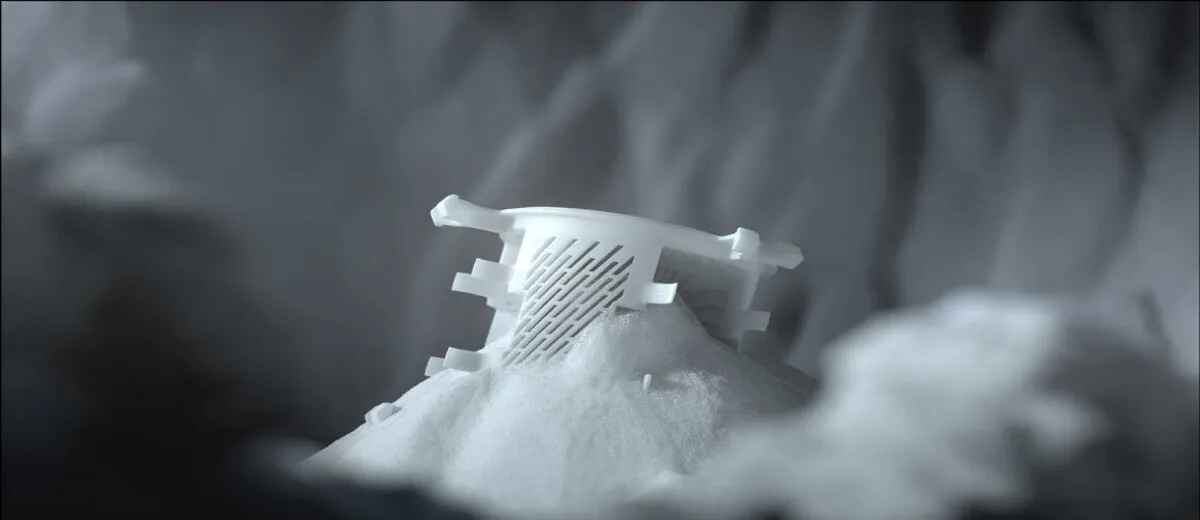
Selective Laser Sintering Glass Filled Nylon PA12 For Stiff, Thermally Stable Parts

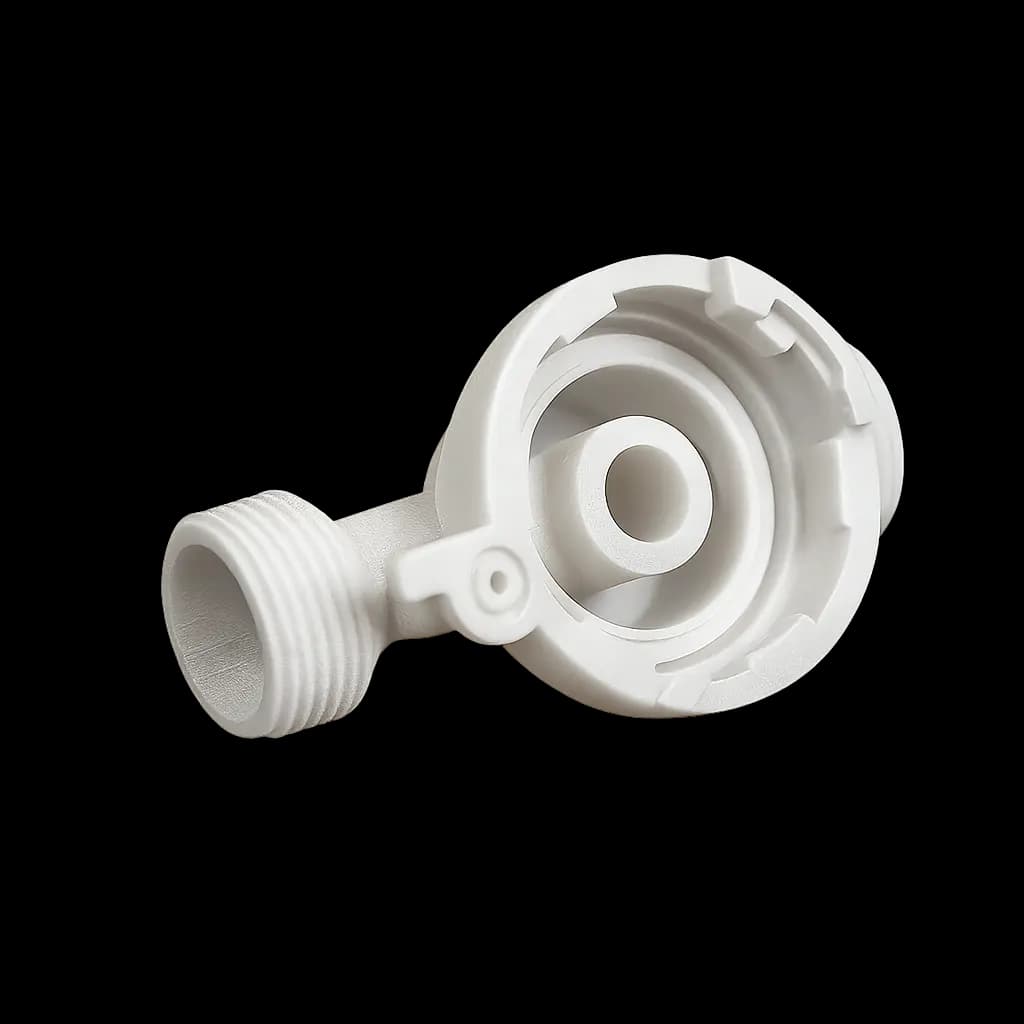
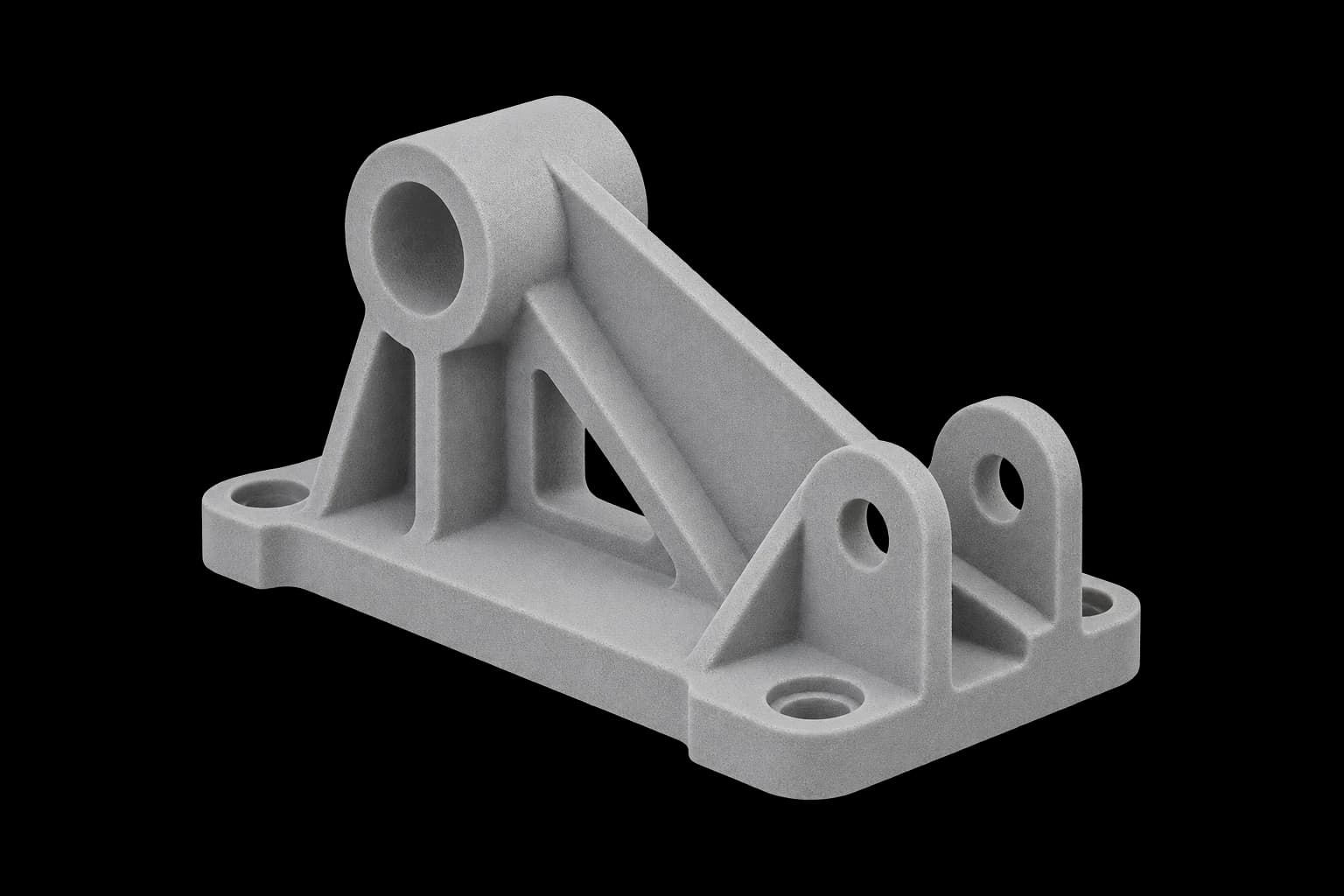
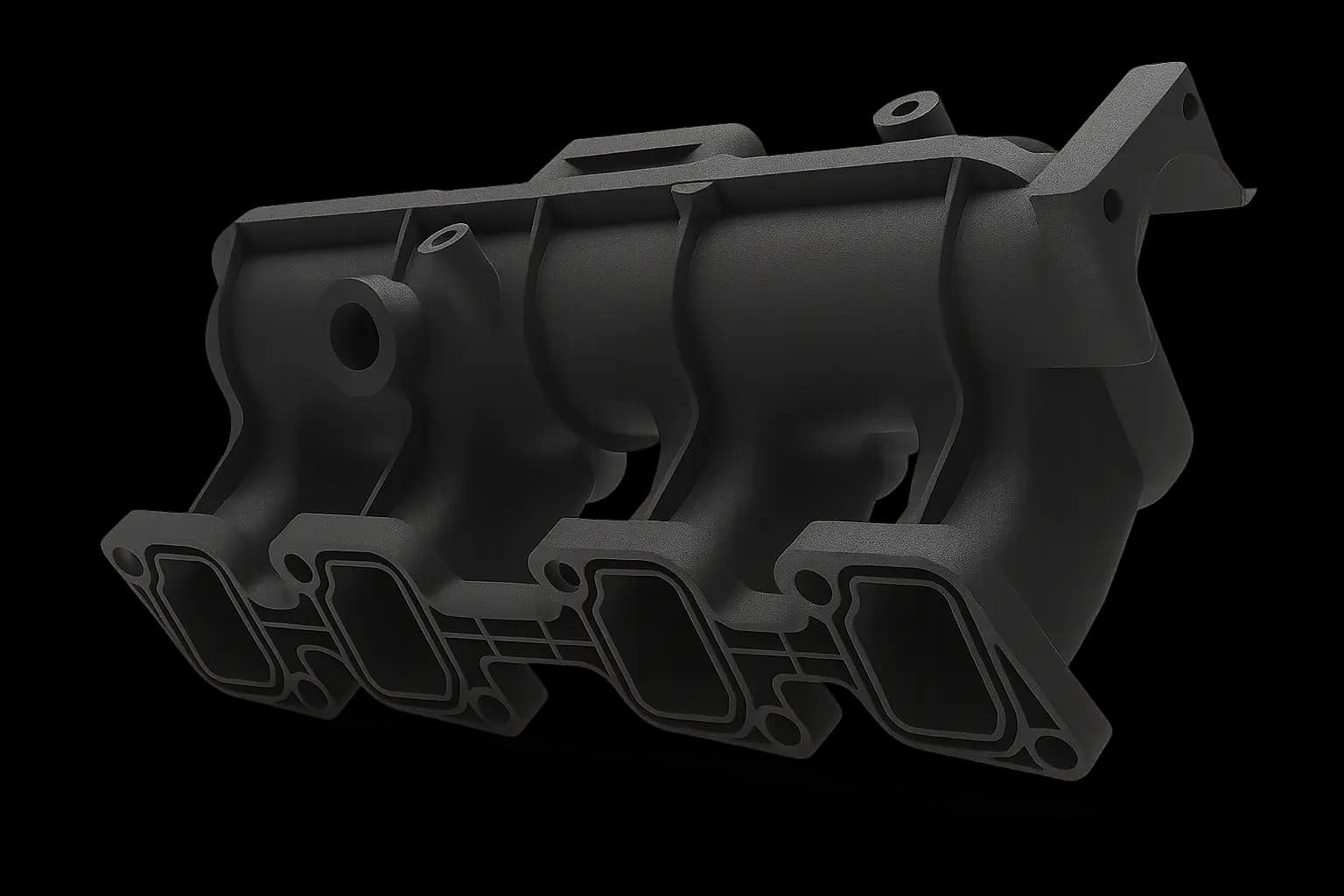
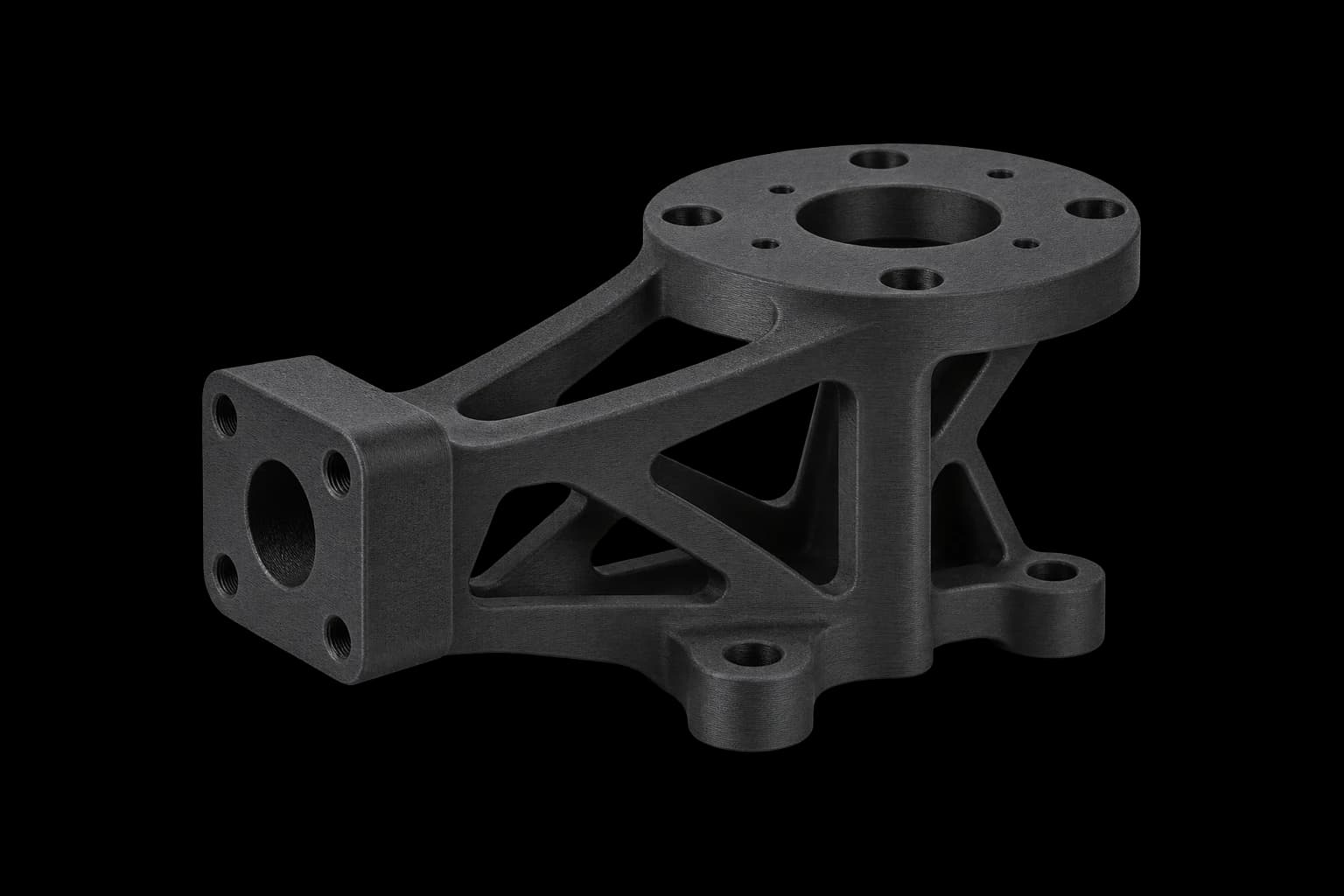
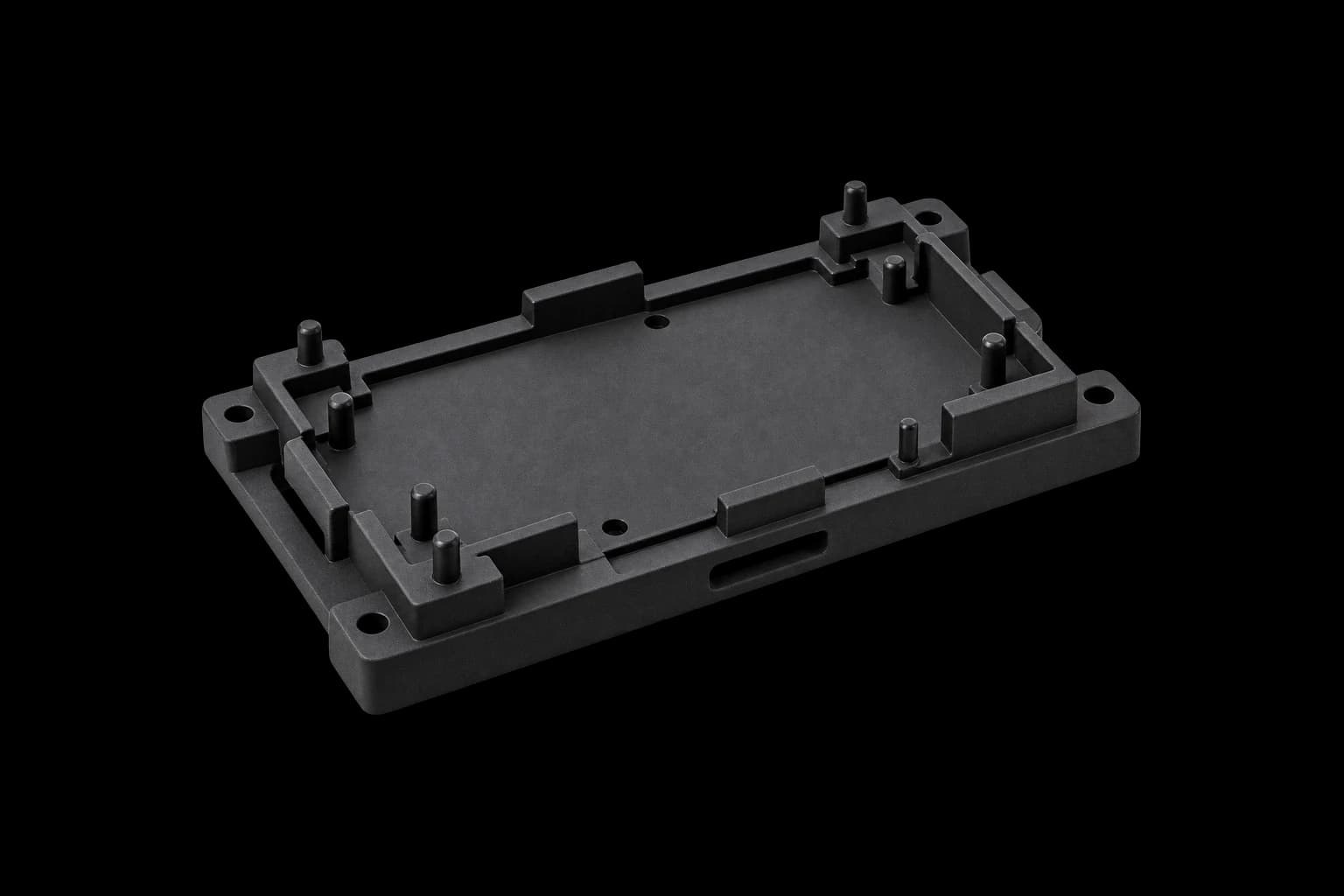
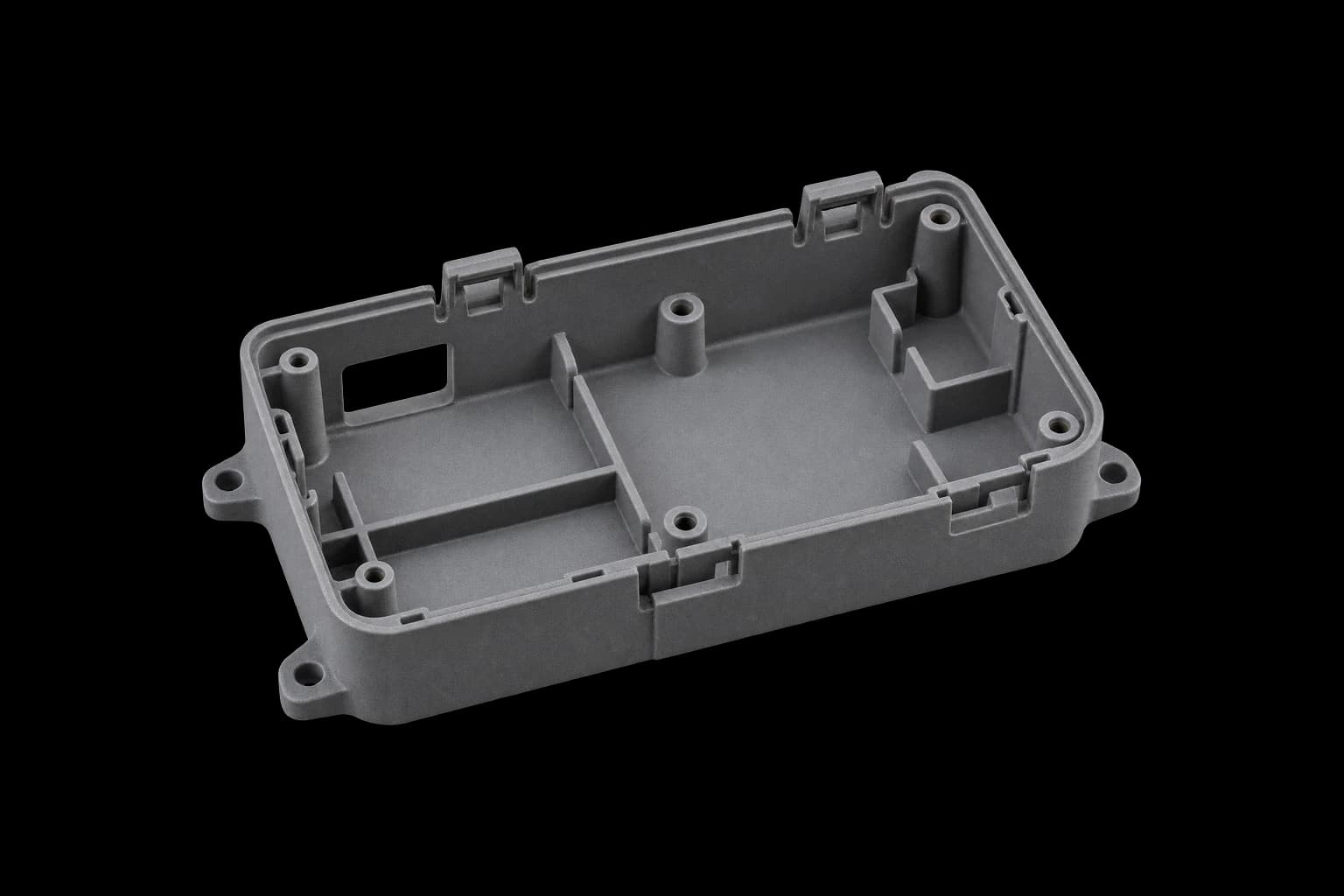
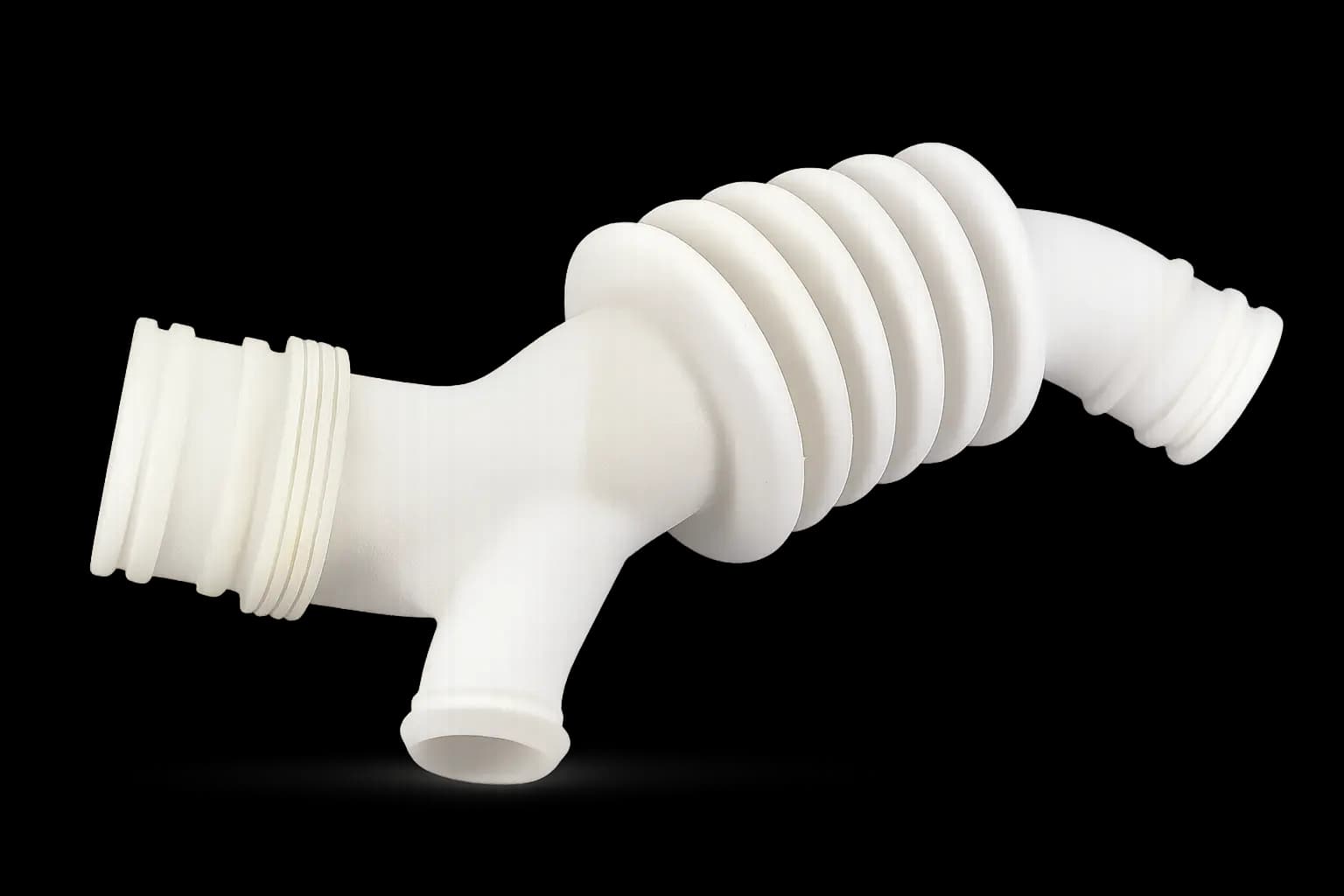
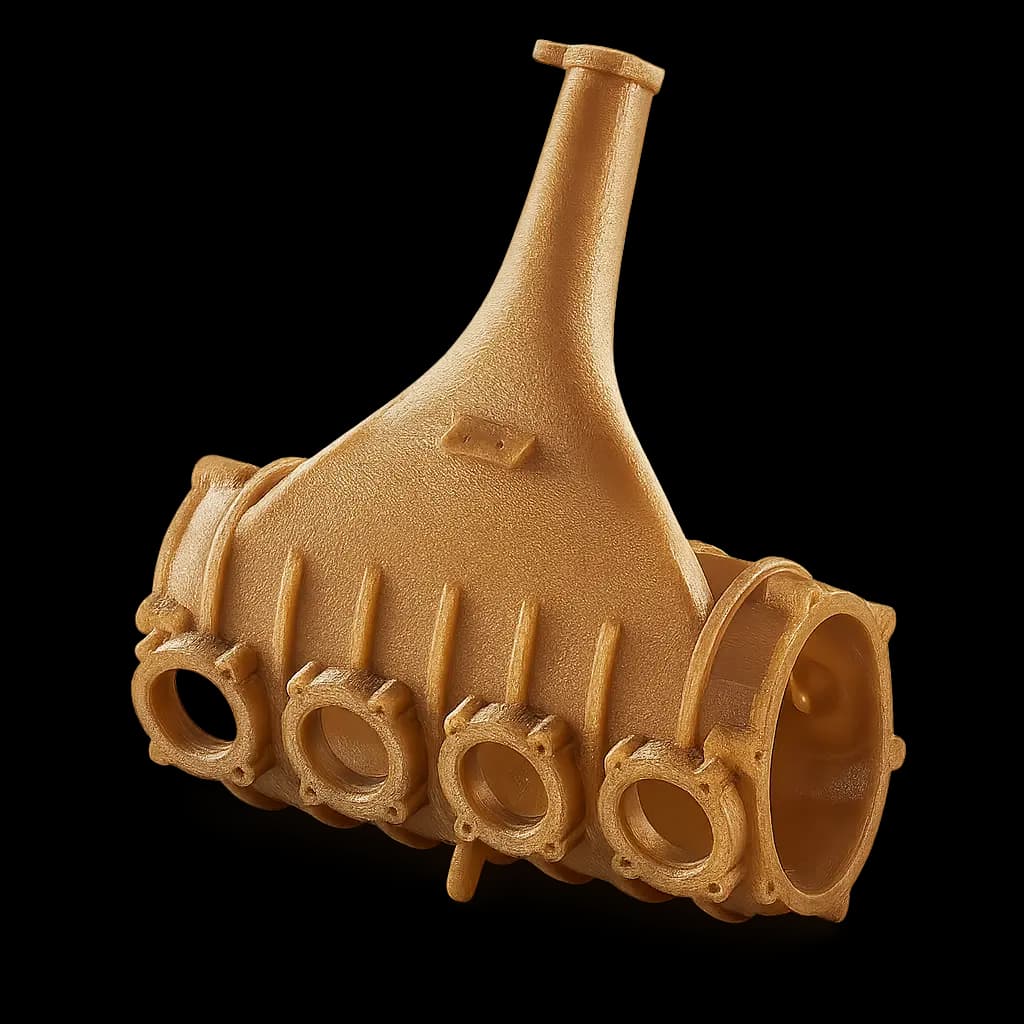
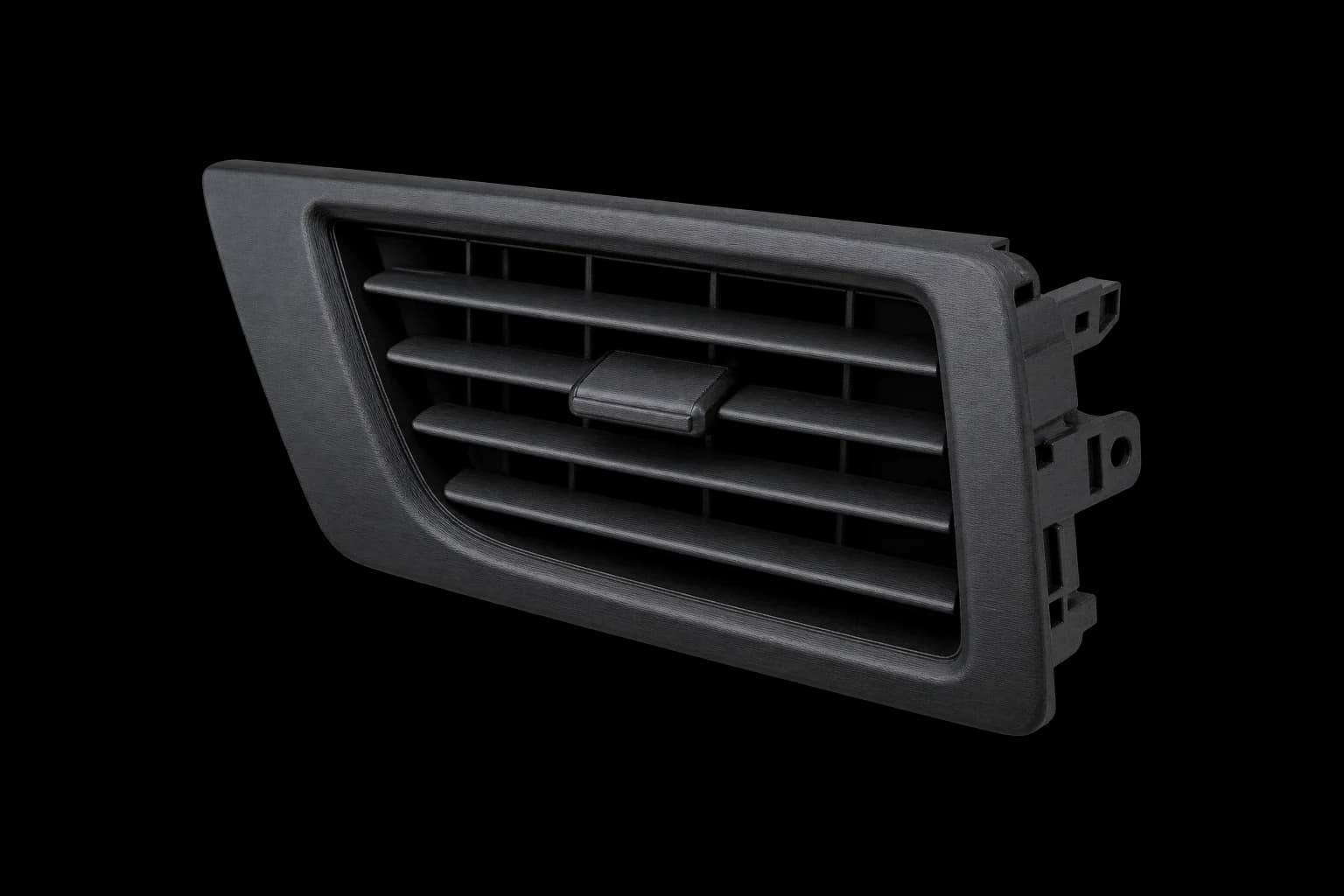
Glass Filled Nylon PA12 3D printed part example
Support-Free Printing
Complex Geometries
SLS material

Glass Filled Nylon PA12 overview

Glass Filled Nylon PA12 (EOS PA 3200 GF) is nylon reinforced with glass beads for SLS 3D printing, used for parts that must stay rigid, hold their shape and stand up to wear. It is nearly twice as stiff as standard PA12 and keeps its shape under load in warm conditions where unfilled nylon starts to soften. Choose it for brackets, housings, jigs and fixtures, and for under-hood and machine parts that run warm, slide against other parts or carry a steady load. Parts come out a natural whitish colour and can be dyed.

How Glass Filled Nylon PA12 is manufactured

Glass Filled Nylon PA12 is manufactured using Selective Laser Sintering (SLS) on Forge Labs' EOS P 396 systems, an industrial powder-bed process that builds parts layer by layer without support structures or tooling. The EOS laser sintering process precisely fuses the glass-nylon composite while keeping the support-free design freedom of standard PA12, so complex geometries, internal features and consolidated designs print with excellent repeatability. The material's stiffness, wear resistance and reduced warpage make it ideal for automotive under-hood components and industrial tooling that demand structural rigidity.

Build volume
340 × 340 × 600 mm
Lead time
2-4 business days
Layer height
0.10 - 0.15 mm
Forge Labs Steam

Know before you manufacture in Glass Filled Nylon PA12.

Upload CAD files to Forge Labs Steam for instant Glass Filled Nylon PA12 pricing and live manufacturability feedback, and fix issues before production so timelines stay predictable.

Upload CAD files to Forge Labs Steam for instant Glass Filled Nylon PA12 pricing and live manufacturability feedback, and fix issues before production so timelines stay predictable.

Surface finishes

Finishes for Glass Filled Nylon PA12

SLS parts feature a fine-textured matte surface finish that is durable and functional, making them ideal for a wide range of applications. While the natural finish is suitable for many uses, SLS parts can be further enhanced through post-processing techniques. Deep color dyeing with DyeMansion technology provides vibrant, uniform colors, while painting allows for a smooth, professional finish that can match precise aesthetic requirements.

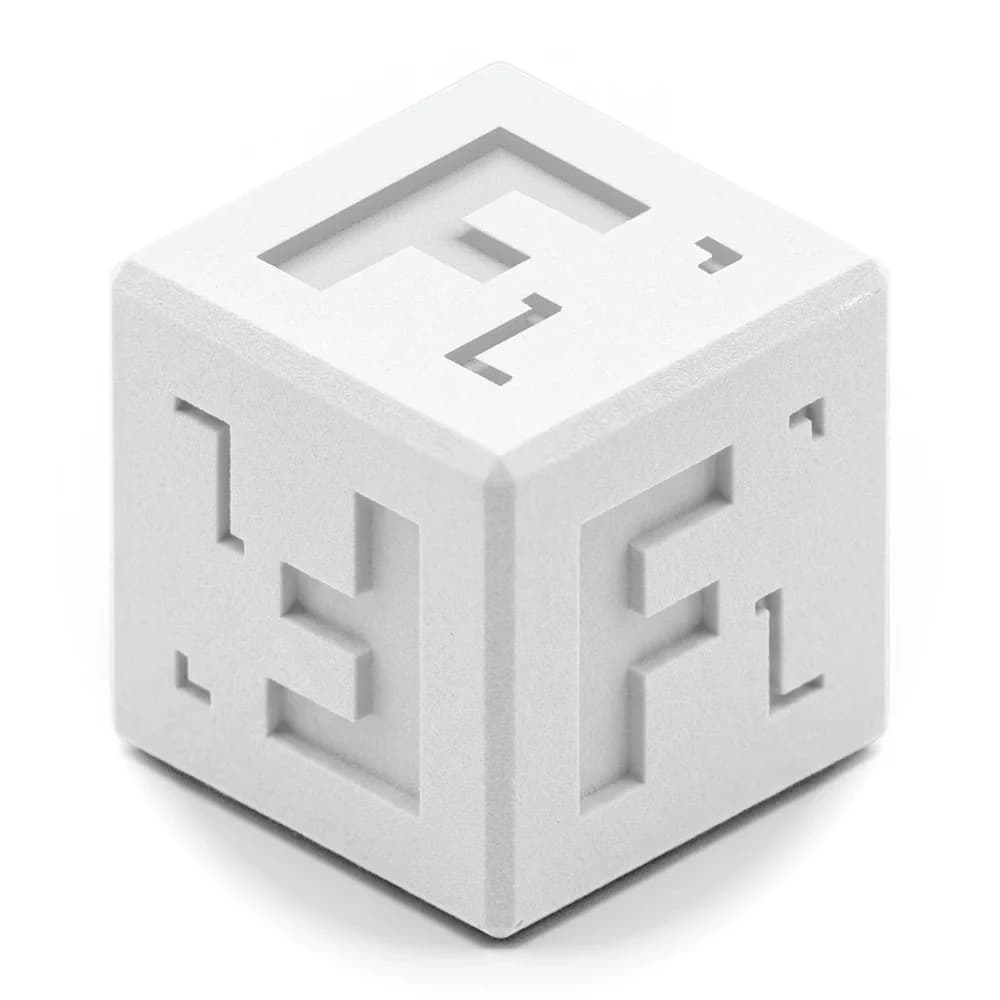
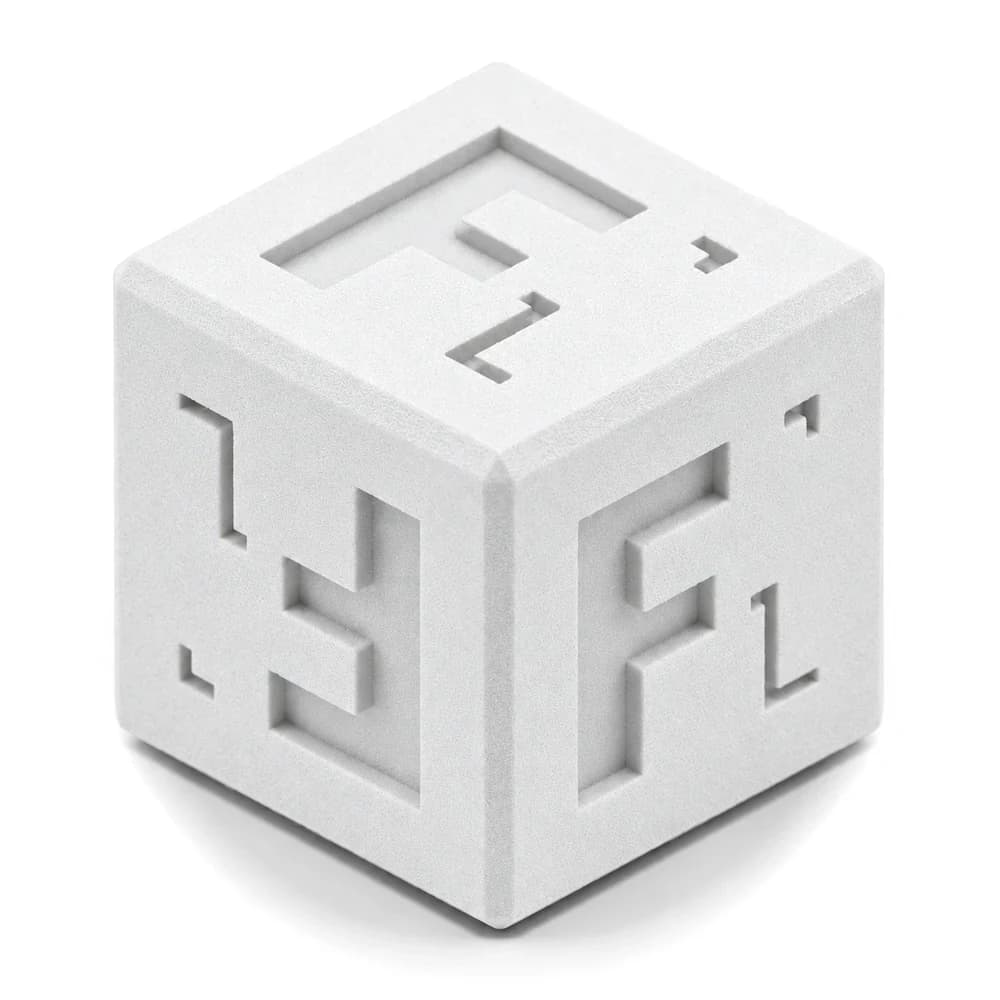
Sample cube in natural white SLS PA12 with the standard bead-blasted matte finish
Natural White

Standard Finish

Selective Laser Sintered (SLS) parts naturally come in a fine-textured matte surface finish. Parts are depowdered through media blasting, resulting in a bright white color with a slightly grainy texture. The surface is durable, uniform, and functional, making it ideal for both mechanical and aesthetic applications. While intricate details are well-defined, the porous nature of SLS PA12 can lead to a slightly rough feel, which can be improved through post-processing techniques.

Surface Texture
Fine-textured Matte Finish
Appearance
Bright White
Details
Clear & refined
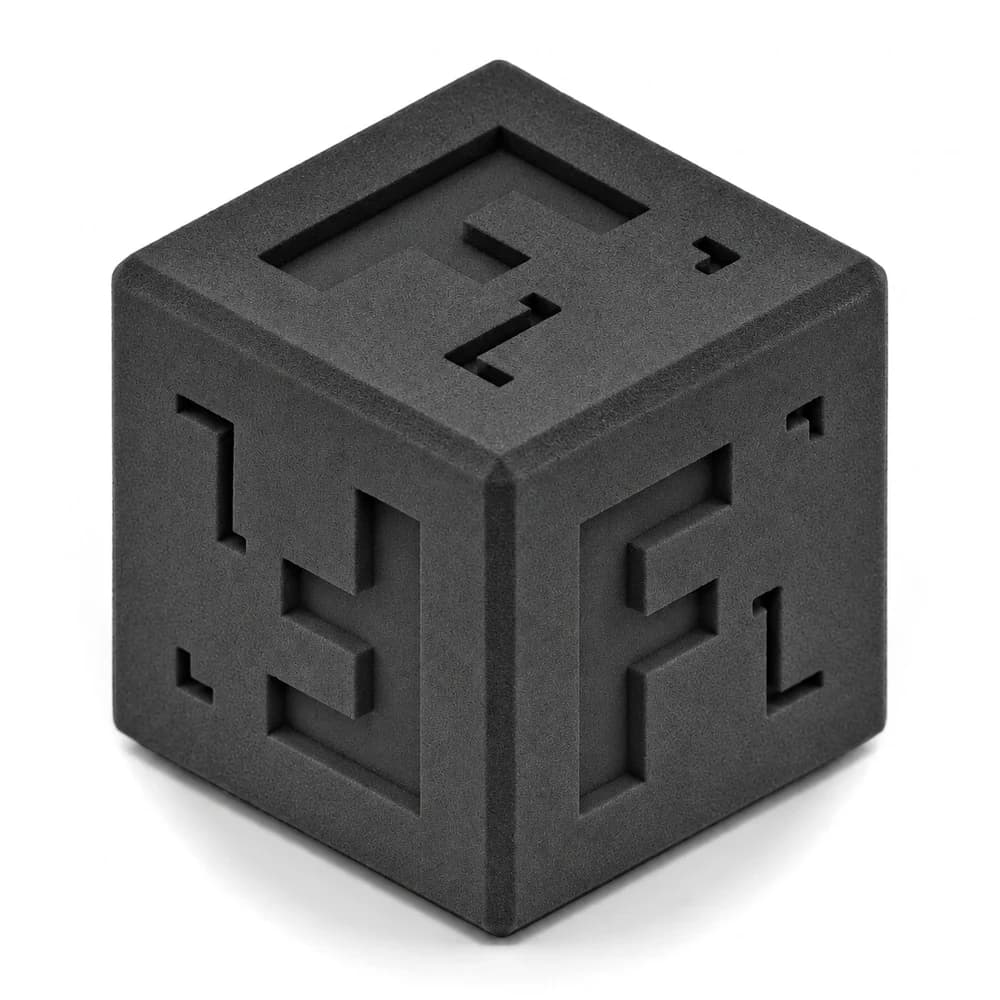
Sample cube in SLS PA12 dyed deep black
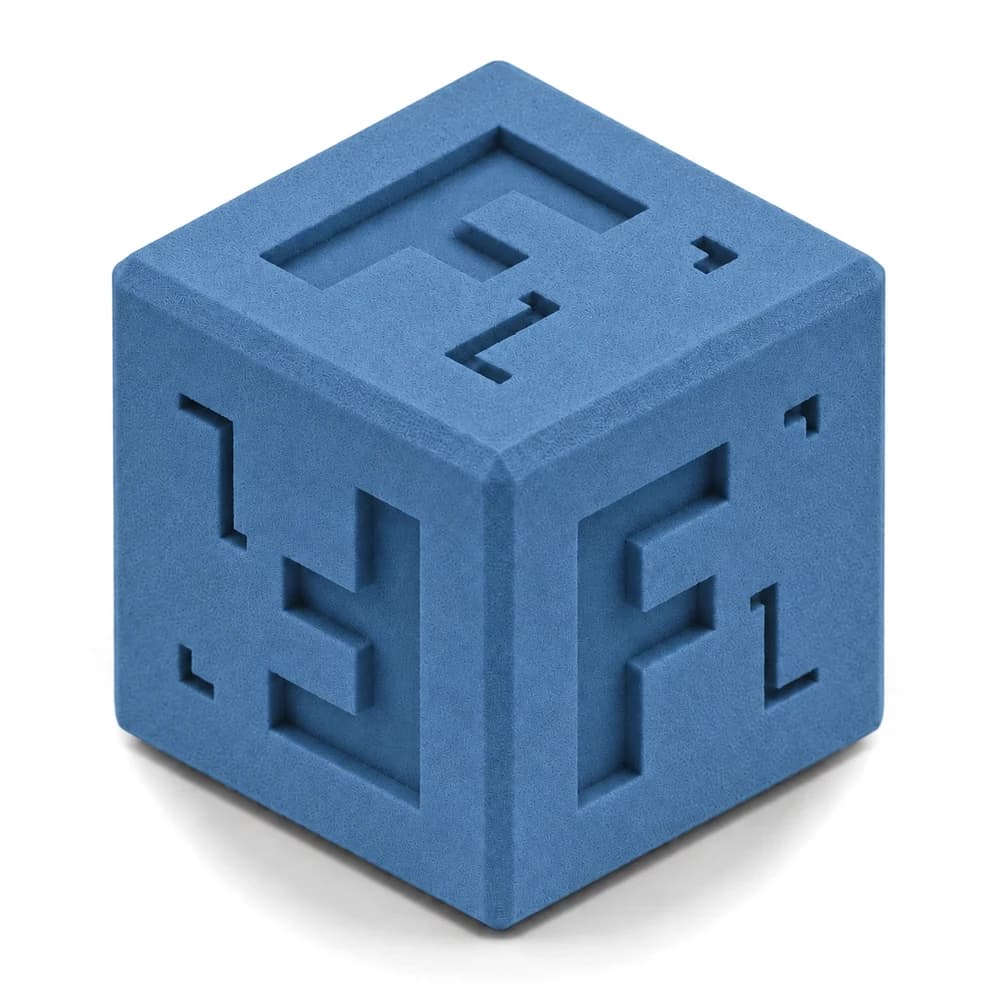
Sample cube in SLS PA12 dyed deep blue
Enhanced Finish

Deep Color Dye

Deep color dying provides a rich, uniform color, improving the overall aesthetics. Suitable for both functional and visually appealing applications. The dye also enhances scratch resistance, making the parts more durable in handling and use. This process ensures consistent color uniformity across the entire part, even for complex geometries or intricate designs.

Surface Texture
Fine-textured Matte Finish
Appearance
Rich, uniform color coverage
Details
Clear & refined
Sample cube in white SLS PA12 after vapour smoothing
Sample cube in natural white SLS PA12 with the standard matte finish
Smoothed Surface

Vapour Finishing

Vapour finishing uses controlled chemical vapour to smooth the surface texture of SLS parts, reducing the characteristic powder grain while maintaining dimensional accuracy. This process creates a more refined surface feel and appearance, making it ideal for parts requiring improved aesthetics or user interaction. The result is a smoother touch feel while preserving the structural integrity and detail definition of the original part.

Surface Texture
Smoothed Matte Finish
Appearance
Refined White with Reduced Grain
Details
Clear & refined
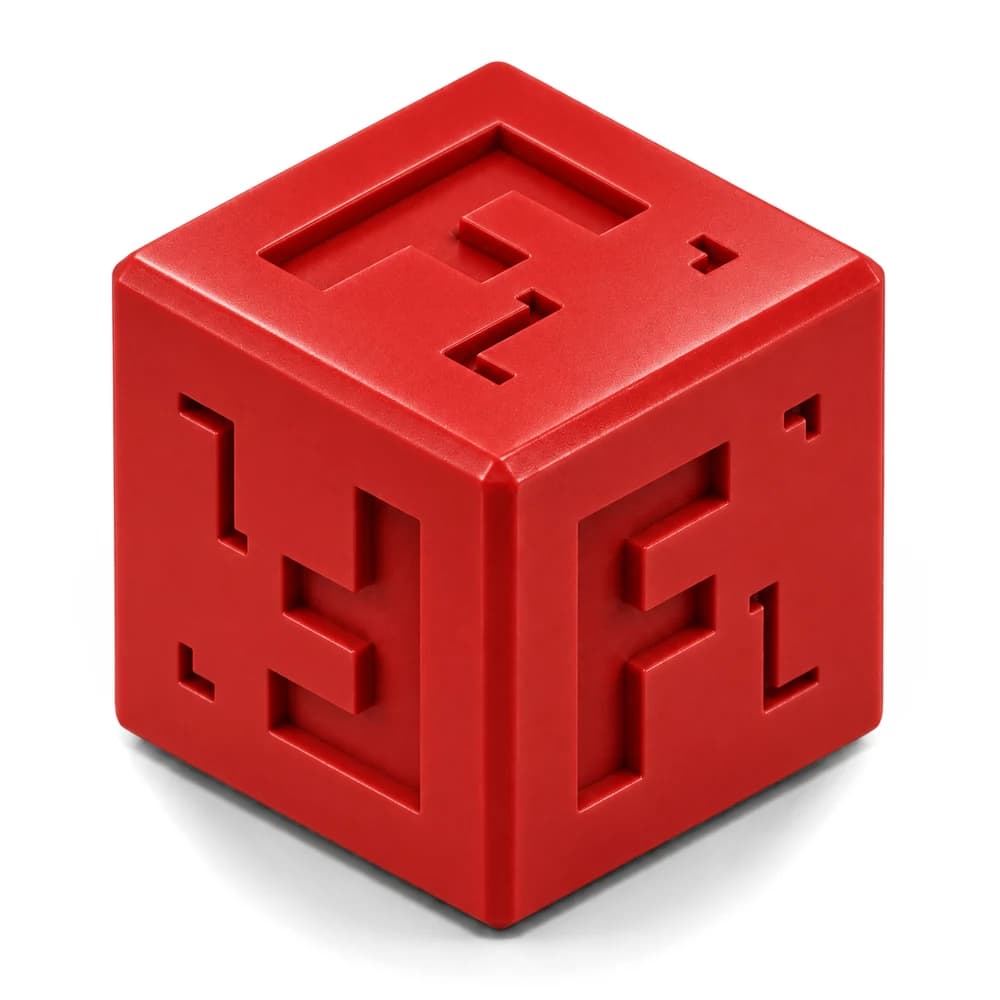
Sample cube with a red automotive-grade performance paint finish
Sample cube in natural white SLS PA12 with the standard matte finish
Premium Finish

Performance Paint

Painting offers a highly durable, automotive-grade coating that enhances the aesthetics and durability of 3D-printed parts. Each part is hand-finished to ensure smooth surfaces and a premium quality appearance. Using professional-grade coating equipment, this process allows for precise application and exceptional adhesion. Custom color matching is available, making it ideal for applications that require specific branding or visual impact.

Surface Texture
Matte to Semi-Gloss
Appearance
Custom color matching
Details
Clear & refined
Industry applications

Industry applications for Glass Filled Nylon PA12

Glass Filled Nylon PA12 is the SLS nylon for parts that must stay stiff, resist abrasion and hold their shape under load at elevated temperature. From rapid prototyping to production runs, teams rely on Glass Filled Nylon PA12 to maintain tight tolerances while reducing assembly complexity through consolidated part designs.

From automotive under-hood components to industrial housings, Glass Filled Nylon PA12 makes rigid, thermally stable parts with the dimensional stability that demanding engineering applications need.

The spherical glass beads stiffen the part in every build direction: even along Z its tensile modulus is about 50% above standard PA12, and Z-direction strength holds at about 92% of X/Y. Large flat faces and mounting bosses keep their shape under load, and parts come off the build with an excellent surface finish and fine detail resolution.

Forge Labs' EOS systems keep glass distribution and mechanical properties consistent from build to build, and our finishing options deliver professional surfaces without giving up the stiffness the glass beads add.

All industries
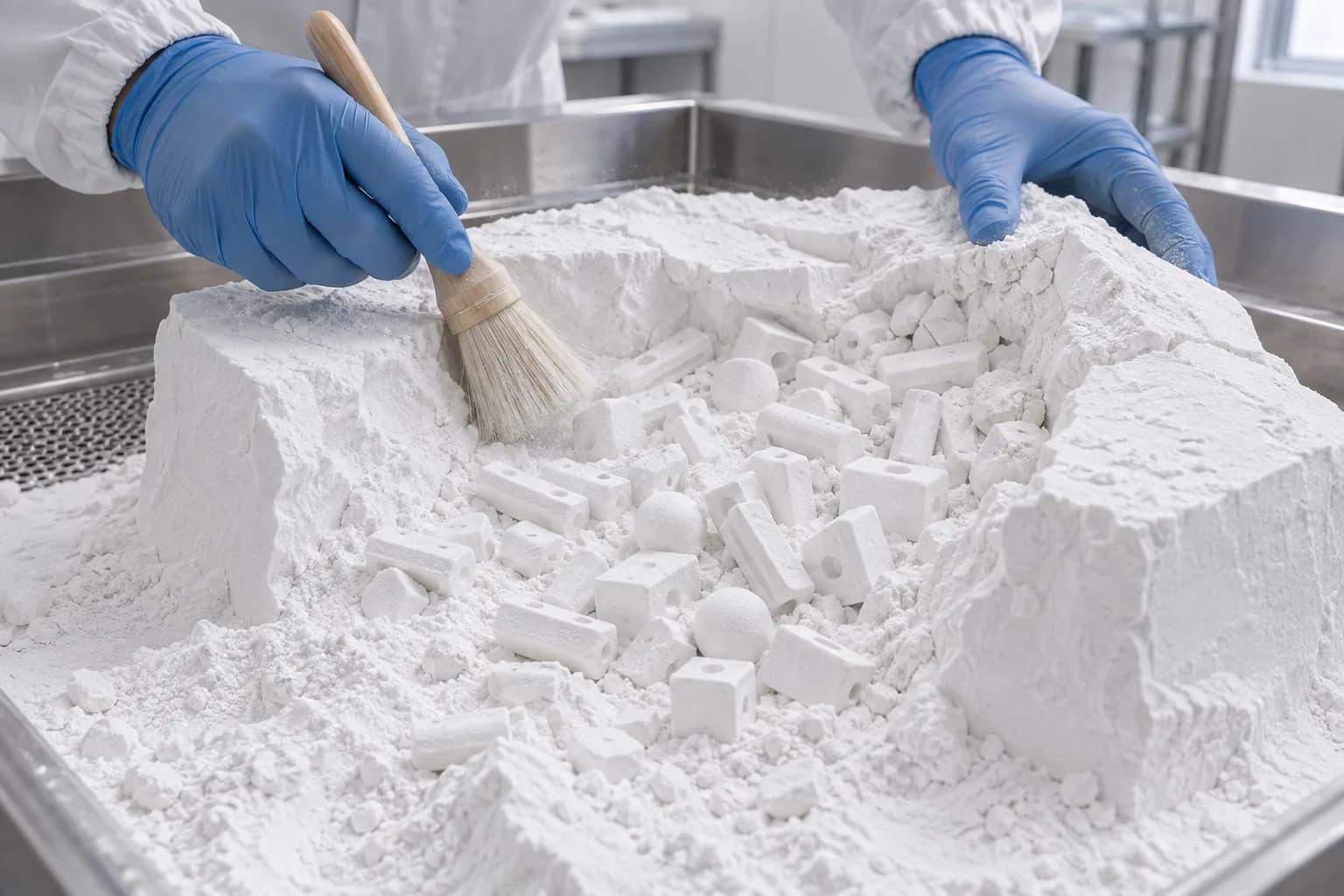
Small white SLS nylon parts being brushed out of a broken-open powder cake

Robotics

Exoskeleton & Wearable Robot Parts

Wearable robotics teams use Glass Filled Nylon PA12 for actuator mount plates, and it is the stiffer choice for working housings, where broad faces and mounting points bend less under load than they would in standard PA12. It is also the nylon to choose where parts see sliding wear. In one exoskeleton program, a glass-filled mount plate was supplied alongside PA12 stops and clamp plates made in repeat lots without moulds, at a median of five business days from order to ready.

  • Actuator mount plates
  • Working housings
  • Sliding-contact parts
Read the exoskeleton actuator case study
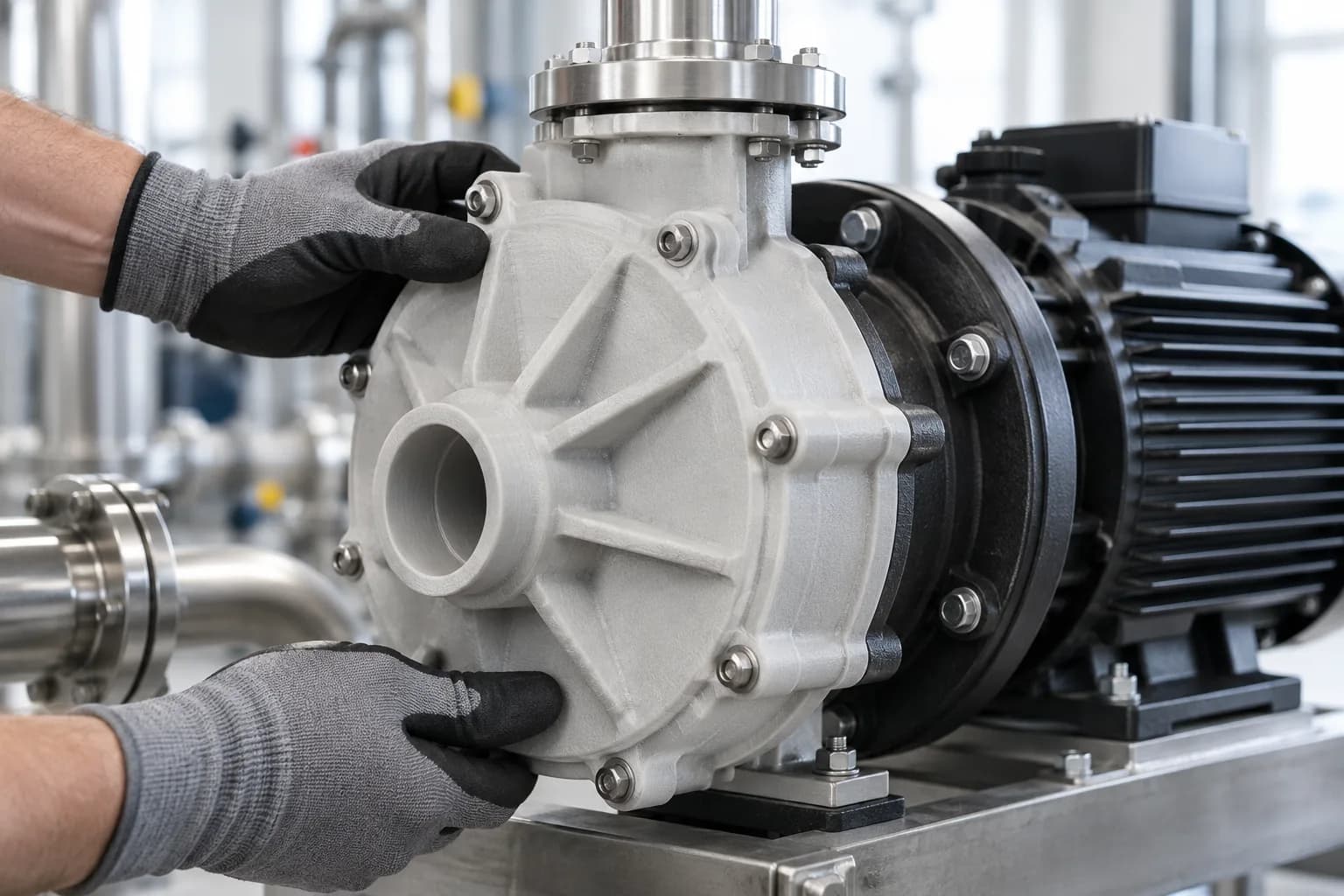
Glass-filled SLS nylon pump housing cover on an industrial pump

Industrial Equipment

Pump Housings, Machine Covers & Wear Parts

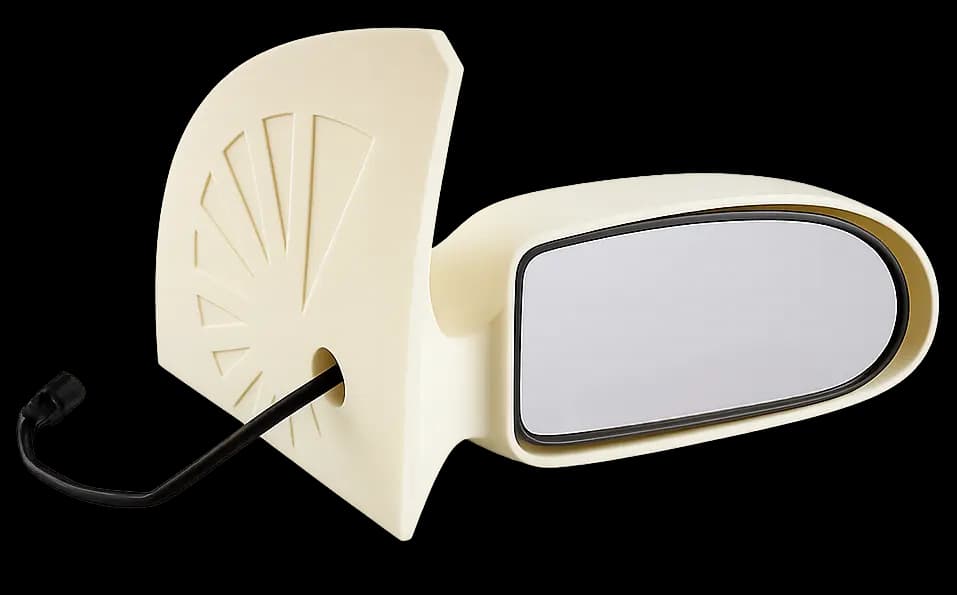
Machine builders use Glass Filled Nylon PA12 for pump housings and impellers, conveyor components, machine guards and bearing housings that need stiffness under load and resistance to wear. It is made for heavily used parts with wear and abrasion requirements, losing 30 mg per 2,000 Taber cycles against 34 mg for standard PA 2200. Rigid housings for power supplies, server racks and industrial controls print with their mounting features built in, as do stiff brackets and covers for grid and field equipment.

  • Pump housings and impellers
  • Conveyor and bearing parts
  • Machine guards and control enclosures
Explore grid and field hardware
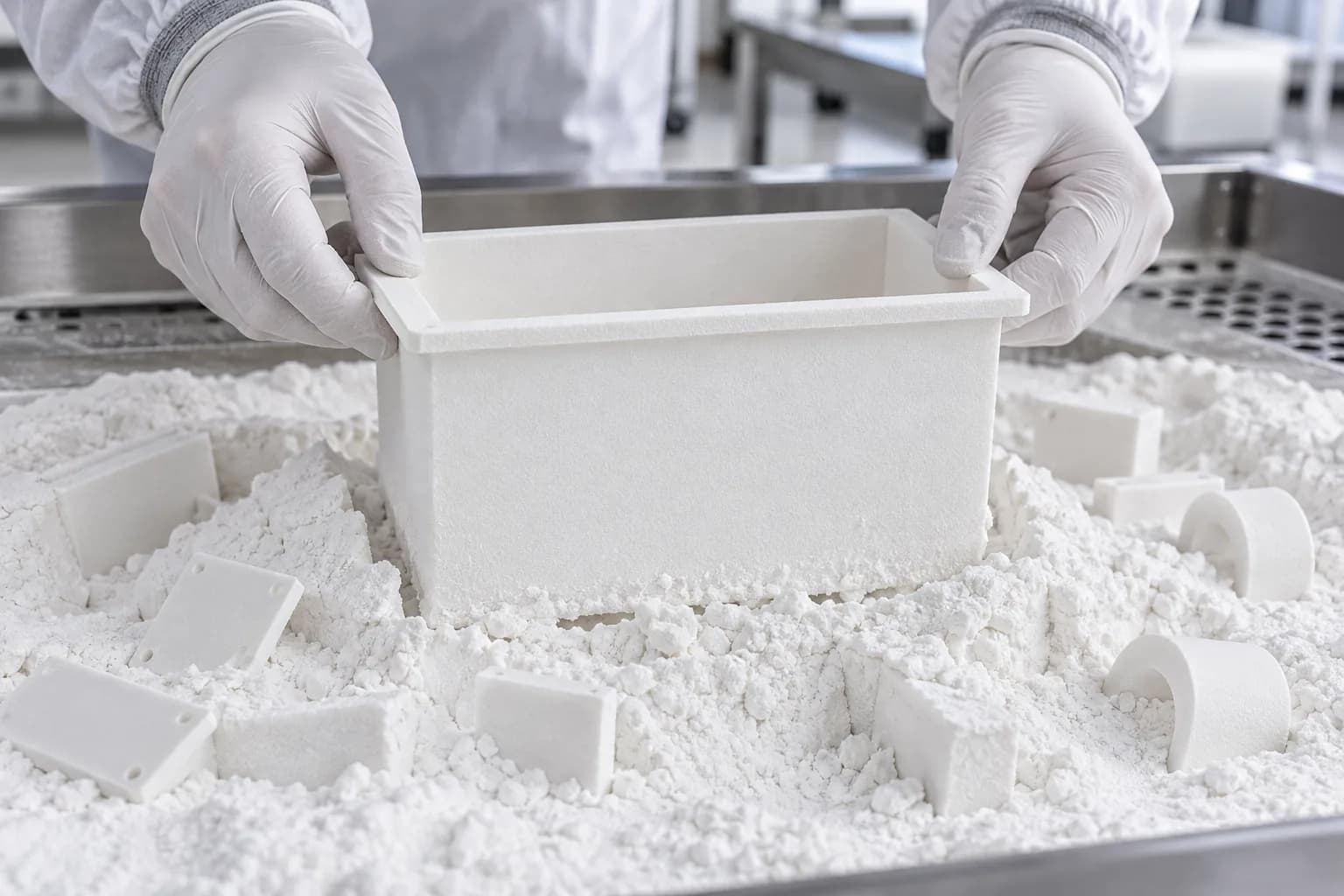
White SLS nylon housing lifted out of the powder cake after a build

Automotive

Engine-Bay Ducts, Covers & Brackets

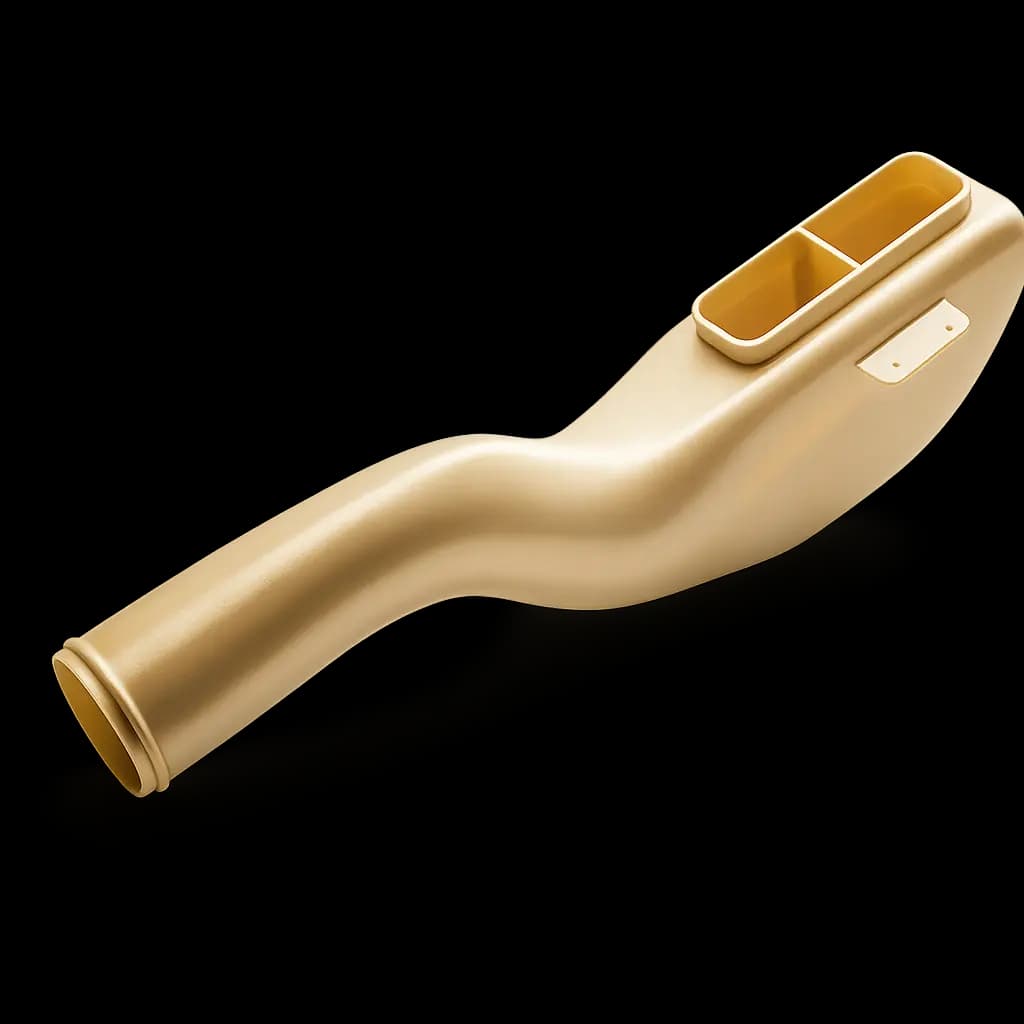
Automotive teams use Glass Filled Nylon PA12 for air ducts, intake manifolds, engine covers, shrouds, bracket systems, sensor housings and connectors, including final parts in the engine area. Under a 1.8 MPa load its heat deflection temperature is 96 °C, against 64 °C for unfilled PA 2200, and the PA12 it is based on resists petrol, fuel oil, brake fluid and glycol antifreeze.

  • Intake manifolds and air ducts
  • Engine covers and shrouds
  • Brackets and sensor housings
Explore under-hood parts
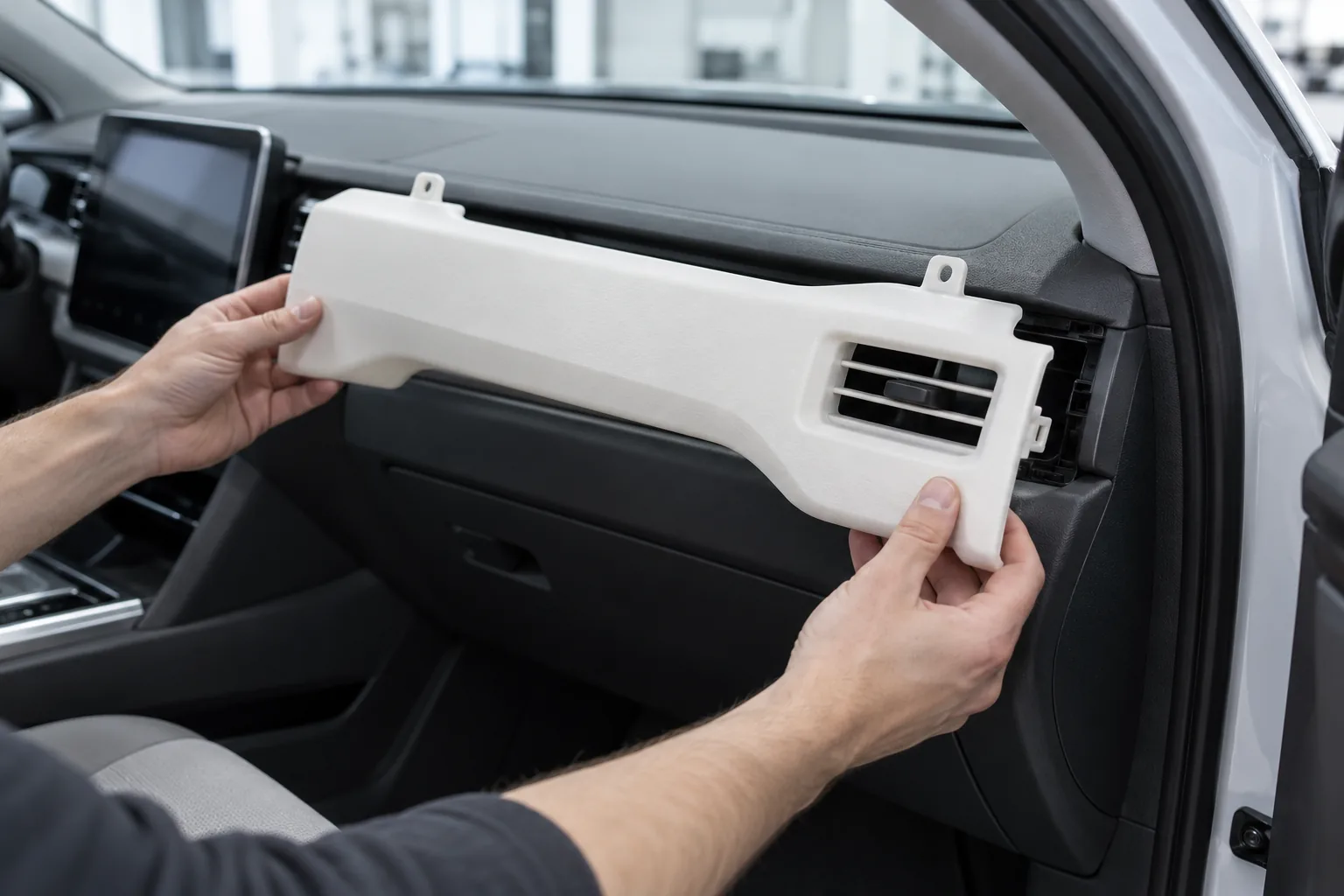
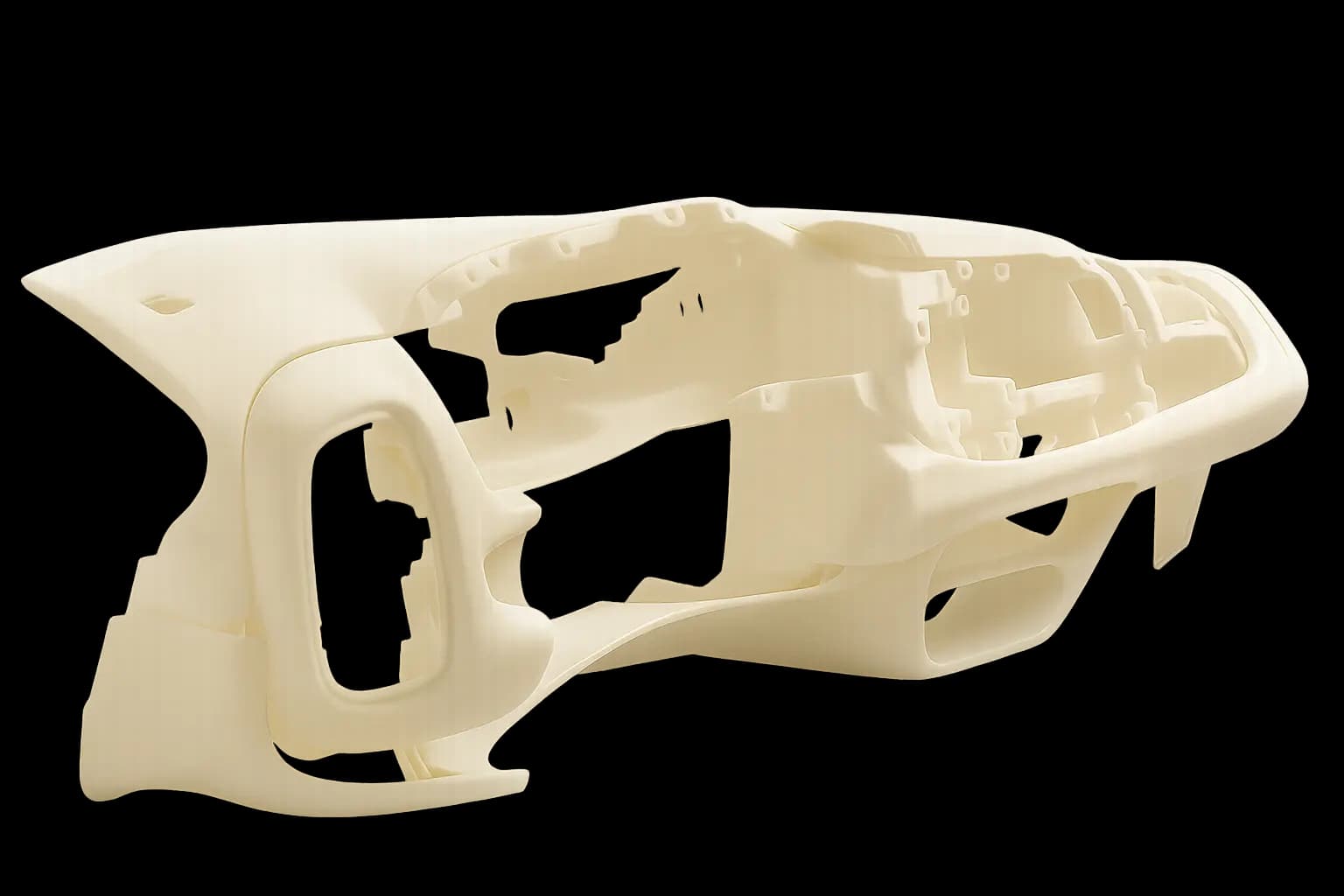
White SLS nylon dashboard panel prototype held up for a fit check in a vehicle

Product Development

Works-Like Prototypes & Test Parts

Product and vehicle development teams use Glass Filled Nylon PA12 for functional prototypes that need production-like stiffness for validation and testing, from load-bearing brackets to housings and air intake units. Fully functional air intake development prototypes print in this grade. Prototypes come from the same powder and process as production parts, so test results carry straight into low-volume production.

  • Works-like prototypes
  • Load-bearing test brackets
  • Air intake development parts
Explore functional prototyping
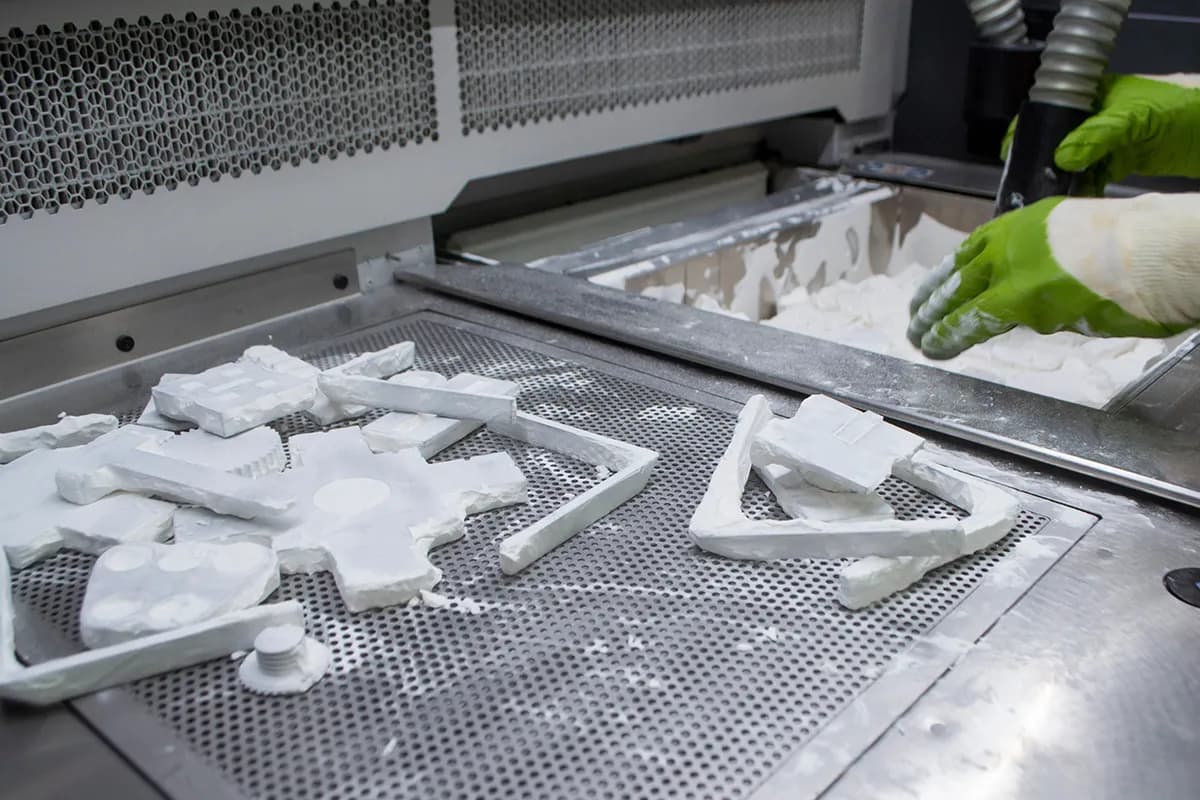
White SLS nylon brackets and frames laid out on a depowdering station

Manufacturing

Forming Tools, Jigs & Fixtures

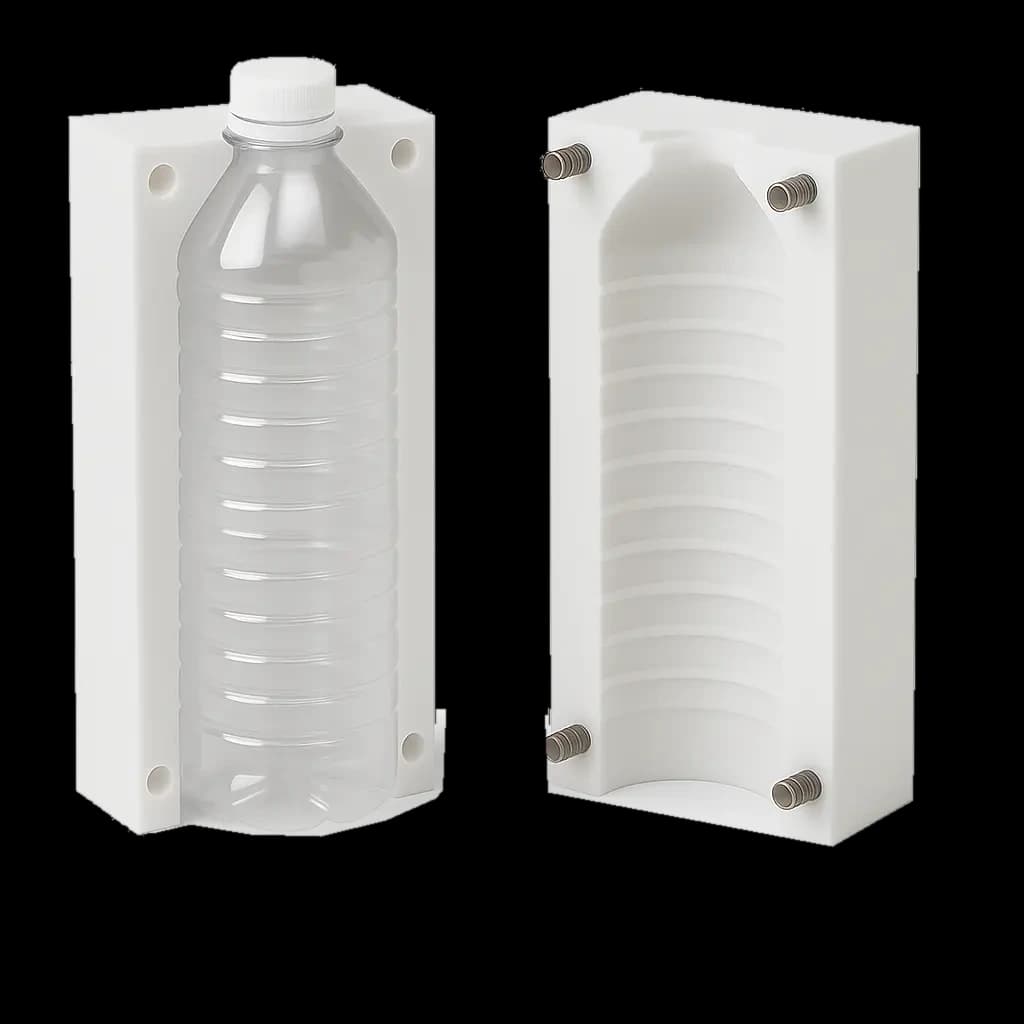
Manufacturing engineers use Glass Filled Nylon PA12 for deep-drawing dies, forming and thermoforming tools, jigs and fixtures. Its high stiffness and low abrasive wear suit forming tools and deep-drawing dies. A printed tool needs no machining, so a revised fixture goes into the next build without retooling, and high-temperature manufacturing fixtures keep their shape where unfilled nylon would flex.

  • Deep-drawing and forming tools
  • Thermoforming tools
  • Jigs and fixtures
Explore automotive line tooling
Performance data

Technical performance for Glass Filled Nylon PA12

Values from the EOS PA 3200 GF datasheet and EOS product data, tested to the standard listed with each property, with chemical ratings from EOS data for unfilled PA12.

Mechanical performance

Mechanical properties

Glass Filled Nylon PA12 delivers high stiffness under load with good elongation at break, for engine-area covers and brackets, aerospace structural brackets and industrial machine housings that demand production-ready durability. Compare the modulus rows with standard PA12 to see what the glass beads add, and read the X/Y and Z rows together: stiffness and elongation are lower in the Z (build) direction, so orient loaded features accordingly.

The Taber abrasion row shows its resistance to sliding wear. Like all thermoplastics it creeps under long-term load, so size parts that carry constant stress with that in mind.

PropertyValue
Tensile Modulus (X/Y)ISO 527-1/-2
3200 MPa
Tensile Modulus (Z)ISO 527-1/-2
2500 MPa
Tensile Strength (X/Y)ISO 527-1/-2
51 MPa
Tensile Strength (Z)ISO 527-1/-2
47 MPa
Elongation at Break (X/Y)ISO 527-1/-2
9 %
Elongation at Break (Z)ISO 527-1/-2
5.5 %
Flexural Modulus (X)ISO 178
2900 MPa
Flexural Strength (X)ISO 178
73 MPa
Charpy Impact Strength, Unnotched (X)ISO 179/1eU
35 kJ/m²
Charpy Impact Strength, Notched (X)ISO 179/1eA
5.4 kJ/m²
Izod Impact Strength, Unnotched (X)ISO 180/1U
21 kJ/m²
Izod Impact Strength, Notched (X)ISO 180/1A
4.2 kJ/m²
Taber Abrasion (mass loss, 2,000 cycles)DIN 53754
30 mg

Material makeup

Physical properties

Consistent density and surface quality keep critical features in tolerance and downstream finishing predictable. The glass bead content makes parts heavier than unfilled PA12, in exchange for higher stiffness and hardness.

EOS describes high dimensional accuracy and excellent long-term constant behaviour for this grade, which suits mating features and fitted assemblies.

PropertyValue
Part DensityEOS method
1.22 g/cm³
Glass Bead ContentEOS MDS
40 wt%
Shore Hardness DISO 7619-1
80
Ball Indentation HardnessISO 2039-1
98 MPa
Powder Colour
Whitish
Part Colour
Whitish

Heat performance

Thermal properties

Read the heat deflection rows by load: the 0.45 MPa value suits lightly loaded parts, and the 1.8 MPa value suits loaded parts. Vicat values show softening under a point load.

For automotive and industrial parts that run warm, EOS rates PA12 parts for steady stress from −40 °C to +80 °C, and parts in this grade withstand high-temperature painting and metal coating.

PropertyValue
Melting Temperature (20 °C/min)ISO 11357-1/-3
176 °C
HDT @ 0.45 MPa (X)ISO 75-1/-2
157 °C
HDT @ 1.8 MPa (X)ISO 75-1/-2
96 °C
Vicat Softening Temperature (A50, 10 N)ISO 306
179 °C
Vicat Softening Temperature (B50, 50 N)ISO 306
166 °C

Compatibility data

Chemical properties

EOS rates its unfilled PA12 (PA 2200), the base polymer of this grade, for six months at 20 °C and four weeks at 60 °C; the glass-filled grade has no separate table. At 20 °C it resists fuels, fuel oil, brake fluid, glycol antifreeze, acetone, alcohols, aromatic solvents and sea water, while strong mineral acids attack it. The 60 °C column shows where resistance drops at elevated temperature.

Chemical ratings are screening guidance; confirm them with application-specific testing before production release.

ChemicalPA12, 20 °C, 6 monthsPA12, 60 °C, 4 weeks
Petrol (gasoline)
PA12, 20 °C, 6 monthsResistant
PA12, 60 °C, 4 weeksResistant
Fuel oil
PA12, 20 °C, 6 monthsResistant
PA12, 60 °C, 4 weeksResistant
Brake fluid
PA12, 20 °C, 6 monthsResistant
PA12, 60 °C, 4 weeksResistant
Glycol antifreeze
PA12, 20 °C, 6 monthsResistant
PA12, 60 °C, 4 weeksResistant
Silicone oil
PA12, 20 °C, 6 monthsResistant
PA12, 60 °C, 4 weeksResistant
Paraffin
PA12, 20 °C, 6 monthsResistant
PA12, 60 °C, 4 weeksResistant
Acetone
PA12, 20 °C, 6 monthsResistant
PA12, 60 °C, 4 weeksResistant
Sea water
PA12, 20 °C, 6 monthsResistant
PA12, 60 °C, 4 weeksResistant
Ethanol 100%
PA12, 20 °C, 6 monthsResistant
PA12, 60 °C, 4 weeksPractically resistant
Methanol
PA12, 20 °C, 6 monthsResistant
PA12, 60 °C, 4 weeksPractically resistant
Xylene
PA12, 20 °C, 6 monthsResistant
PA12, 60 °C, 4 weeksConditionally resistant
Toluene
PA12, 20 °C, 6 monthsResistant
PA12, 60 °C, 4 weeksLittle resistant
Acetic acid 10%
PA12, 20 °C, 6 monthsResistant
PA12, 60 °C, 4 weeksLittle resistant
Hydrogen peroxide 30%
PA12, 20 °C, 6 monthsResistant
PA12, 60 °C, 4 weeksNot tested
Sulfuric acid 10%
PA12, 20 °C, 6 monthsPractically resistant
PA12, 60 °C, 4 weeksLittle resistant
Sodium hypochlorite 5%
PA12, 20 °C, 6 monthsPractically resistant
PA12, 60 °C, 4 weeksLittle resistant
Battery acid
PA12, 20 °C, 6 monthsLittle resistant
PA12, 60 °C, 4 weeksNot resistant
Hydrochloric acid 10%
PA12, 20 °C, 6 monthsNot resistant
PA12, 60 °C, 4 weeksNot resistant
Nitric acid 10%
PA12, 20 °C, 6 monthsNot resistant
PA12, 60 °C, 4 weeksNot resistant
Compliance

Compliance profile

The EOS safety data sheet lists no REACH candidate-list, Annex XIV or Annex XVII restricted substances in PA 3200 GF.

The powder contains no flame retardants, and EOS publishes no flammability rating for this grade.

StandardStatus
REACH Regulation (EC) 1907/2006No SVHC candidate-list, Annex XIV or Annex XVII restricted substances, per the EOS safety data sheet
EOS SDS
Resources

Datasheets and design resources

Datasheets, design guidance and supplier documentation for Glass Filled Nylon PA12.

Download center

Access the most recent datasheet and supporting documentation maintained by our engineering team.

Glass Filled Nylon PA12 datasheet

Design guidelines

Explore printable geometry recommendations, wall thickness tips, and finishing playbooks for SLS.

View SLS design guide
White SLS nylon part emerging from unsintered powder
Advanced Manufacturing

Built with Precision SLS Technology

Glass Filled Nylon PA12 is manufactured using industrial-grade SLS technology, ensuring exceptional mechanical properties and dimensional accuracy for demanding applications. Each build fuses the glass-filled powder into dense, repeatable components and keeps production scalable from a single prototype to full production batches.

Tolerance
±0.3% (min ±0.3 mm)
Production capacity
Multiple parts and assemblies nested in each build
Quality control
In-process monitoring and batch traceability for consistent part quality and material properties
Colours & finishes
Natural white, or dyed in-house in black, charcoal, red, orange, yellow, green, blue, purple or magenta; bead blasting, machining, drilling, tapping and vapor polishing
Learn more about SLS technology
Frequently Asked Questions

Frequently asked questions about Glass Filled Nylon PA12

Can't find the answer you're looking for? Reach out to our customer support team.

Glass Filled Nylon PA12 is a PA12 powder filled with 40% glass beads by weight. It offers exceptional stiffness, with a tensile modulus of 3,200 MPa (X/Y), superior wear and abrasion resistance for high-friction parts, and a heat deflection temperature of 96 °C at 1.8 MPa, making it suitable for automotive and industrial parts that must stay rigid under heat and load.
Start a quote

Ready to Get Started with Glass Filled Nylon PA12?

Upload your design and get an instant quote for Glass Filled Nylon PA12 parts.

  • Instant pricing with automated manufacturability analysis
  • Production workflows built for repeatable quality
  • Engineering support from prototype to production
Compare all materials

Create an account to upload CAD

STEP, STL, OBJ, 3MF and IGES supported

Manufacturing technologies
6
Engineering materials
50+
Part quantities
1-500+