Aerospace
Aircraft Systems & Avionics Enclosures
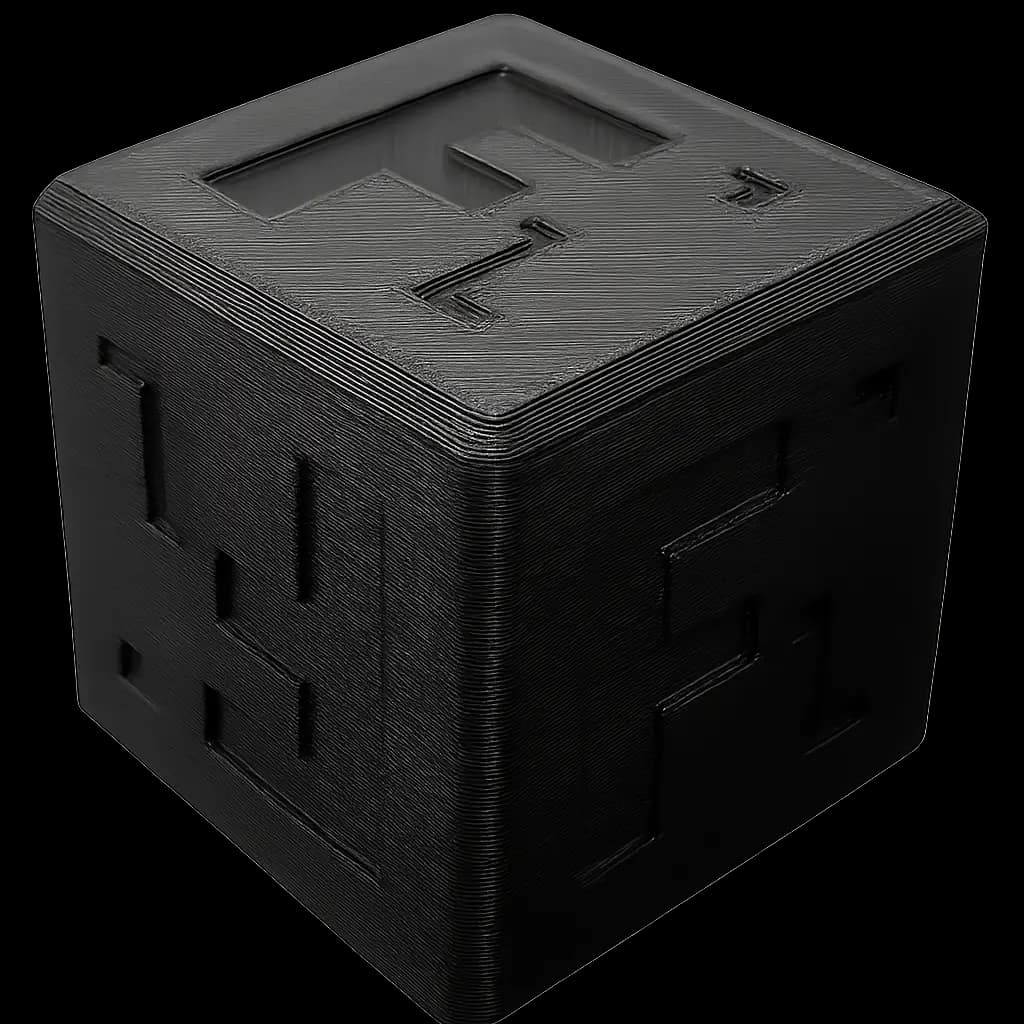
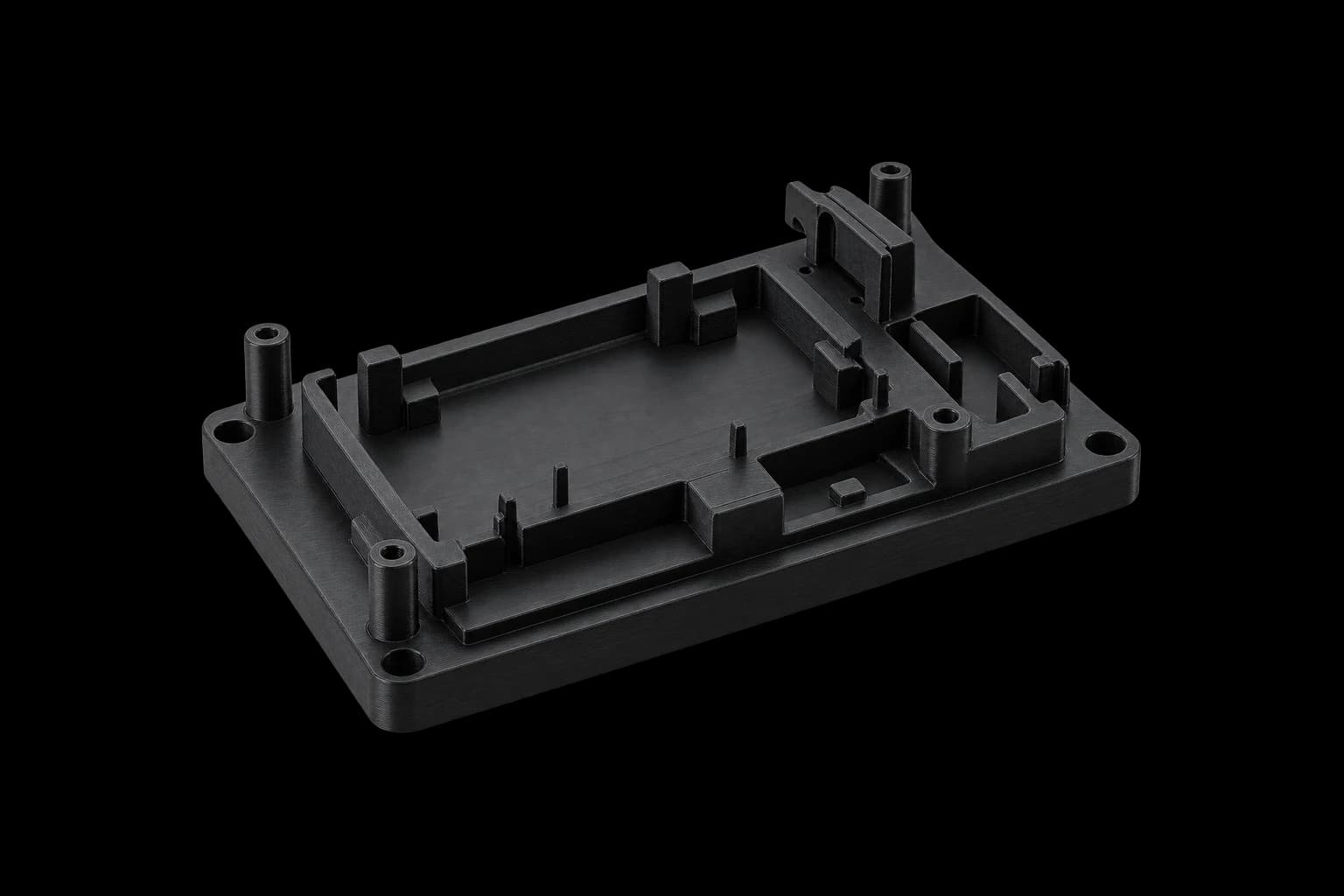
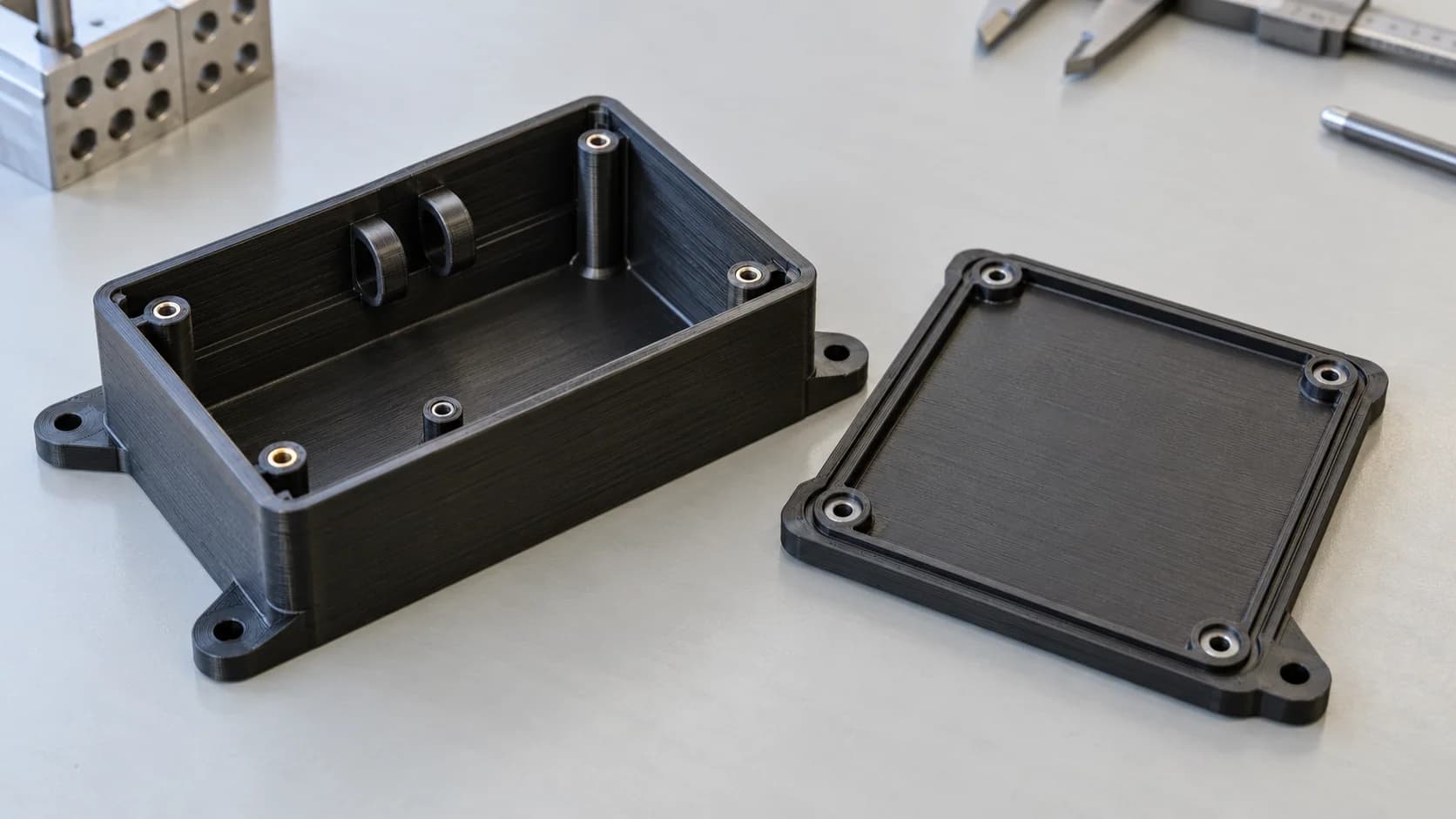
Black controller enclosures with cable guides, inspected and shipped in about two and a half weeks.
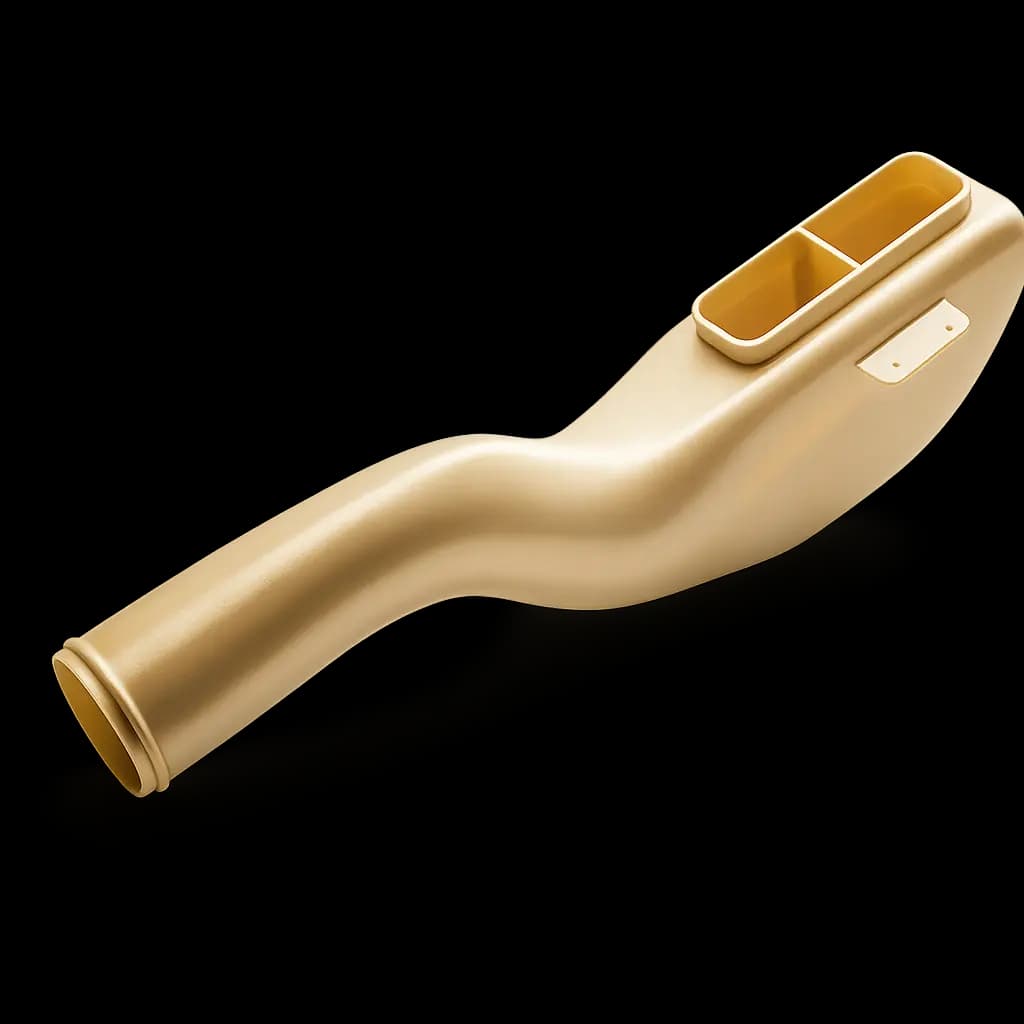
ULTEM 9085 is a strong, lightweight, flame-retardant plastic for finished aircraft, rail and enclosure parts, made by Fused Deposition Modeling (FDM) 3D printing with no tooling. It has been tested to aircraft and railway standards for flame, smoke and toxic fumes, so printed ducts, panels and brackets can replace machined parts in cabins and trains. It stays stable in hot service, holds up to fuels, alcohols and water-based fluids, and is tough enough to survive handling during installation. Choose it for cabin interiors, avionics and power enclosures, rail and bus interior parts, and lightweight replacements for machined brackets and fittings.
How ULTEM 9085 is manufactured
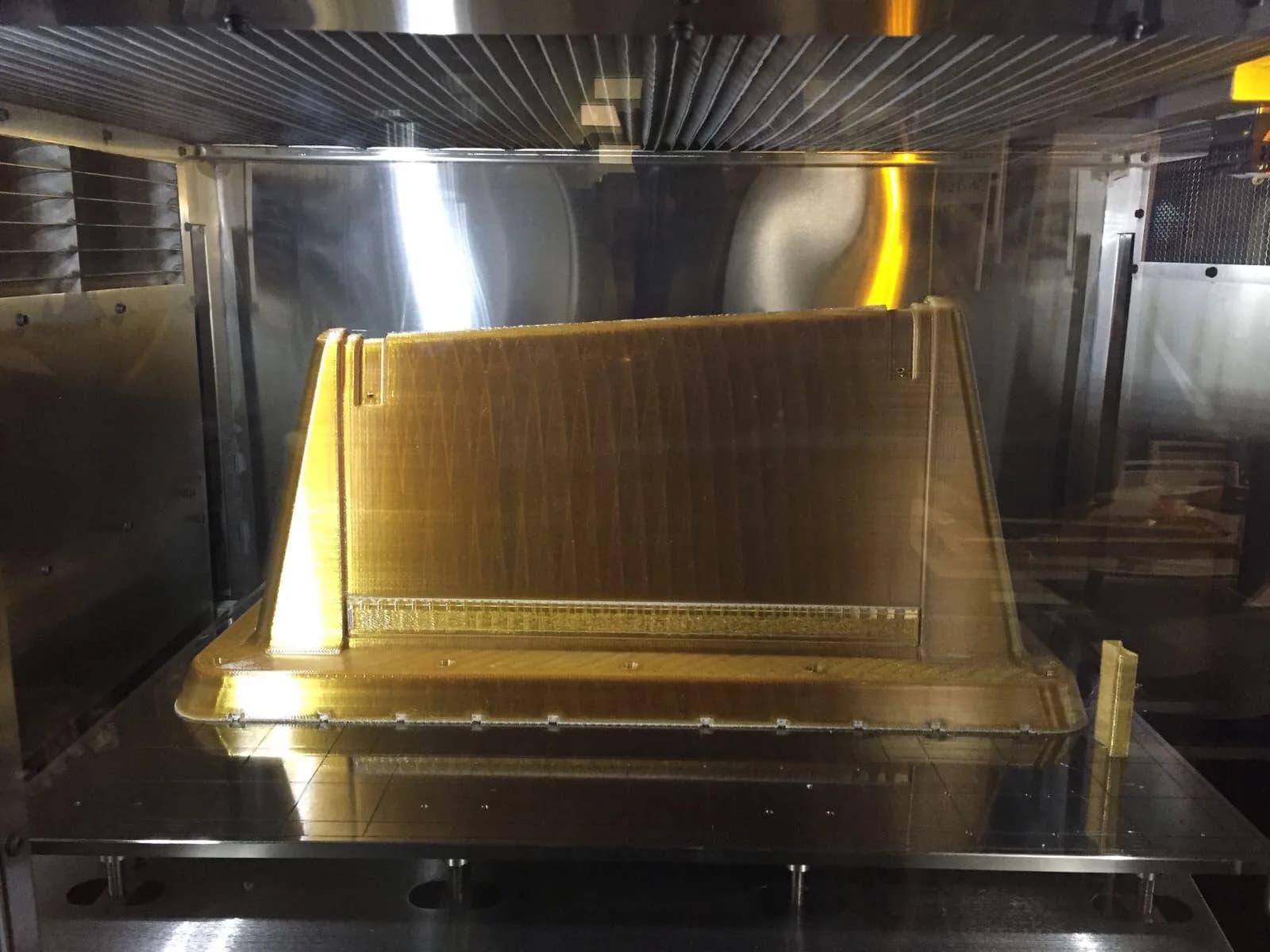
ULTEM 9085 is manufactured using Fused Deposition Modeling (FDM) on Stratasys Fortus production systems, which build parts layer by layer from PEI filament in a heated chamber, with no tooling. Forge Labs' Fortus 900mc systems with precise thermal control ensure consistent mechanical properties across large builds, critical for aerospace tooling and production parts. Breakaway supports carry overhangs and internal features during the build, so parts from air ducts to structural brackets print in their final shape.
Upload CAD files to Forge Labs Steam for instant ULTEM 9085 pricing and live manufacturability feedback, and fix issues before production.
Upload CAD files to Forge Labs Steam for instant ULTEM 9085 pricing and live manufacturability feedback, and fix issues before production.



ULTEM 9085 combines light weight and high strength with flame, smoke and toxicity (FST) performance tested to aerospace standards, making it a go-to FDM thermoplastic for aircraft interiors.
Its high glass transition temperature and broad resistance to petroleum fuels, hydrocarbons, alcohols and aqueous solutions keep parts stable in hot, fluid-exposed service. This durability, combined with inherent flame retardancy (UL 94 V-0), allows ULTEM 9085 to replace traditionally machined components in both cabin and out-of-cabin applications.
From rapid prototyping to production runs, teams rely on ULTEM 9085 to maintain tight tolerances while reducing assembly complexity through consolidated part designs. It balances strength and flexibility, unlike the more rigid ULTEM 1010, so housings, brackets and clips survive handling during installation and servicing.
Beyond aircraft and rail interiors, underwater vehicle builders choose it for interior parts that must be flame retardant, defense teams for ruggedized housings, and production lines for high-temperature jigs, fixtures and semiconductor tooling. Its low dielectric constant and electrical insulation suit RF-transparent radomes, antenna housings and PCB carriers, and its low thermal conductivity suits thermal insulation parts.
Aerospace
Black controller enclosures with cable guides, inspected and shipped in about two and a half weeks.
Aircraft Interiors
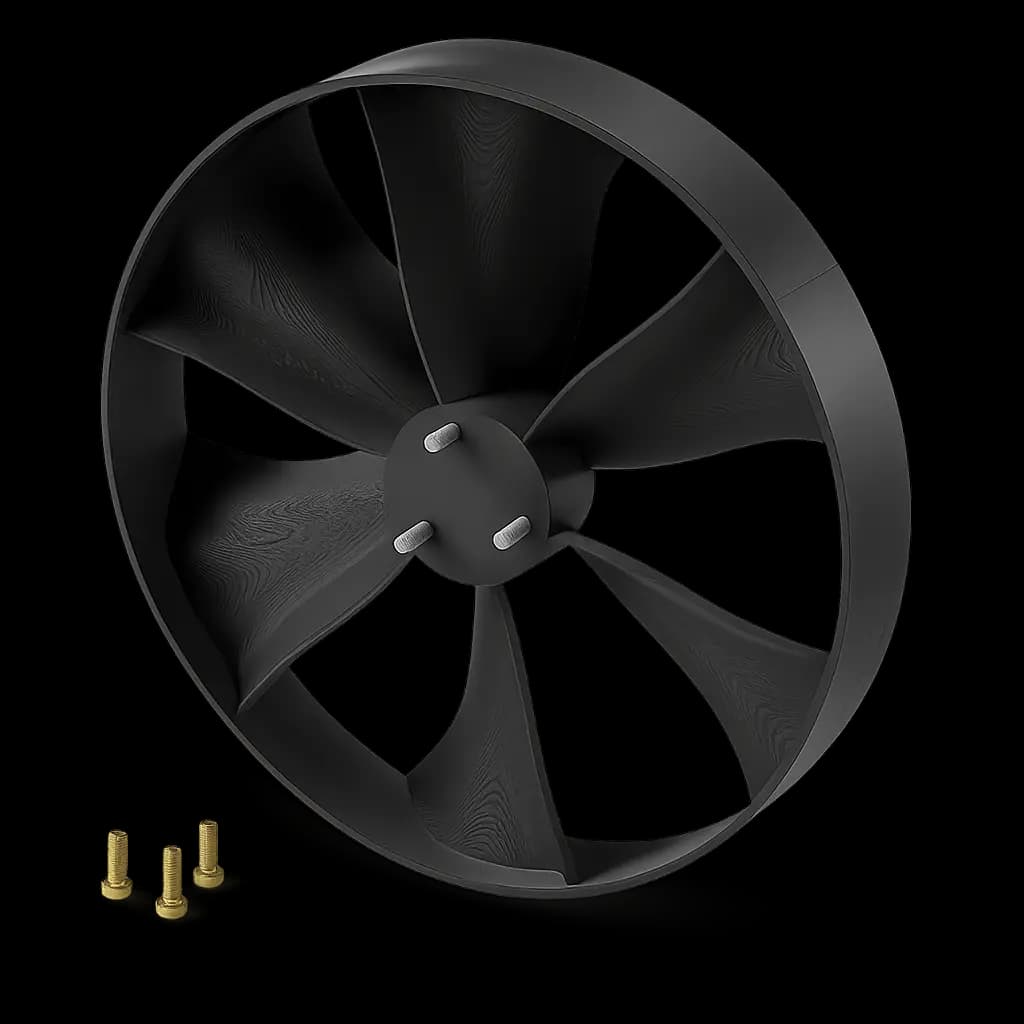
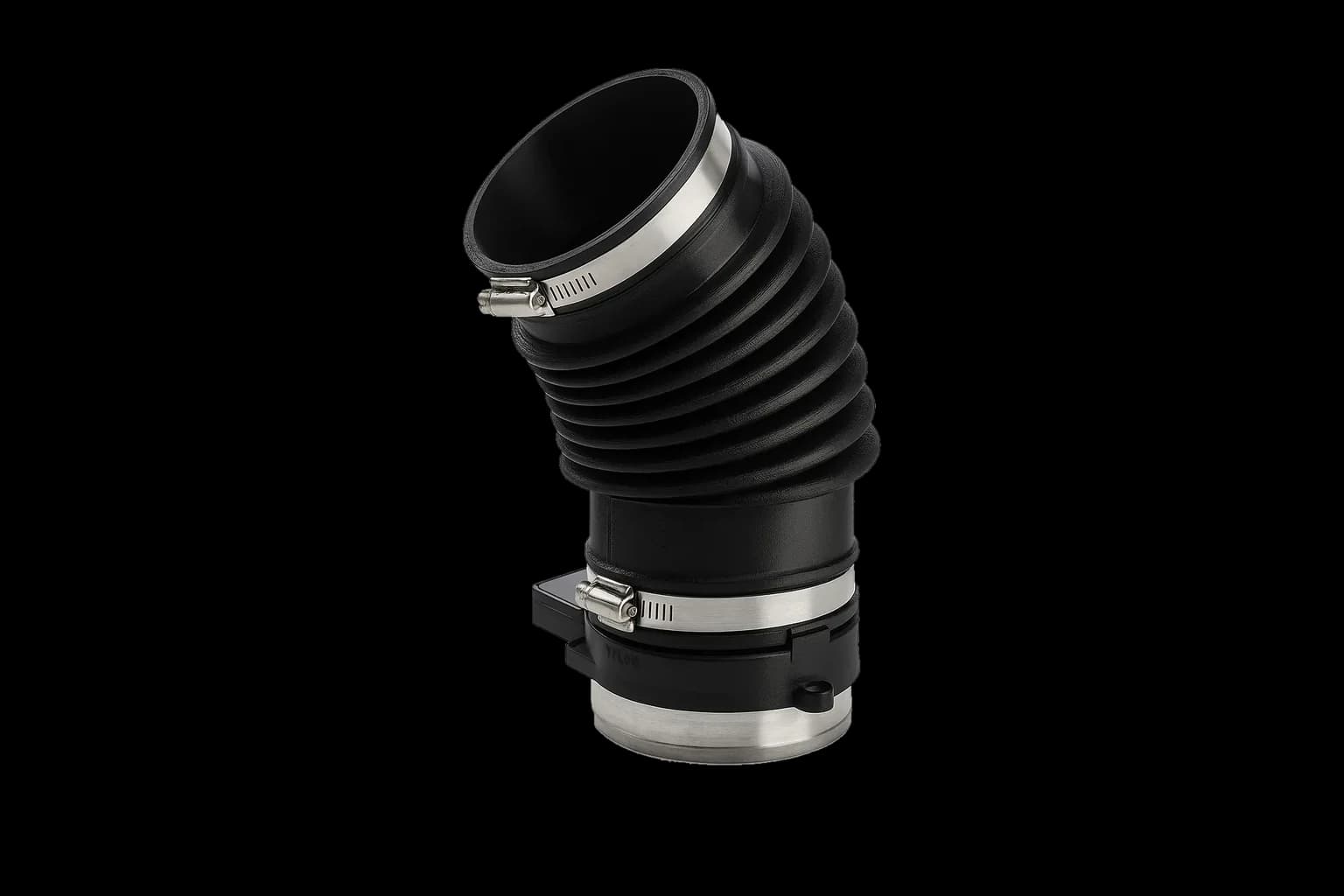
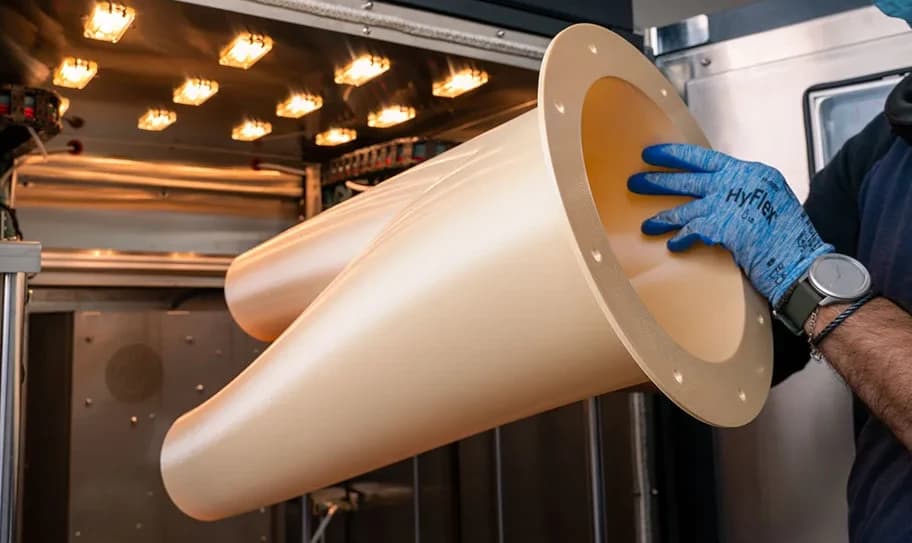
Ducts, panels and brackets that meet 14 CFR 25.853, with large ducts printed in one piece.
Power Generation
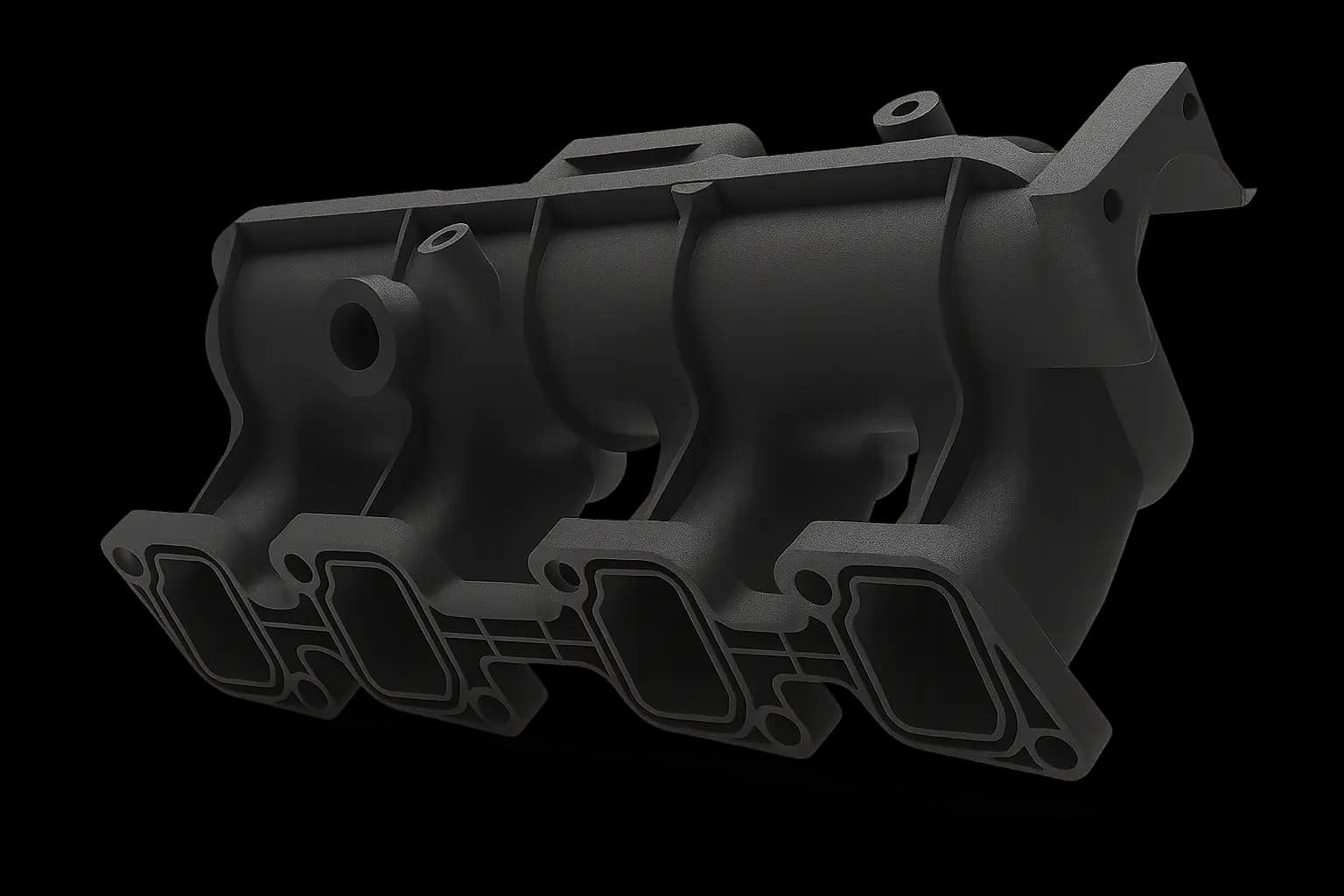
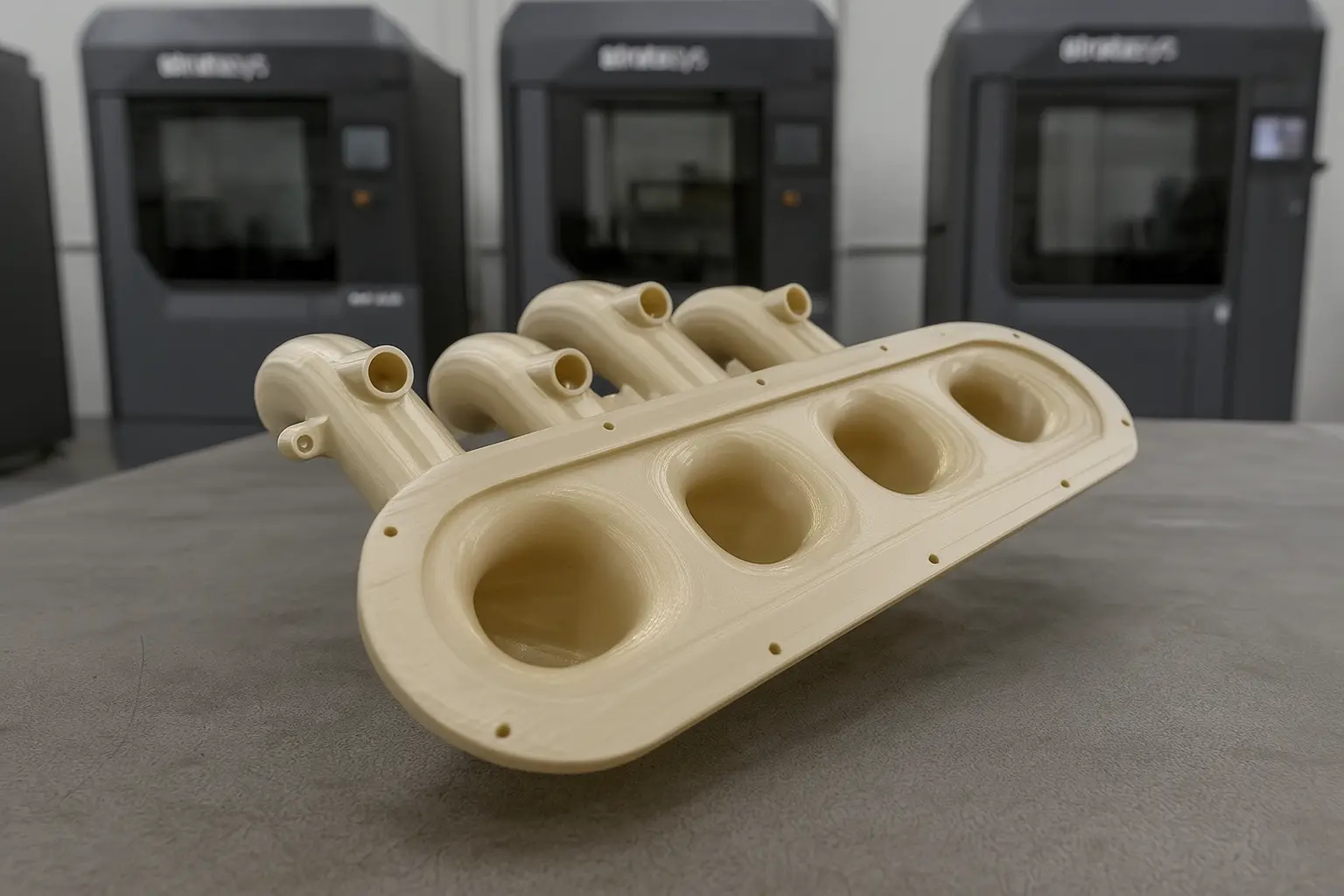
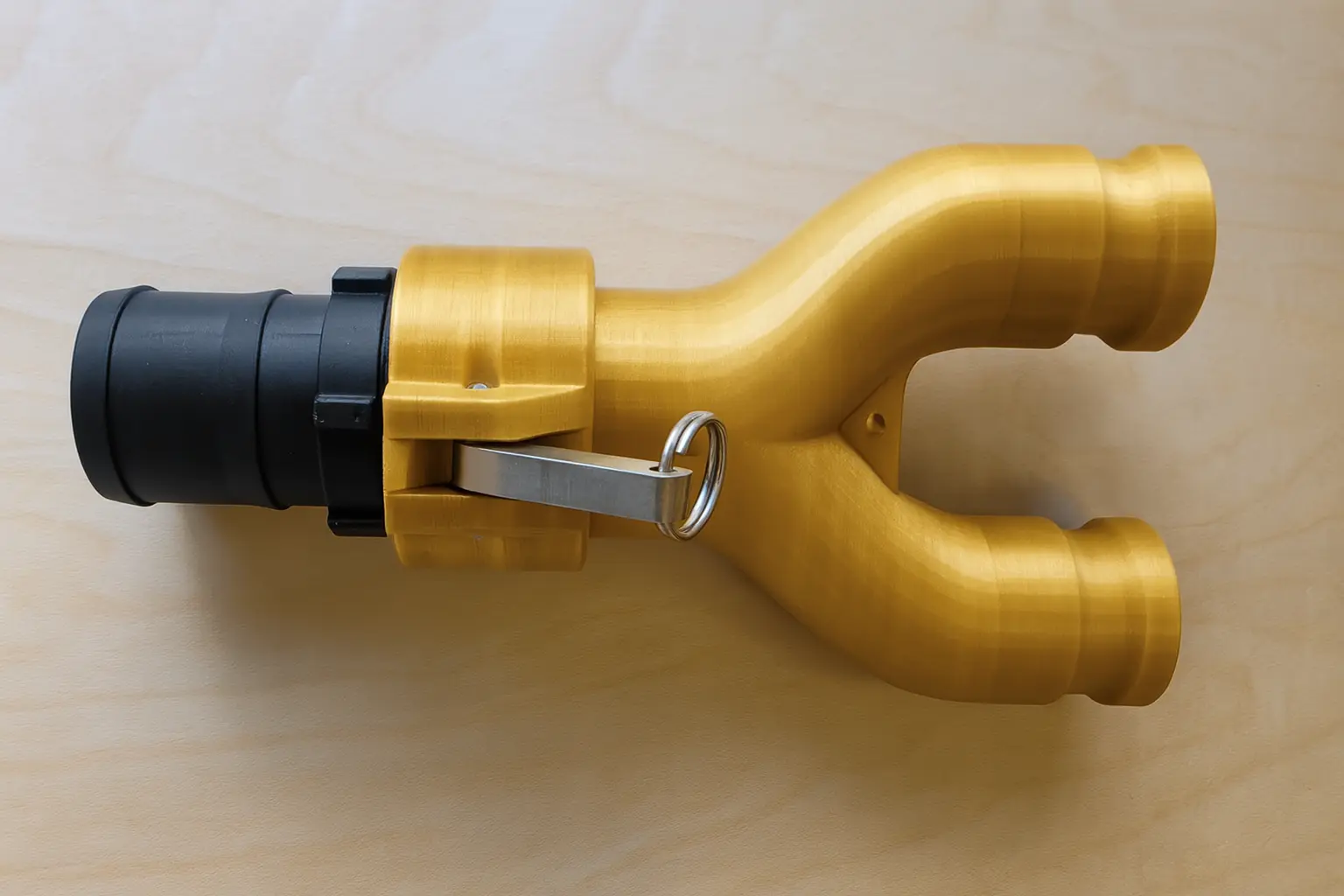
An intake fitting drawn in 6061-T6 aluminium, made in black ULTEM 9085 at solid infill.
Clean Tech
Flame-rated fuel cell brackets in a UL 94 V-0 listed material.
Rail & Transit
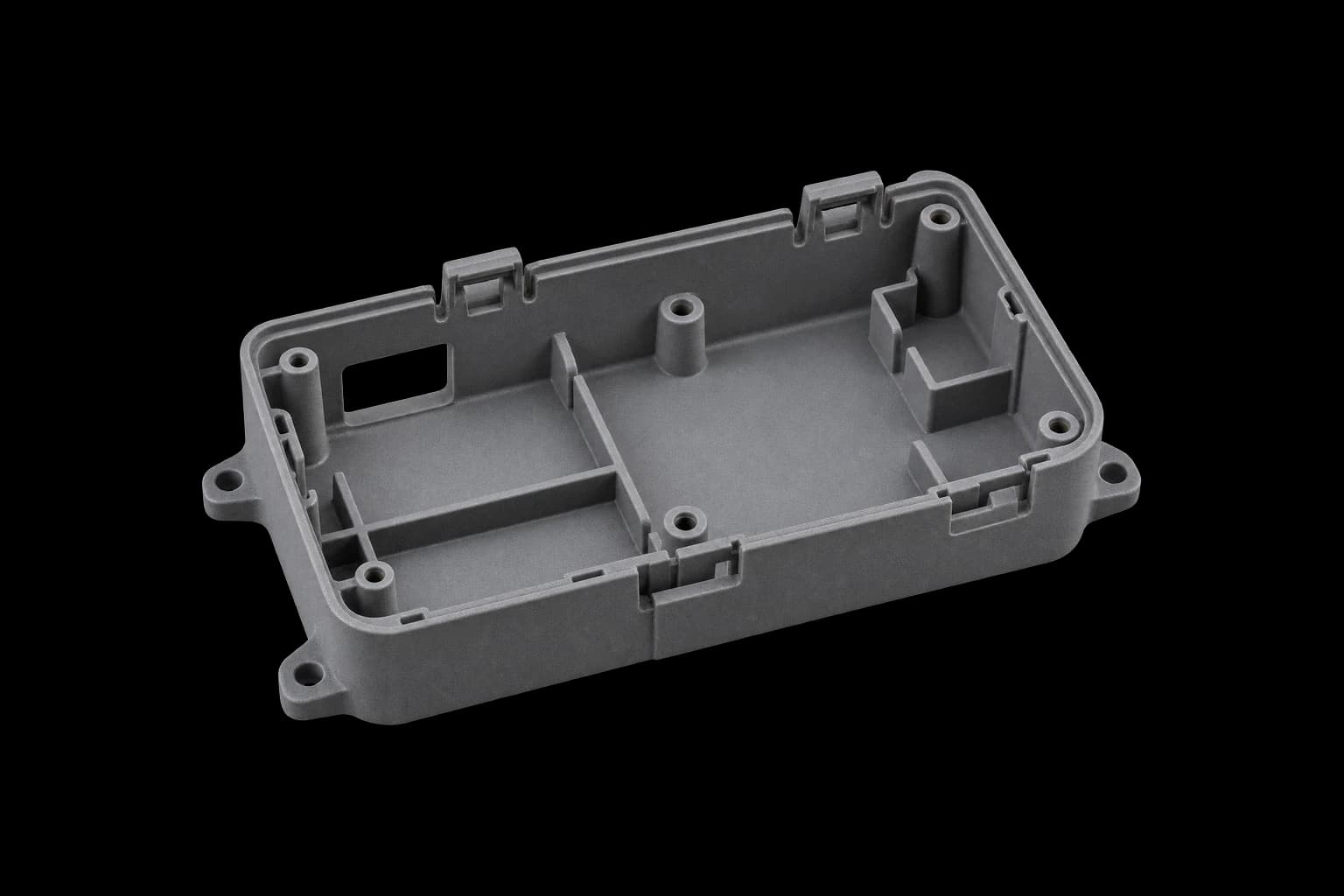
Interior parts for underground and mainline rail, reaching EN 45545-2 HL3 at 10 mm.
Aerospace
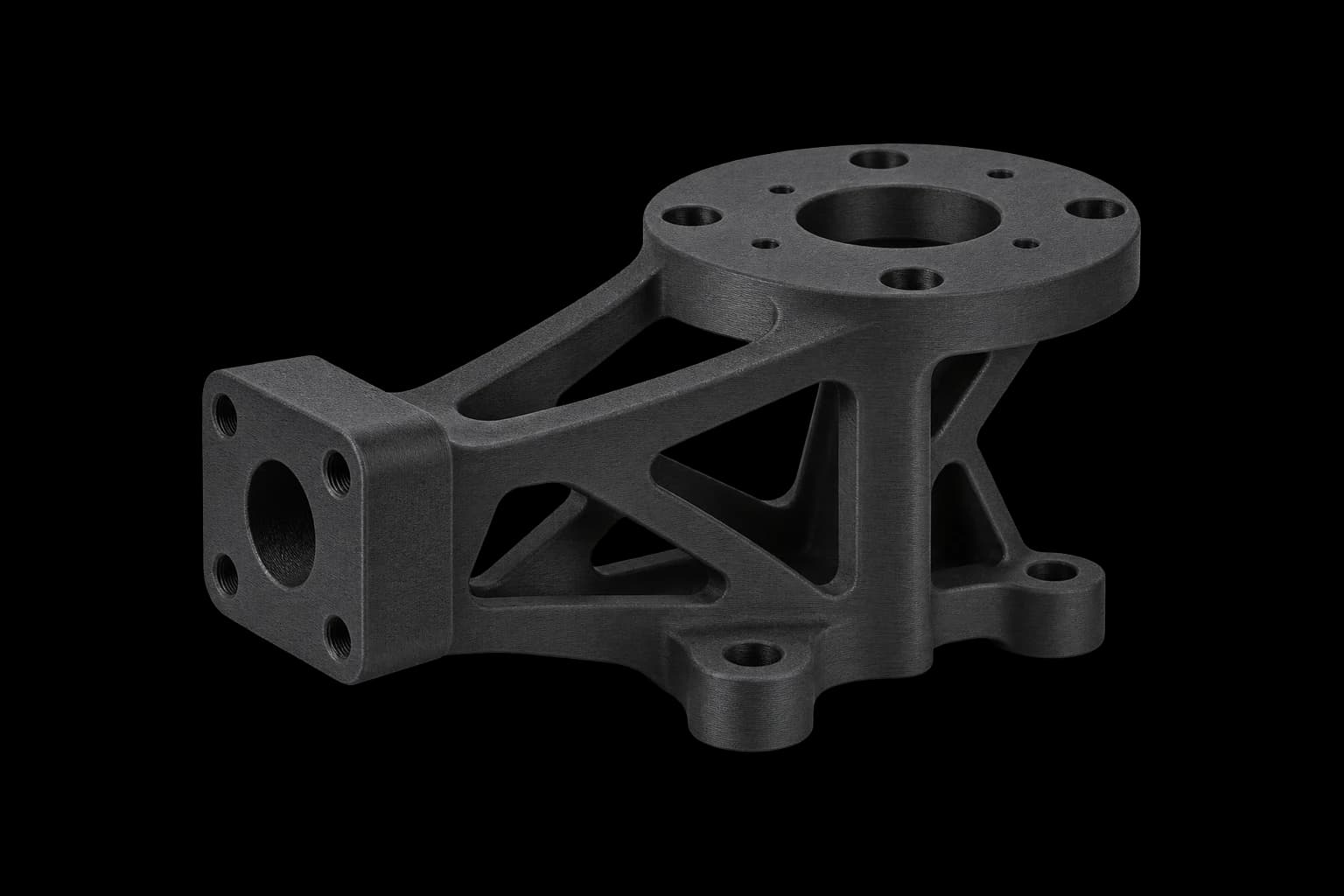
Aircraft systems makers use ULTEM 9085 for controller enclosures, wire management and instrument brackets, where heat resistance, low weight and electrical insulation matter together. On black enclosures for aircraft water-system controllers, the drawing fixed the material, the FDM process and the build direction, internal cable guides were refined through print trials, and first article inspection checked the mounting features. Samples shipped in about two and a half working weeks, with orientation and print settings recorded for repeat orders.
Aircraft Interiors
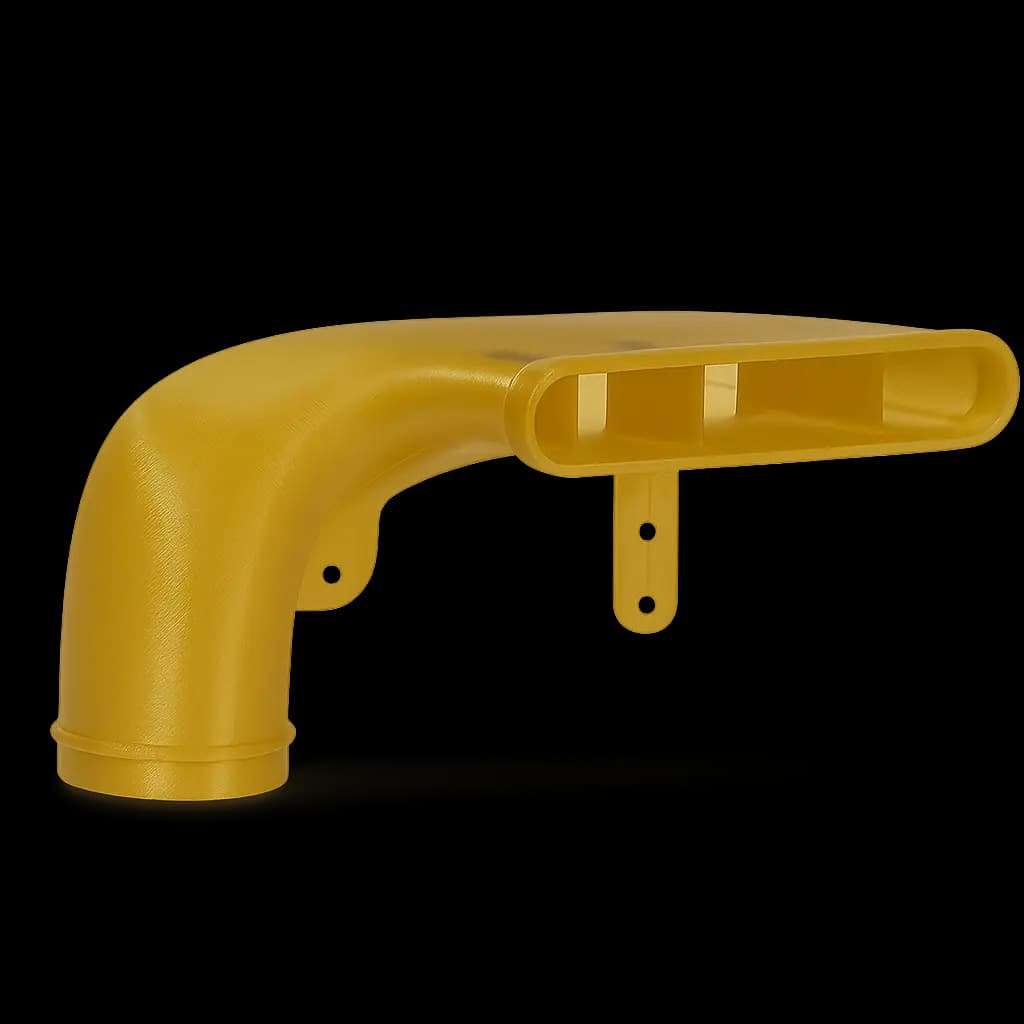
Cabin and environmental control teams use ULTEM 9085 for air ducts, interior panels and brackets that must meet aircraft fire rules. It meets 14 CFR 25.853, including 60-second and 12-second vertical burns and heat release, and its smoke density of 4 to 15 in Boeing BSS 7238 testing is far below the FAA limit of 200, with low toxic gas emissions. Large ducts print in one piece, so assemblies that once needed several moulded or bonded sections become a single part.
Power Generation
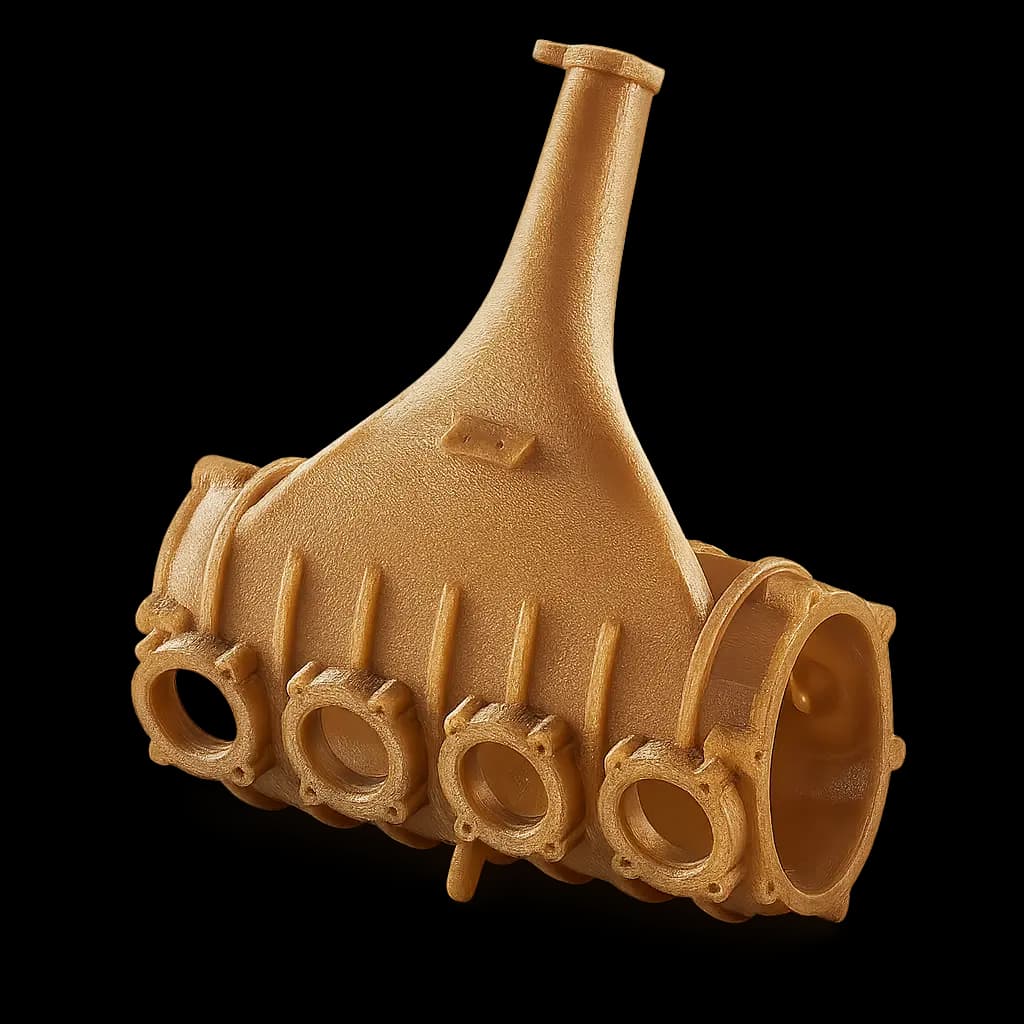
Power generation developers use ULTEM 9085 where a low-load metal part can become a lighter polymer one. On a set of prototype engine parts, an intake fitting drawn in 6061-T6 aluminium was made in black ULTEM 9085 by FDM at solid infill. Swaps like this are checked for strength across the layers and heat near the engine, where ULTEM 9085 has a heat deflection temperature of 170 °C at 1.82 MPa.
Clean Tech
A fuel cell maker orders flame-rated ULTEM 9085 brackets, and the same material suits power distribution enclosures and fluid-line fittings in energy equipment. It is UL 94 V-0 listed at walls as thin as 0.508 mm for horizontal builds and 1.016 mm for vertical builds at 0.254 mm layers, so brackets and covers designed to those walls are flame retardant with no added coating.
Rail & Transit
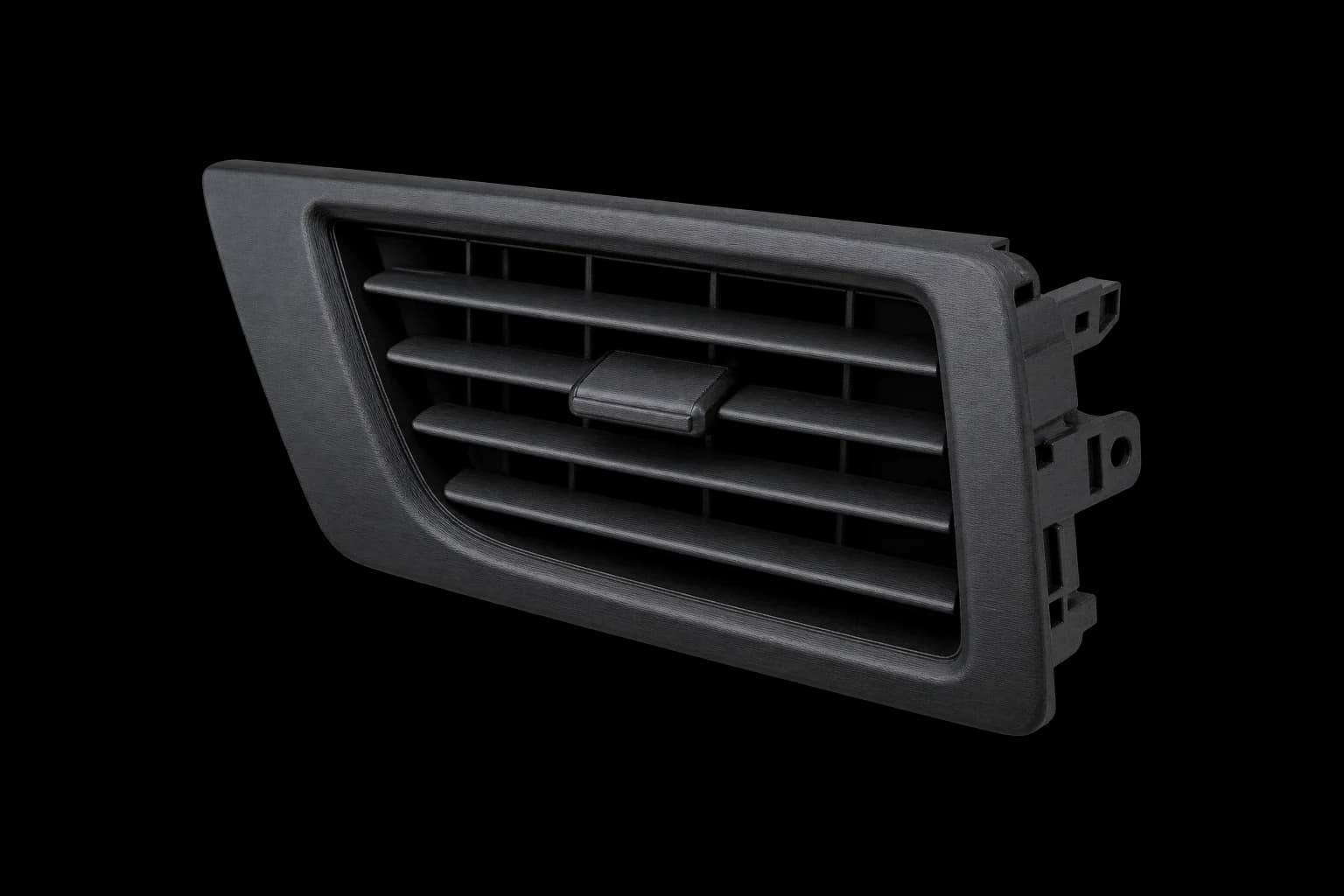
Rail and bus builders use ULTEM 9085 for interior panels, ventilation grilles and junction boxes, where low smoke and toxicity matter most in tunnels. It reaches EN 45545-2 HL2 at 1 mm and HL3 at 10 mm for requirements R1, R6 and R7, and the certified grade has a flame spread index of 0 in the ASTM E162 test NFPA 130 calls for and does not ignite in UN ECE Regulation 118 bus tests.
Values from the Stratasys ULTEM 9085 datasheets, tested to the standard listed with each property.
Mechanical performance
ULTEM 9085 delivers dependable strength and impact resistance for aircraft cabin components and ducting, brackets and housings. Its balanced mechanical profile handles demanding load conditions, with strength, elongation and impact resistance far higher along the layers than across them.
XZ values come from specimens printed on edge and ZX values from upright specimens loaded across the layers, so orient loaded features, mounting tabs and clips along the build plane and size parts against the ZX figures.
Material makeup
Low density makes ULTEM 9085 parts lightweight yet durable, and consistent surface quality keeps critical features in tolerance and downstream finishing predictable. The oxygen index shows how much oxygen the material needs to keep burning, well above the level of normal air, which underpins its flame retardancy.
Low outgassing in ASTM E595 vacuum testing suits enclosed and space hardware, and stress at break is practically unchanged after accelerated UV exposure, so parts hold their strength under cabin lighting and sunlight.
Heat performance
Heat deflection is measured at two loads and in two print directions, and ULTEM 9085 holds its shape close to its glass transition temperature at both, so parts keep their dimensional accuracy in elevated temperature environments, from aircraft cabins to equipment near heat sources.
The retained-strength values show how much of its room-temperature strength the material keeps as it warms, so size parts for their real service temperature rather than the deflection point. In the cold it gets stronger, reaching 157% of its room-temperature strength at break at −54 °C in Stratasys testing, and the expansion coefficients help size clearances on assemblies that see temperature swings.
Functional performance
High volume resistivity and a low dielectric constant make ULTEM 9085 a dependable insulator for electrical housings, connectors, insulating features and functional prototypes.
Dielectric constant is given at 1 kHz and 2 MHz in two print directions, and dissipation factor at both frequencies. Low values mean low dielectric losses in signal-sensitive or high-frequency parts.
Compatibility data
Stratasys rates ULTEM 9085 on a relative scale for common chemical classes. It resists petroleum fuels, washer fluid, water and weak bases, and holds up well to aliphatic and aromatic hydrocarbons, alcohols, esters, motor oil, greases, coolant, weak acids and strong bases. Resistance is limited to ketones, strong acids, brake fluid and transmission fluid, while halogenated hydrocarbons and phenols attack it.
Stratasys notes the ratings are relative rather than based on specific testing, so treat them as screening guidance and confirm them with application-specific testing before production release.
Compliance
ULTEM 9085 is inherently flame retardant, with a UL 94 V-0 listing on its UL Blue Card. Stratasys has tested it to the aircraft, rail and bus fire standards listed here, along with ASTM E595 outgassing, and states that the tests show compliance with each tested standard rather than certification, so aircraft and vehicle programs start their part qualification from supplier data.
Stratasys publishes no biocompatibility or food-contact data for ULTEM 9085; ULTEM 1010 carries those for its certified grade.
Datasheets, design guidance and supplier documentation for ULTEM 9085.
Access the most recent datasheet and supporting documentation maintained by our engineering team.
ULTEM 9085 datasheetExplore printable geometry recommendations, wall thickness tips, and finishing playbooks for FDM.
View FDM design guide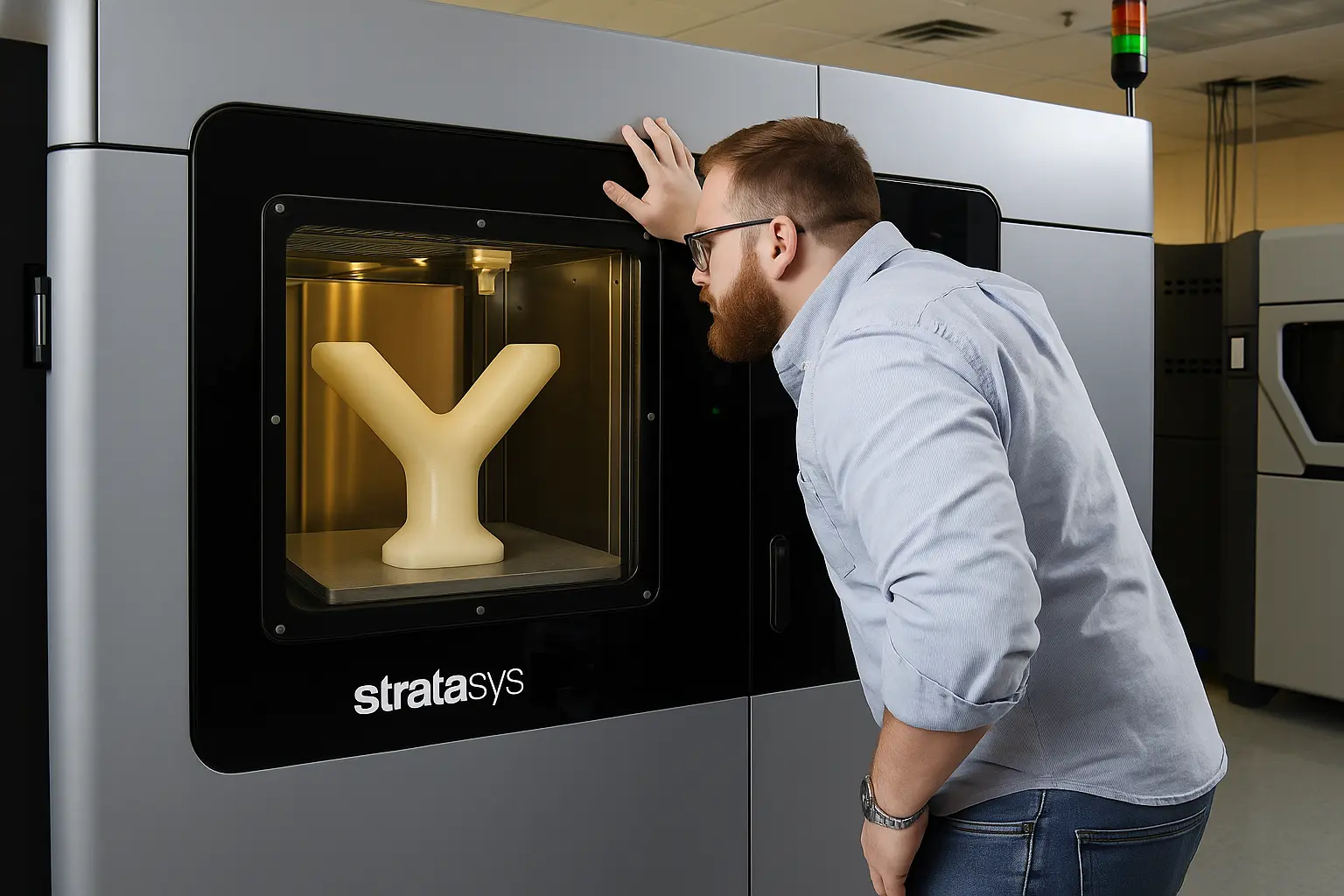
ULTEM 9085 is manufactured using Fused Deposition Modeling (FDM) technology, offering reliable performance for functional prototypes and end-use parts. Qualified material profiles give strong layer adhesion on every build.
Can't find the answer you're looking for? Reach out to our customer support team.
Upload your design and get an instant quote for ULTEM 9085 parts.
Create an account to upload CAD
STEP, STL, OBJ, 3MF and IGES supported