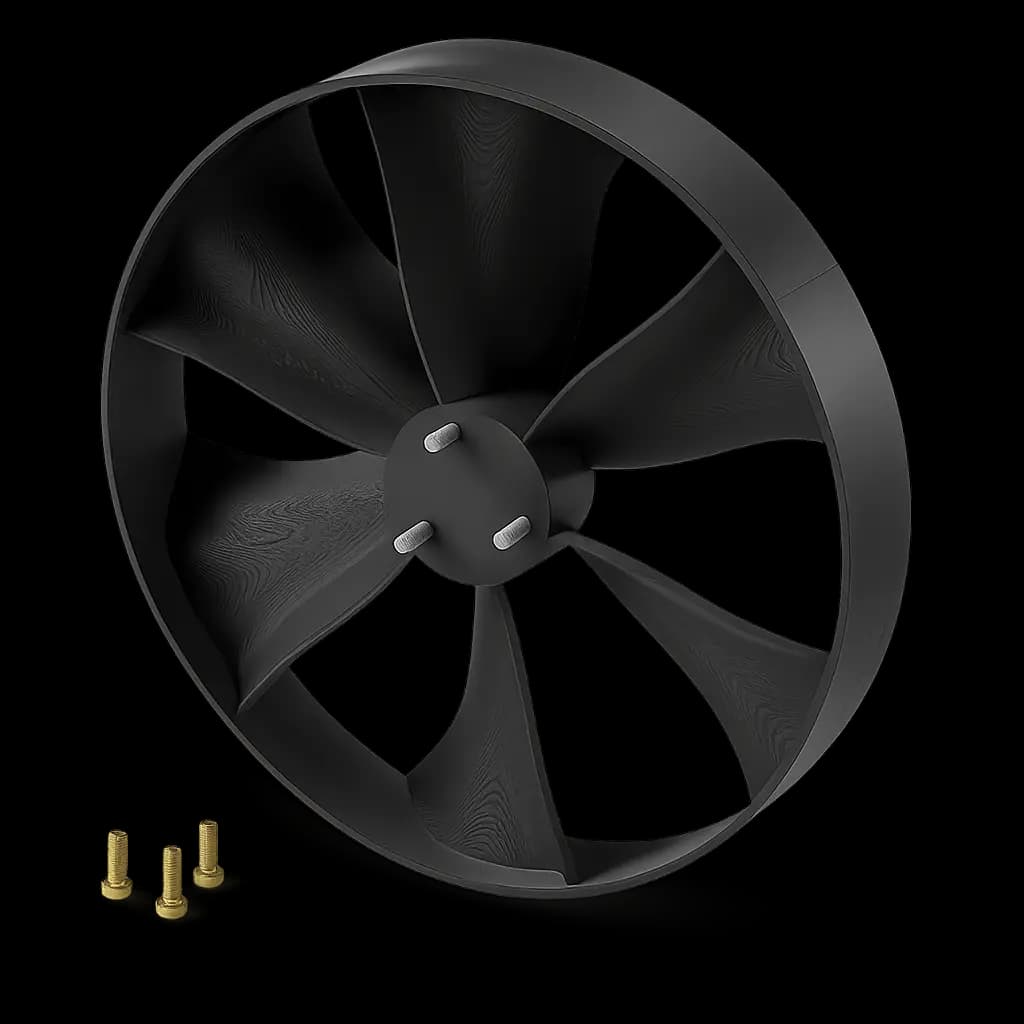
Aerospace
Out-of-Cabin Parts & Composite Tooling
Out-of-cabin parts, MRO fixtures and lay-up tools that withstand 177 °C autoclave cycles.
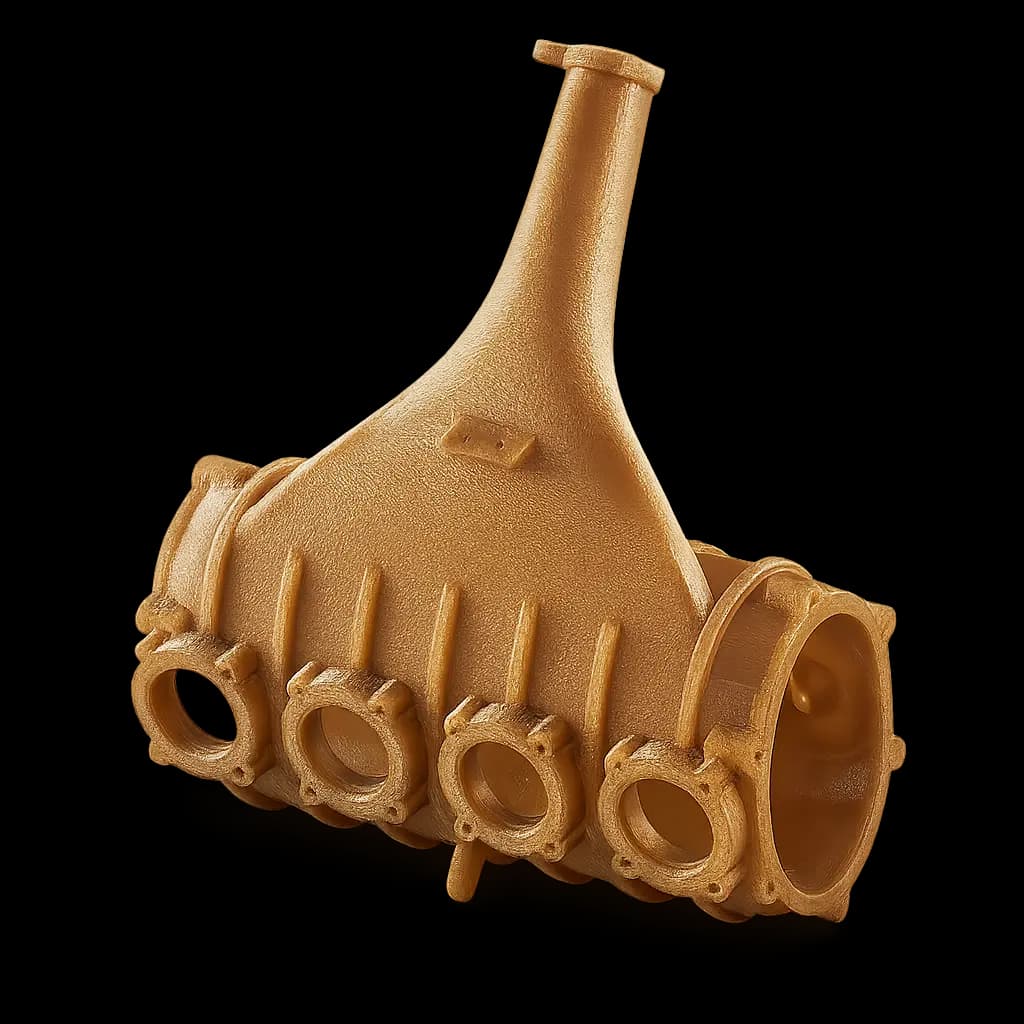
ULTEM 1010 is the most heat-resistant plastic for FDM 3D printing, for tools and parts that must stay strong when hot. Parts keep their shape in hot engine bays and autoclave cycles, resist fuels, coolants and many industrial chemicals, and are naturally flame retardant. Its certified grade is approved for food contact and meets medical biocompatibility standards, and surgical guides made from it can be steam sterilized. Aerospace, automotive, medical and food production teams use it for composite lay-up tools, under-hood ducts and housings, surgical guides, instrument trays and food-production fixtures.
How ULTEM 1010 is manufactured
ULTEM 1010 is manufactured using Fused Deposition Modeling (FDM) on Stratasys Fortus production systems, which build parts layer by layer from PEI filament, with no tooling. Large build envelopes take full-size tools, ducts and fixtures in one piece. This makes ULTEM 1010 a practical route to autoclave-resistant medical instruments, composite tooling and food-production fixtures, in quantities from a single tool to low-volume production.
Upload CAD files to Forge Labs Steam for ULTEM 1010 quotes and live manufacturability feedback, and fix issues before production.
Upload CAD files to Forge Labs Steam for ULTEM 1010 quotes and live manufacturability feedback, and fix issues before production.
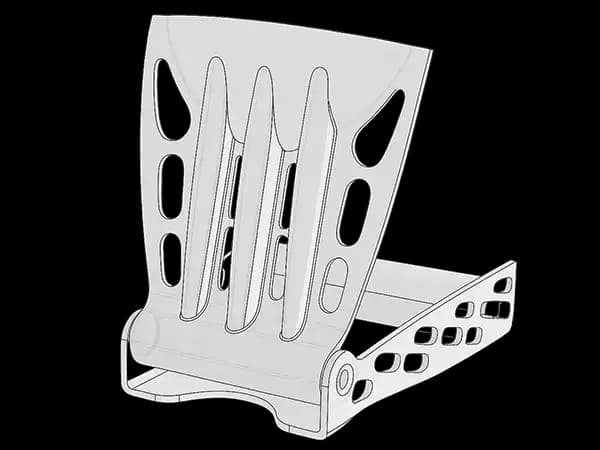
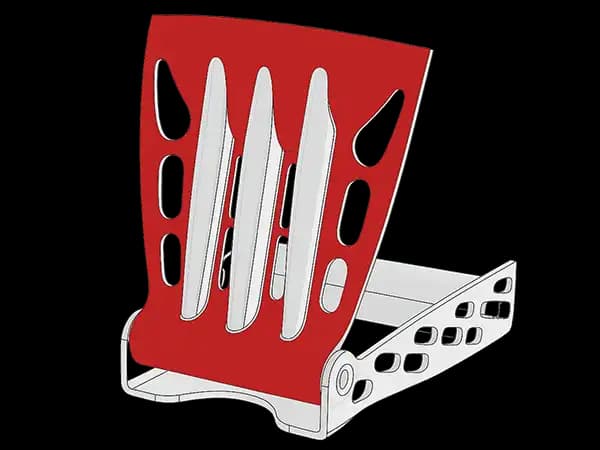
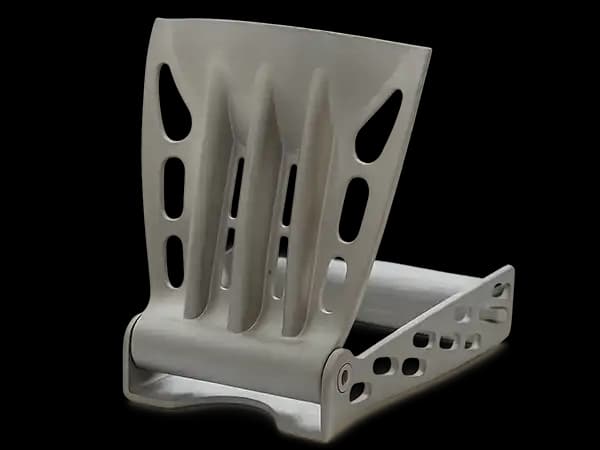
ULTEM 1010 combines exceptional tensile strength along the layers with resistance to a wide range of fuels, coolants and industrial chemicals, and keeps its shape under load above 200 °C, a combination that enables applications from autoclave tooling to biocompatible medical devices.
The certified grade's food-contact and biocompatibility approvals open doors to regulated industries where material safety is paramount. Combined with resistance to steam autoclaving, ULTEM 1010 serves applications from surgical instruments to food production, where it makes temperature-resistant dies, patterns and fixtures, high-temperature conveyor and packaging equipment parts and beverage-dispensing components.
From rapid prototyping to production runs, teams rely on ULTEM 1010 to maintain tight tolerances while reducing assembly complexity through consolidated part designs. Forge Labs' Fortus systems deliver consistent, repeatable mechanical properties, and a Stratasys certificate of conformity traces every material lot, giving aerospace, medical and food programs the documentation they ask for.
Flame retardant, low-outgassing and electrically insulating, ULTEM 1010 also serves vacuum and space hardware, semiconductor manufacturing fixtures, and hot-zone parts and insulating components in power and electrical equipment. Its heat resistance and dimensional stability suit test fixtures for environmental chambers, laboratory and chemical processing components, and precision metrology fixtures and gauges.
Aerospace
Out-of-cabin parts, MRO fixtures and lay-up tools that withstand 177 °C autoclave cycles.
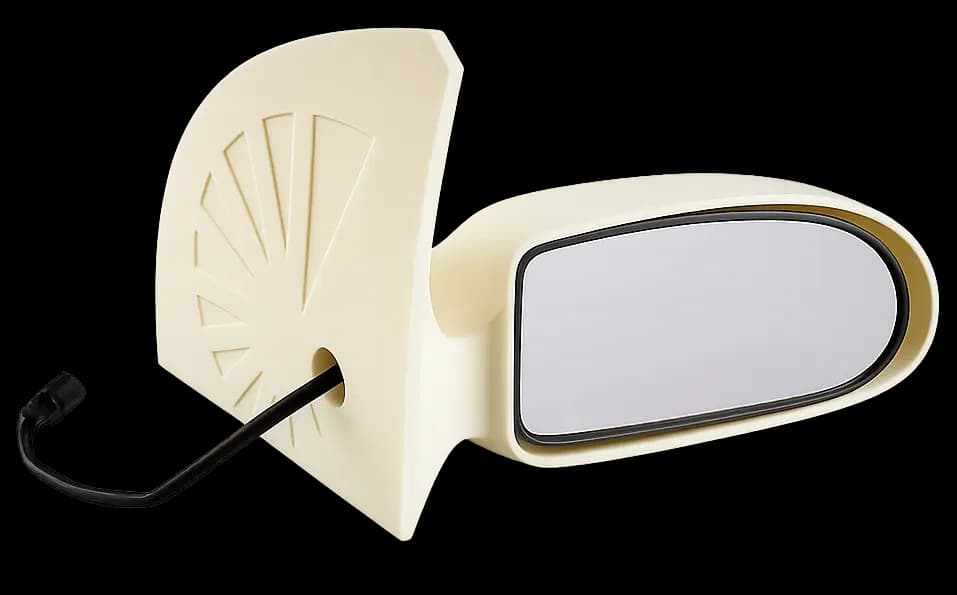
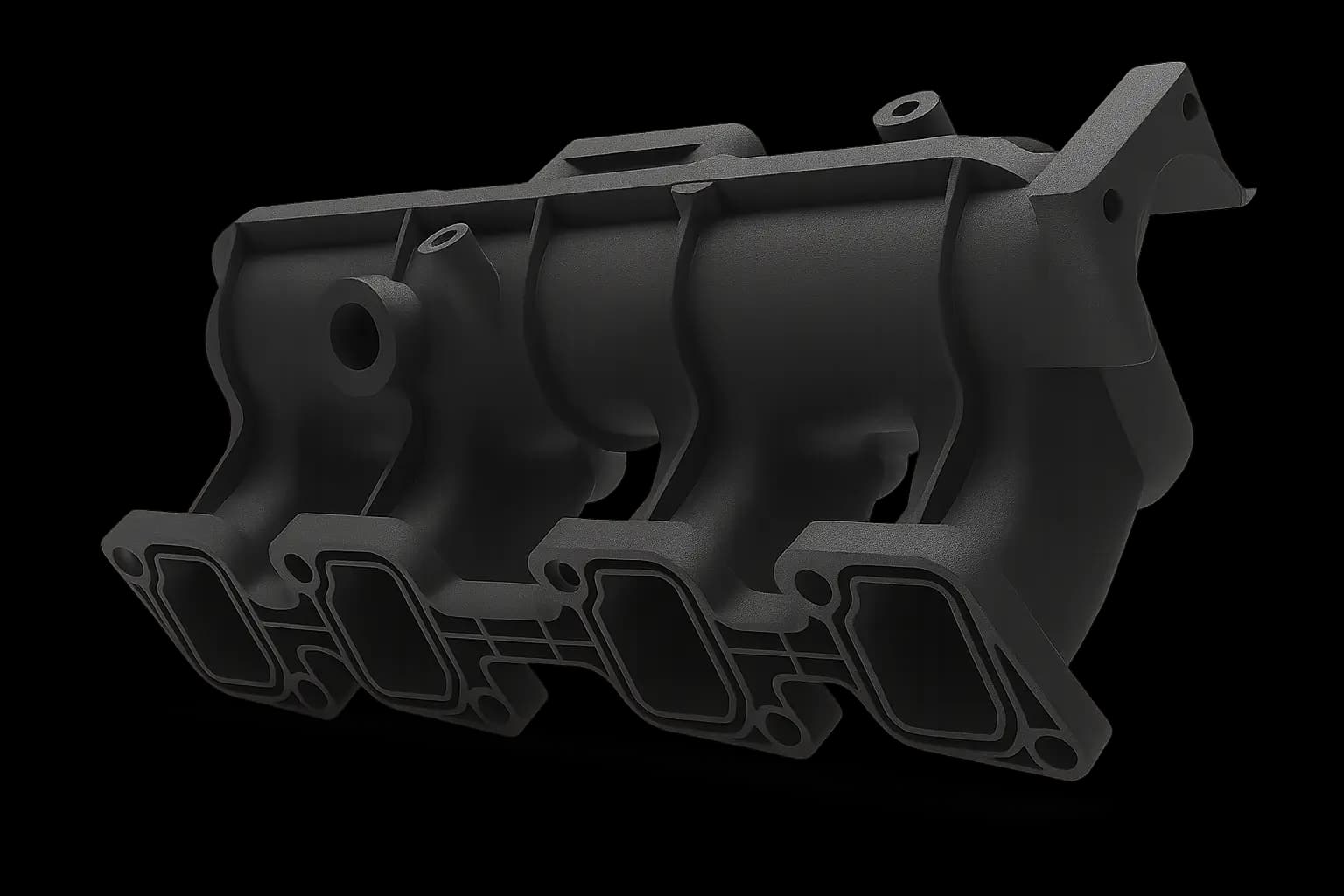
Automotive
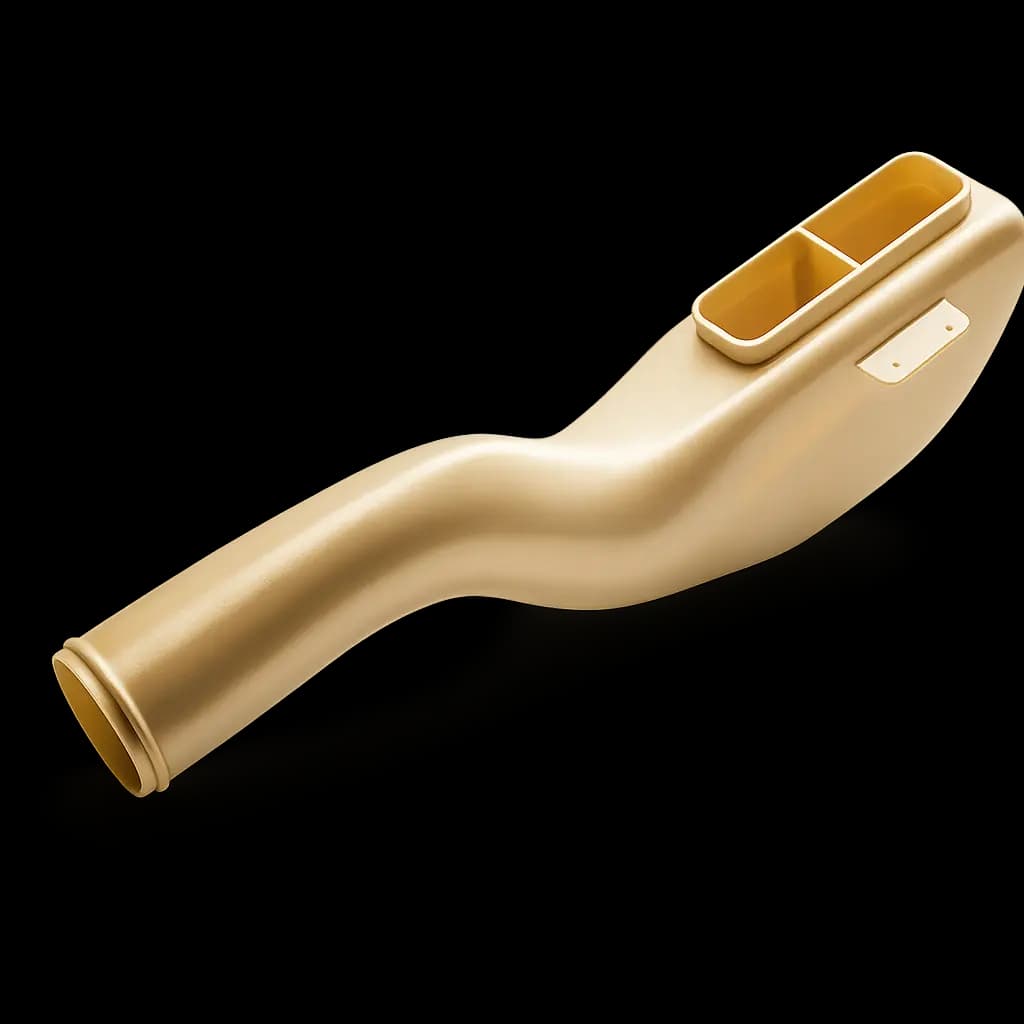
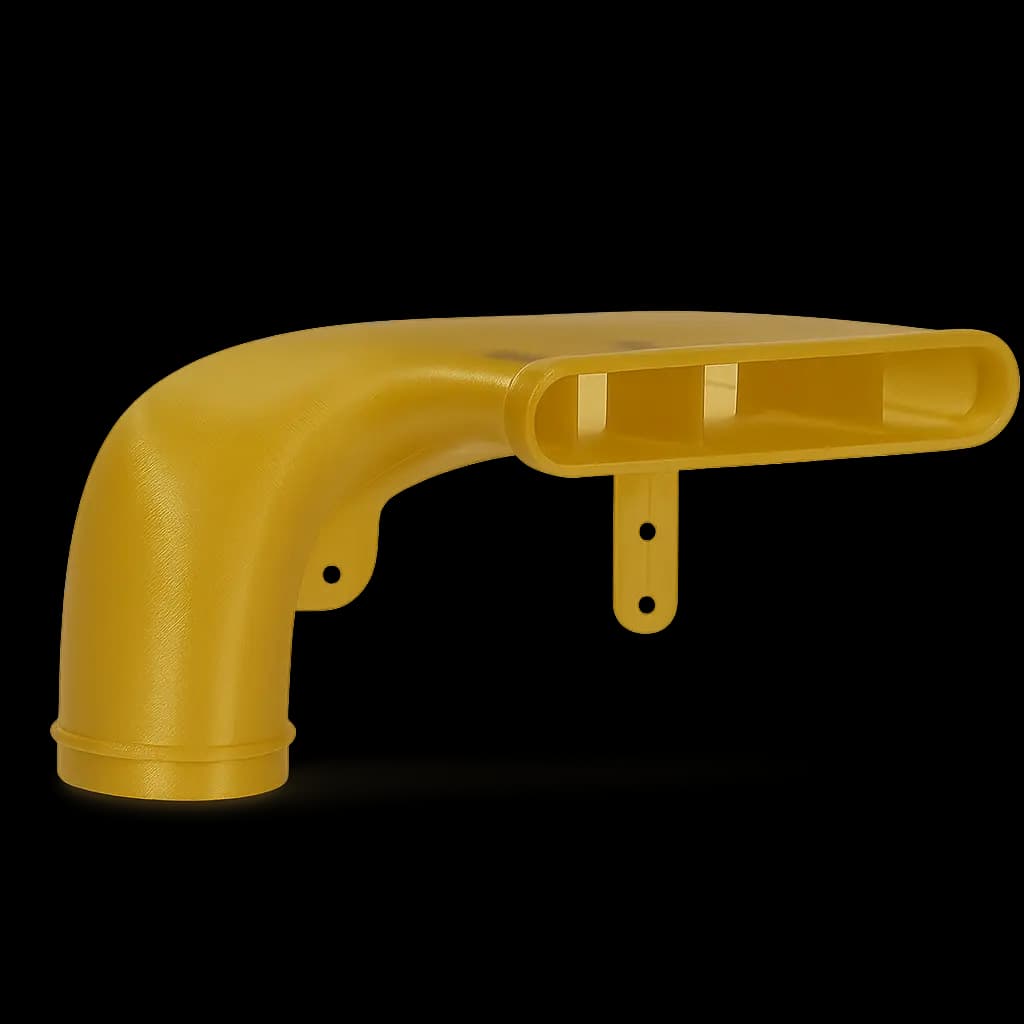
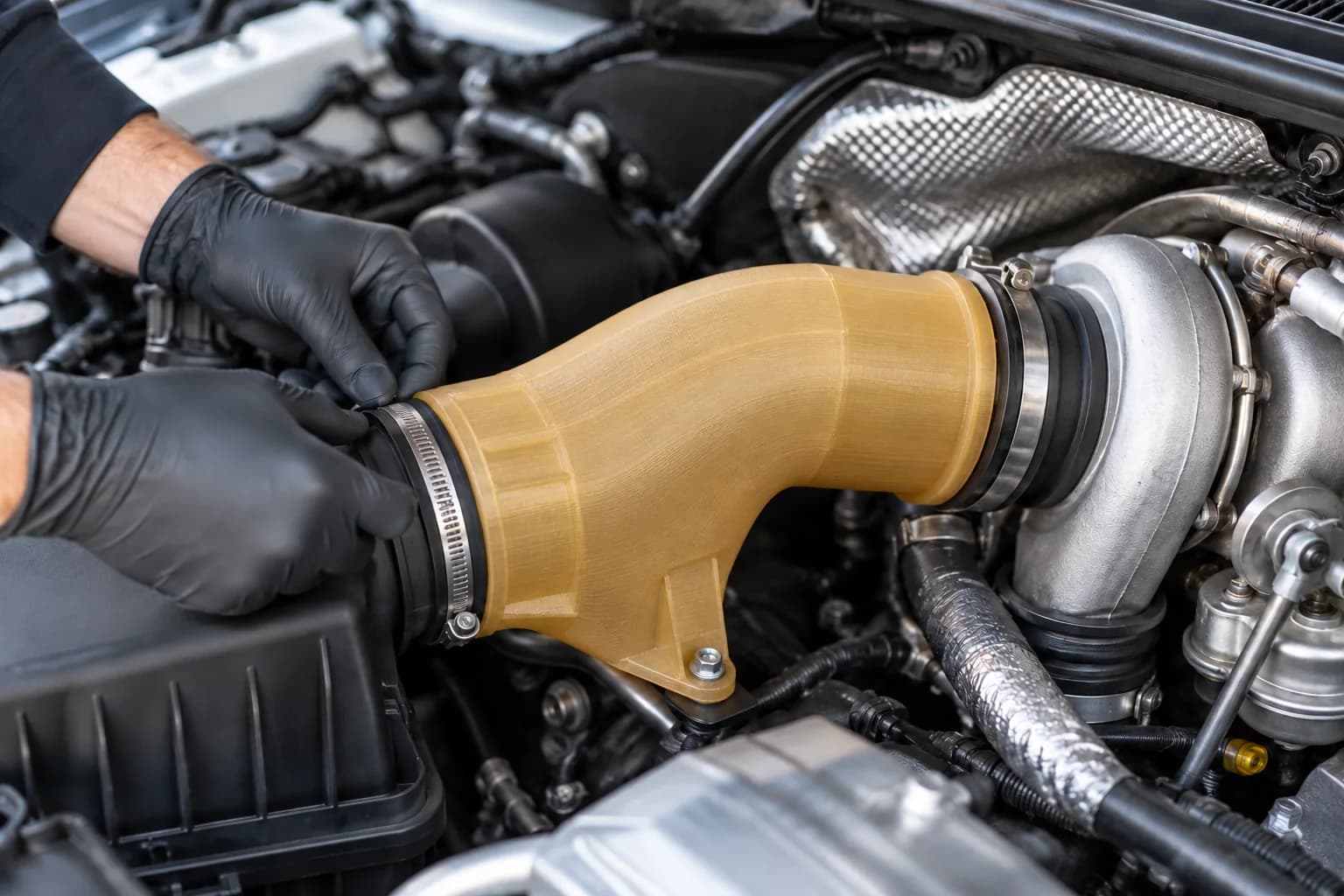
Under-hood ducts and housings with excellent resistance to fuels and engine coolant.
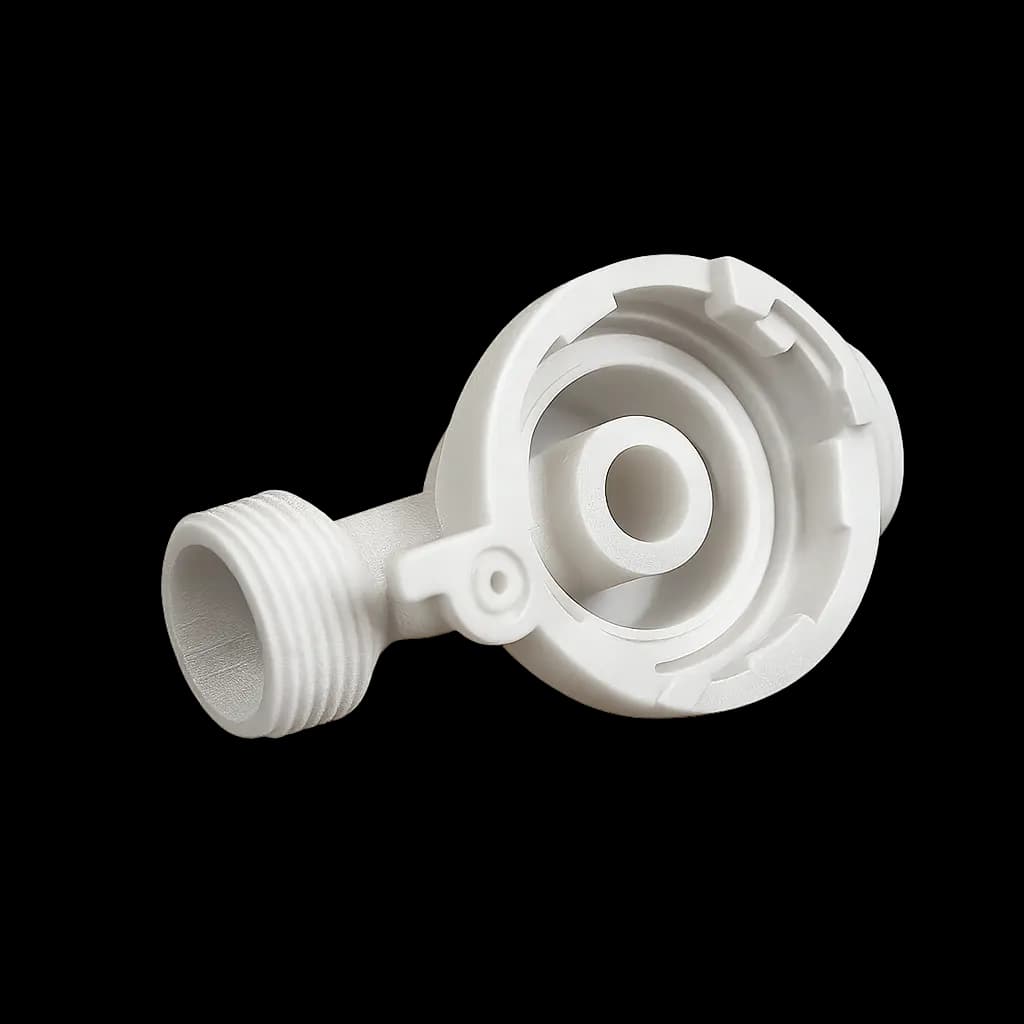
Medical & Healthcare
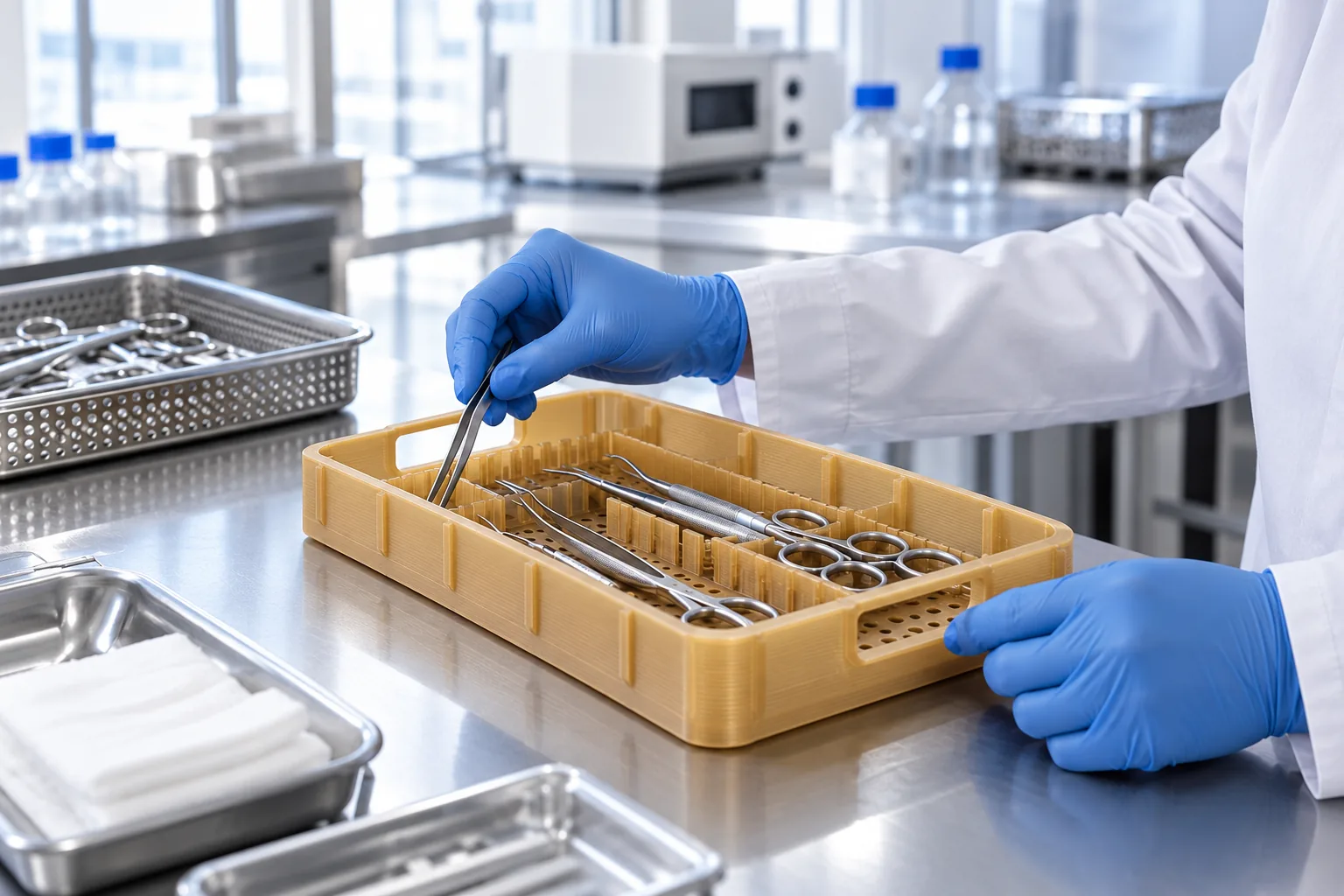
Surgical guides and instrument trays in a USP Class VI material that withstands autoclaving.
Aerospace
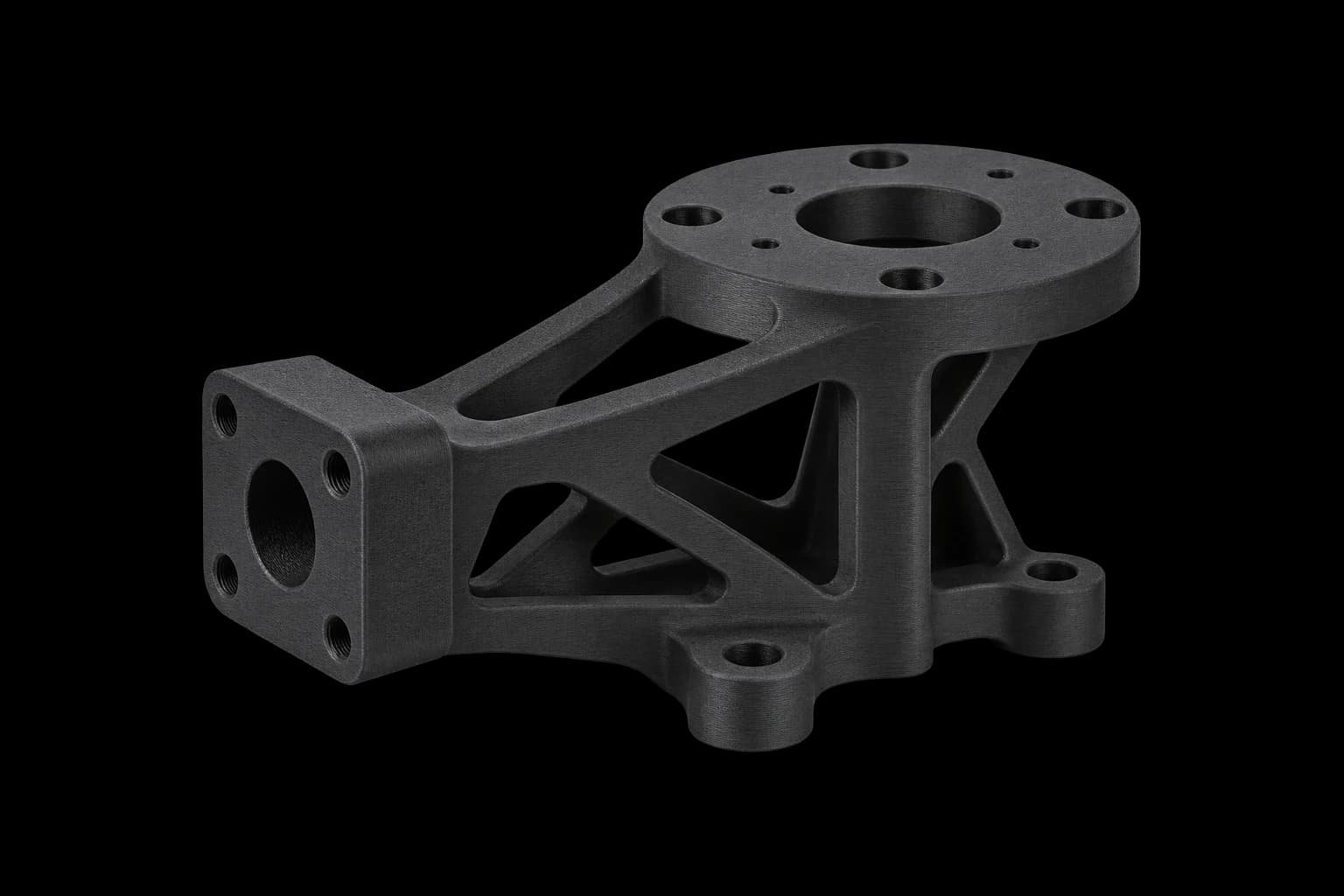
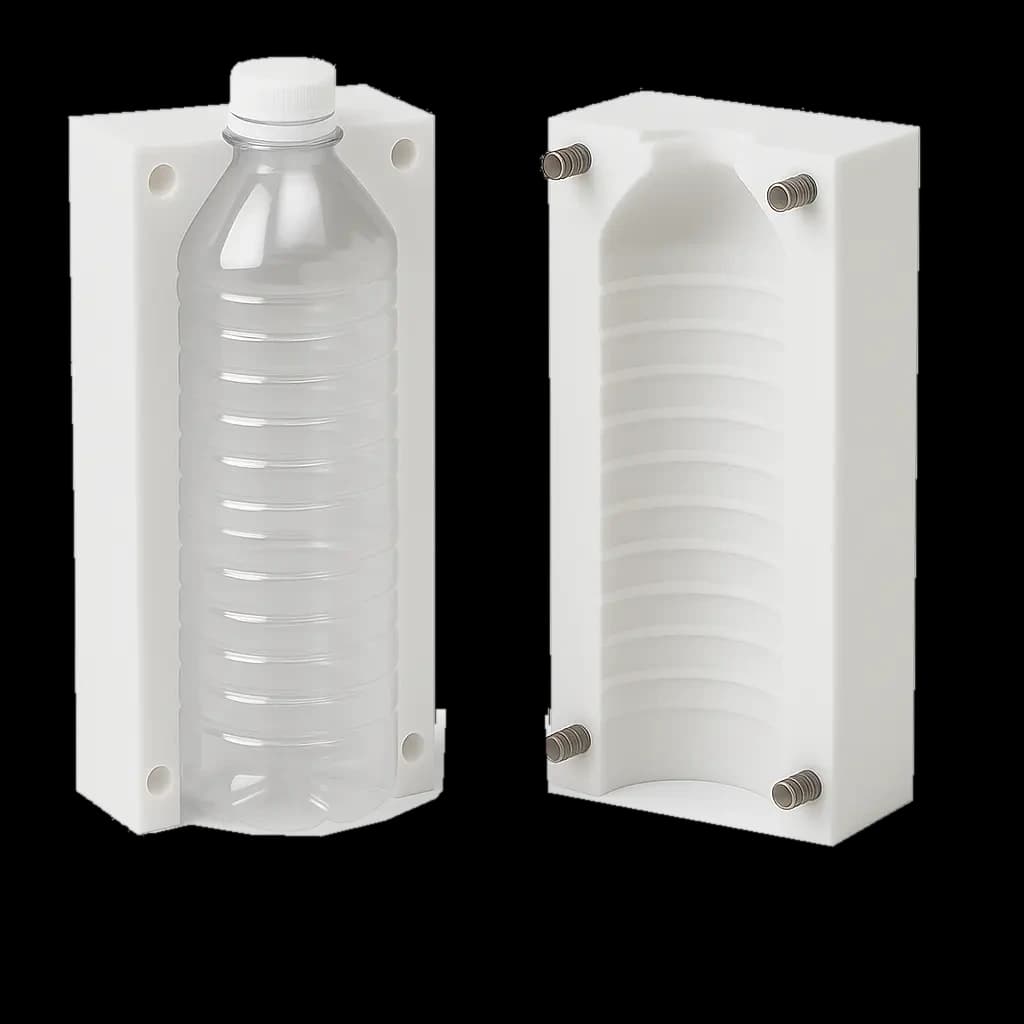
Aerospace and defense teams use ULTEM 1010 for out-of-cabin and high-heat parts, MRO jigs and fixtures, and composite tooling: lay-up tools, caul plates, vacuum-bagging mandrels, bonding jigs and trim and drill fixtures. Printed lay-up tools withstand autoclave cures at 177 °C and 100 psig and last up to 50 cure cycles, as many as 100 on some tools, without the lead time of a machined metal tool.
Automotive
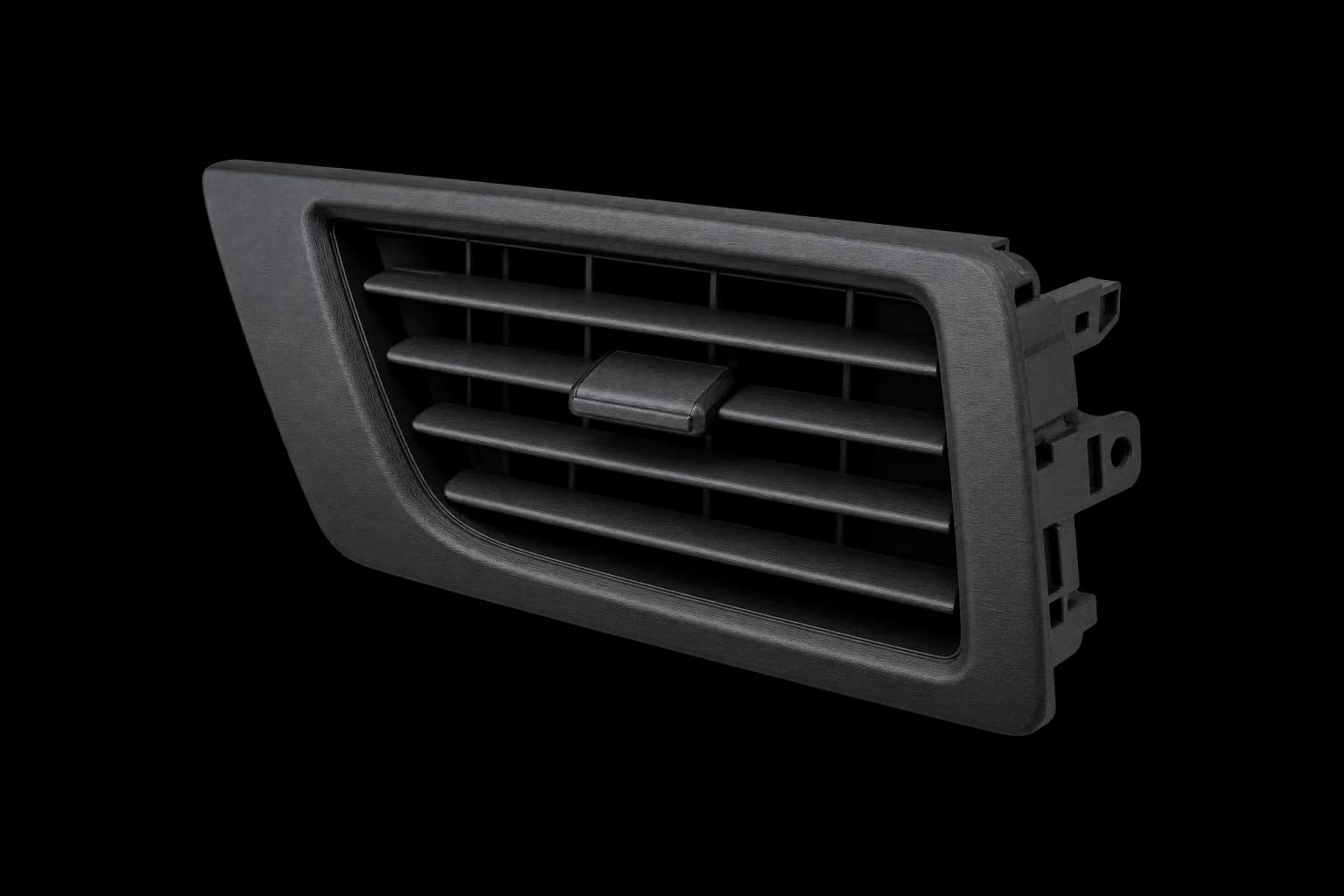
Automotive teams turn to ULTEM 1010 where nylon's heat resistance is not enough: under-hood housings, ducts and semi-structural components, sensor housings and heat shields. It has excellent resistance to petroleum fuels and engine coolant. For cab ducts that carry heated air from the heater core, ULTEM 1010 is the higher-temperature option when PA12 grades do not suit the operating conditions, and the same material makes assembly fixtures for hot production steps.
Medical & Healthcare
Medical device teams use ULTEM 1010 for patient-specific surgical guides, sterilizable instrument trays and organizers, surgical tool handles and device prototypes for regulatory testing. The certified grade meets ISO 10993 and USP Class VI, and surgical guides made from it withstand steam autoclaving. Forge Labs inspects every medical part and post-processes and packs it in a cleanroom.
Values from the Stratasys ULTEM 1010 resin datasheet, with mechanical properties printed on a Stratasys F900, tested to the standard listed with each property.
Mechanical performance
ULTEM 1010 delivers dependable strength and stiffness for composite lay-up tooling, surgical guides and high-temperature aerospace and automotive parts, from prototype to production. Its mechanical profile handles demanding load conditions.
XZ samples are printed on edge and ZX samples stand upright, so the ZX values describe strength across the layers, where ULTEM 1010 is much weaker in tension. Stratasys reports no yield point in tension, so strength is given at break, and on-edge (XZ) samples bend past 5% strain without breaking. Orient load-bearing features so stress runs along the layers.
Material makeup
Consistent density and surface quality keep critical features in tolerance and downstream finishing predictable. Parts are lighter than the metal tools and housings they replace, and the material's dimensional stability minimizes warpage.
Stratasys measures specific gravity on a moulded plaque, the reference value for the resin itself.
Heat performance
ULTEM 1010 maintains dimensional stability through temperature swings and repeated thermal cycling, which suits aerospace tooling, sterilized medical parts and under-hood automotive components. Heat deflection is reported flat (XY) and on edge (XZ) at both loads, and sits close to the glass transition temperature, so parts keep their shape under load until the resin begins to soften.
ULTEM 1010 is amorphous, so it has no melting point. Glass transition, thermal conductivity and diffusivity are measured on moulded plaques, and thermal expansion is reported over the temperature range listed with each value.
Functional performance
ULTEM 1010 offers high resistivity and a stable dielectric constant for electrical housings, connectors, insulating features and functional prototypes, and gives enclosures in integrated electrical systems dependable insulation.
Stratasys reports dielectric constant at 1 kHz and 2 MHz for flat and on-edge samples and volume resistivity on a moulded plaque. Dielectric losses were below the resolution of its measurement, so no dissipation factor is listed. Dielectric strength comes from Stratasys's earlier ULTEM 1010 specification sheet.
Compatibility data
Stratasys rates ULTEM 1010 by chemical class at room temperature. It stands up best to fuels, engine coolant, washer fluid and aromatic hydrocarbons, and handles short-term contact with oils, greases, brake and transmission fluid and alcohols. Ketones, strong acids and halogenated hydrocarbons, shown as poor, carry Stratasys's limited rating (likely to degrade the part in short-term exposure), and phenols attack it.
Chemical ratings are screening guidance; confirm them with application-specific testing before production release.
Compliance
ULTEM 1010 is rated UL 94 V-0 on Stratasys's UL listing and has inherent flame retardant properties. In ASTM E595 testing it showed low outgassing, inside the common screening limits for vacuum and space hardware.
The Stratasys certified grade (CG) is approved for food contact under NSF 51 and meets ISO 10993 and USP Class VI, so teams can start regulatory reviews from supplier data. ULTEM 1010 carries no current FAR 25.853 data, so aircraft cabin parts use ULTEM 9085 or Antero 800NA.
Datasheets, design guidance and supplier documentation for ULTEM 1010.
Access the most recent datasheet and supporting documentation maintained by our engineering team.
ULTEM 1010 datasheetExplore printable geometry recommendations, wall thickness tips, and finishing playbooks for FDM.
View FDM design guide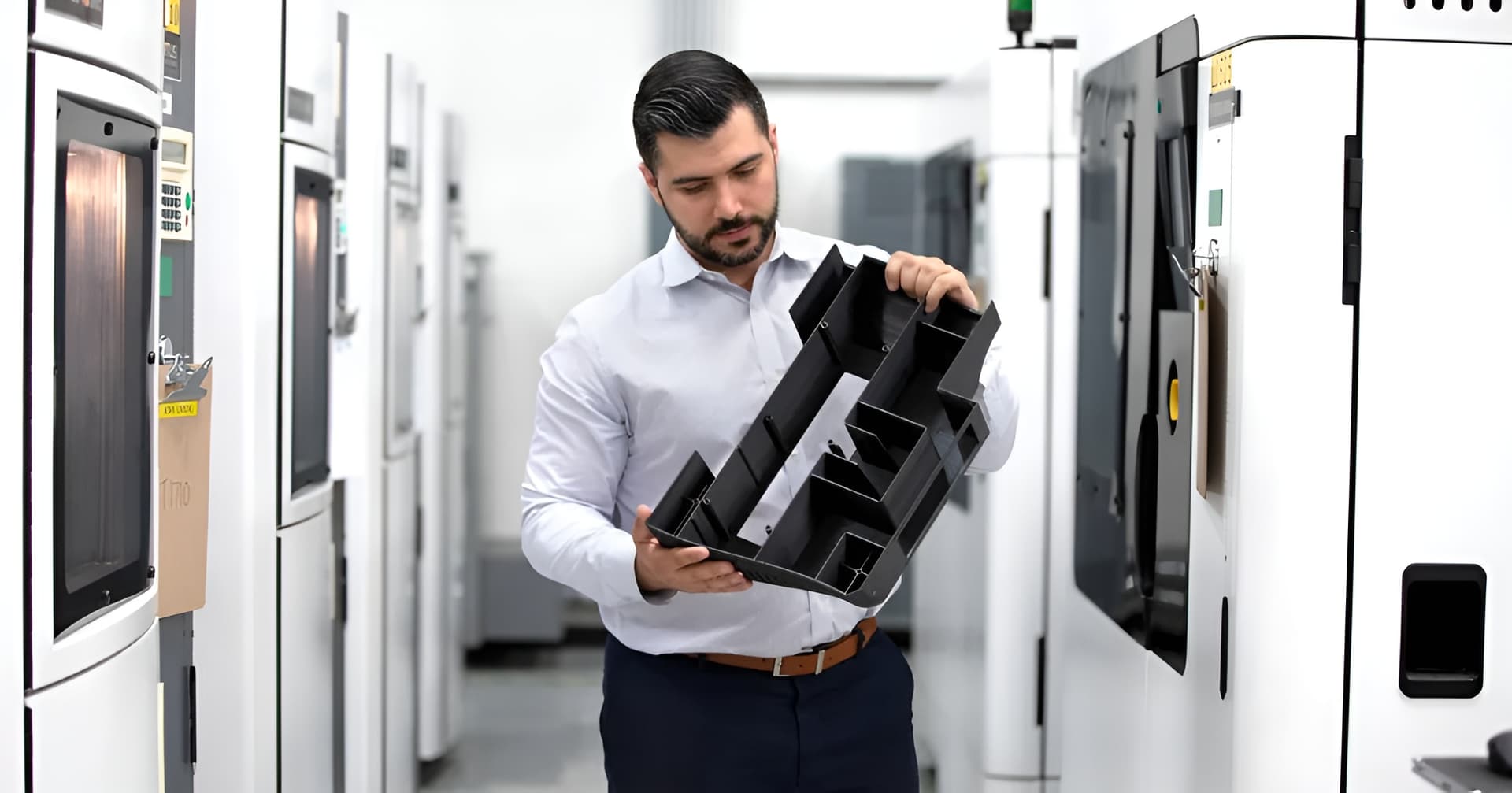
ULTEM 1010 is manufactured using Fused Deposition Modeling (FDM) technology, offering reliable performance for functional prototypes and end-use parts. It runs on industrial FDM platforms with heated chambers and qualified material profiles for consistent layer adhesion and mechanical integrity.
Can't find the answer you're looking for? Reach out to our customer support team.
Upload your design and get an instant quote for ULTEM 1010 parts.
Create an account to upload CAD
STEP, STL, OBJ, 3MF and IGES supported