Multi Jet Fusion HP High Reusability PA12 For Consistent, Repeatable Production Runs

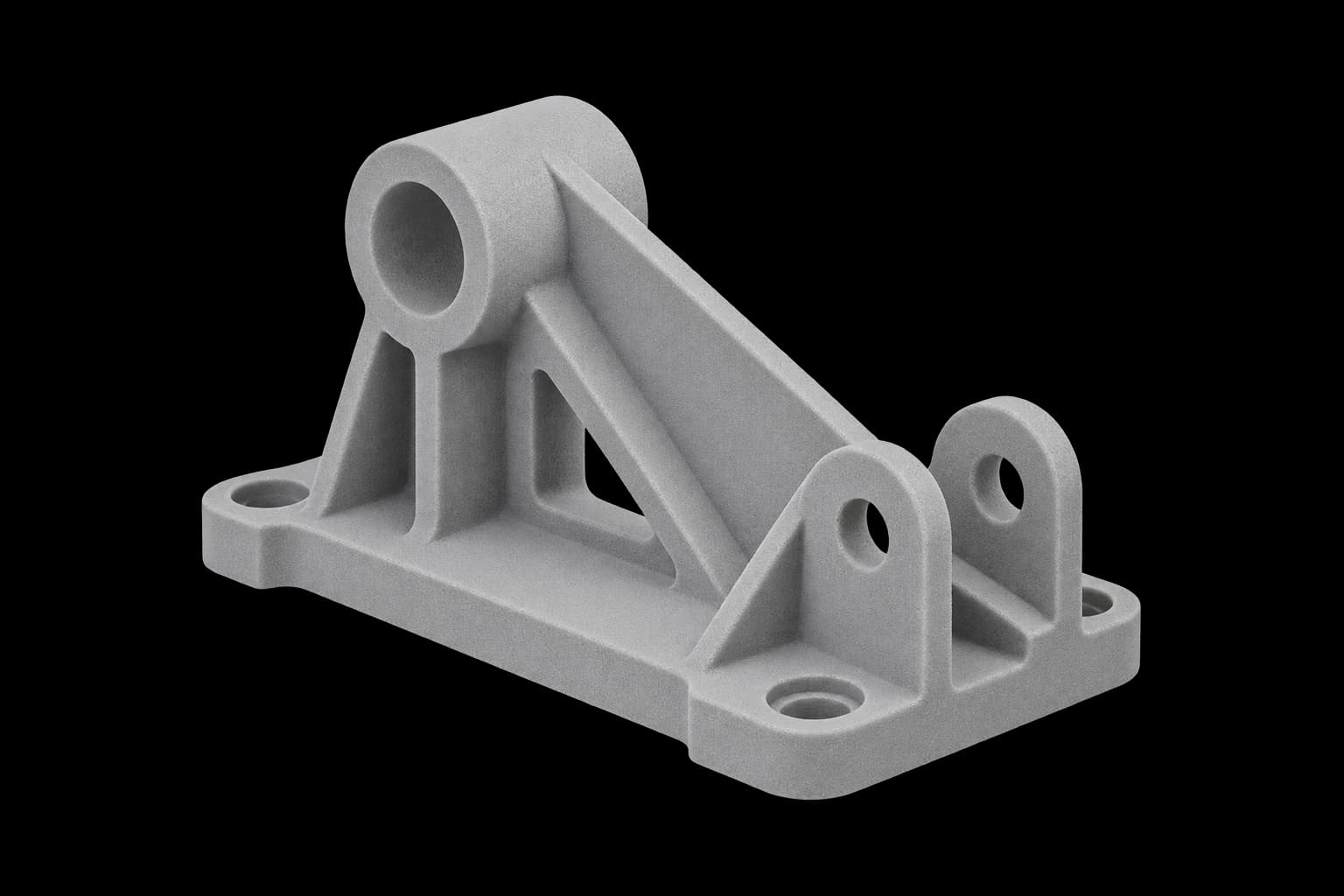
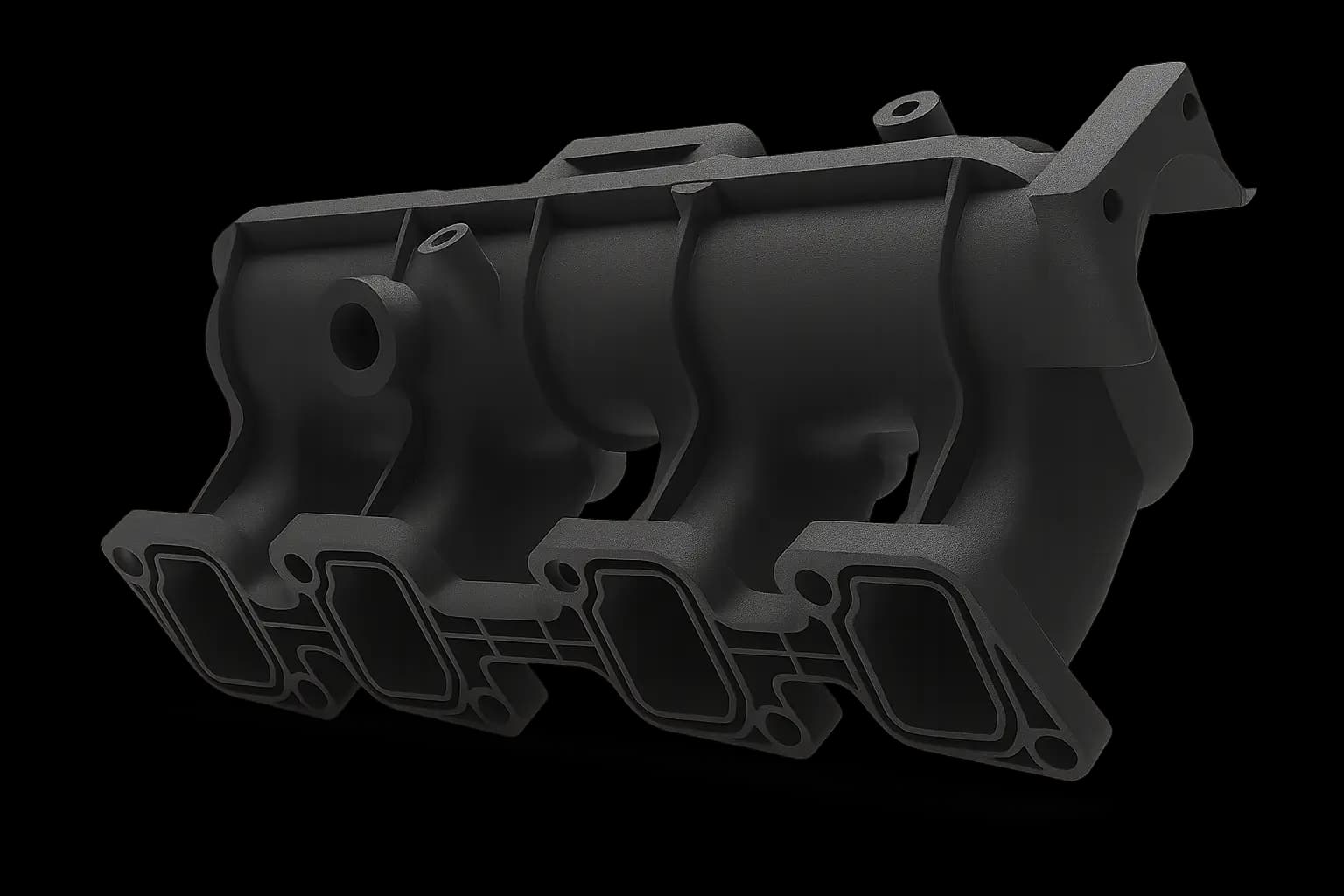
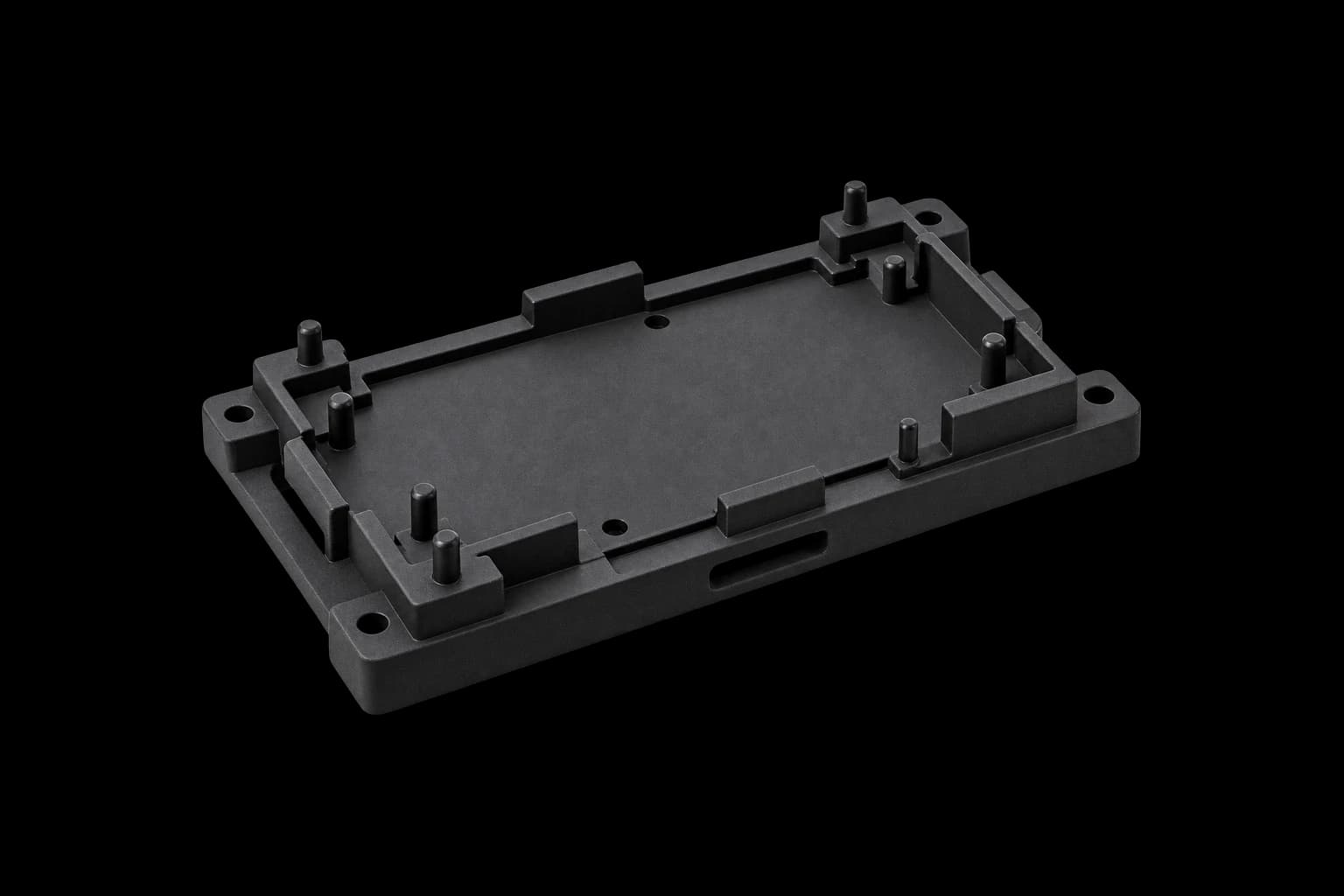
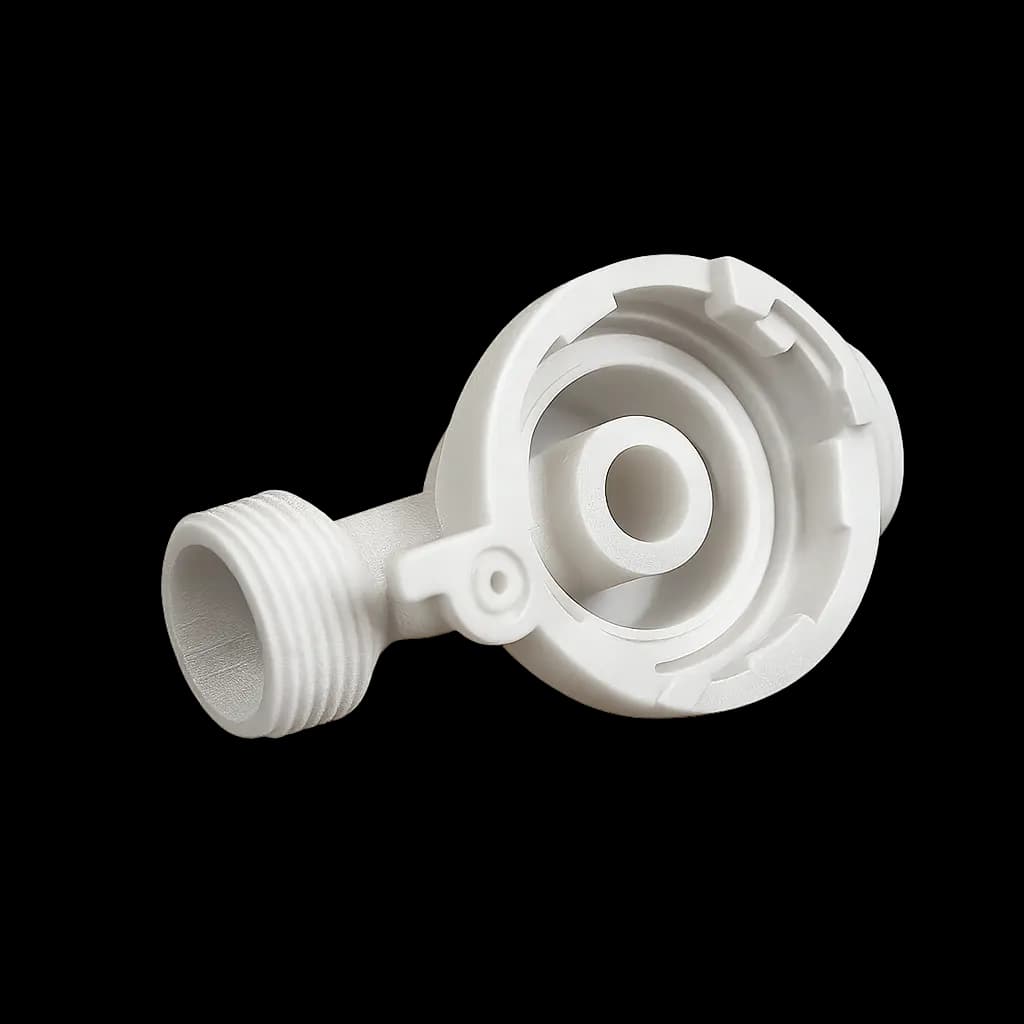
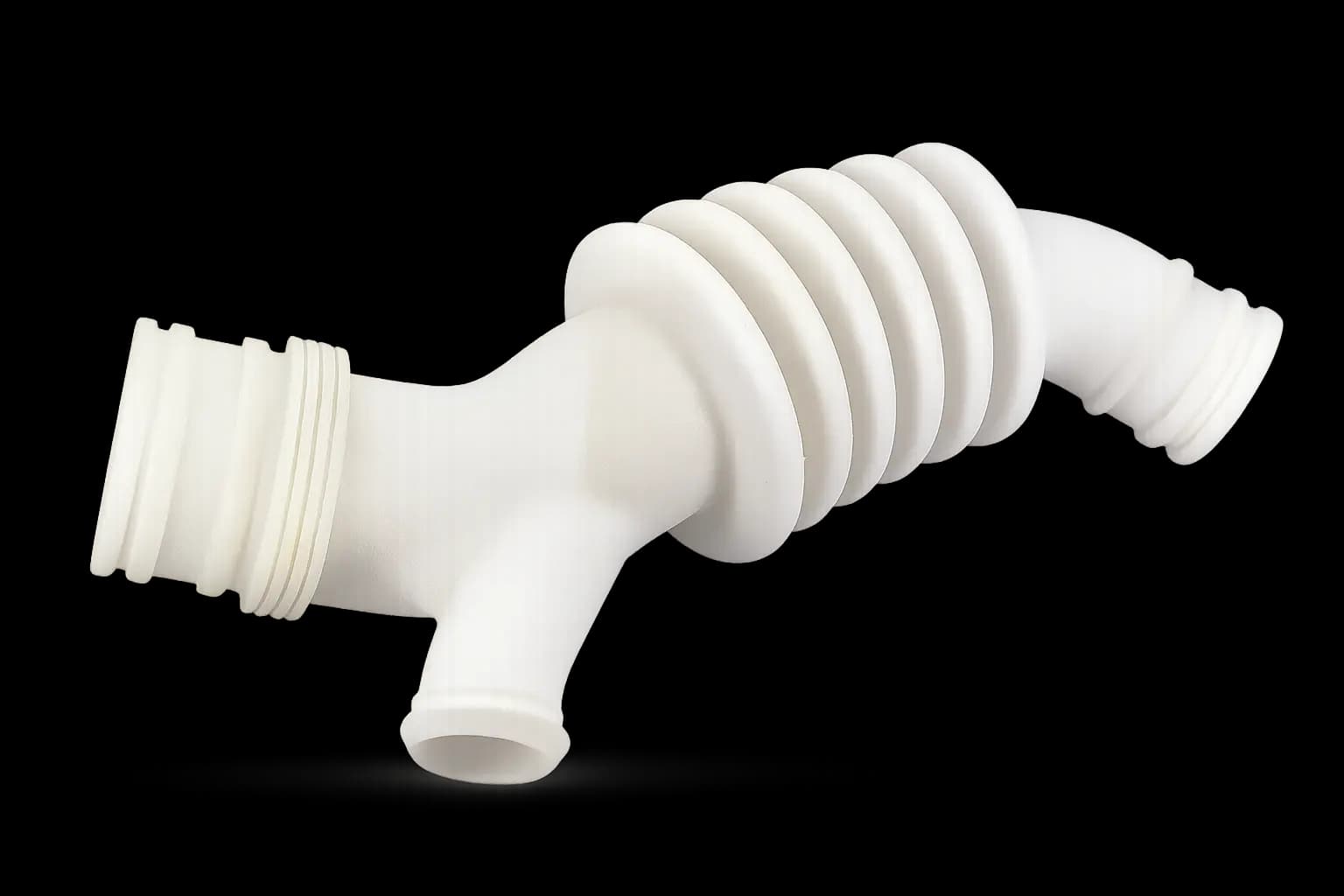
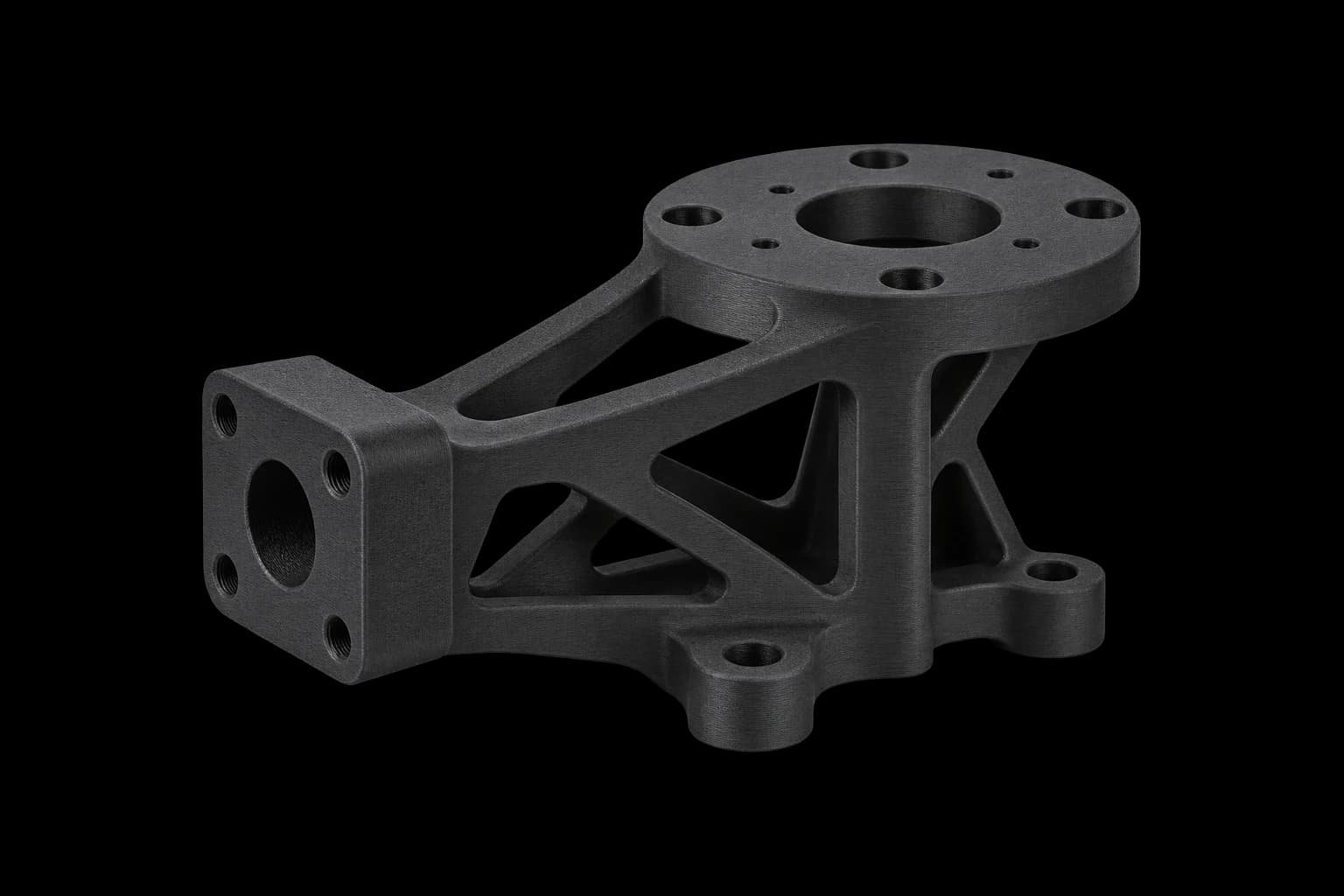
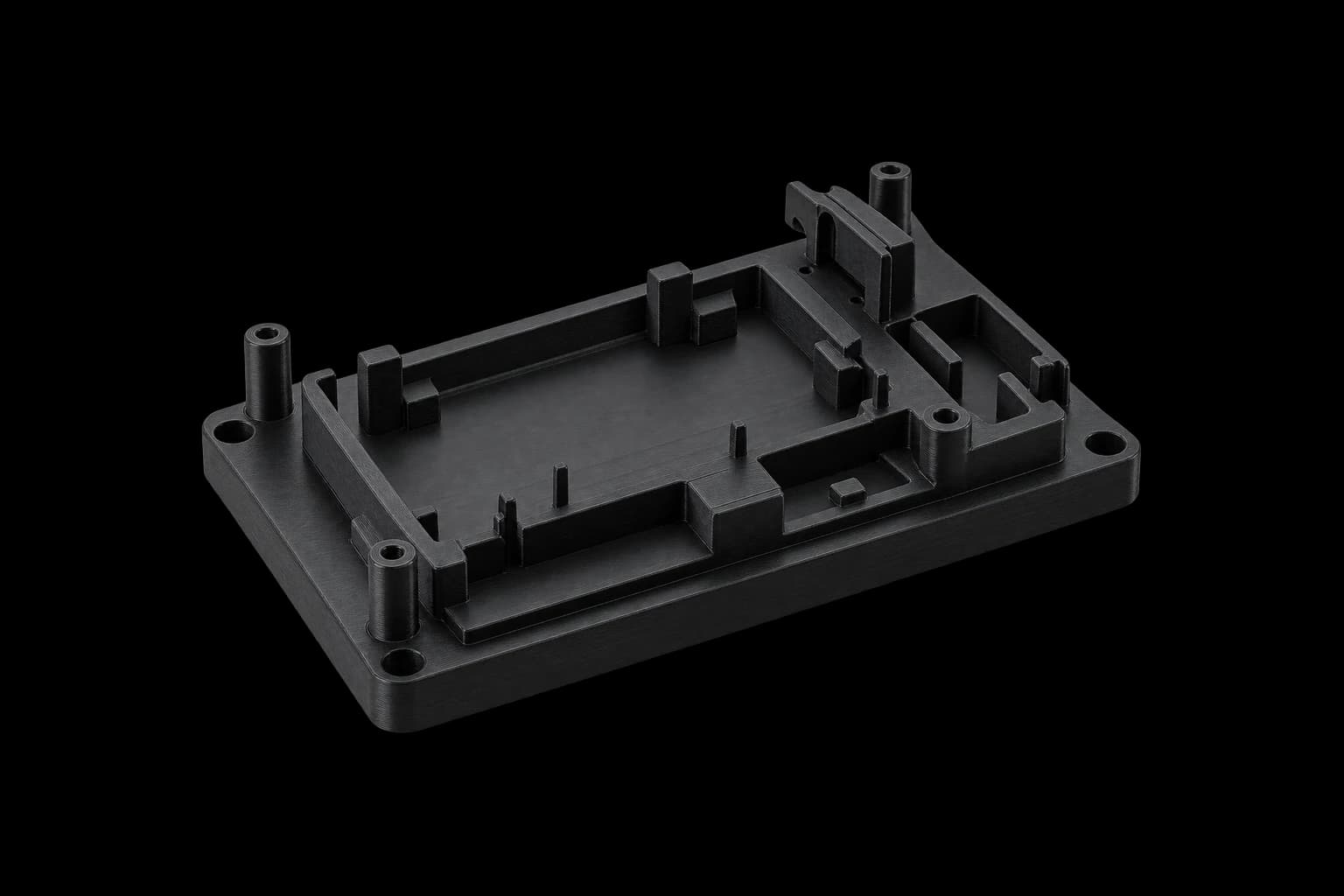
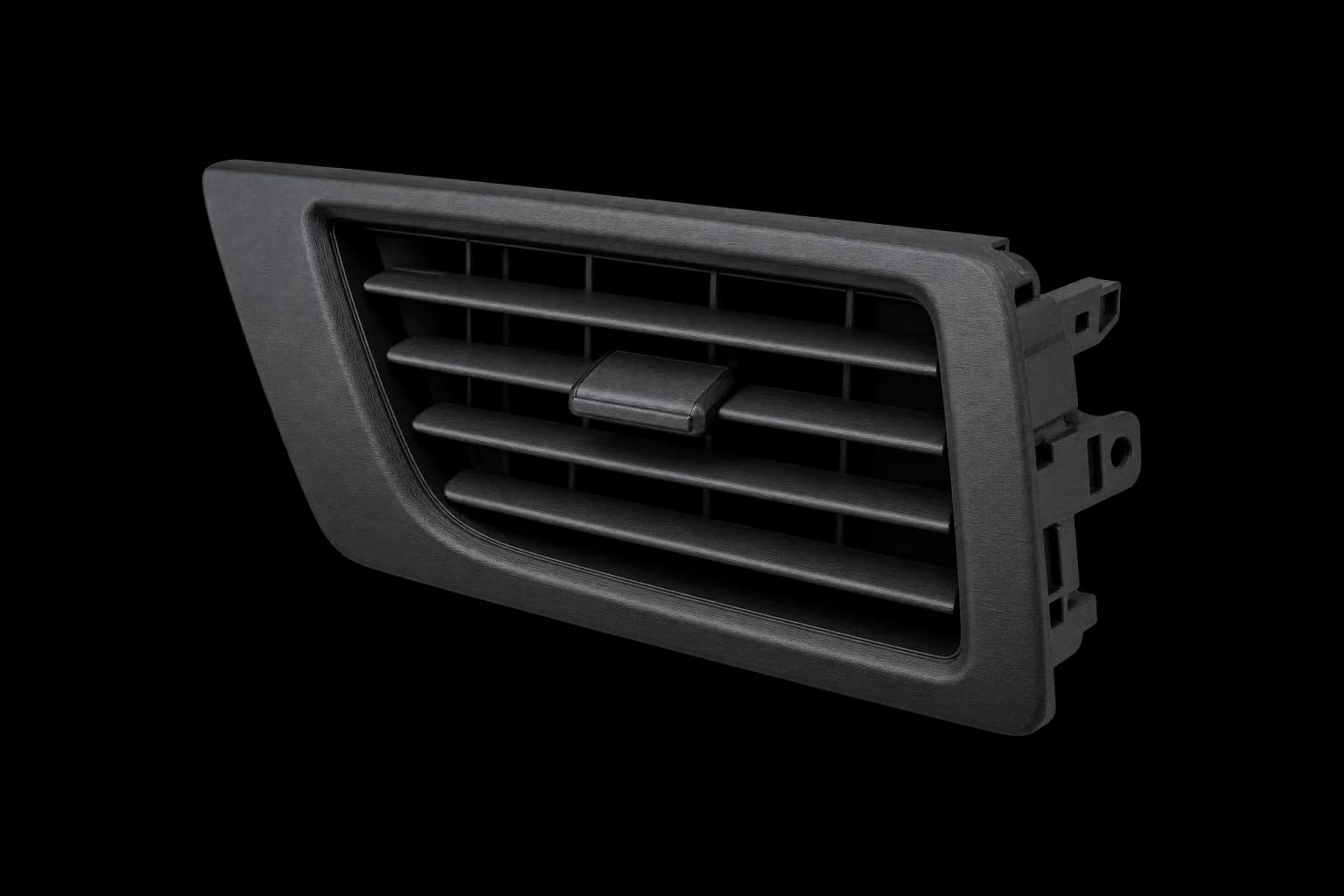
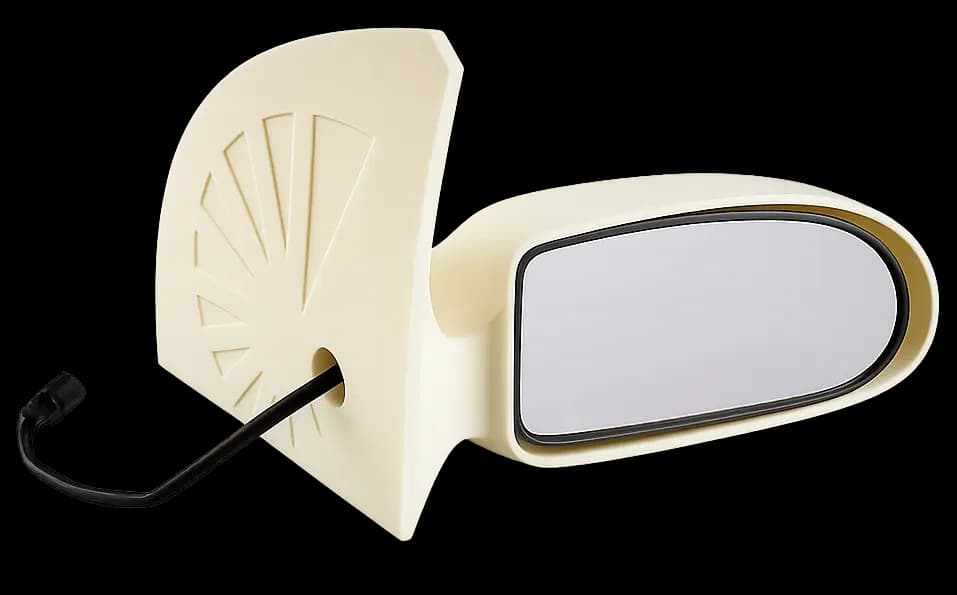
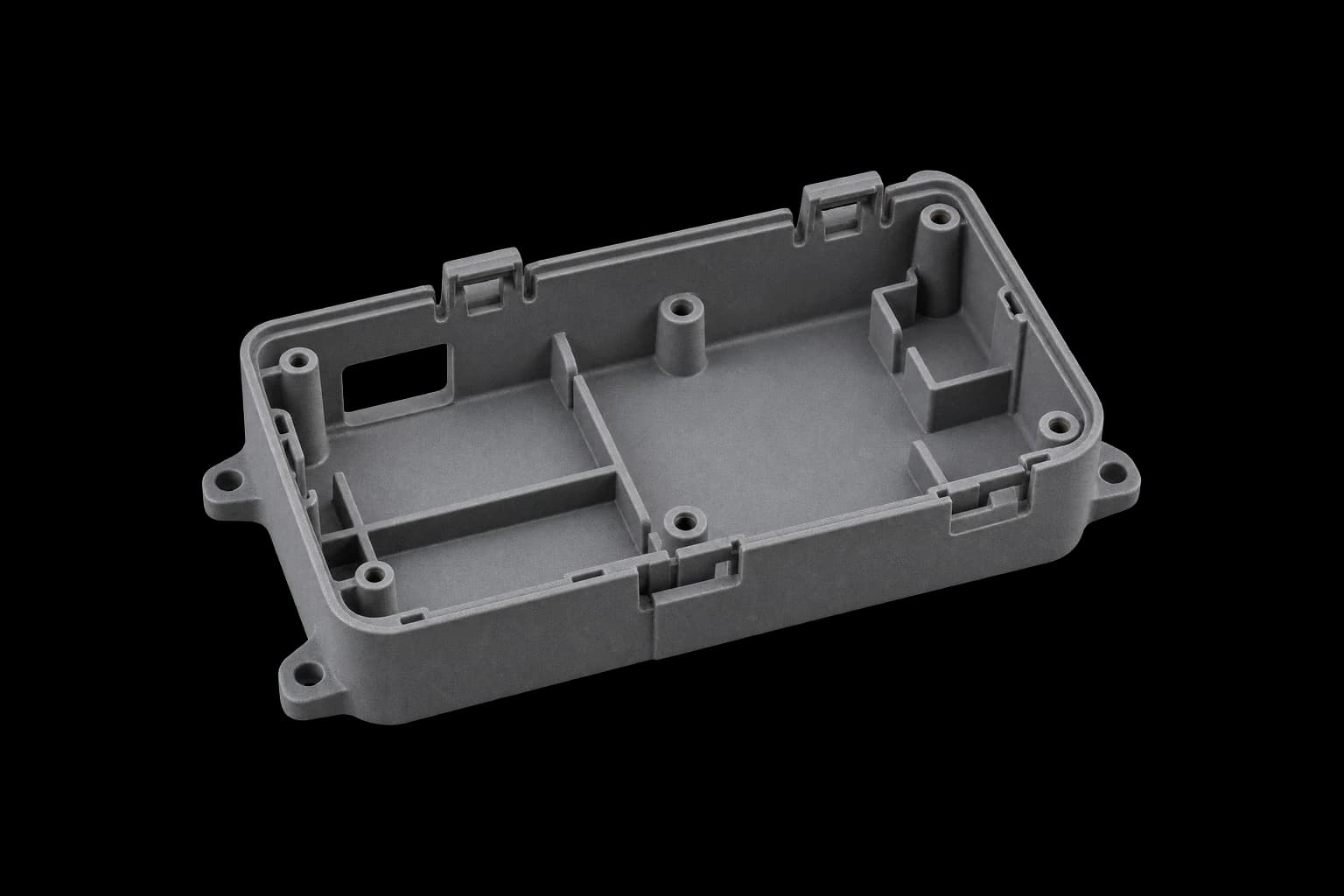
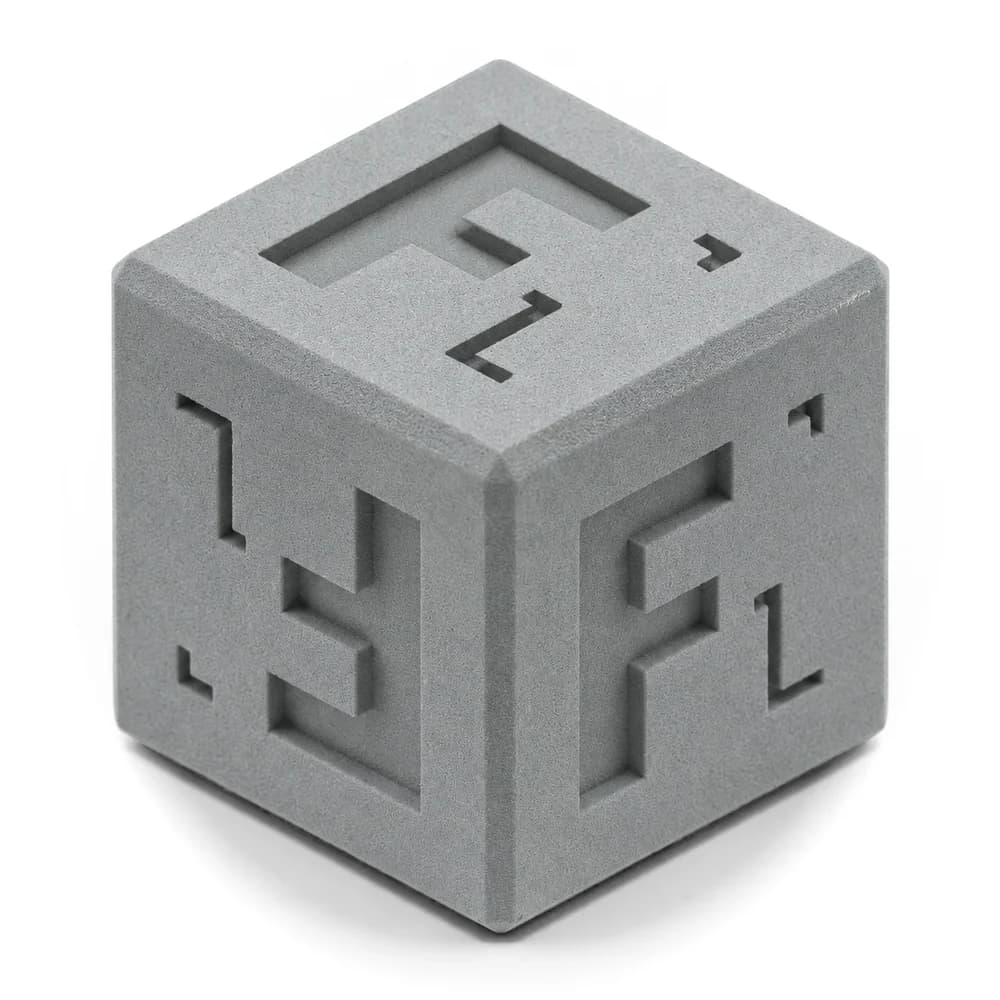
HP High Reusability PA12 3D printed part example
Rapid Production
High Throughput
MJF material

HP High Reusability PA12 overview

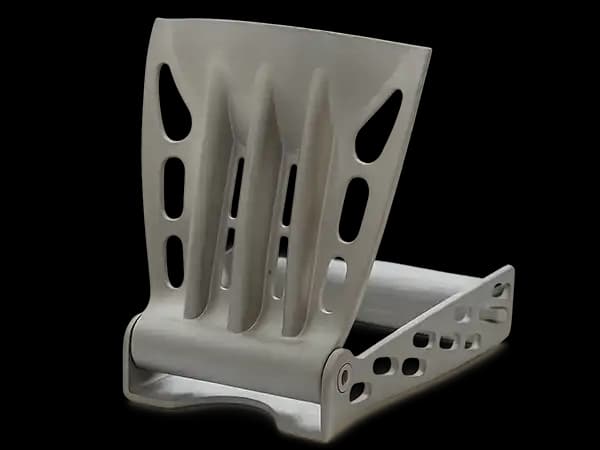
HP High Reusability PA12 is a strong, tough nylon, 3D printed by HP Multi Jet Fusion (MJF), for detailed prototypes and production parts in the same material. Parts are equally strong whichever way they are built, come out watertight with sharp detail, and let snap fits and threads behave like moulded parts. Its powder is highly reusable, which keeps part costs down. It resists oils, greases and vehicle fluids, and suits vehicle cab parts, wearables, device housings, robot tooling and pilot runs.

How HP High Reusability PA12 is manufactured

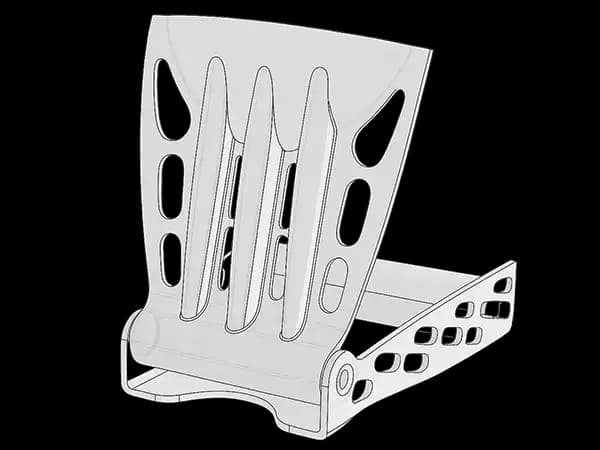
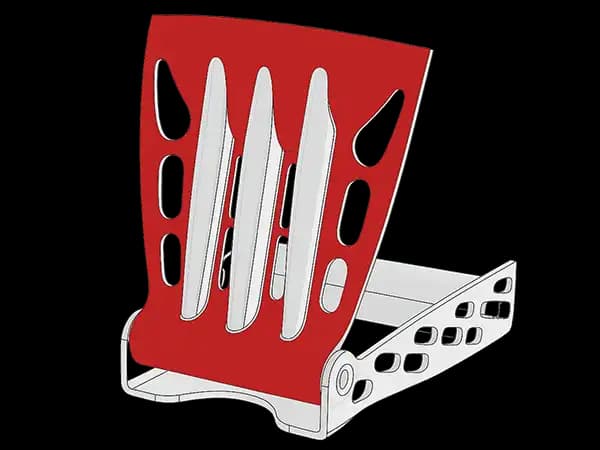
HP High Reusability PA12 is manufactured using HP Multi Jet Fusion (MJF), an industrial powder-bed process that applies fusing and detailing agents with 1200 dpi precision and fuses each full layer with heat, producing sharp edges and fine features. Parts build without support structures or tooling, with consistent thermal control across the build. Complex geometries, internal features and consolidated designs are produced with excellent repeatability, from functional prototypes to production runs.

Build volume
380 × 284 × 380 mm
Lead time
4-8 business days
Layer height
0.08 mm
Forge Labs Steam

Know before you manufacture in HP High Reusability PA12.

Upload CAD files to Forge Labs Steam for instant HP High Reusability PA12 pricing and live manufacturability feedback, and fix issues before production so timelines stay predictable.

Upload CAD files to Forge Labs Steam for instant HP High Reusability PA12 pricing and live manufacturability feedback, and fix issues before production so timelines stay predictable.

Surface finishes

Finishes for HP High Reusability PA12

MJF parts have a smooth, matte surface with a slightly grainy texture due to the powder-based printing process. Unlike FDM, MJF does not produce visible layer lines, resulting in a more uniform and professional appearance straight from the printer. At Forge Labs, bead blasting is performed as a standard post-processing step to remove excess powder and refine the surface texture.

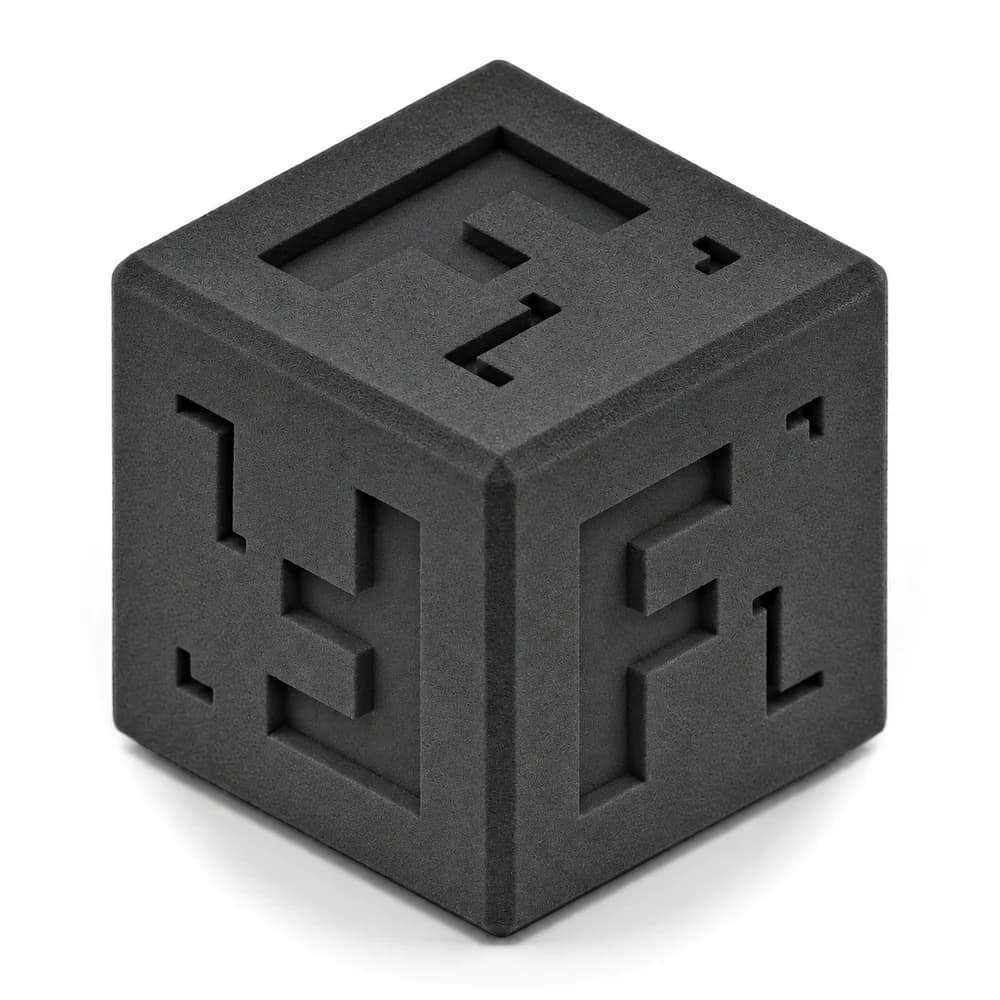
Sample cube in natural grey MJF PA12 with the standard bead-blasted finish
As-Printed

Standard Finish

MJF parts are delivered with a standard bead-blasted finish in natural grey. This process removes excess powder and slightly smooths the surface while maintaining the material's natural matte texture.

Surface Texture
Uniform, matte grey finish with subtly grainy texture
Appearance
Matte Grey
Details
Well represented
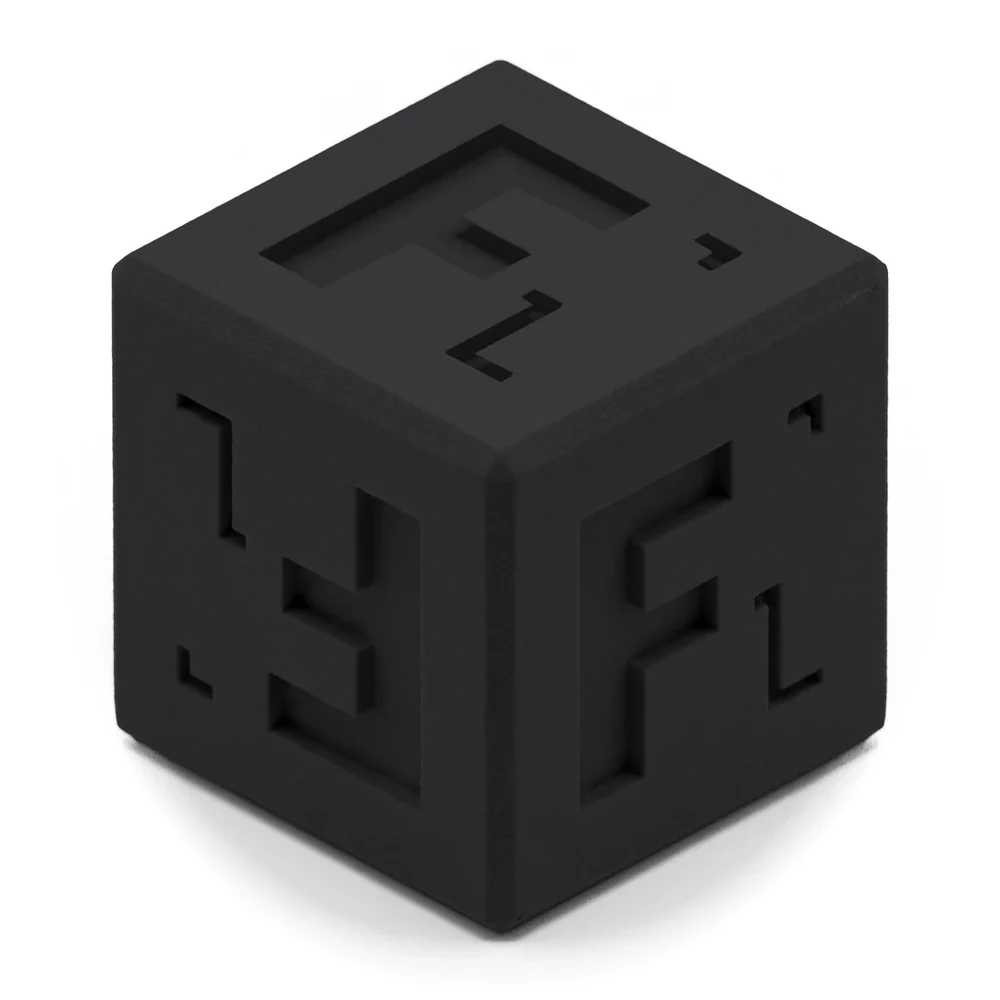
Sample cube in MJF PA12 dyed black
Sample cube in natural grey MJF PA12
Enhanced

Deep Color Dye

Specialized dye bath creates deep, uniform black color that chemically bonds with the nylon material. Unlike painted finishes, the dye fully penetrates the surface and won't chip or wear off over time.

Surface Texture
Black dye fully saturates the material for professional finish
Appearance
Matte Black
Details
Well represented
Sample cube in black PA12 after vapor smoothing
Sample cube in dyed black MJF PA12 with the standard matte finish
Premium

Vapor Smoothing

Advanced chemical smoothing technique that enhances surface quality by slightly melting and redistributing the surface material, eliminating grainy texture and sealing porous areas.

Surface Texture
Removes the powdery texture of MJF parts
Appearance
Smoother, semi-gloss finish
Details
May soften
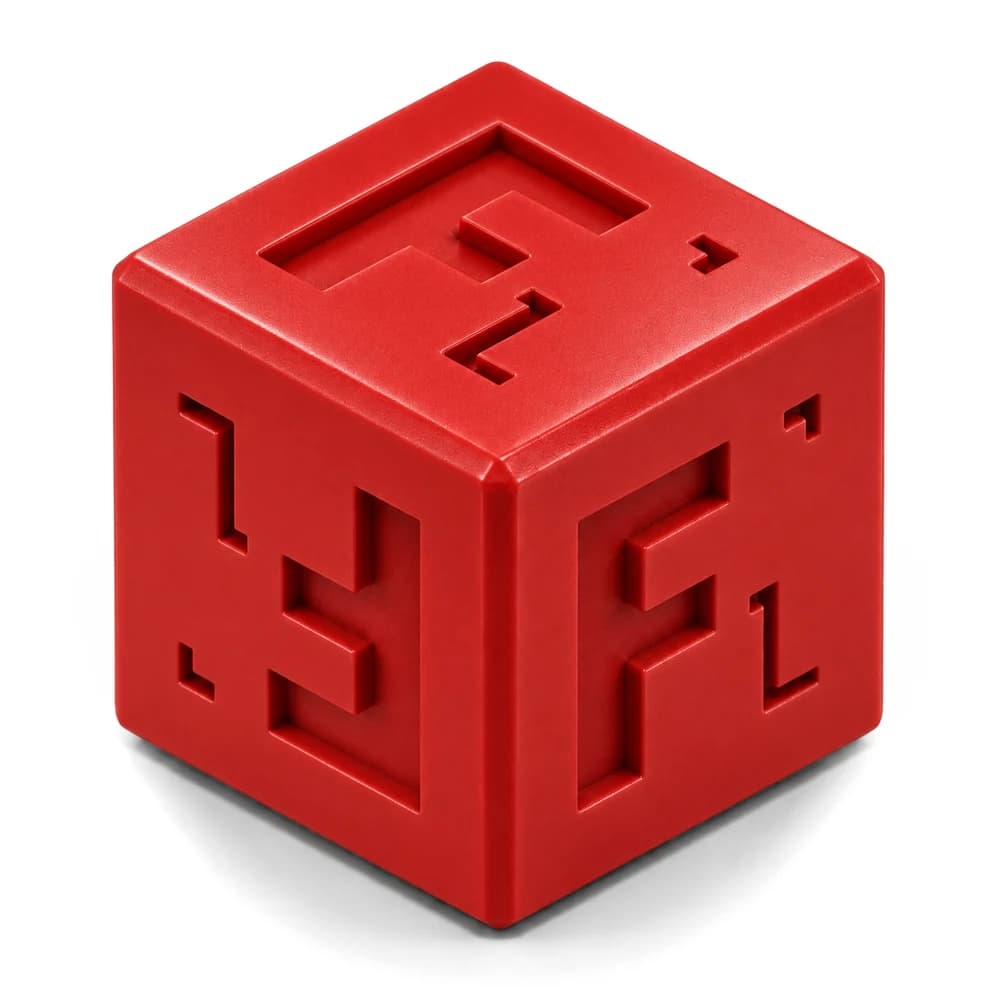
Sample cube with a red automotive-grade performance paint finish
Sample cube in natural grey MJF PA12 with the standard finish
Premium

Performance Paint

Automotive-grade coating that enhances aesthetics and durability. Hand-finished for smooth surfaces with professional-grade equipment. Custom color matching available for precise branding needs.

Surface Texture
Matte to Semi-Gloss
Appearance
Custom color matching for precise branding
Details
Clear & refined
Industry applications

Industry applications for HP High Reusability PA12

HP High Reusability PA12 combines high powder reusability (up to 80%) for cost efficiency with consistent mechanical properties for demanding applications. From rapid prototyping to production runs, teams rely on it to maintain tight tolerances while reducing assembly complexity through consolidated part designs.

HP's fusing and detailing agents create sharp edges and fine text, with clearances, holes and gaps down to 0.5 mm, and parts are watertight without additional post-processing.

Its resistance to oils, greases, aliphatic hydrocarbons and alkalies, together with FMVSS 302 flammability testing and intact-skin biocompatibility testing, makes it a dependable choice for vehicle interiors, fluid-contact parts, skin-contact wearables and device housings.

The technology excels at bridge production and mass customization, with single builds producing hundreds of unique parts without tooling changes. MJF delivers a low cost per part, so production runs stay economical at volume.

All industries
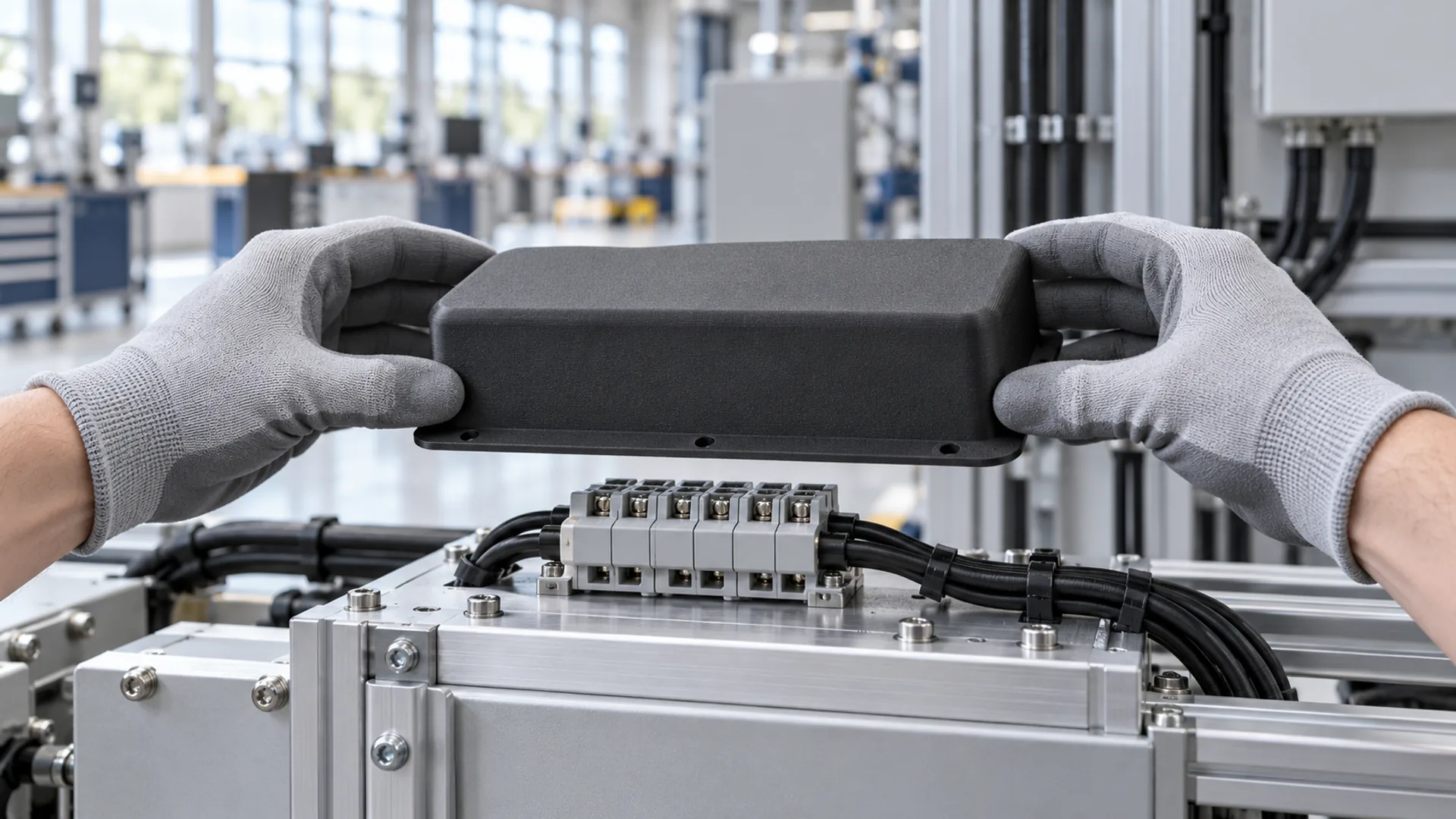
Gloved hands fitting a black MJF PA12 cover over a terminal block on power equipment

Clean Tech

Touch-Proof High-Voltage Covers

A fuel cell equipment maker ordered HP High Reusability PA12 touch-proof covers for high-voltage connections, long low-voltage covers and small support rings as production parts to its own drawings. The material has the stiffness to hold each cover's shape and the toughness to handle fitting and removal at the mounting lugs. The order fixes build direction, GD&T to ASME Y14.5 and part marking, and calls for a first article inspection and a bounding-box check on every part.

  • High-voltage touch-proof covers
  • Low-voltage connection covers
  • Supports and mounting rings
Read the high-voltage cover case study
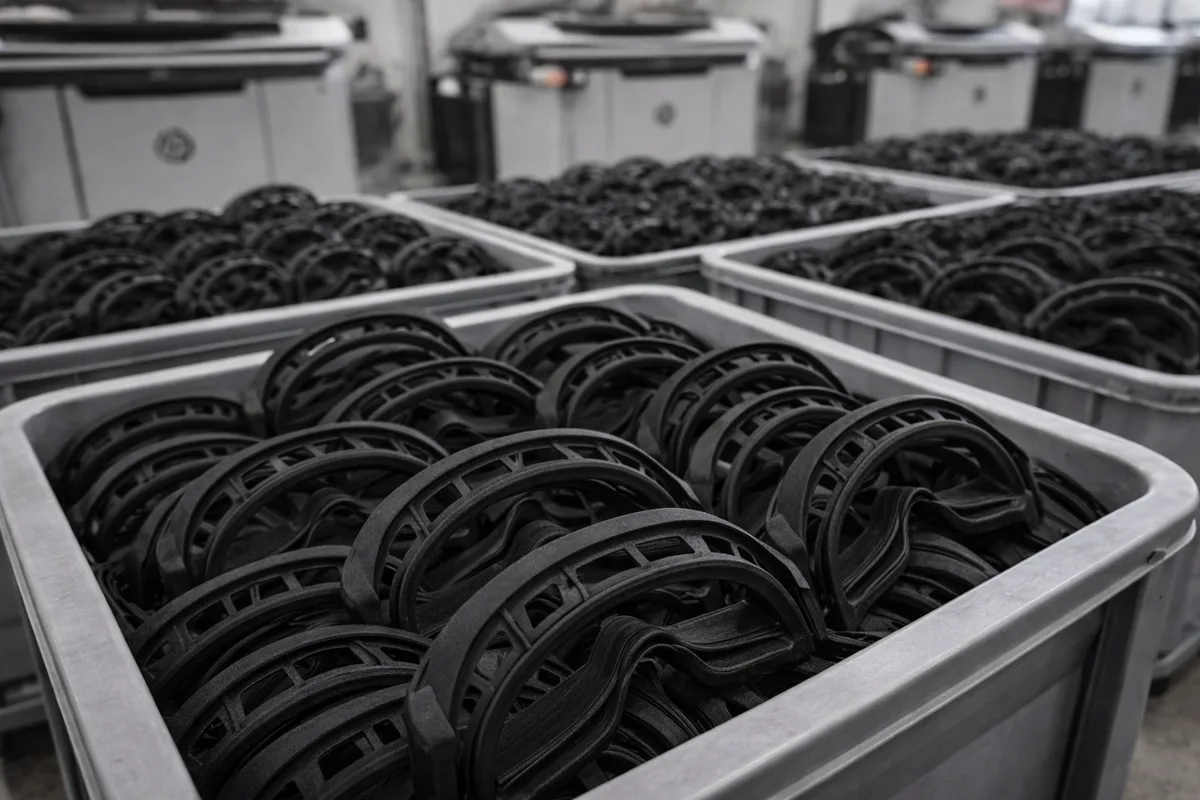
Bins of black MJF PA12 VR visor frames in production

Consumer Electronics

VR Visor Frames & Wearables

Hardware developers use HP High Reusability PA12 for headset visor frames that must stay stiff enough to hold optics in line, with snap fits, alignment pins and accessory mounts printed into the part. Once one developer's design was validated, production moved to the HP Jet Fusion 5200, where densely packed builds turned out more than 1,000 visor components every 72 hours, and its display and review units were vapor smoothed for an injection-moulded feel.

  • Headset visor frames
  • Wearable device housings
  • Snap-fit electronics enclosures
Read the VR visor case study
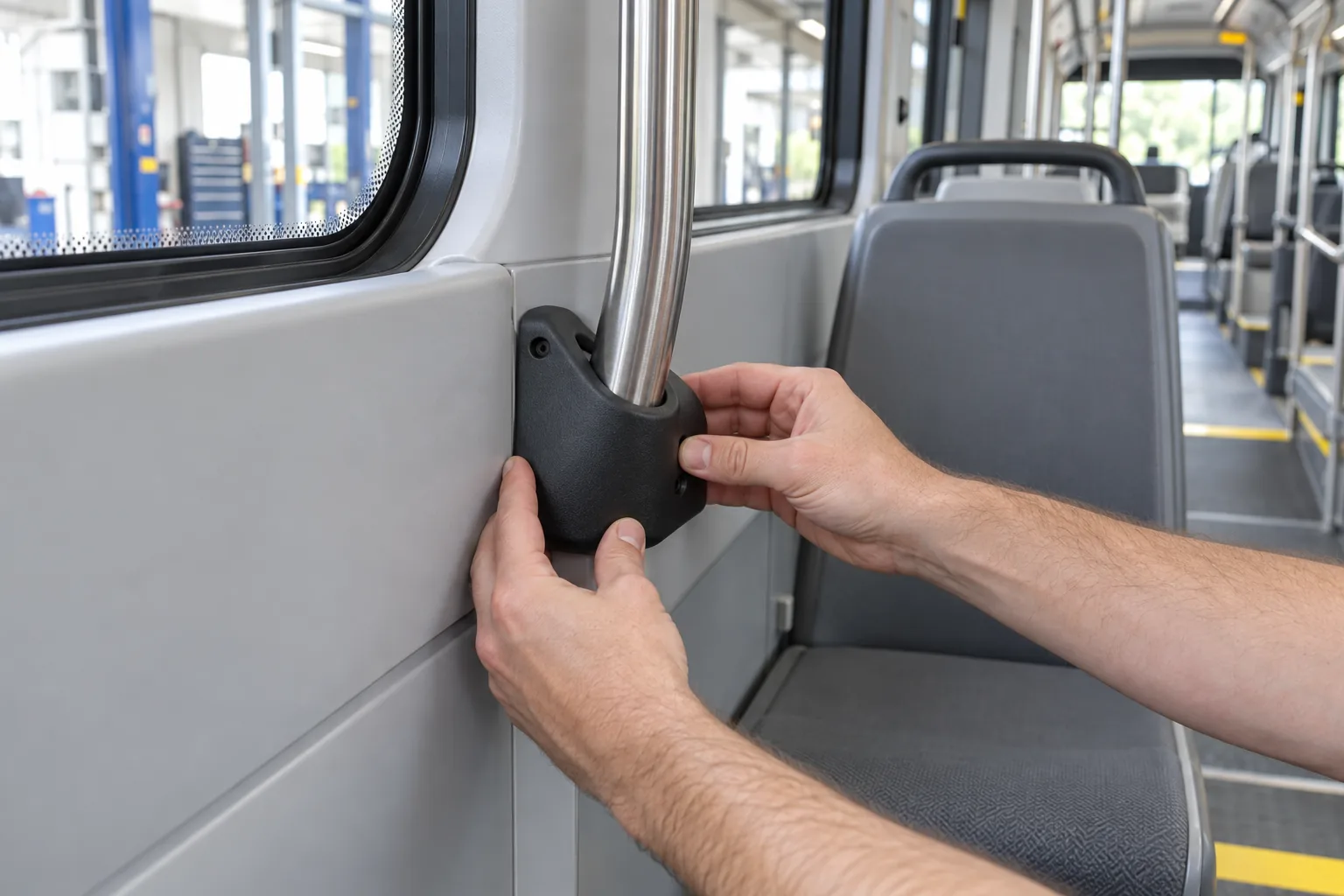
Black printed nylon trim fitted around a grab rail inside a transit bus

Automotive

Cab, Fluid-Contact & Service Parts

Vehicle makers use HP High Reusability PA12 for cab control enclosures, console frames, holders and brackets reordered as vehicles are built, and for service trim on fleets no longer in production. It meets FMVSS 302, identical to Canada's CMVSS 302, on the HP Jet Fusion 5200 platform Forge Labs runs, and weeks of immersion in hot motor oil, ATF, brake fluid and coolant caused no chemical attack or stress cracking.

  • Cab enclosures and console frames
  • Intake ducting and fluid-handling parts
  • Service trim and brackets
Explore automotive
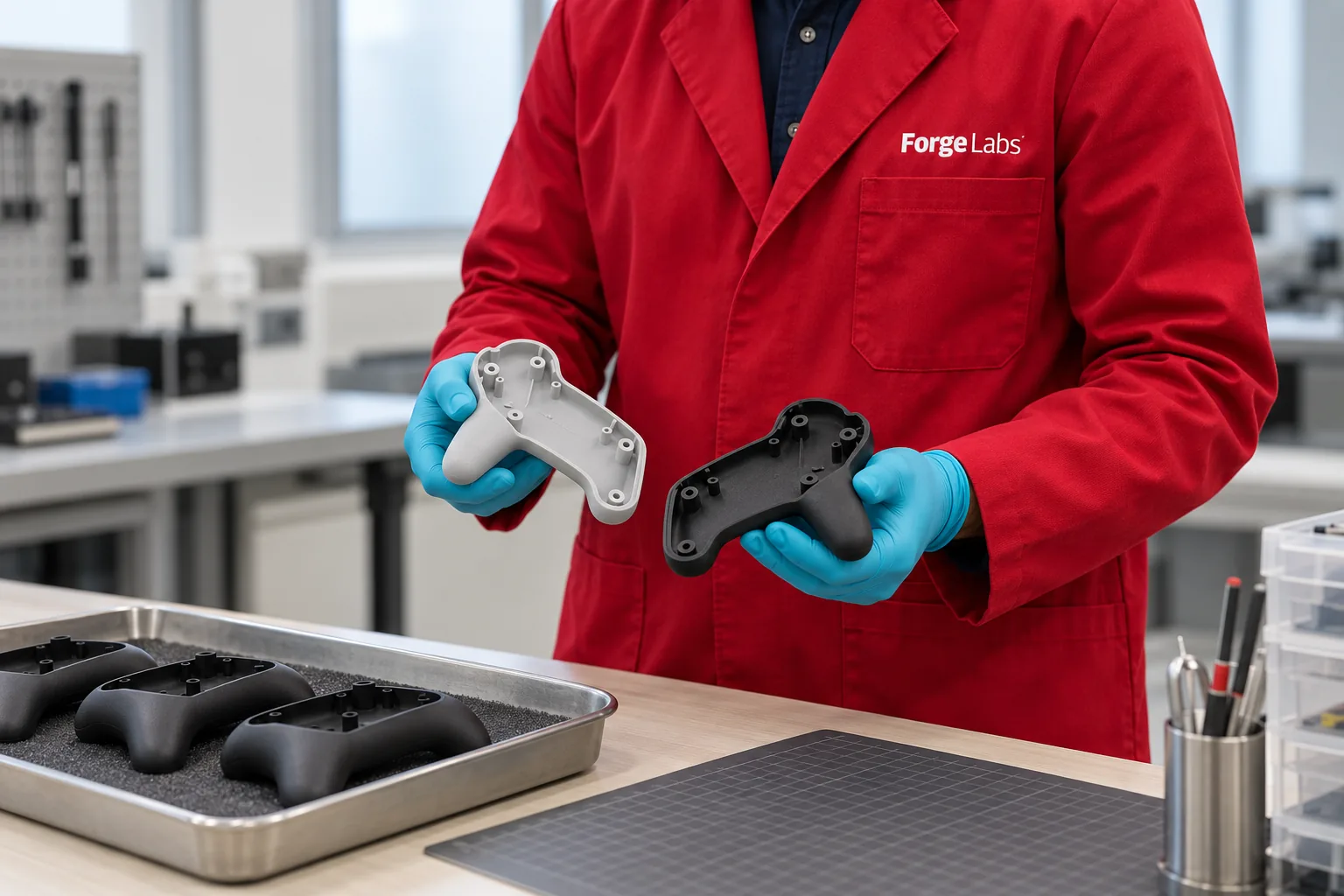
Forge Labs technician comparing white and black 3D-printed electronics housings beside a tray of matching pilot-run parts

Industrial Design

Pilot Runs & Mechanical Assemblies

Product teams use HP High Reusability PA12 for pilot runs, market-test units and limited launches of consumer electronics, wearables and sporting goods, in batches of 10 to more than 1,000 units with no tooling. Its toughness lets snap fits and threads behave like moulded parts, moving and hinged parts print already assembled, and heat-set inserts take production fasteners.

  • Pilot-run and launch housings
  • Sporting goods and protective gear
  • Snap-fit and insert-fastened assemblies
Explore industrial design
Black printed nylon vacuum gripper with suction cups on a robot arm over a conveyor

Robotics & Automation

End-of-Arm Tooling, Fixtures & Light Shields

Production lines and robotics teams use HP High Reusability PA12 for end-of-arm tooling, assembly jigs and fixtures, inspection gauges and line components, and for machine-vision light shields and covers. Internal channels and integrated features print in one part, a design change is simply a new file, and at well under half the density of aluminium the tools are far lighter than machined metal. Low abrasion loss suits handling and sliding parts.

  • End-of-arm robotic tooling
  • Assembly jigs and fixtures
  • Light shields and sensor covers
Explore robotics
Performance data

Technical performance for HP High Reusability PA12

Values from HP's 3D High Reusability PA 12 datasheets for the Jet Fusion 5200 Series, with extended data from the 5600 Series, tested to the standard listed with each property.

Mechanical performance

Mechanical properties

HP High Reusability PA12 delivers dependable strength and impact resistance for functional prototypes, end-use parts and automotive interior and under-hood components, helping teams move from prototype to production with confidence. Its balanced mechanical profile handles demanding load conditions.

Elongation and unnotched impact strength are higher in XY than in Z, so flexing features such as snap fits and clips perform best laid in the XY plane. Stiffness and strength fall well above room temperature, so size loaded parts that run warm from the 55 and 90 °C values, and use HP's −40 °C notched impact values for vehicle and outdoor parts in cold service.

PropertyValue
Tensile Strength (XY / Z)ASTM D638
50 / 50 MPa
Tensile Modulus (XY / Z)ASTM D638
1900 / 1900 MPa
Tensile Strength at 55 / 90 °C (XY)ASTM D638 Type I
36 / 27 MPa
Tensile Modulus at 55 / 90 °C (XY)ASTM D638 Type I
800 / 500 MPa
Elongation at Yield (XY / Z)ASTM D638
10 / 8 %
Elongation at Break (XY / Z)ASTM D638
17 / 9 %
Izod Impact Strength, Notched 3.2 mm (XY / Z)ASTM D256 Method A
4.2 / 3.8 kJ/m²
Charpy Impact Strength, Notched (XY / Z)ISO 179-1/1eA
3.3 / 2.6 kJ/m²
Charpy Impact Strength, Notched at −40 °C (XY / Z)ISO 179-1/1eA
2.5 / 3.3 kJ/m²
Charpy Impact Strength, Unnotched (XY / Z)ISO 179-1/1eU
49 / 28 kJ/m²
Flexural Modulus (XY / Z)ASTM D790 Procedure B
1750 / 1850 MPa
Flexural Strength at 5% Strain (XY / Z)ASTM D790 Procedure B
63 / 68 MPa
Compression Strength at 10% Strain (XY / Z)ASTM D695
60 / 57 MPa
Compression Modulus (XY / Z)ASTM D695
1450 / 1450 MPa
Poisson's Ratio (XY / Z)ASTM D638
0.4 / 0.3

Material makeup

Physical properties

Consistent density and surface quality keep critical features in tolerance and downstream finishing predictable. Low density makes parts lightweight yet durable, and minimal warpage means parts meet specifications after standard bead blasting, so assemblies fit and finish without secondary rework.

Upward and downward faces finish smoother than side walls, so place cosmetic faces flat in the build. Its powder particle size and bulk density give consistent, well-packed builds.

PropertyValue
Part DensityASTM D792
1.01 g/cm³
Shore Hardness DASTM D2240
73
Taber Abrasion Loss, 1000 cycles (X / Y / Z)ASTM D4060
27 / 23 / 23 mg
Surface Roughness Sa (top and bottom faces)ISO 25178-2
9 µm
Surface Roughness Sa (side faces)ISO 25178-2
12 µm
Powder Particle Size (D50)ASTM D3451
60 µm
Powder Bulk DensityASTM D1895
0.425 g/cm³

Heat performance

Thermal properties

For under-hood automotive components and industrial equipment exposed to heat sources, use the higher-load heat deflection value and the relative thermal index when sizing loaded parts near heat, and allow clearance on long parts that run warm, because expansion increases above room temperature.

HP also publishes glow-wire, ball pressure and relative thermal index results, the values electrical equipment designers use to qualify housings and covers.

PropertyValue
Powder Melting Point (DSC)ASTM D3418
187 °C
HDT @ 0.45 MPa (XY / Z)ASTM D648 Method A
175 / 173 °C
HDT @ 1.82 MPa (XY / Z)ASTM D648 Method A
108 / 104 °C
Vicat Softening Temperature, 10 N (XY / Z)ASTM D1525
175 / 175 °C
Vicat Softening Temperature, 50 N (XY / Z)ASTM D1525
166 / 163 °C
Thermal Conductivity (XY / Z)ISO 8302
0.178 / 0.251 W/m·K
Coefficient of Linear Expansion (XY / Z, −30 to 20 °C)ISO 11359-2
105 / 97 ×10⁻⁶/K
Coefficient of Linear Expansion (XY / Z, 50 to 100 °C)ISO 11359-2
180 / 145 ×10⁻⁶/K
Ball Pressure TestIEC 60695-10-2
172 °C
Relative Thermal Index (RTI)UL 746B
65 °C
Glow-Wire Flammability Index (0.75 / 1.5 / 3.0 mm)IEC 60695-2-12
775 / 700 / 700 °C
Glow-Wire Ignition TemperatureIEC 60695-2-13
725 °C

Functional performance

Electrical properties

Its high volume resistivity makes HP High Reusability PA12 an electrical insulator for housings, connector covers and insulating features in integrated electrical systems.

Dielectric strength is lowest in XY, and the Z value falls after humid conditioning, so design touch protection into a cover's shape, fixing and clearances, and confirm it in testing of the finished product.

PropertyValue
Volume Resistivity, 23 °C 50% RH (XY / Z)ASTM D257
2.7×10¹⁴ / 3.7×10¹⁴ Ω·cm
Dielectric Strength, 23 °C 50% RH (XY / Z)ASTM D149
2.8 / 6.2 kV/mm
Dielectric Strength, 35 °C 90% RH (XY / Z)ASTM D149
2.8 / 4.1 kV/mm

Compatibility data

Chemical properties

HP rates HP High Reusability PA12 for good resistance to oils, greases, aliphatic hydrocarbons and alkalies. In its automotive fluid immersion study, no sample showed chemical reaction, stress cracking or solvation: brake fluid was absorbed without plasticizing the part, coolant slightly plasticized the samples, and most of the grease weight gain was residue left on the surface.

Chemical ratings are screening guidance; confirm them with application-specific testing before production release.

ChemicalWeight changeHP finding
Motor oil (60 °C, 4 weeks)
Weight change+0.16%
HP findingNo significant effect
Gear oil (60 °C, 4 weeks)
Weight change+0.27%
HP findingNo reaction
ATF / steering fluid (60 °C, 4 weeks)
Weight change+0.31%
HP findingNo attack
Lubricating grease (60 °C, 4 weeks)
Weight change+1.44%
HP findingNo effect
Brake fluid (60 °C, 6 weeks)
Weight change+2.24%
HP findingNot plasticized
Antifreeze coolant, 50% glycol (60 °C, 6 weeks)
Weight change+3.32%
HP findingSlightly plasticized

Medical readiness

Biocompatibility and compliance profile

HP tested representative parts printed from fresh HP High Reusability PA12 powder with its fusing and detailing agents on the Jet Fusion 4200/4210 to USP Class I–VI, ISO 10993-5, -10 and -11 and US FDA guidance for intact skin surface devices. These results support regulatory reviews for intact-skin devices and housings; each device maker tests its own device, and HP makes no sterilization claim for this grade.

HP has tested it to FMVSS 302 for vehicle interiors and provides RoHS and REACH declarations. It is rated UL 94 HB and is not flame retardant.

StandardStatus
USP Class I–VIMet USP Class I–VI requirements, including muscle implantation (USP <88>), with HP fusing and detailing agents; HP tested representative parts printed from fresh powder on the Jet Fusion 4200/4210
HP tested
FDA Intact Skin Surface Devices guidanceMeets US FDA guidance for intact skin surface devices; HP tested representative parts printed from fresh powder on the Jet Fusion 4200/4210
HP tested
ISO 10993-5 (Cytotoxicity)In vitro cytotoxicity test passed; HP tested representative parts printed from fresh powder on the Jet Fusion 4200/4210
HP tested
ISO 10993-10 (Irritation and sensitization)Irritation and skin sensitization tests passed; HP tested representative parts printed from fresh powder on the Jet Fusion 4200/4210
HP tested
ISO 10993-11 (Acute systemic toxicity)Acute systemic toxicity test passed; HP tested representative parts printed from fresh powder on the Jet Fusion 4200/4210
HP tested
FMVSS 302 (Interior flammability)Passed with a 0 mm/min burn rate on the Jet Fusion 5200 Series; identical to Canada’s CMVSS 302
HP tested
UL 94 flammabilityHB at 0.75, 1.5 and 3.0 mm; not flame retardant
HB
RoHS Directive 2011/65/EURoHS compliance for the EU and other listed regions
HP declaration
EU REACHREACH information in HP’s Environmental Attributes and Regulatory Summary, on request
HP declaration
Resources

Datasheets and design resources

Datasheets, design guidance and supplier documentation for HP High Reusability PA12.

Download center

Access the most recent datasheet and supporting documentation maintained by our engineering team.

HP High Reusability PA12 datasheet

Design guidelines

Explore printable geometry recommendations, wall thickness tips, and finishing playbooks for MJF.

View MJF design guide

Supplier compliance documents

Supplier declarations and test statements for this material.

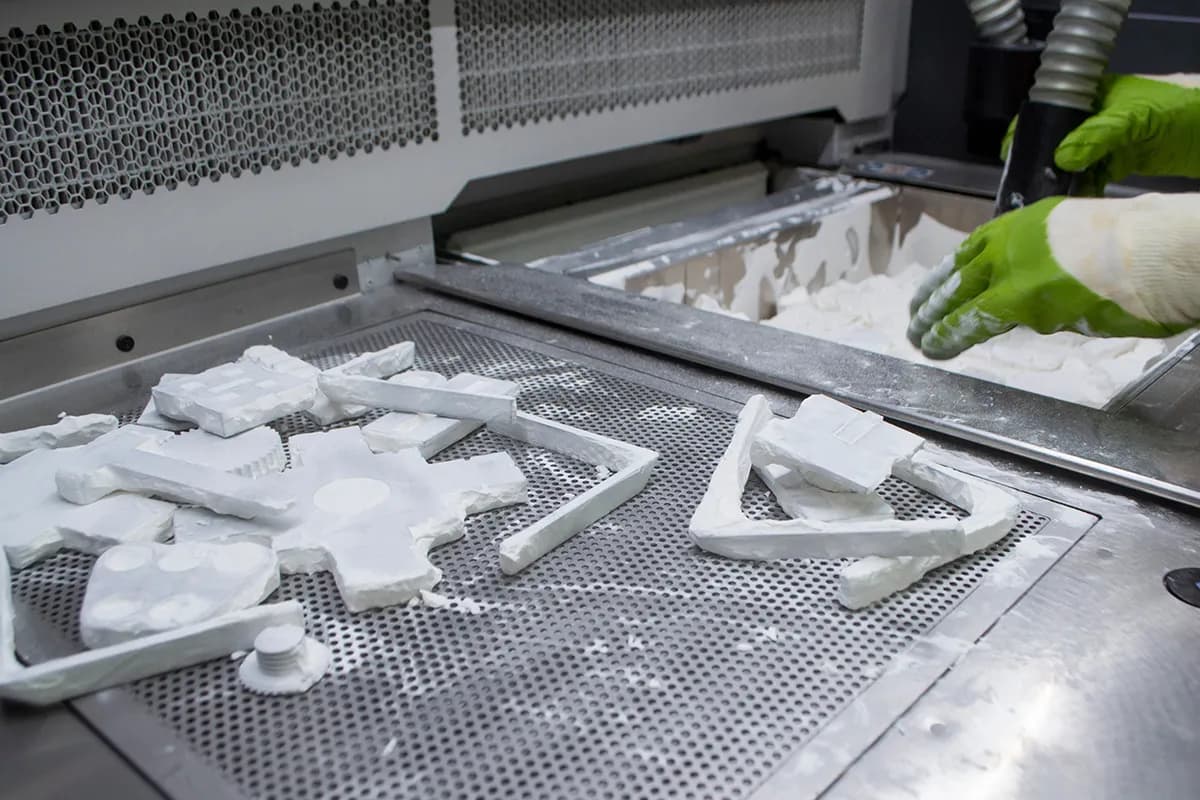
MJF parts unpacked from the powder at a processing station
Advanced Manufacturing

Built with Precision MJF Technology

HP High Reusability PA12 is manufactured using Multi Jet Fusion (MJF) technology, combining speed and consistency for high-volume production applications. Forge Labs' HP Jet Fusion 5200 systems run continuous build, cool and unpack cycles, so production lots run back to back with rapid cycle times.

Tolerance
±0.3% (min ±0.5 mm)
Production capacity
Multiple parts and assemblies nested in each build
Quality control
In-process monitoring and batch traceability for consistent part quality and material properties
Colours & finishes
Charcoal grey; black dyed in-house; bead blasting, vapor smoothing and painting
Learn more about MJF technology
Frequently Asked Questions

Frequently asked questions about HP High Reusability PA12

Can't find the answer you're looking for? Reach out to our customer support team.

HP High Reusability PA12 combines up to 80% powder reusability for cost efficiency with a tensile strength of 50 MPa and a tensile modulus of 1900 MPa in both the XY and Z directions, fine detail resolution and a uniform matte finish, making it suitable for automotive and industrial production parts.
Start a quote

Ready to Get Started with HP High Reusability PA12?

Upload your design and get an instant quote for HP High Reusability PA12 parts.

  • Instant pricing with automated manufacturability analysis
  • Production workflows built for repeatable quality
  • Engineering support from prototype to production
Compare all materials

Create an account to upload CAD

STEP, STL, OBJ, 3MF and IGES supported

Manufacturing technologies
6
Engineering materials
50+
Part quantities
1-500+