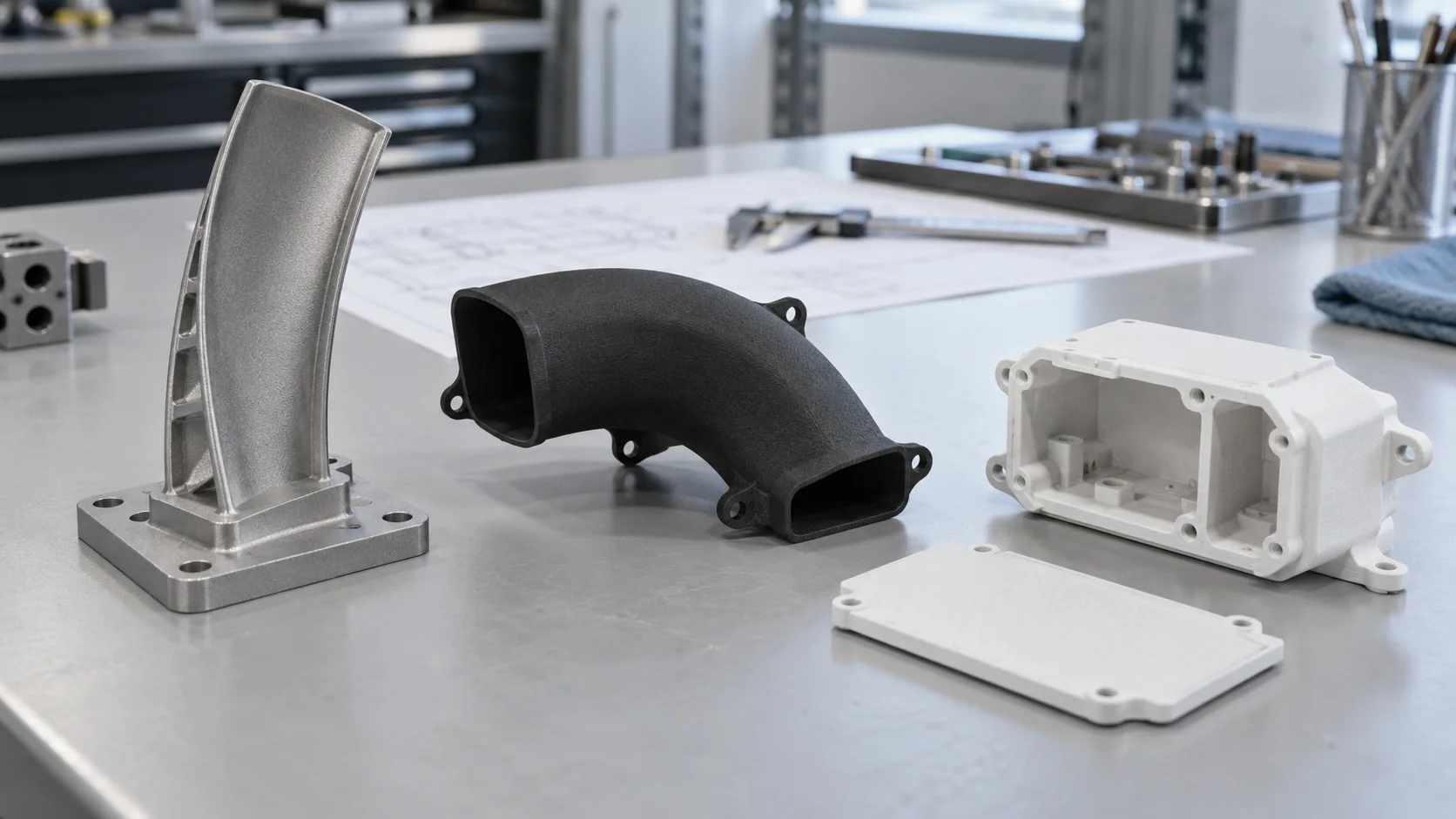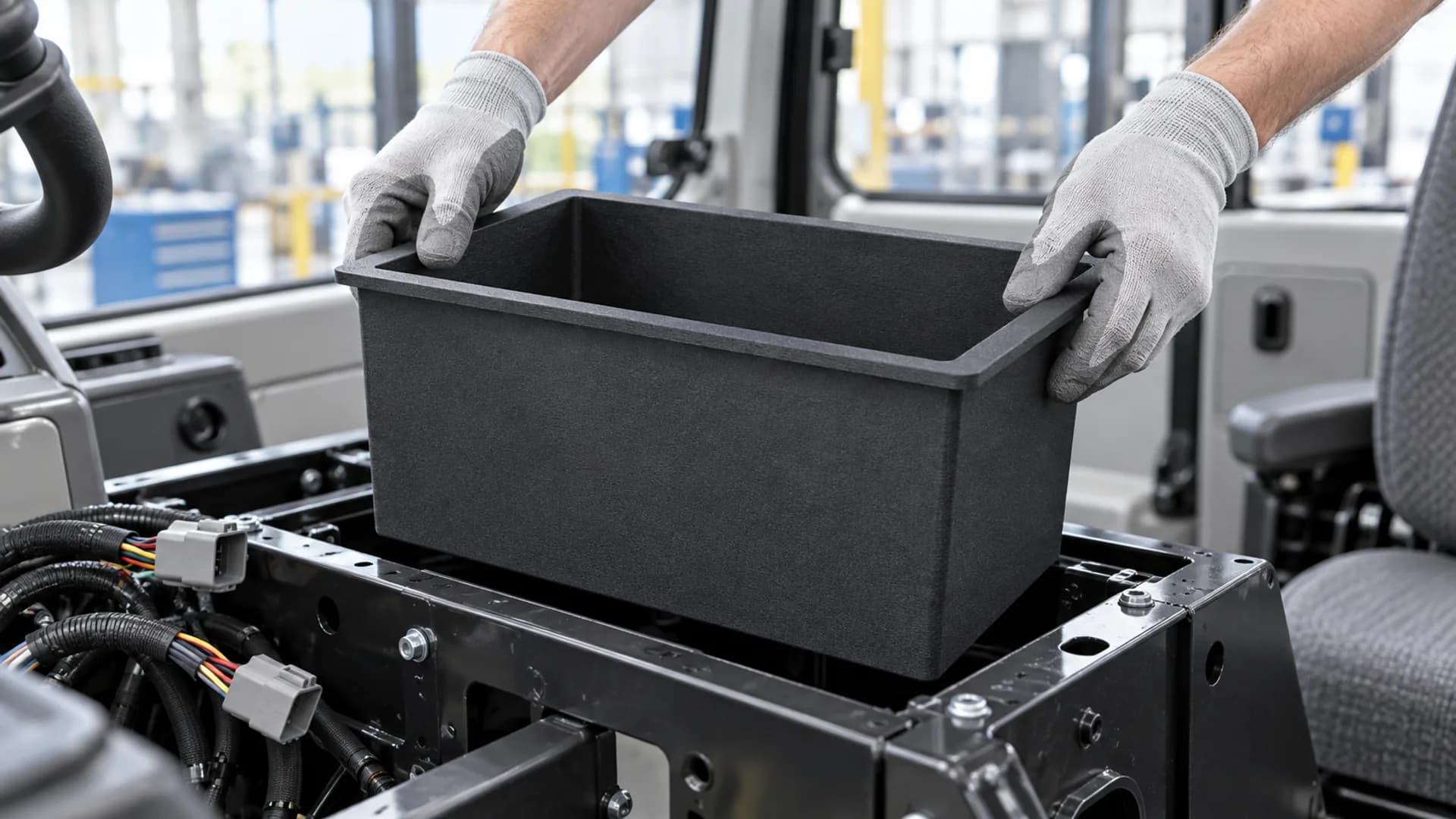
Cab enclosures, dashboard panels and air ducts put different demands on a printed part. A large enclosure needs mounting features and enough build space. A duct needs an accessible air passage and a material suited to its temperature. Small covers and brackets need to be easy to reorder as assembly needs change.
These examples bring together separate customer projects: repeat cab enclosures and HVAC parts, a dashboard panel, and another set of air ducts. They show where SLS nylon and SLA resin each fit, how we plan large parts through production, and which details make the next order easier.
Process SelectionChoose the Process for the Part's Job
In the cab work, large control enclosures and mounting frames were ordered alongside ducts, brackets, holders, covers and caps. Printing allowed deep pockets, perimeter flanges, internal bosses and ribs to be built into the enclosure geometry without mould tooling. Small batches could follow the assembly schedule, and a revised model could go into a later order without changing a mould.
The process choice followed the part. Large enclosures used SLS PA12. The HVAC orders specified SLA with Accura 25 resin. Some small nylon parts were ordered as MJF, with SLS substitutions approved on several orders. A repeat part therefore needs an agreed material and process specification, even when two powder-bed processes could make its shape.
| Part example | Process and material | Manufacturing decision |
|---|---|---|
| Cab enclosures and mounting frames, up to about 400 mm | SLS PA12, dyed black | Print the pockets, flanges and bosses together; plan the complete geometry into a large powder-bed build. |
| HVAC ducts and a connector | SLA Accura 25, black finish specified | Define the resin grade, temperature requirement and tolerances alongside the smooth air-path geometry. |
| Small holders, brackets, covers and caps | PA12 powder-bed; SLS or MJF as agreed | Check thin rails and hinge features, preserve the approved file and order only the next required batch. |
| Dashboard panel from a separate project | SLS PA12, black | Produce a large, open panel geometry with fixing points and stand-offs in a small order. |
| Inlet and outlet ducts from a separate air-duct project | SLS PA12, natural white | Make curved passages and mounting flanges without internal support structures; allow access for powder removal. |
Nylon suits parts that need some flexibility during assembly, such as clips, rails and hinge knuckles. SLA offers a smoother surface and fine feature definition. We match these characteristics to the fixing method, operating temperature, finish and required fit of each part.
Large PartsPlan Enclosures Around Build Space and Cooling
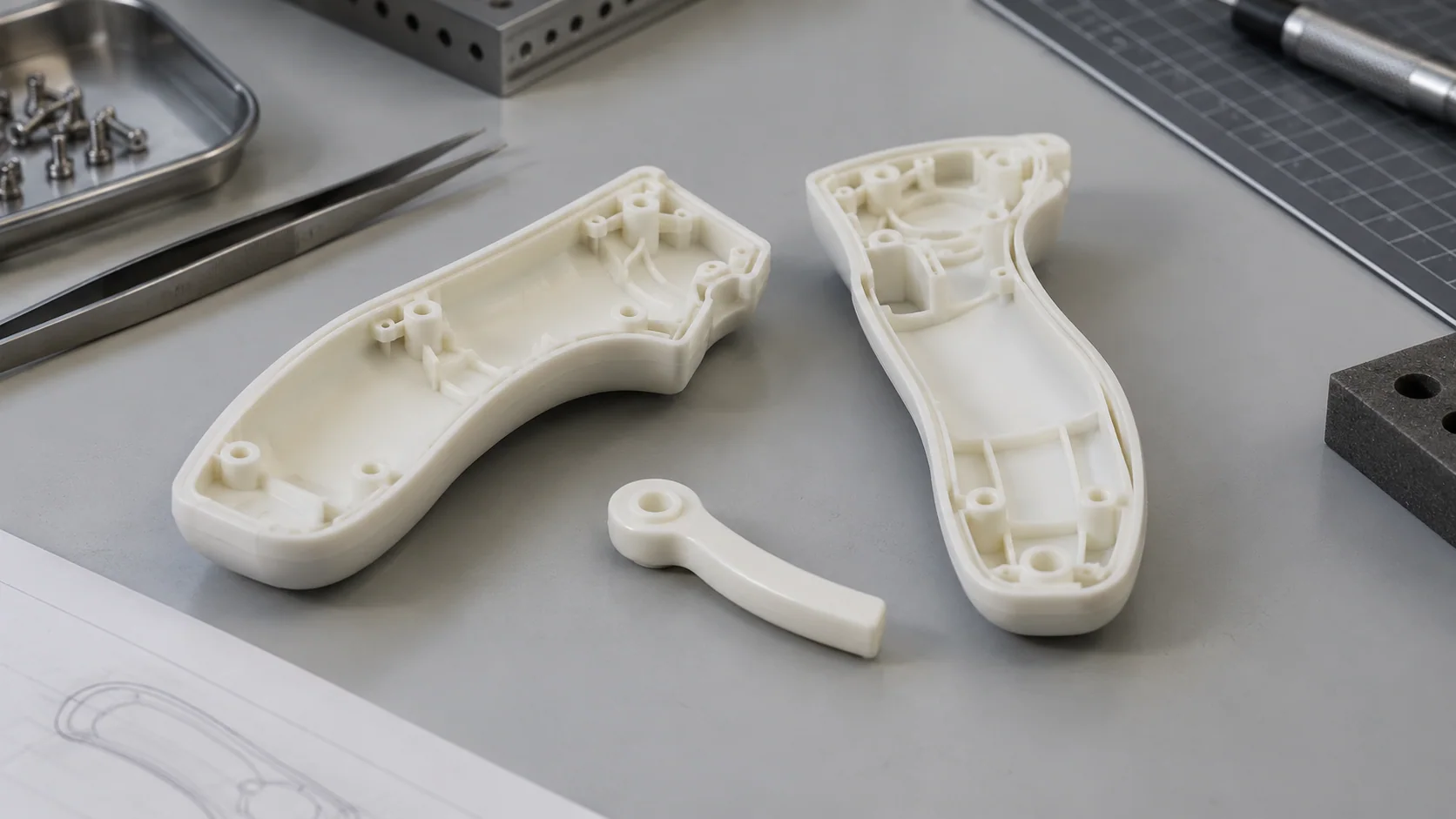
The cab enclosures are deep, tub-shaped parts with bolt flanges, switch and connector openings, internal ribs and mounting bosses. Matching open frames carry clips and tabs. At roughly 400 mm long, these parts need their complete shape checked against the build volume before their orientation is chosen.
An EOS P396 has a 340 × 340 × 600 mm build volume. For a part roughly 400 mm long, diagonal or more upright placement may provide room for the full shape. We check its width, depth, projections and clearances together to choose an orientation that accommodates both the part and its detailed features.
Hollow enclosures also occupy much more build space than their fused material volume suggests. The recorded large-frame builds containing these cab parts ran at around 7% packing density across the whole build and included other jobs. Enclosure sets were spread across several builds, with estimated print cycles of 24 to 30 hours and recorded cooling allowances of up to 48 hours before breakout.
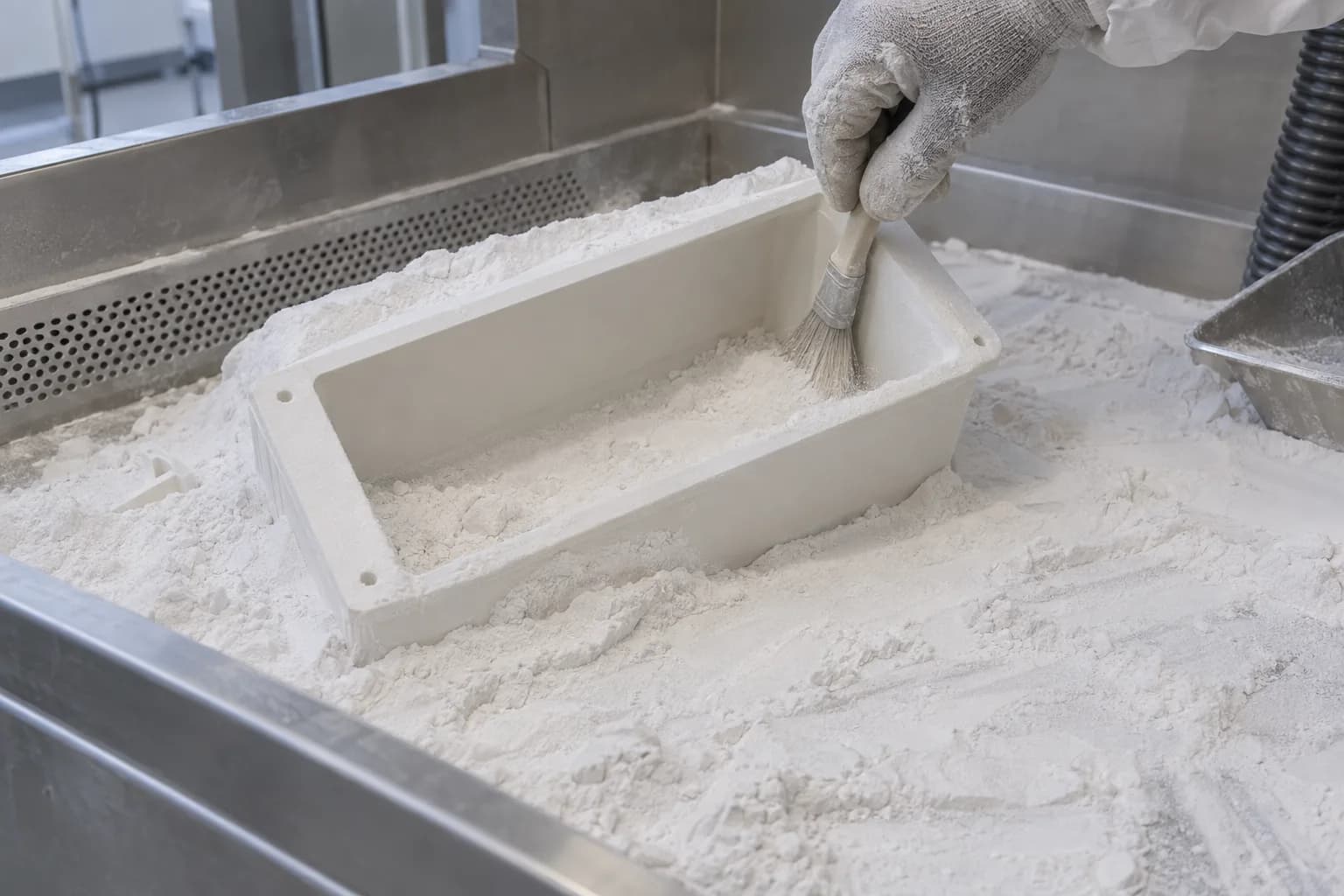
A hollow enclosure needs room in the build and time to cool before the surrounding powder is removed.
These enclosures integrated features that would otherwise need machining or assembly, with no secondary machining specified. Sampled walls were about 2.5 to 4 mm, comfortably above our general SLS minimum of 0.8 mm and 1.0 mm recommendation. Mounting loads and the span of a wall still matter more than simply exceeding the minimum printable thickness.
The separate dashboard panel was roughly 360 mm across, with an open framework, fixing points and stand-offs. It was ordered in black SLS PA12 and shipped eight business days after submission. Its open geometry shows how mounting features can be incorporated into a large panel produced in a small order.
We assess the complete model and required finish when planning a large part. Turnaround includes build scheduling, cooling, depowdering and finishing as well as printing. Those steps explain why a single panel and a set of large hollow enclosures can have different lead times.
Air DuctsChoose a Duct Material for the Actual Air Path
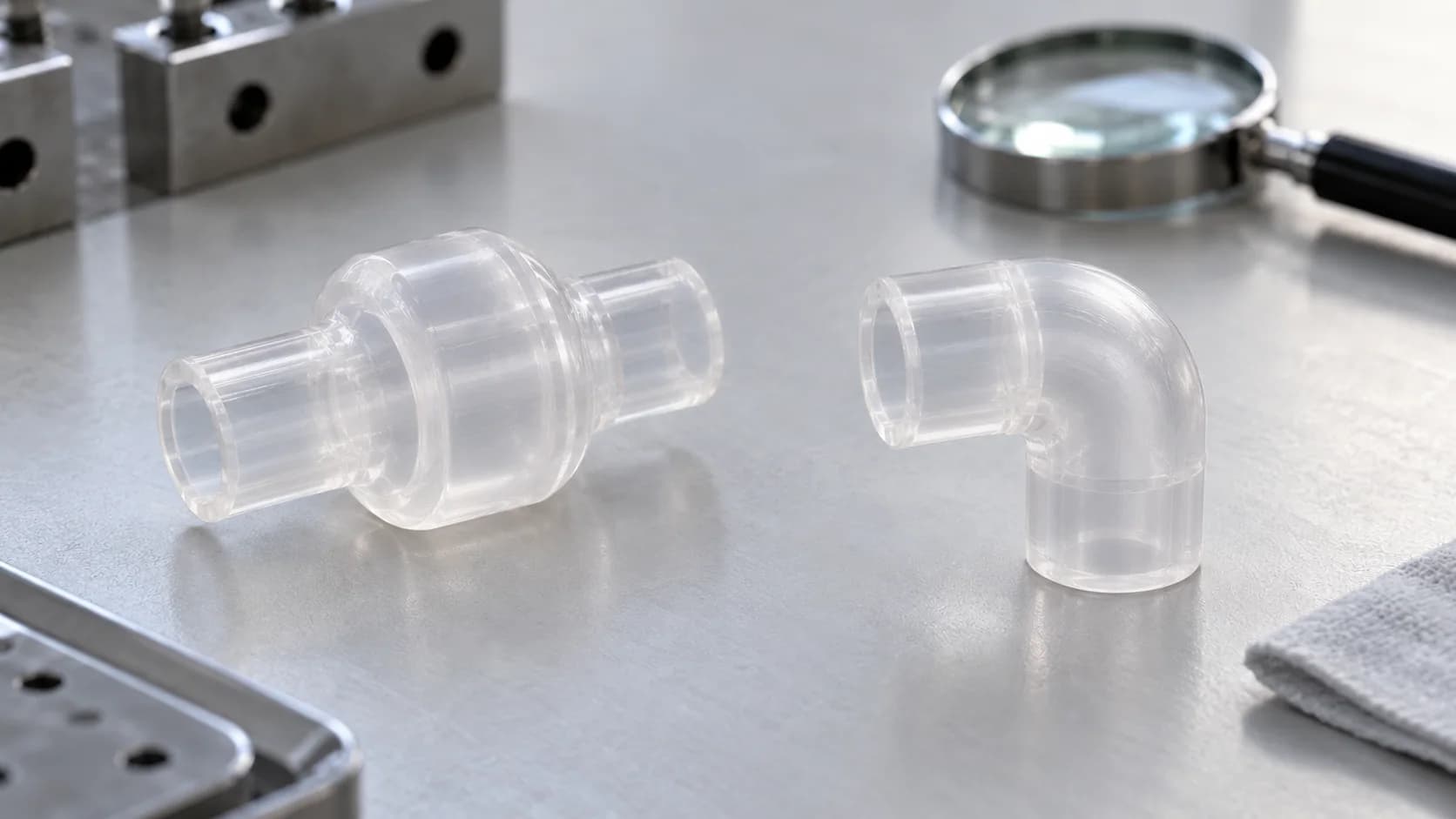
The cab HVAC orders included an intake duct, a blower duct and a smaller connector. The customer drawings specified SLA, and the orders specified Accura 25. SLA gives these parts smooth surfaces, sharply defined flanges and fine connector features. Sampled wall sections were roughly 2 mm.
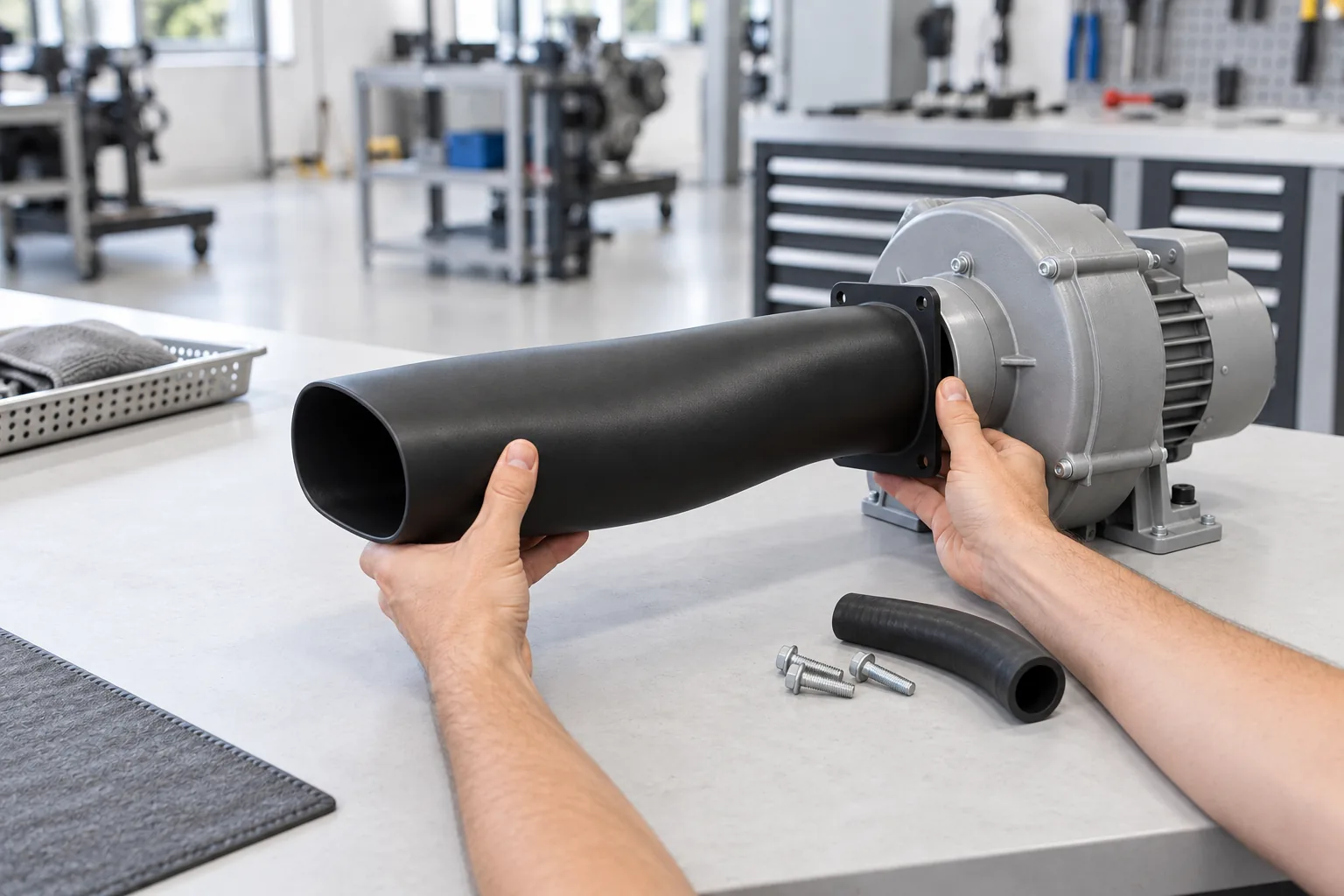
The air passage, mounting flange and material choice all contribute to how a duct works in its assembly.
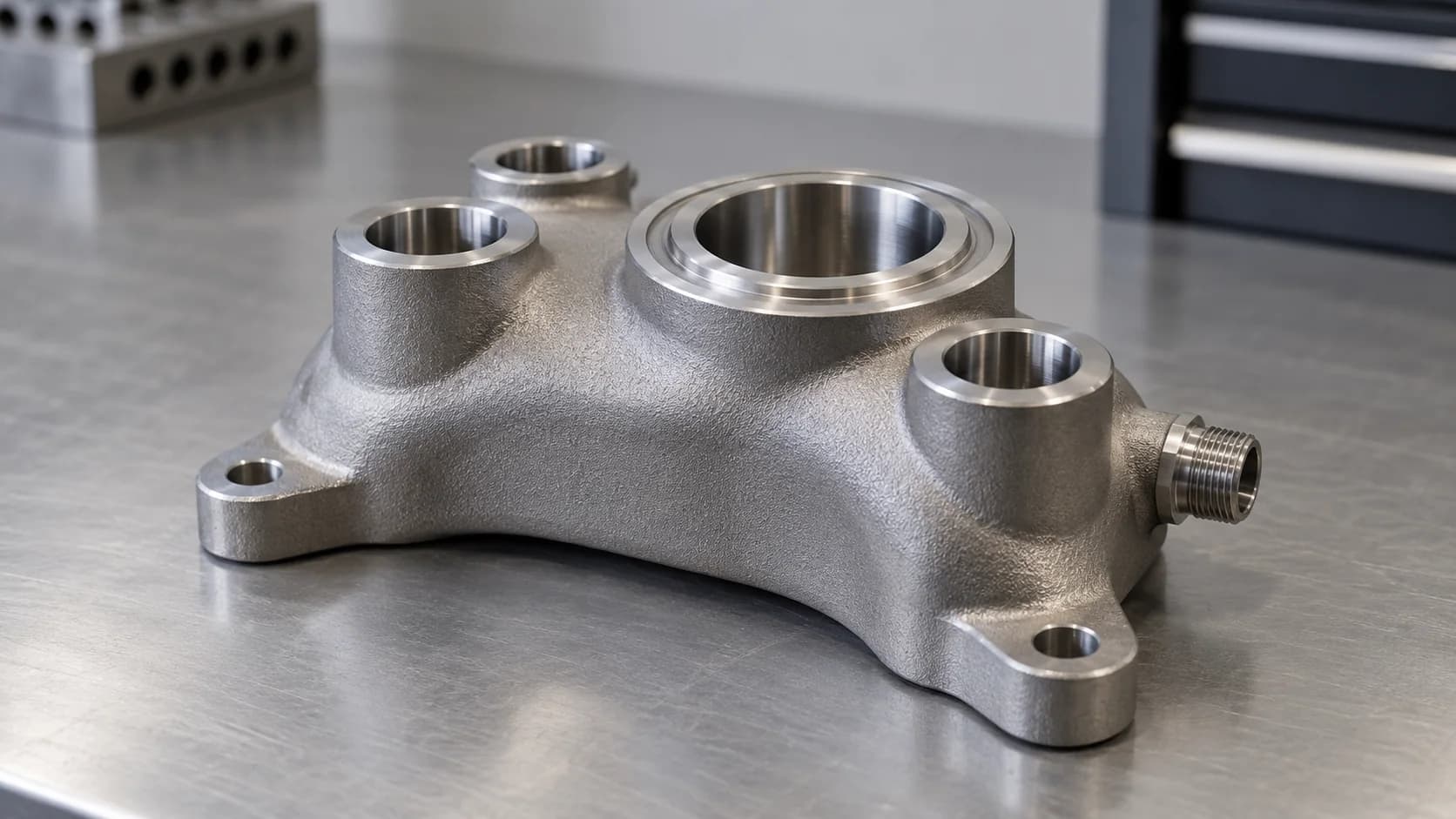
In the separate air-duct project, inlet and outlet parts with curved passages were ordered in natural white SLS PA12. Their curved hollow transitions and mounting flanges show why nylon powder-bed printing is another useful route for duct geometry. The surrounding powder supports the passage during printing, but it must be removable afterward. Open ends and access to bends need to be considered before the part is released.
The comparison is useful when choosing a process for a new duct: SLA can favour surface detail, while SLS offers nylon and support-free passage geometry. The required air temperature, mounting loads and access for cleaning should guide that choice.
Temperature, finish and fit work together
Accura 25 is a polypropylene-like SLA resin with smooth surfaces and fine feature definition. Its post-cured heat deflection temperature is 58 to 63 °C at 0.45 MPa, falling to 51 to 55 °C at 1.8 MPa. The lower value at higher load shows why thermal and mechanical requirements belong together in duct design. Air temperature, flange stiffness, fastener loads and duration of exposure all inform the material choice.
Ducting before a heater core sees a different duty from ducting carrying its heated output. For higher temperature requirements, we can compare suitable PA12 grades or ULTEM 1010 against the operating conditions. The process choice also accounts for the surface finish and fit needed at the duct's connections.
- Finish and lead time. Our black finish for Accura 25 adds one production day, which we account for when planning the order.
- Assembly interfaces. Flange faces, hole positions and connector fits determine how the duct meets neighbouring parts. We can review these interfaces where a closer fit is needed. Our general Accura 25 tolerance is ±0.25% with a minimum of ±0.25 mm; SLS PA12 is ±0.3% with a minimum of ±0.3 mm.
- Sealing and airflow. Where a gasket is used, flange stiffness and fastener placement help control compression around the joint. Assembly trials can evaluate fit, leakage and airflow before the design moves into repeat production.
Make Small Parts and Design Changes Easy to Reorder
The small cab parts included a hinged holder, a mating slide-in plate, covers and caps. Small SLS batches shared builds with other jobs on an EOS P110, with recorded build estimates around 14 to 15 hours. This is useful for quantities that would not justify mould tooling or a dedicated machine run.
Our portal makes an existing order the starting point for the next batch. Repeat order creates a new quote using the stored CAD files, process and material, ready to configure for the quantity and finish needed next. There is no need to find and upload the same models again.
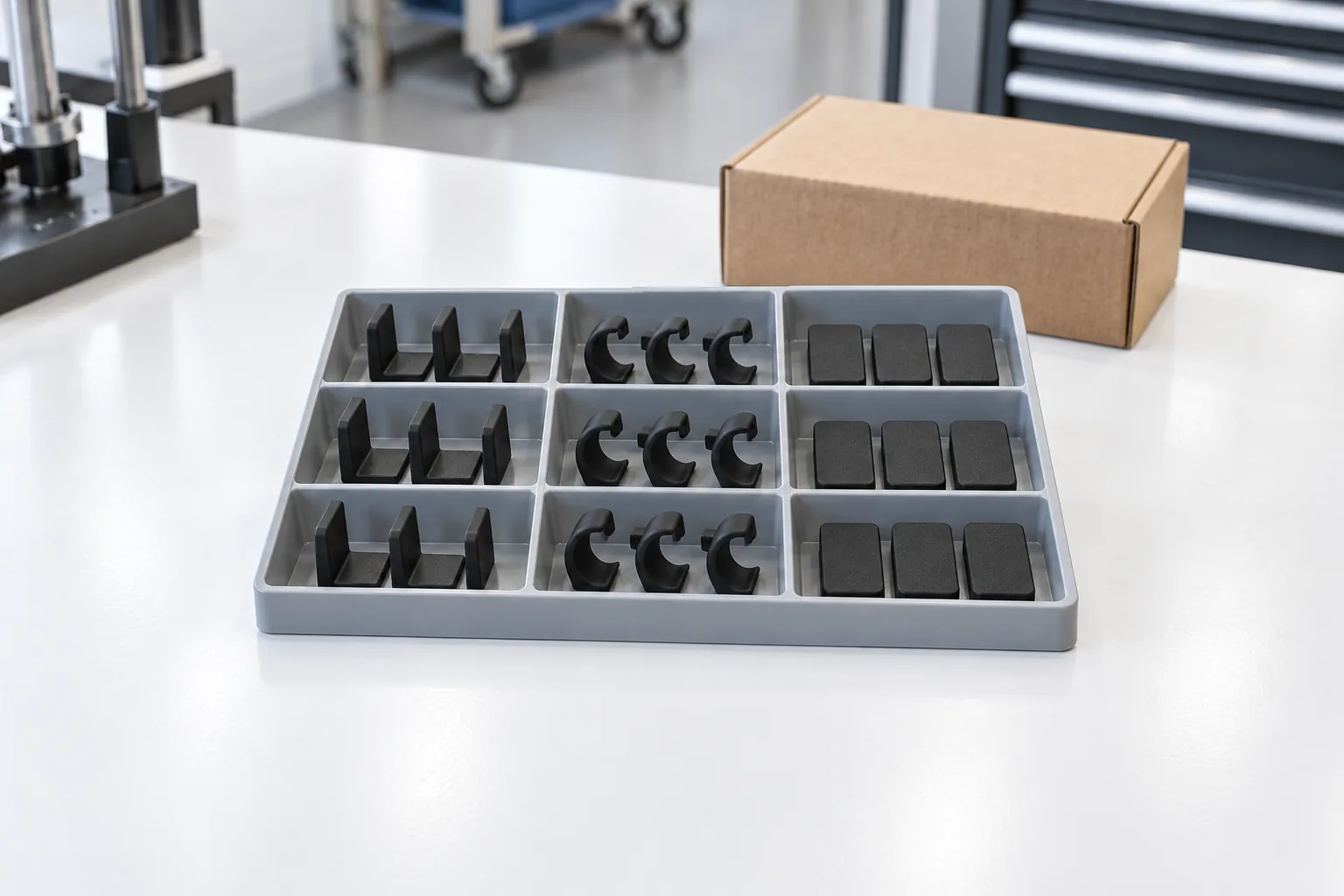
Small nylon parts can share a scheduled build, making low-quantity reorders practical.
Small features can govern assembly behaviour even when the main wall is substantial. In the holder and mating plate, local regions around 0.6 mm appeared alongside much thicker walls. A clip needs room to flex, while a locating rail needs enough stiffness to guide its mating part. Our SLS design guide starts at 1.5 mm for unsupported walls; the span, loads and intended movement help determine the geometry of each feature.
From design updates to repeat parts
CAD revision history is built into the portal. While preparing a quote, a new model can replace the current version while earlier revisions remain available to review or restore. That keeps design updates connected to the part instead of relying on filenames to communicate which version is current.
In these examples, a duct drawing revision added flange holes, while a connector model changed within essentially the same outer envelope. A moved fixing hole changes alignment; a revised connector can change clearance or sealing at the joint. Additive manufacturing allows those interfaces to evolve without modifying a mould. We can review the affected features and any material or finish changes before the next run.
Manufacturing and FinishingPlan Manufacturing, Finishing and Inspection
Turnaround includes build scheduling, printing, cooling and finishing. These completed orders show how part size and production requirements affect the time from submission to dispatch, excluding carrier transit.
| Completed example | Order to dispatch |
|---|---|
| Small SLS cap batch | 2 business days |
| Small SLS cover batches | 3 business days |
| Separate large dashboard panel | 8 business days |
| Large cab enclosure sets | About 3.5 to 4.5 calendar weeks |
A consistent finish across repeat parts
We dye black SLS and MJF PA12 parts in-house on DyeMansion equipment after depowdering and surface preparation. SLS PA12 starts white; MJF PA12 starts grey. Dye penetrates around 0.2 mm into EOS PA 2200, with depth varying by material. Colour penetrates the surface instead of forming a paint film, but a deep gouge can still expose lighter nylon underneath.
A consistent material and finish help repeated parts look and fit alike. Sliding interfaces also benefit from suitable clearance and local wear features, keeping movement and appearance in balance. Our black SLS PA12 finish adds no production days; other colours can, with red adding two in the current catalogue.
Visible cab panels and enclosures need a finish that holds its colour through exposure to sunlight and heat. Standard DyeMansion black retained its colour better than the conventional textile dye tested under the same conditions. That matters on a panel near a window, where fading can make an otherwise functional part look worn or mismatched with neighbouring trim.
For assembly teams, part identification and inspection records make repeated components easier to receive and use. We can agree the critical checks and any Certificate of Conformance requirements during quoting, so the documentation relates to the material, process and requirements used for the parts.
HP HR PA12 for the Jet Fusion 5200 process has passed FMVSS 302 testing for interior-material flammability. For interior panels and covers, that gives designers a documented material option to evaluate alongside stiffness, finish and mounting requirements.
Chemical resistance matters for covers and brackets that may contact vehicle fluids during servicing. MJF PA12 specimens showed no chemical attack or stress cracking with the tested oils, grease, brake fluid and coolant at 60 °C for four to six weeks. Coolant caused some softening, making retained stiffness and fit useful checks for clips or clamped features exposed to it. This connects the material choice to how the part is mounted and maintained.
Discuss Your Enclosures, Ducts or Panels With Us
We can help match your enclosure, duct or panel to a suitable process, material and finish, from the first fit check through repeat production. For design details, see our SLS, MJF and SLA guides and surface finishes guide.
Related examples include hairpin stator assembly nests and repeat SLS PA12 production without tooling. Explore our automotive applications and end-use part manufacturing service for more options.
Lead times start at 2 business days, with 24-hour turnaround available on request and next day shipping anywhere in the US and Canada. We will confirm the schedule for your parts and finish when quoting.
Discuss your parts with us