Automotive
Fluid Reservoirs & Welded Assemblies
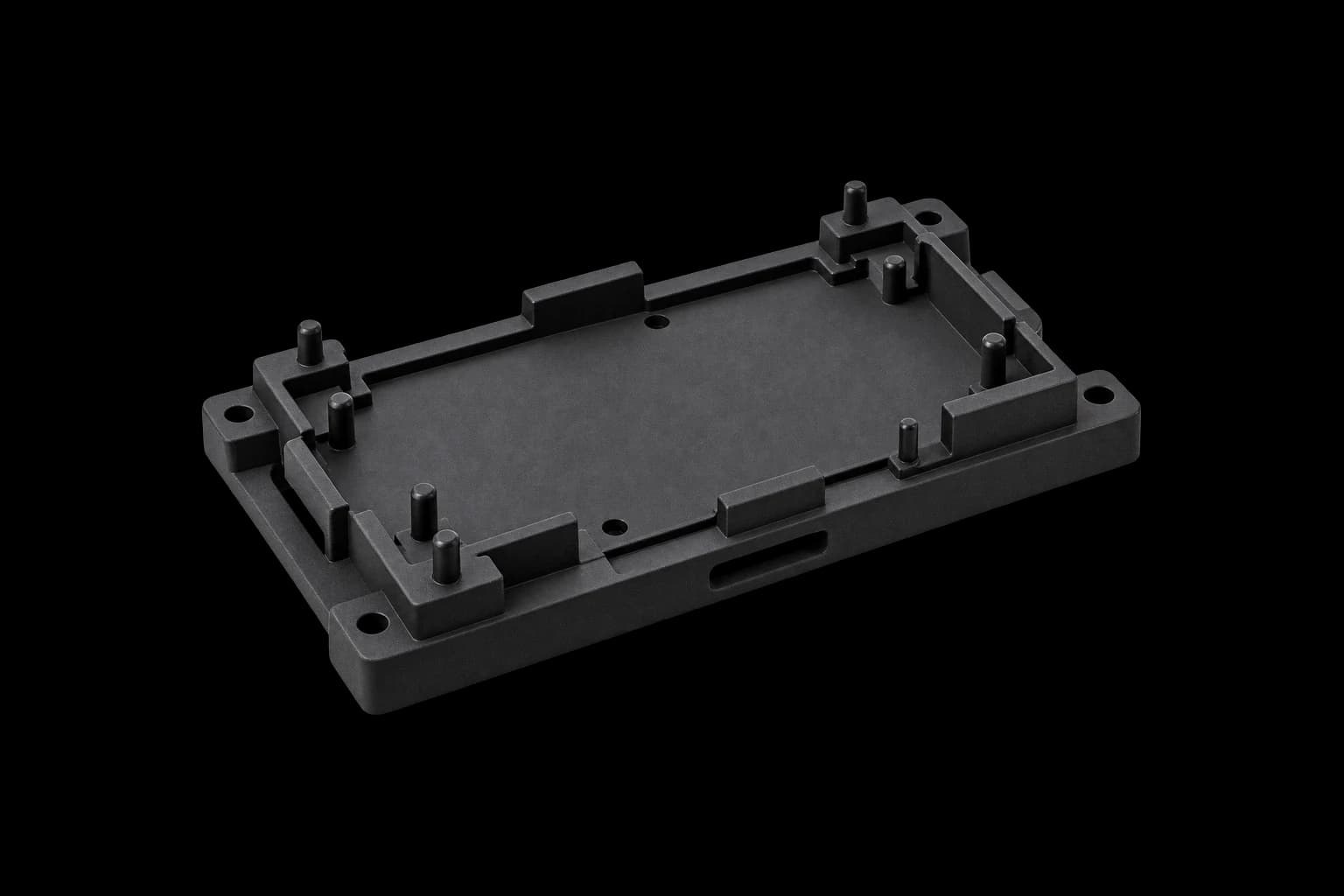
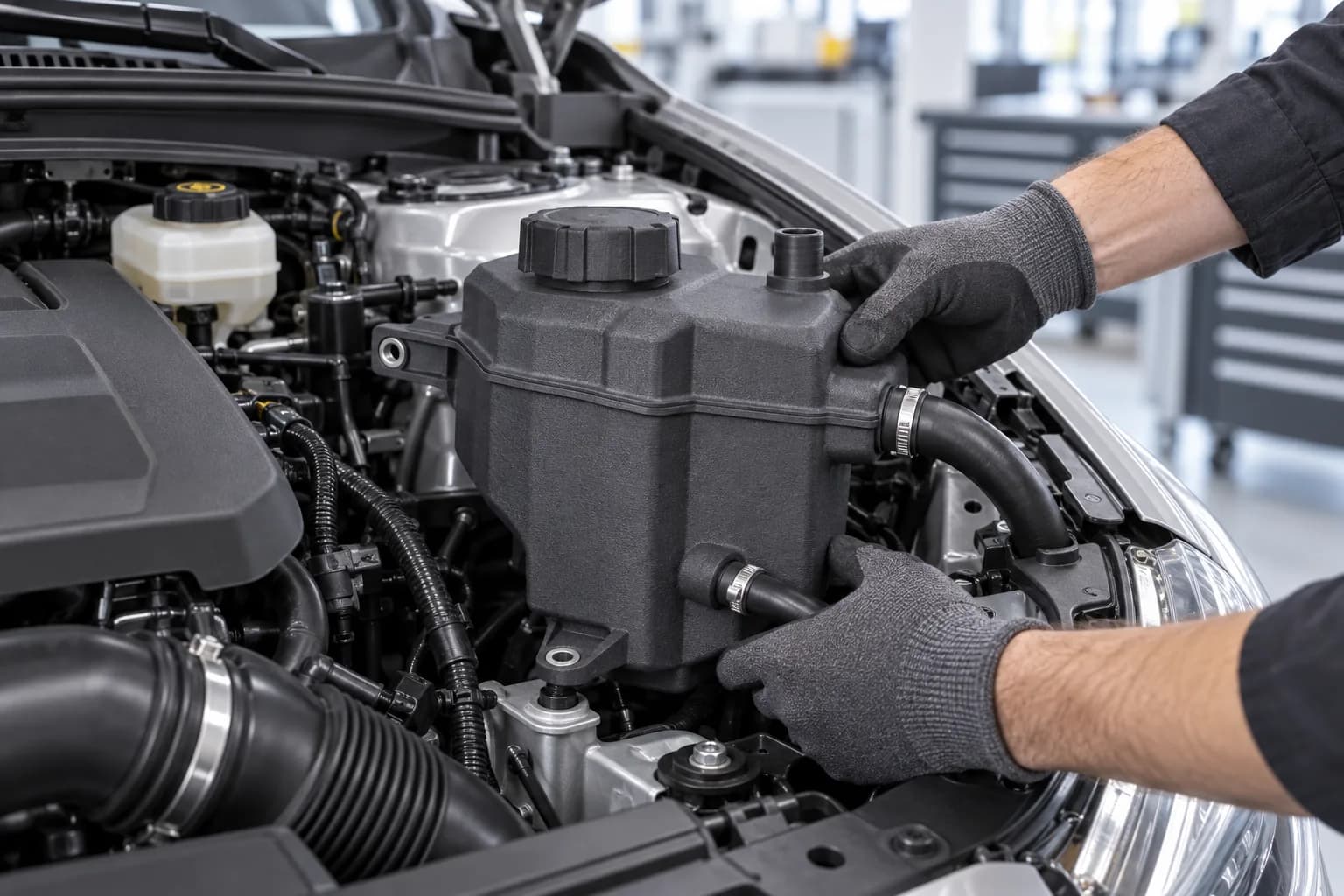
Reservoir parts printed and hot-plate welded in six days instead of seven weeks, sealing hermetically in leak tests.
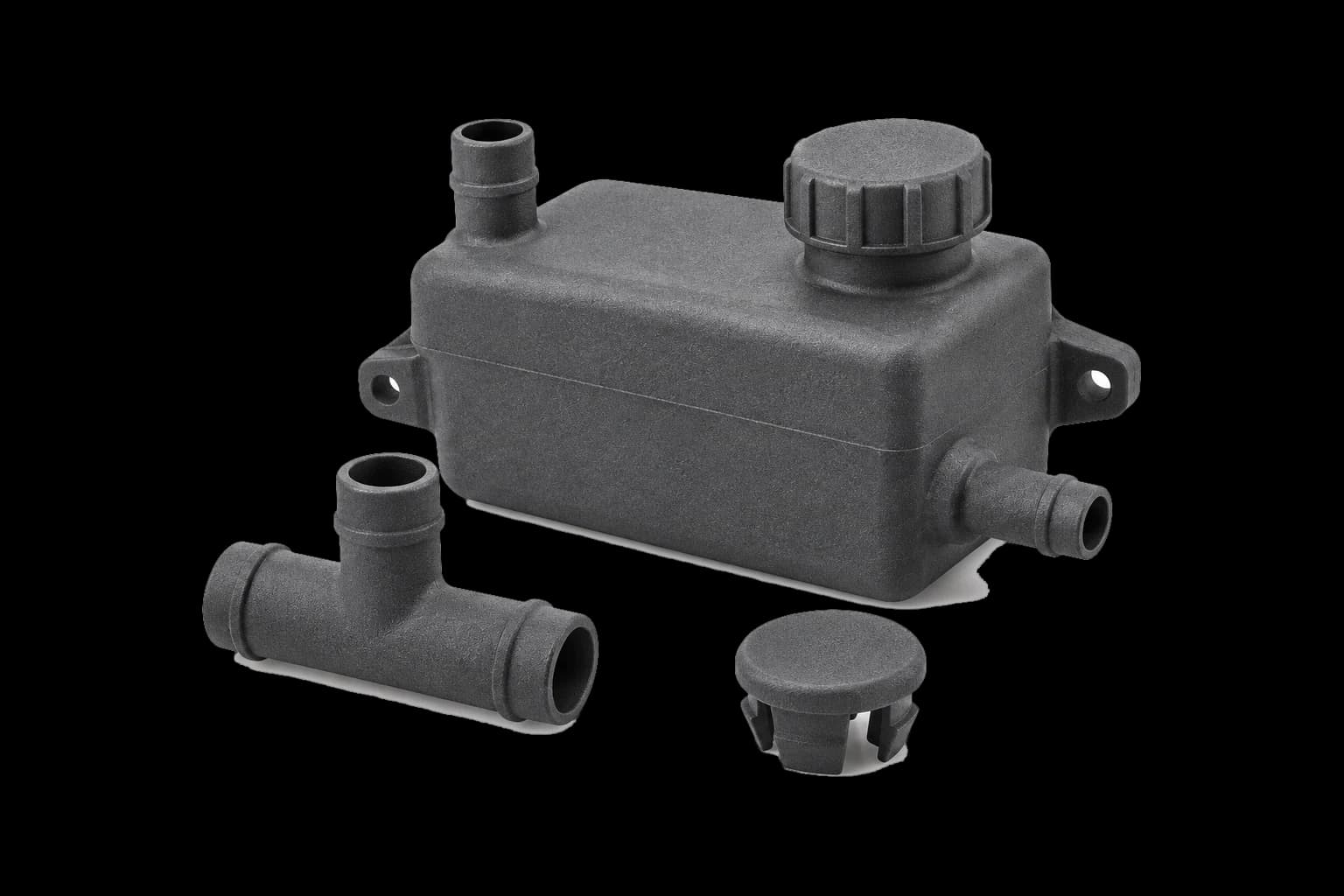
Polypropylene (PP) is one of the most common injection-moulded plastics, and HP Multi Jet Fusion 3D printing makes parts in genuine PP rather than a PP-like substitute. HP 3D High Reusability PP stands up to many chemicals, absorbs very little water and is light enough to float, and printed parts can be welded to moulded PP parts. That lets you test prototypes in the same plastic as the production part, and print end-use parts without tooling. Choose it for fluid reservoirs, piping, tanks and containers, automotive parts and orthotics.
How polypropylene is manufactured
Polypropylene is manufactured using HP Multi Jet Fusion (MJF) on the HP Jet Fusion 5200, an industrial powder-bed process that applies fusing and detailing agents with 1200 dpi precision and fuses each full layer with infrared energy. Parts build without support structures or tooling.
Every polypropylene quote is prepared by an engineer with a manufacturability review, so warp-prone flat sections and tight fits are fixed before the part prints.
Every polypropylene quote is prepared by an engineer with a manufacturability review, so warp-prone flat sections and tight fits are fixed before the part prints.



Polypropylene lets teams print in the polymer their production parts are moulded in. Product developers test fit, snap action, chemical exposure and welding on prototypes that behave like the moulded part, and manufacturers print end-use reservoirs, fittings, housings and orthoses without tooling or minimum order quantities.
It sits at the top of the HP Multi Jet Fusion range for chemical resistance, low moisture absorption and light weight, which suits piping, fluid systems and containers that sit in water, coolant, cleaning chemicals or dilute acids and bases.
Printed parts weld to injection-moulded PP with standard plastic welding processes, so printed caps, ports and fittings join moulded parts.
Choose it over HP MJF PA12 when chemical resistance, moisture, weight or welding matter more than stiffness, heat resistance and tight tolerances. Choose Tough 1500 Resin, a PP-like SLA resin, when a prototype needs a smooth surface, finer detail and far more stretch, and the real polymer is not required.
Automotive
Reservoir parts printed and hot-plate welded in six days instead of seven weeks, sealing hermetically in leak tests.
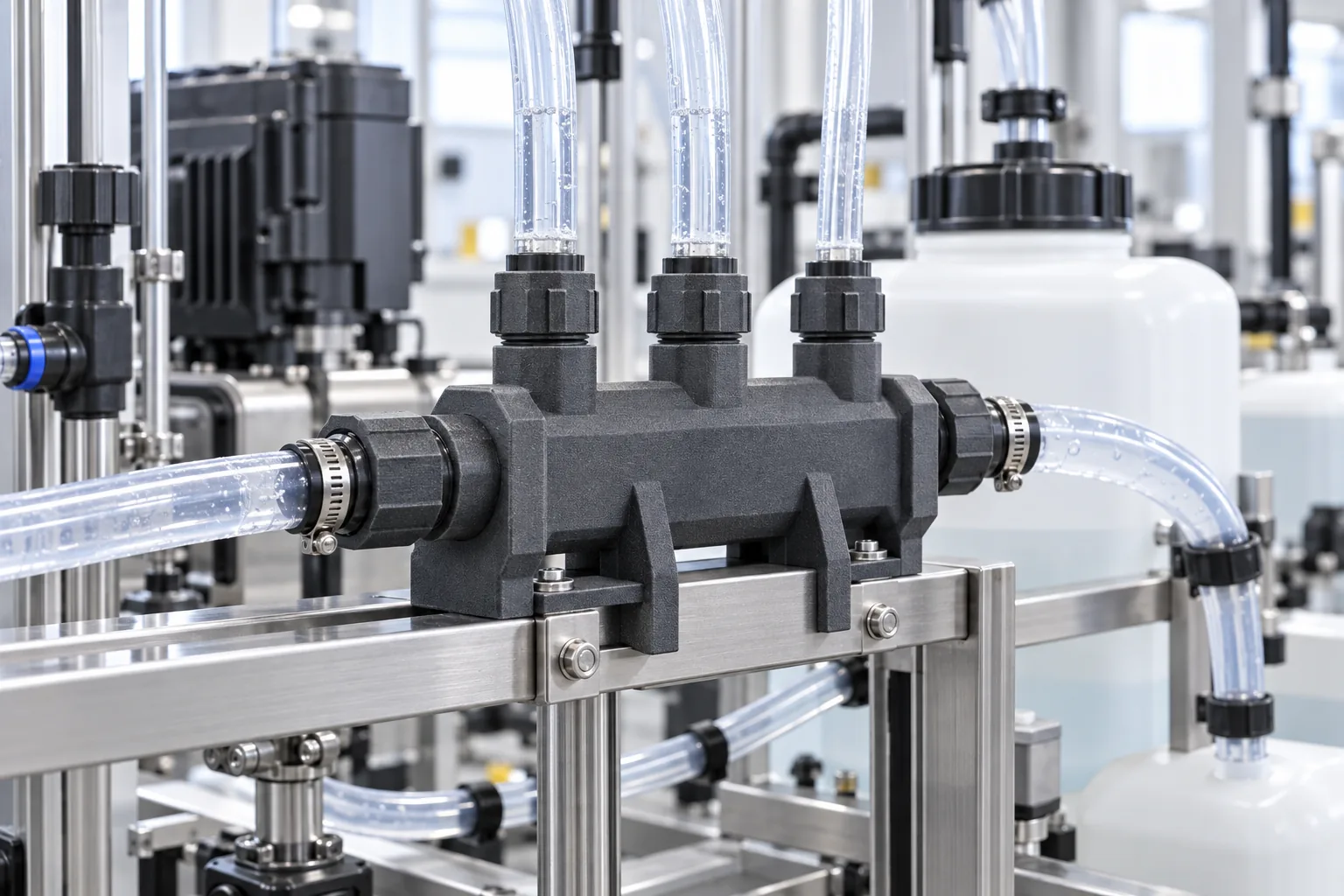
Clean Tech
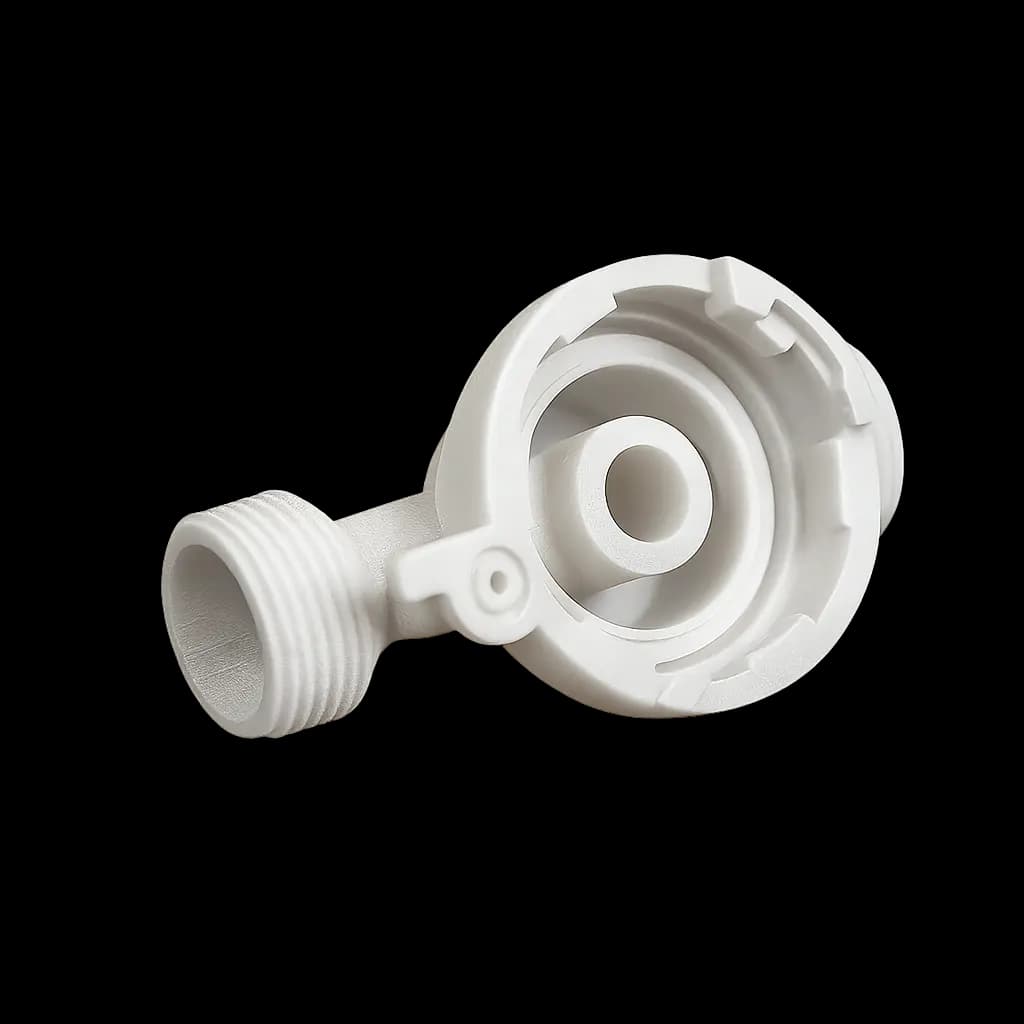
Manifolds, fittings and tanks in a chemical-resistant PP that stays light and absorbs little moisture.
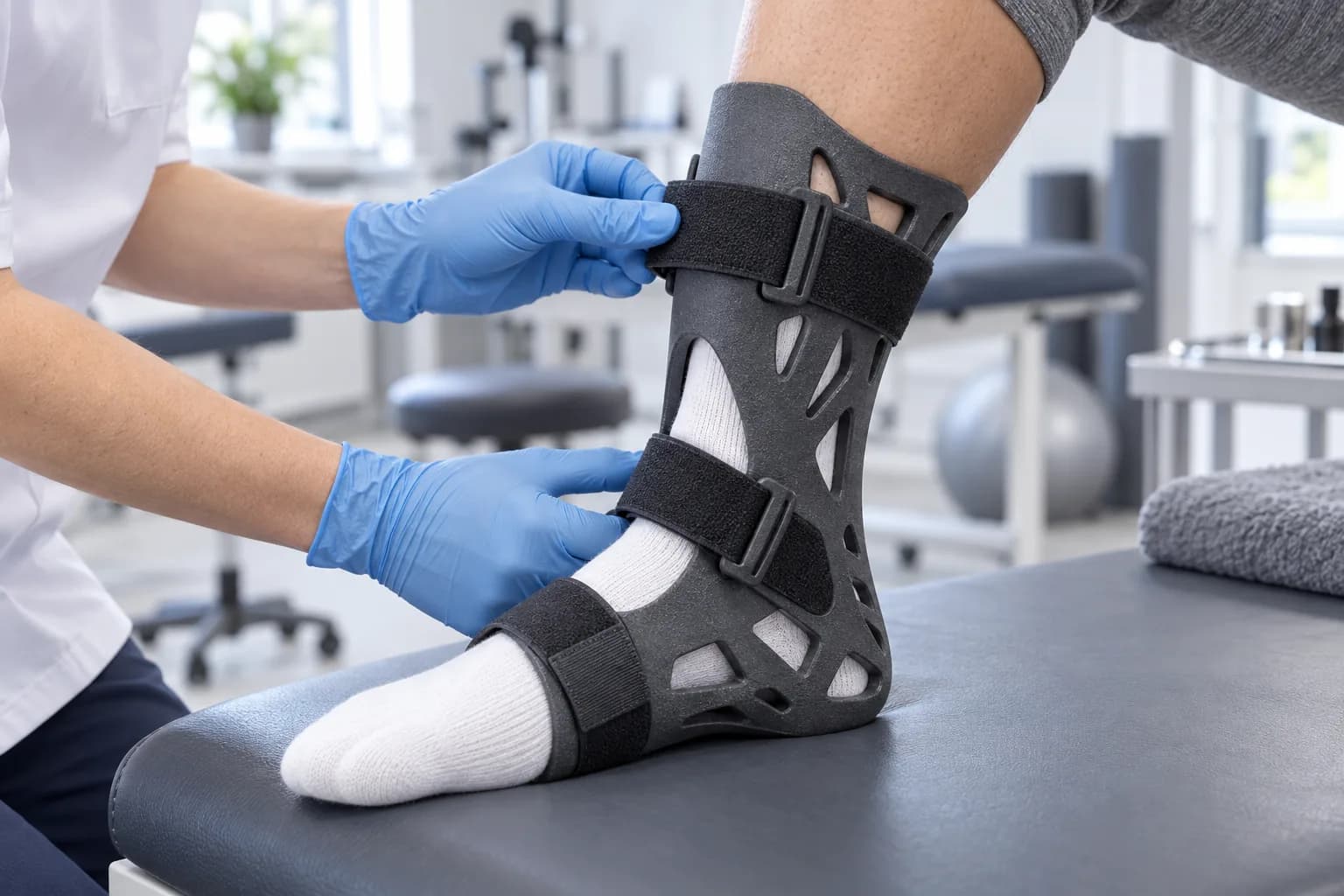
Medical & Healthcare
Light orthoses and skin-contact parts in a PP tested to ISO 10993 for intact-skin devices.
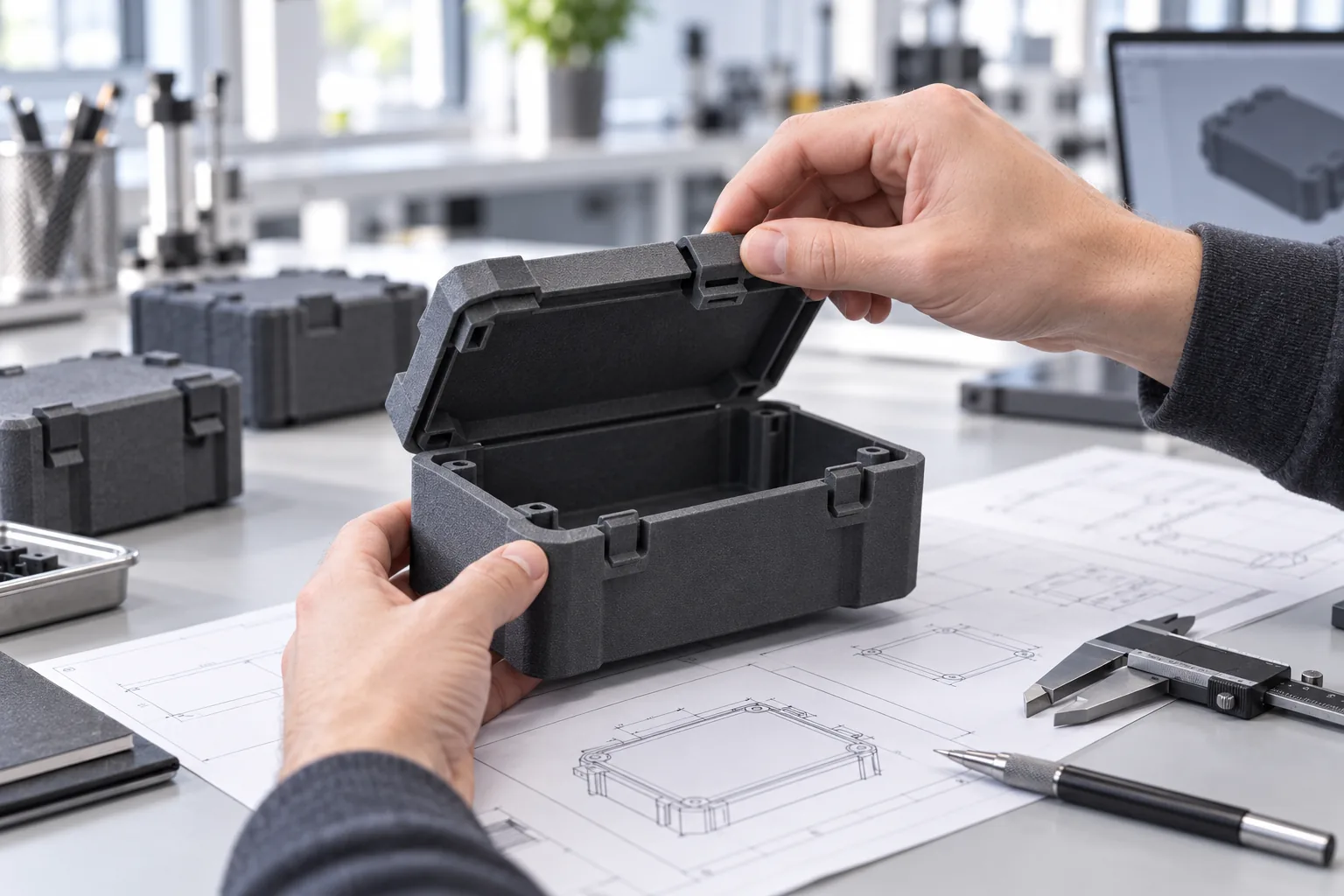
Industrial Design
Prototypes and pilot runs in the production polymer, so fit, snap action and welding are proven before tooling.
Automotive
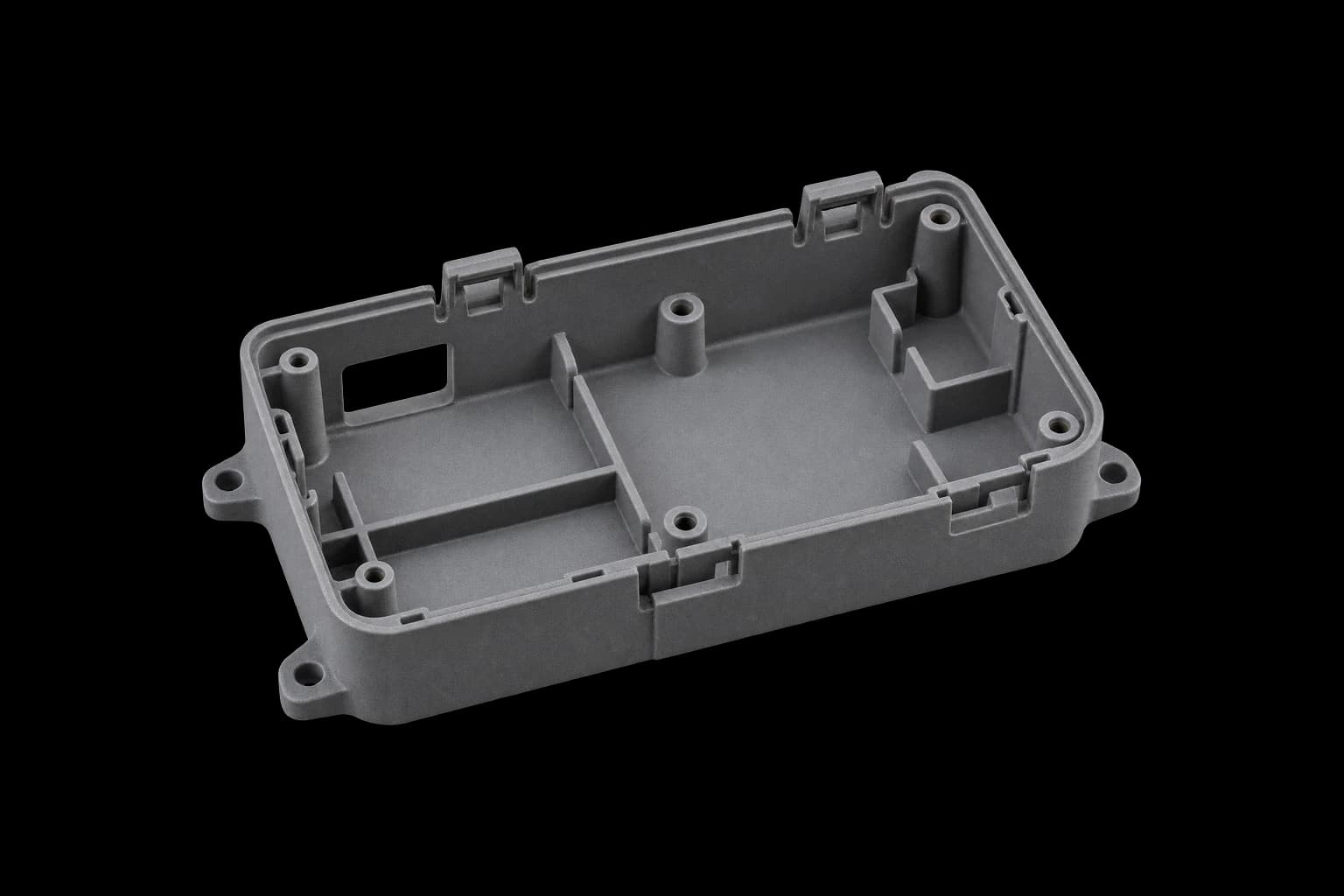
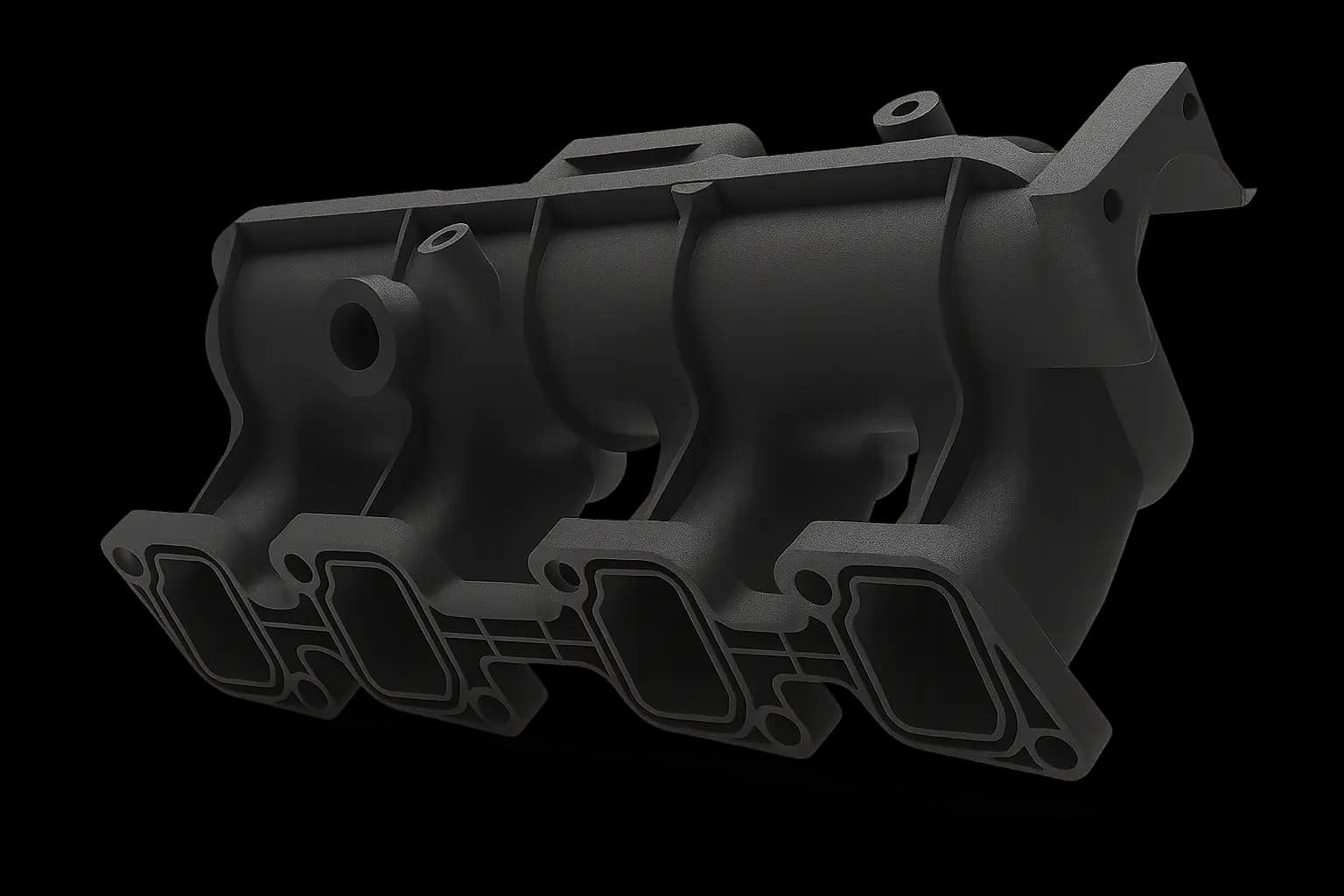
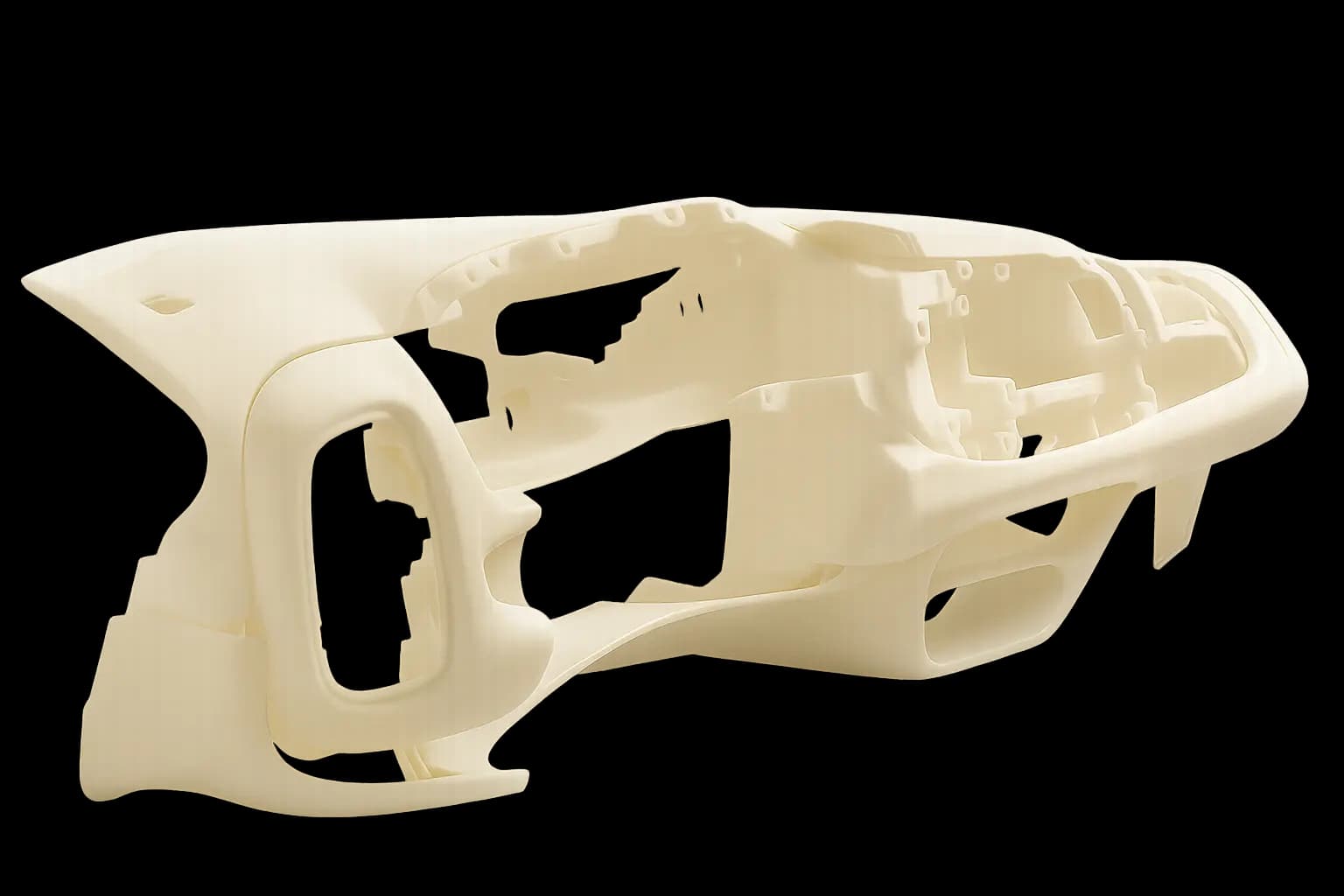
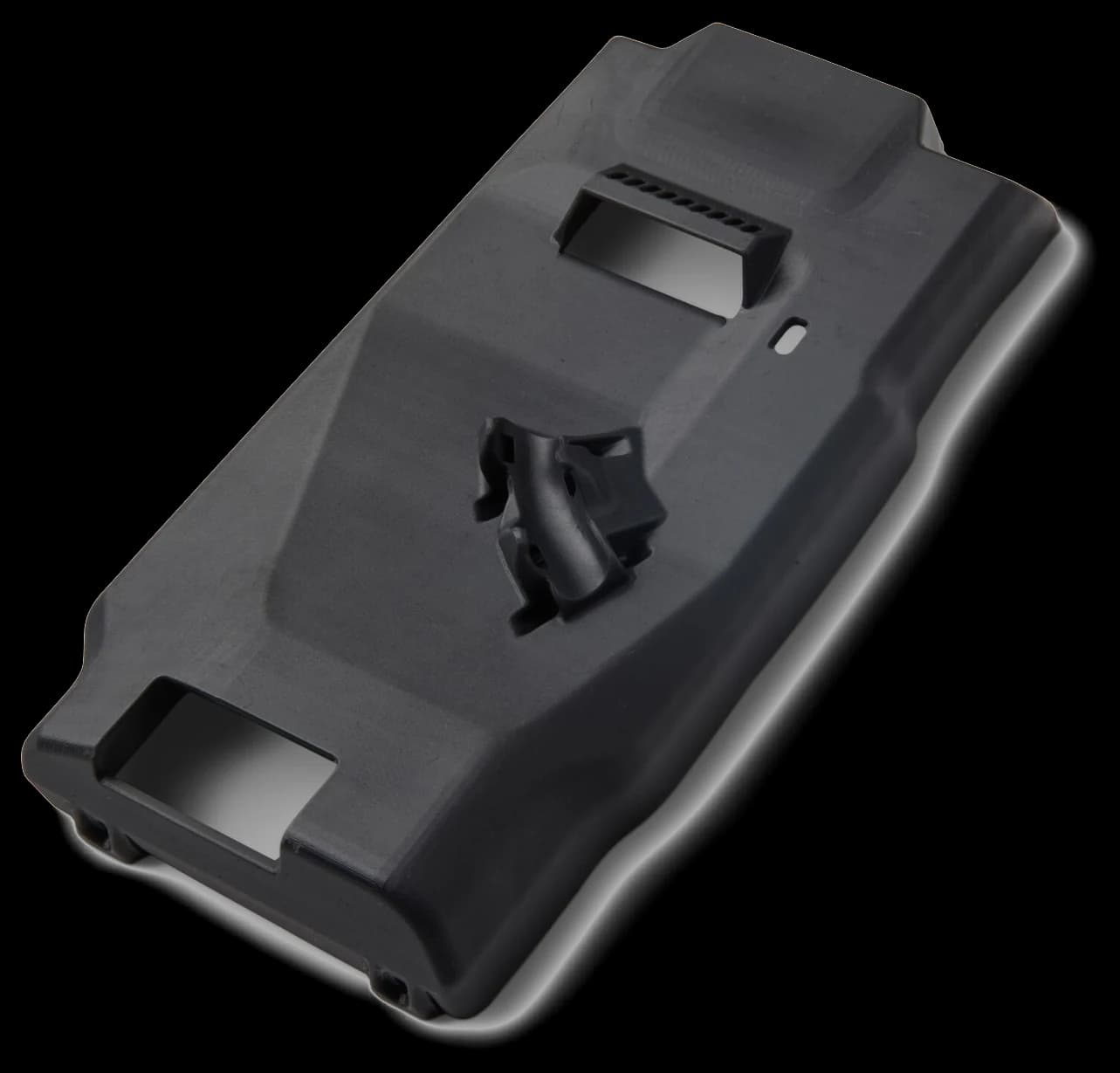
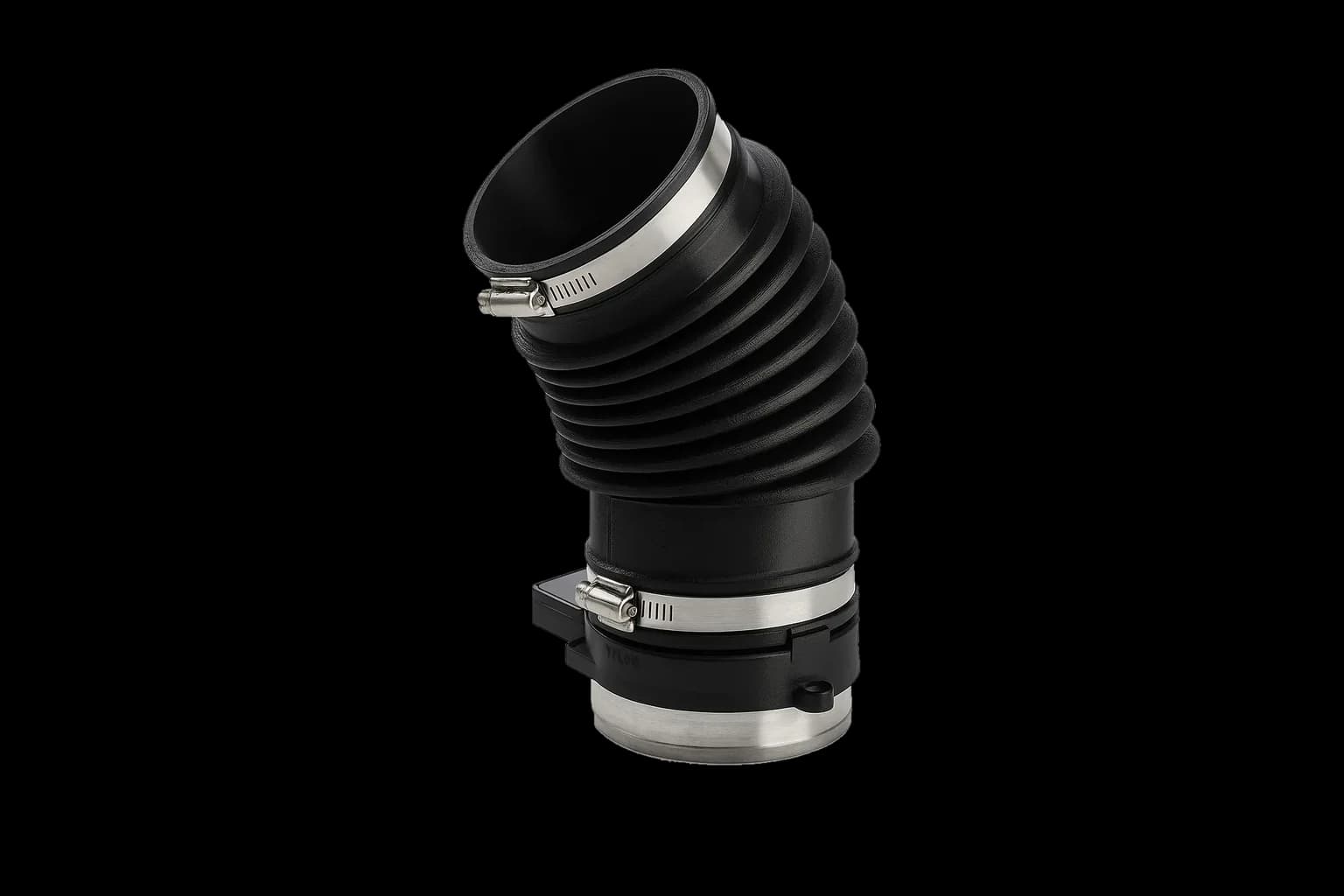
MJF polypropylene suits automotive fluid reservoirs, fluid and HVAC system parts and interior parts, and prototypes print in the polymer the production part is moulded in. One plastics assembly specialist printed fluid reservoir parts in MJF polypropylene and hot-plate welded them on prototype tooling: the first functional assembly took six days instead of seven weeks, the weld reached parent-material strength in burst testing and the assembly sealed hermetically in leak testing.
Clean Tech
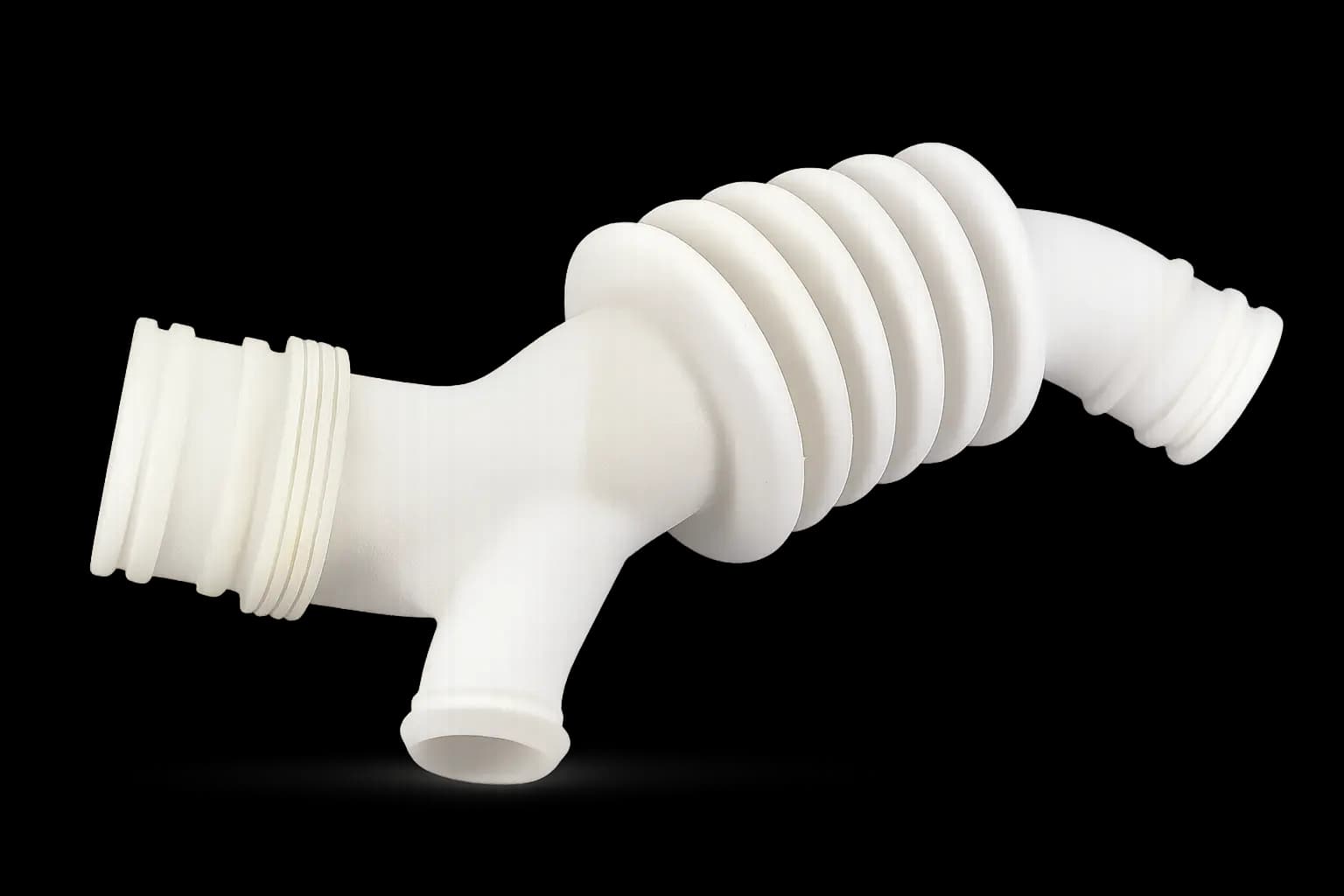
Equipment builders use MJF polypropylene for manifolds, pipe fittings, tanks and covers that carry water, coolant or process chemicals, where chemical resistance and low moisture absorption count for more than stiffness. Internal channels and integrated fittings print in one part without supports.
Medical & Healthcare
Orthotic and device makers use MJF polypropylene for braces, orthoses and device parts that touch intact skin. Printed parts have been tested to ISO 10993 for intact-skin devices, and low density keeps worn parts light.
Industrial Design
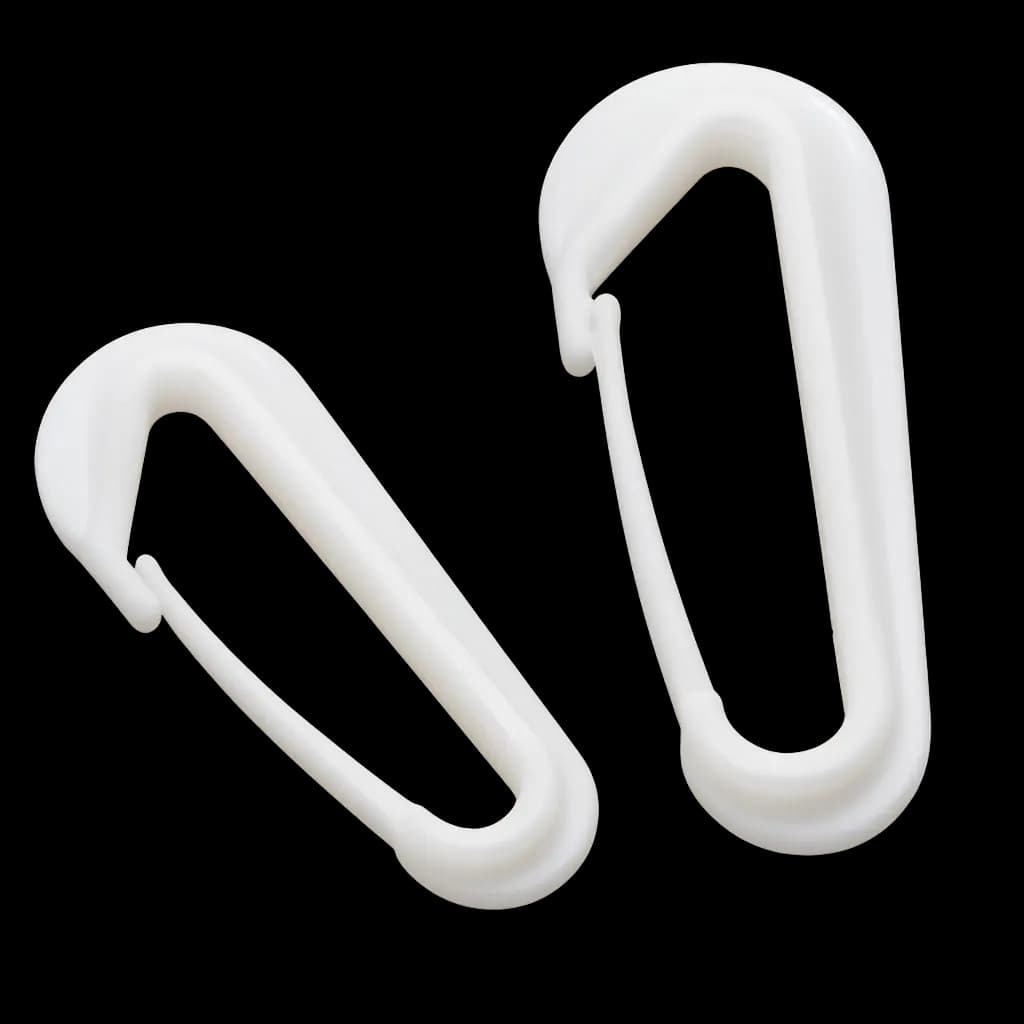
Product teams use MJF polypropylene to prototype housings, caps, clips and containers that will be injection moulded in PP, so fit, snap action, chemical exposure and welding are proven in the production polymer before the mould is cut. Pilot runs and limited launches print with no tooling.
Values from HP's mechanical properties white paper for HP 3D High Reusability PP on the Jet Fusion 5200 Series, with powder data from HP's materials guide, tested to the standard listed with each property.
Mechanical performance
Read this group as a balance of stiffness and give. Tensile modulus shows how firmly a part resists bending: polypropylene is less stiff than PA12, so clips and thin walls deflect with less force, and load-bearing brackets need thicker sections than the same design in PA12. Tensile strength and stiffness are the same in XY and Z, so a part resists static load the same way whichever way it is built.
Elongation at break is higher in XY than in Z, so lay flexing features such as clips and latches in the XY plane. Notched impact strength shows how the material handles a sharp notch, so radius the roots of clips and bosses on parts that will be knocked.
Material makeup
Low density is the signature of polypropylene: parts weigh less than the same part in PA12 and are lighter than water, which keeps worn, handheld and moving parts light.
Powder values describe the HP 3D High Reusability PP feedstock. HP also publishes the melt flow index of the powder, which helps compare it with the moulding grade when printed parts are welded to moulded PP.
Heat performance
Heat deflection temperature shows how warm a loaded part can run before it bends. Polypropylene holds its shape under light load well above room temperature, but its deflection temperature drops sharply under higher load, so size loaded parts that run warm from the 1.82 MPa value.
Compatibility data
HP judges chemical resistance by mechanical property retention, dimensional stability and weight change after immersion, and publishes one overall result across the four chemical classes it tested, not a rating per class or per chemical.
HP names no individual fluids, so treat the result as screening guidance and confirm resistance with application-specific testing in the actual fluid, concentration and temperature before production release, especially for fuels and aromatic or chlorinated solvents.
Medical readiness
Each status comes from HP's regulatory summary for HP 3D High Reusability PP. A third-party laboratory tested parts printed on the Jet Fusion 5200/5210 from 80% reused powder with HP's agents, then sand blasted, soaked in isopropanol for 30 minutes and rinsed in deionized water, to ISO 10993-5, -10 and -11 and the USP pyrogen test, and HP expects similar parts to suit FDA and ISO 10993 guidance for intact-skin devices; each device maker tests its own device.
HP tested printed parts for RoHS substances, PAHs, phthalates, bisphenol A and soluble heavy metals under the ASTM F963 toy standard, and declares REACH registration and no intentionally added GADSL substances. HP states that no HP 3D material is approved for food contact, and it publishes no UL 94 rating for this grade.
Datasheets, design guidance and supplier documentation for Polypropylene.
Access the most recent datasheet and supporting documentation maintained by our engineering team.
Polypropylene datasheetExplore printable geometry recommendations, wall thickness tips, and finishing playbooks for MJF.
View MJF design guideSupplier declarations and test statements for this material.
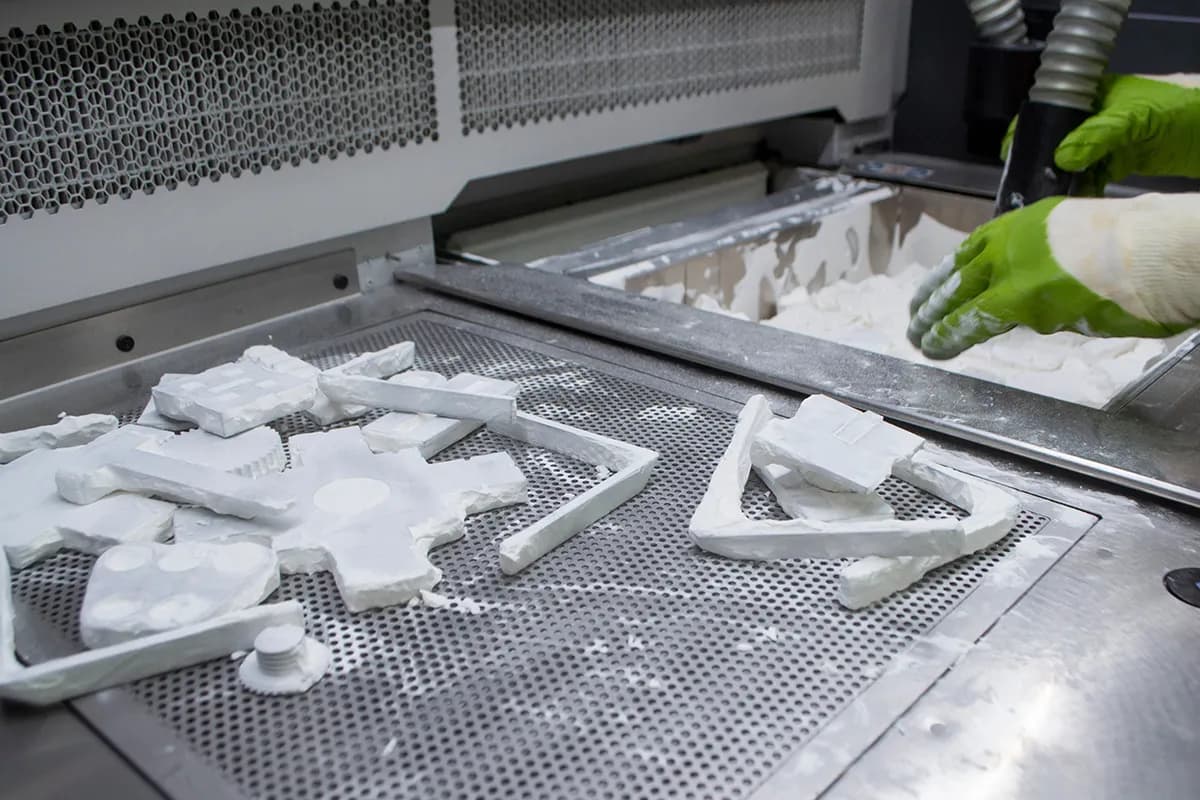
Polypropylene is manufactured using Multi Jet Fusion (MJF) technology, combining speed and consistency for production applications. Forge Labs' HP Jet Fusion 5200 systems run continuous build, cool and unpack cycles, so production lots run back to back.
Can't find the answer you're looking for? Reach out to our customer support team.
Upload your design and get a quote for Polypropylene parts from our engineers.
Create an account to upload CAD
STEP, STL, OBJ, 3MF and IGES supported