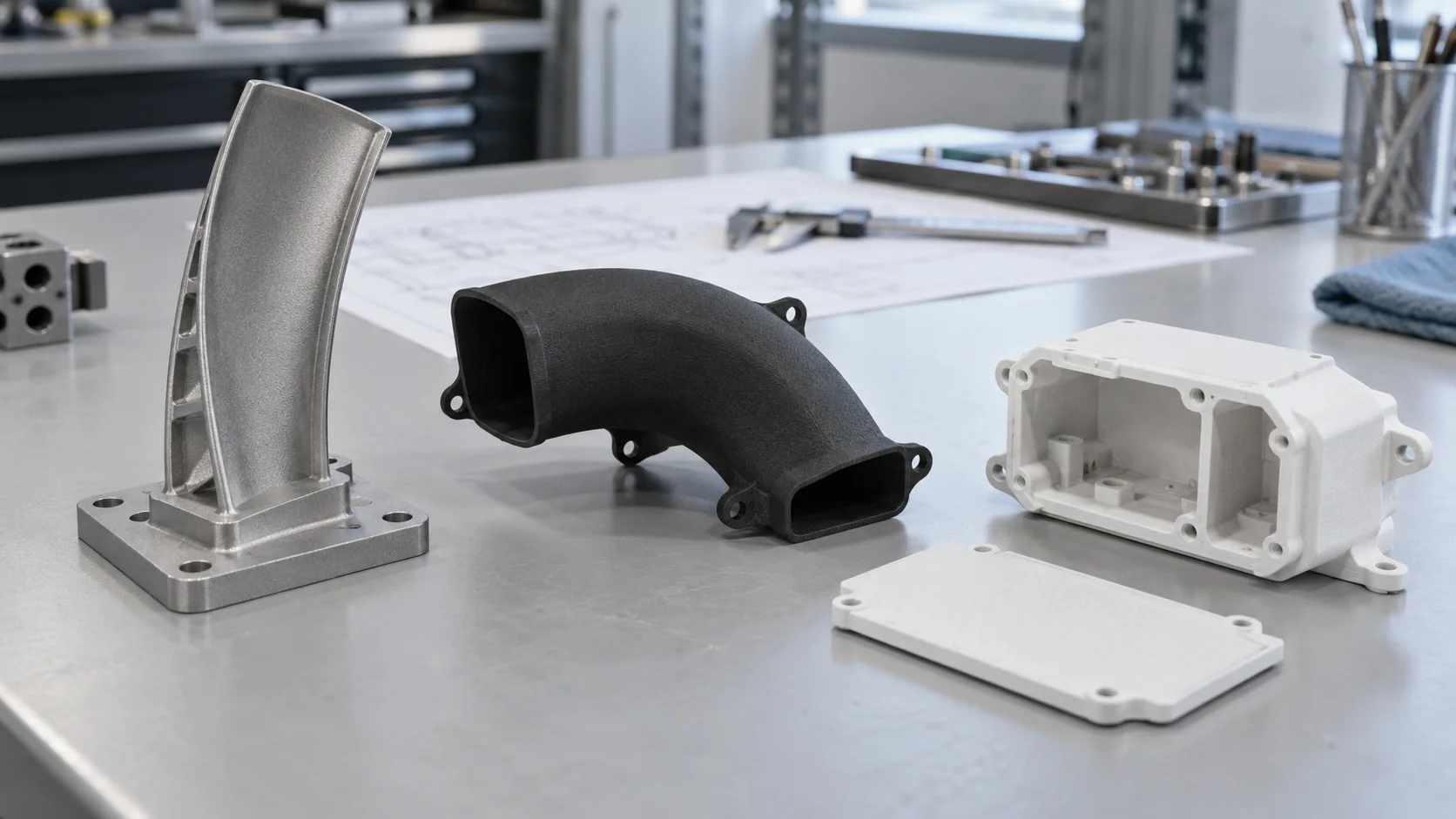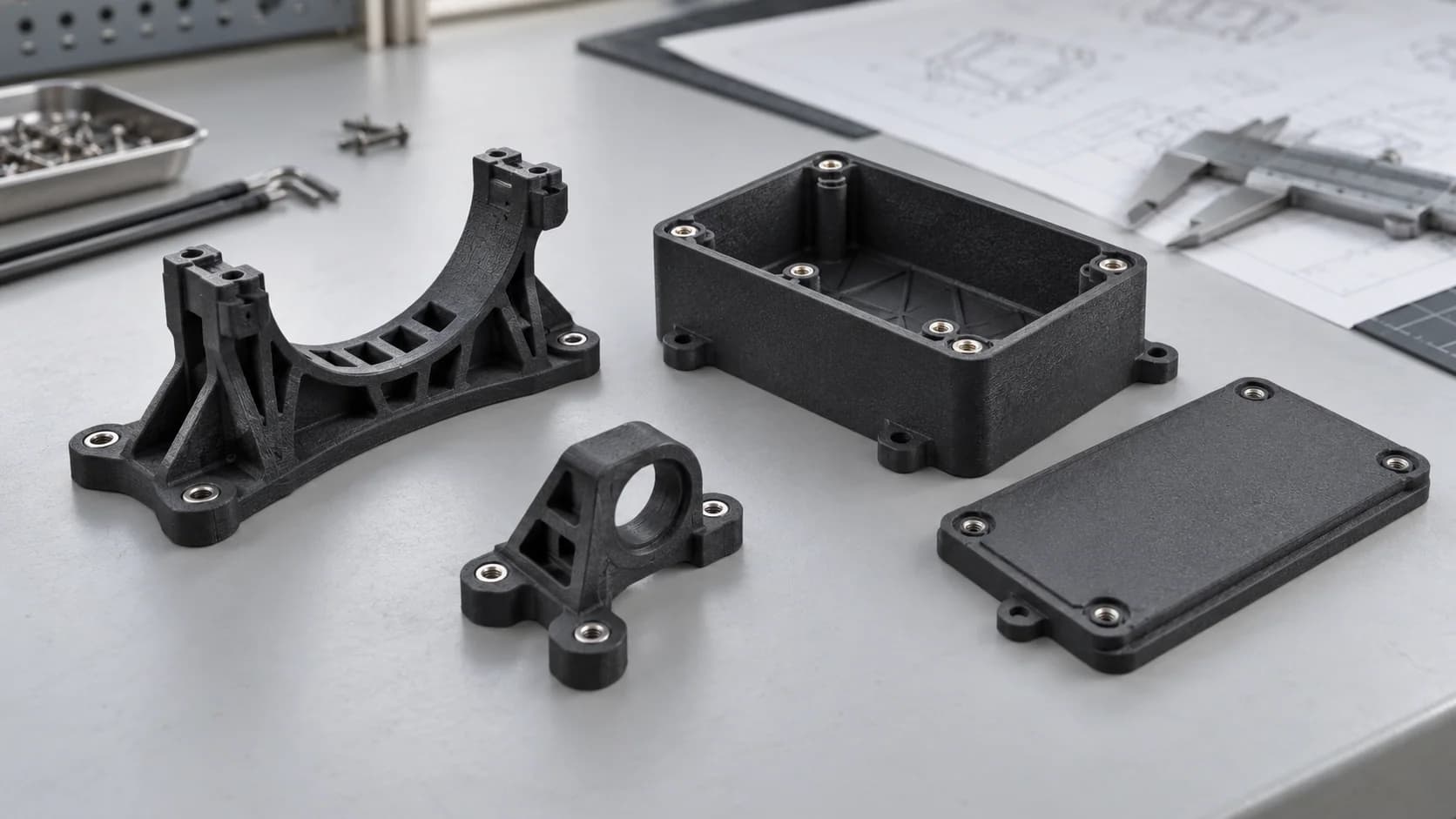
A drone contains many small parts that bring its larger systems together: mounts that locate hardware, enclosures that protect electronics, and covers that keep access points usable. Printing those parts in nylon makes their shape easy to adapt. Turning them into production components means carrying that design through finishing, fastening and assembly.
Forge manufactured a family of these components in SLS Nylon PA12, including mounts, battery enclosures, access panels and sensor hardware. Production quantities reached hundreds of a single design. Selected mounts also required stainless steel heat-set inserts, installed at locations defined in the customer's drawing. This combination of printed geometry and added hardware is where additive manufacturing becomes particularly useful: the nylon provides the custom shape, while metal threads provide a durable fastening interface.
The Project at a Glance
- Parts: drone mounts, enclosures, access covers and sensor hardware
- Process: Selective Laser Sintering in Nylon PA12, with 0.1 mm layers
- Finishing: powder removal, bead blasting and black dyeing for black components
- Assembly: stainless threaded inserts specified for selected mounts
- Scale: production batches in the hundreds, manufactured directly from CAD
Putting the Assembly Features Into the Part
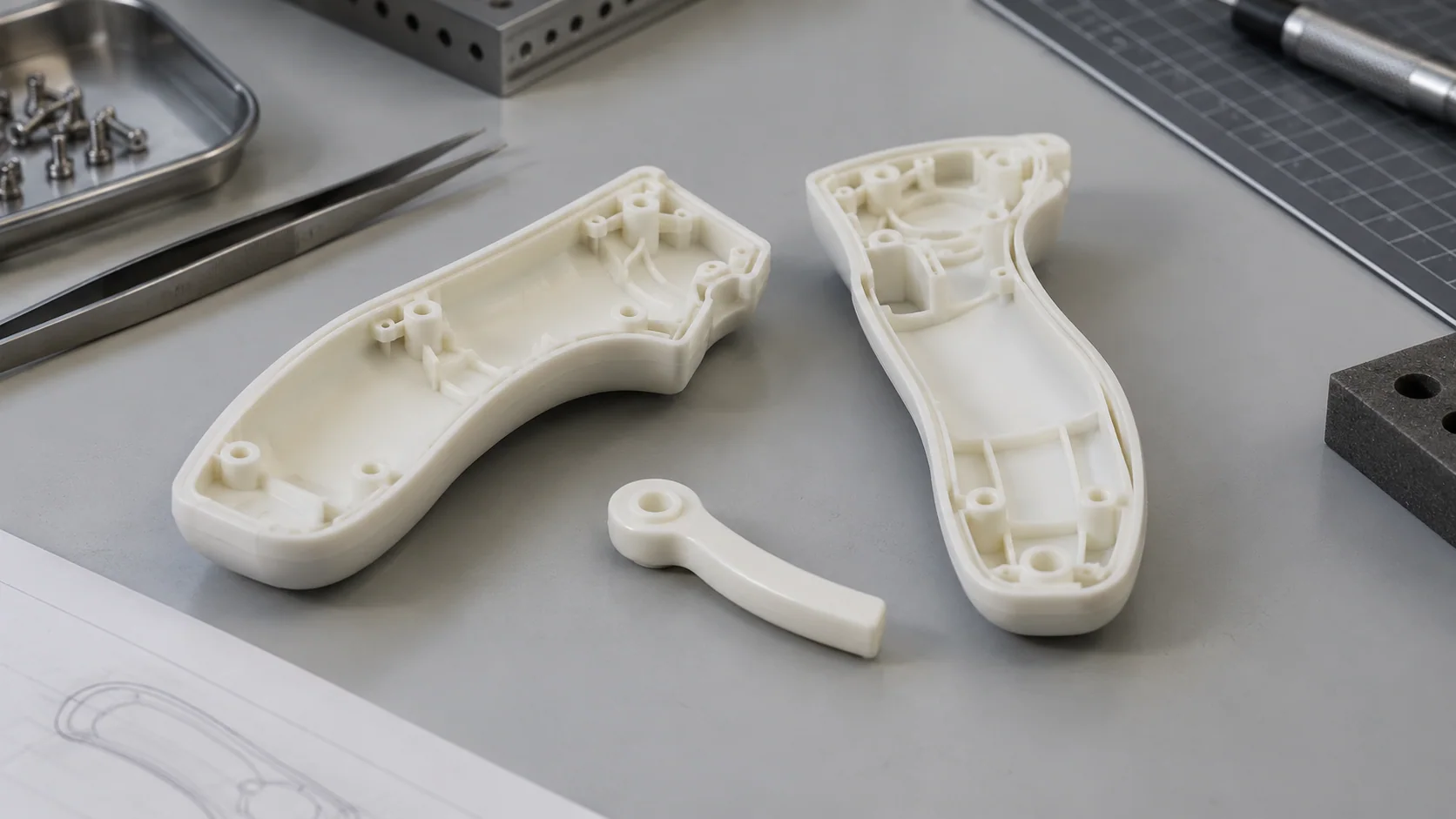
The useful detail sits inside and around these components. The mounts combine walls, ribs, openings and fixing points. Enclosures carry perimeter holes and local mounting features; covers follow the space available around the neighbouring hardware. Each feature has a job, whether it locates a component, leaves room for a cable or provides access for a screw.
Selective Laser Sintering forms those features together in a bed of nylon powder. The surrounding powder supports the geometry during printing, so a rib inside a pocket or an overhanging lip can be positioned around the assembly. There is no mould to open around the finished shape. That freedom is valuable when a compact enclosure has details on several faces and needs to fit an existing arrangement of electronics and mechanical hardware.
For a lightweight mount, the design goal is to put material along the path of the load. A rib can connect a screw boss to a supporting wall; a rounded transition spreads the load where those features meet. Open areas elsewhere keep the part light. Making every wall thicker adds weight and takes space away from the components inside. Local reinforcement gives the designer more control over both stiffness and packaging.
Openings also make the part easier to manufacture. Loose powder must reach an exit after printing, including from recesses around mounting features. Designing accessible pockets and clear passages lets cleaning follow the same straightforward route across a production batch. Our SLS design guide covers wall transitions, ribs and powder-removal access in more detail.
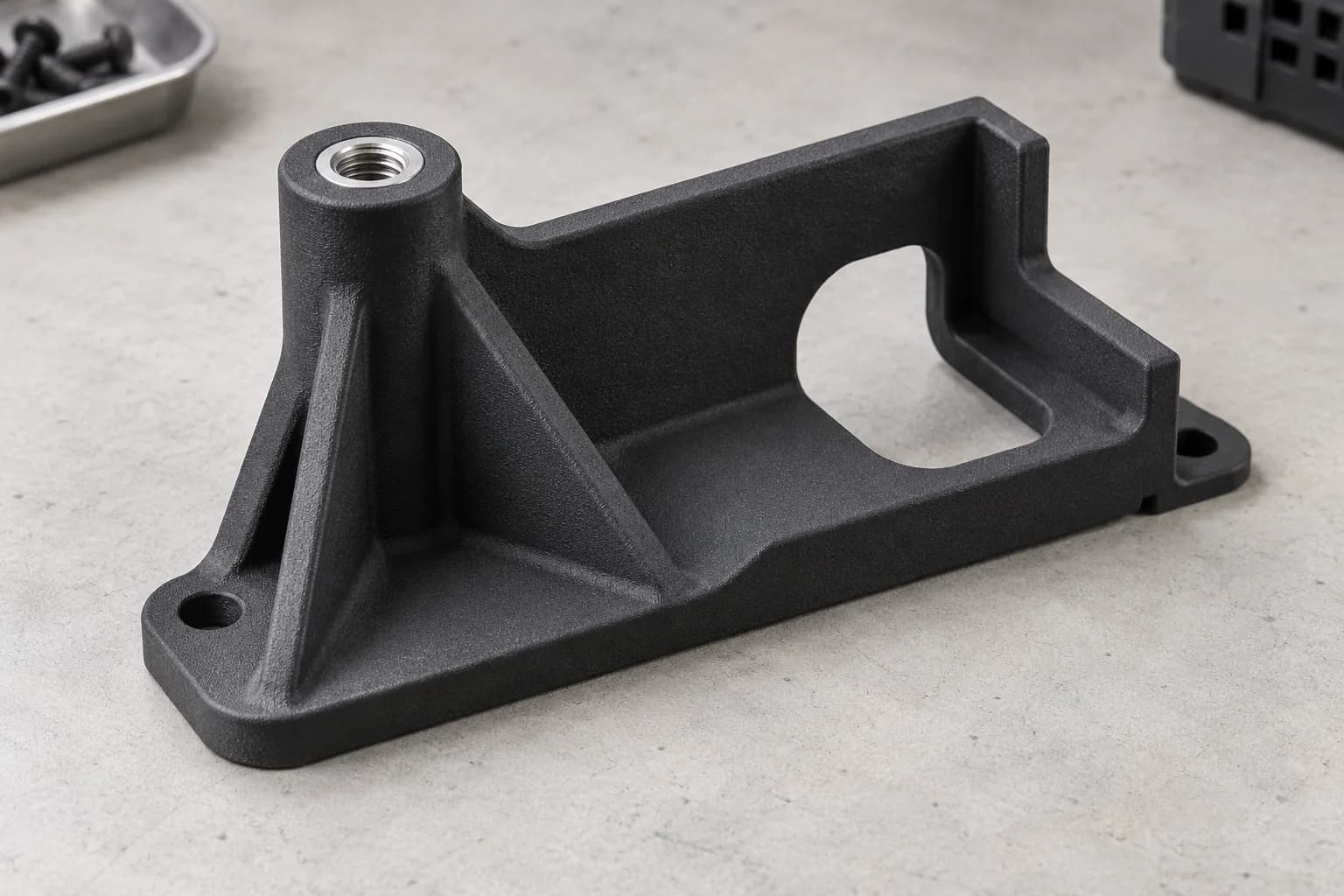
Ribs, bosses and access openings let one nylon component perform several assembly jobs.
Tough, Lightweight Nylon Where the Hardware Meets
PA12 combines low weight with the toughness needed for handling and assembly. That is useful in a cover that must be positioned around electronics, a slender mounting feature that sees a small amount of deflection, or a housing that is opened for access. The material gives designers a practical balance: walls can support components while smaller features accommodate the movement involved in fitting them together.
Geometry sets how that balance feels in the finished part. A short, ribbed flange will feel firm; a longer, thinner tab in the same nylon can flex much more readily. For a clip or narrow mounting lug, build orientation is chosen with its bending direction in mind. How far PA12 can stretch before breaking varies with build direction, so orientation and the shape of the feature work together.
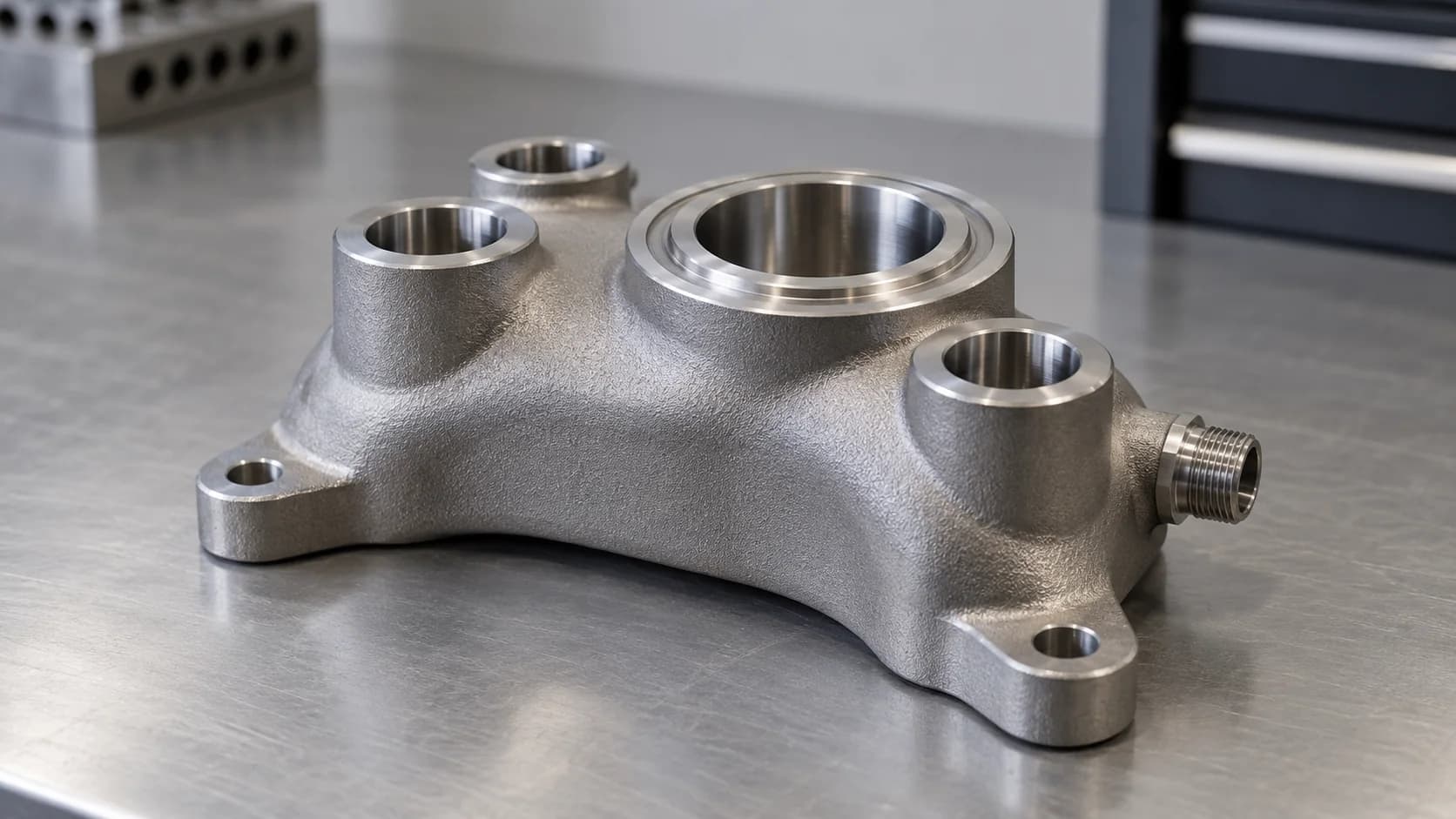
Stainless inserts concentrate metal where the assembly needs it. The surrounding housing remains light, while a screw engages a metal thread that is useful for repeated assembly and removal. Around that insert, enough nylon and a well-supported boss help transfer the fastening load into the rest of the component.
Drawings and FitDefining the Fastening Interface Alongside the Shape
The mount drawing identified a tapered stainless M5 heat-set insert and showed where it belonged in each part. That detail turned a printed hole into a defined assembly operation. The thread size determines which screw fits; the insert's outside shape determines the receiving hole, and its installed position determines how the mating component seats.
During heat installation, the metal insert transfers heat into the surrounding thermoplastic. The softened nylon flows into its external retention features and holds it as it cools. Hole size, surrounding wall thickness and installation control all contribute to a secure connection. A generous boss also gives the installation tool a stable local area to work against.
On a similar design, three details deserve attention together: the insert's seating depth, the surface that the mating part contacts, and the space available for the screw. A proud insert can change how the joint closes; a screw that bottoms out can prevent the intended clamping. The drawing can make the desired relationship clear in a simple section view. Tool access matters too, especially when the insert sits inside a deep enclosure.
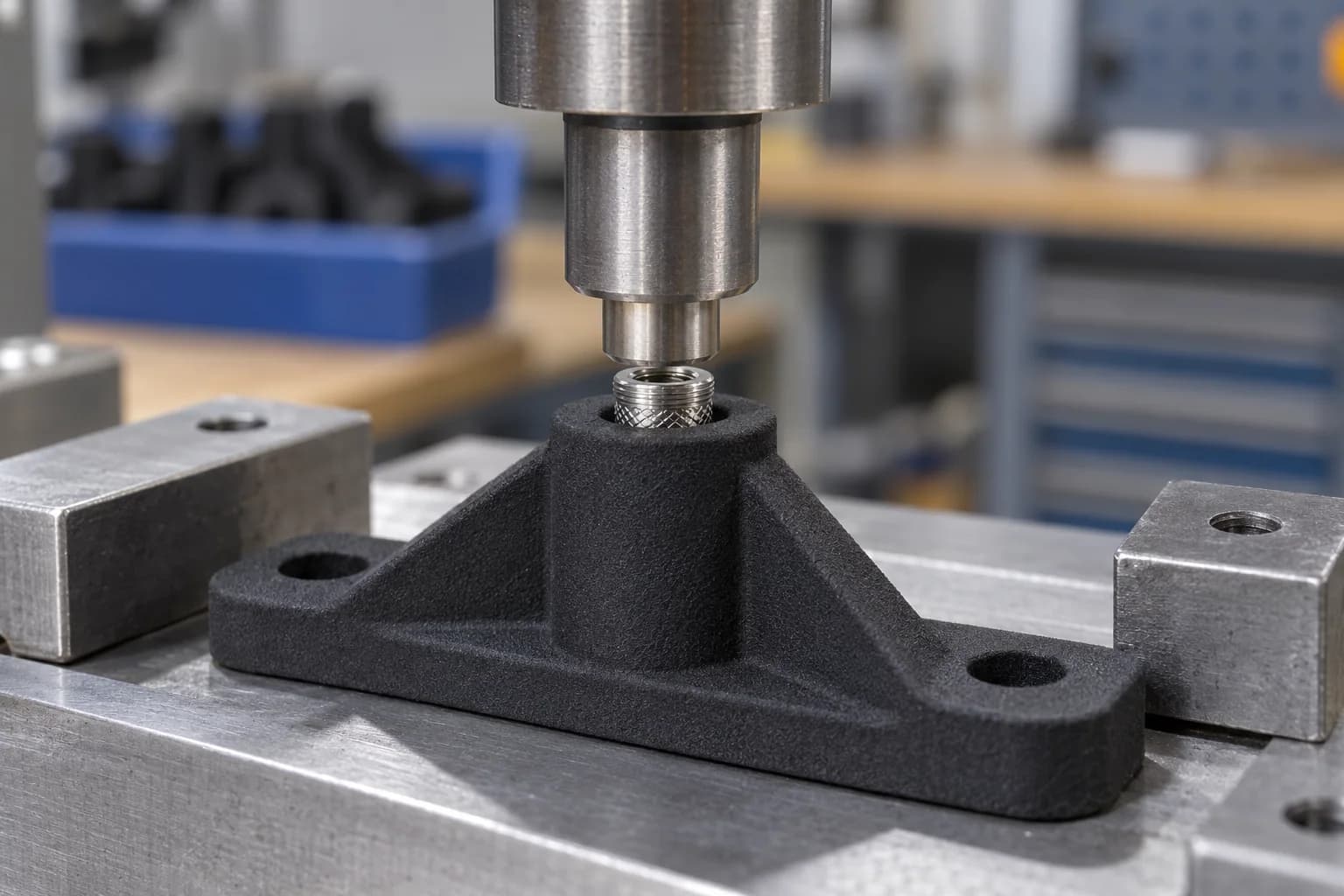
Insert position, tool access and the supporting nylon are designed as one fastening interface.
Dimensional checks are most useful at the interfaces that control assembly: mounting-hole locations, a cover's seating lip or the clearance around an installed component. First article inspection can be configured when ordering through Forge's portal. Checking agreed critical dimensions gives you a useful reference for production and more confidence when ordering additional parts. A physical fit check with the mating hardware can then show how those dimensions work together.
ManufacturingFrom the Powder Bed to Finished Hardware
These PA12 parts were specified at 0.1 mm layer height, and the production history includes builds on our EOS FORMIGA P 110 machines. Multiple designs were distributed across scheduled builds, allowing the machines to produce different components alongside one another. This suits a drone assembly with a mixture of small mounts, larger housings and covers needed in different quantities.
After printing and cooling, the parts are removed from the powder cake and cleaned. Bead blasting removes remaining surface powder and produces an even matte texture. Black components are dyed in-house on DyeMansion equipment. Dyeing colours the nylon while preserving the small openings and locating detail that make the parts useful in assembly.
Mounts with threaded-insert requirements add hardware installation to that route. Their drawing travels with the job so the correct insert and location remain part of the manufacturing specification. Inspection can then focus on the finished assembly features: the mounting surface, insert position, thread access and the dimensions chosen for checking. Planning these operations together gives the customer a component that is further along toward final assembly when it leaves our shop.
Turnaround and ScaleSmall Batches Quickly, More Parts as Demand Grows
Some cover and enclosure batches of roughly a hundred parts reached manufacturing completion in four to five business days from ordering. This is a useful example of what straightforward SLS production can achieve: a meaningful assembly quantity finished within a working week, without a mould-making stage. Transport time follows that manufacturing window.
The full route determines the schedule for each design. A compact cover can pass through printing and dyeing quickly; a larger run of mounts also needs capacity for insert installation and checking. Planning around the finished component includes those operations from the outset. Quantity, build space and the required finish all contribute to the quoted lead time.
SLS also allows quantity to grow without creating a new tool for each part. This work included hundreds of individual mounts made from the same digital design. Capacity comes from the number of parts that fit in a build and the builds scheduled across the fleet. Smaller orders and larger batches use the same basic manufacturing route, making it practical to order the quantity needed for the next assembly run.
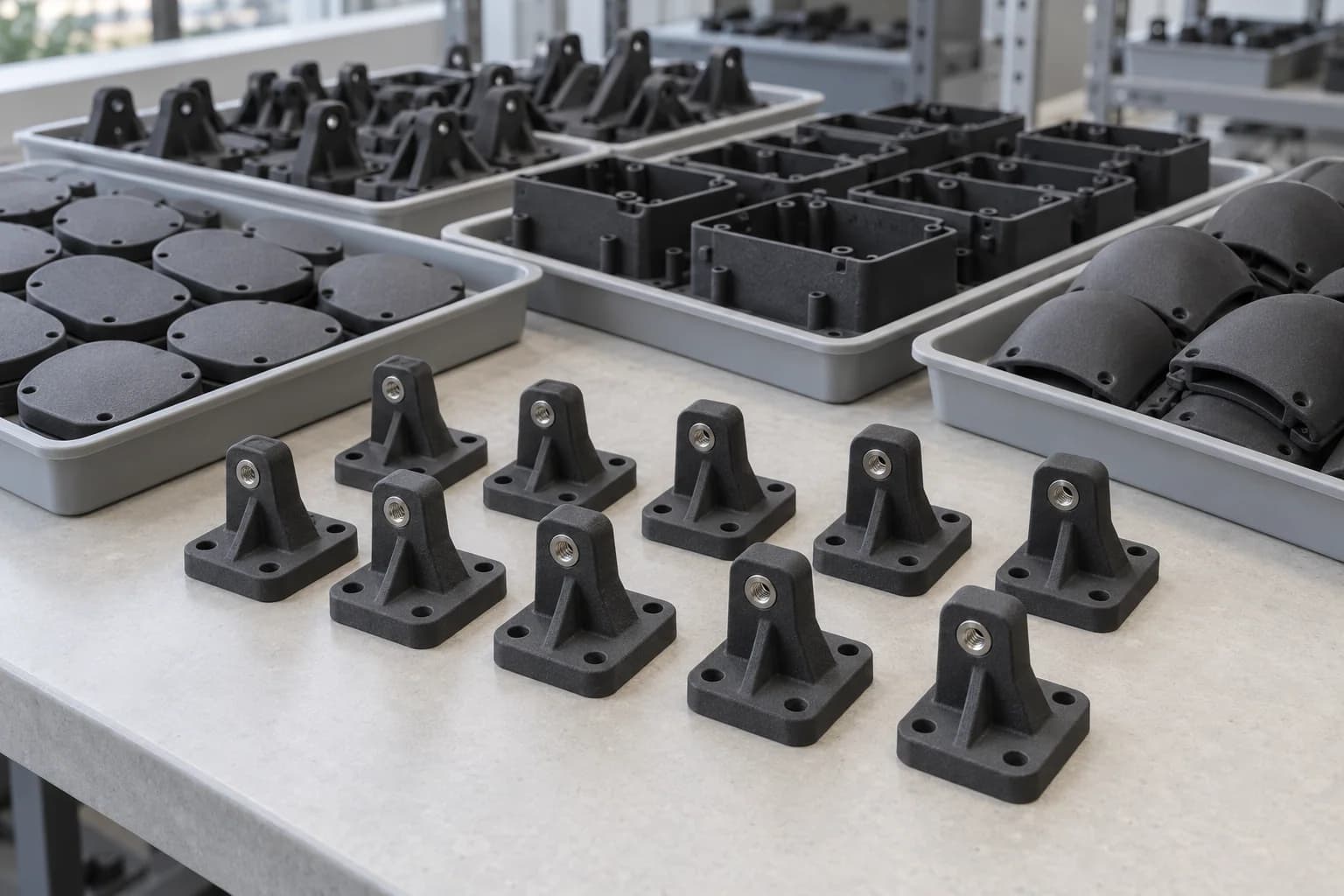
Digital manufacturing supports batches sized around assembly needs, with finishing and hardware included in the plan.
A Practical Route to Repeat Production
Forge supplied a varied family of nylon hardware through one manufacturing process, from covers and enclosures to mounts requiring added metal threads. Revised mount geometry could move into production from updated CAD, while established designs remained available for further batches. The result was a way to manufacture detailed, application-specific parts at production quantities with room for the design to develop.
For another drone or robotics assembly, the most useful starting point is the interface: what the part holds, how it is fastened, where it needs clearance and how it will be handled. Build the nylon around those requirements, reinforce the loaded areas, and define the hardware and fit on the drawing. Forge can then bring printing, finishing and assembly operations together around the component you actually need.
Explore our aerospace manufacturing capabilities or upload your parts for a quote to review SLS PA12, finishing and threaded-insert options for your next build.