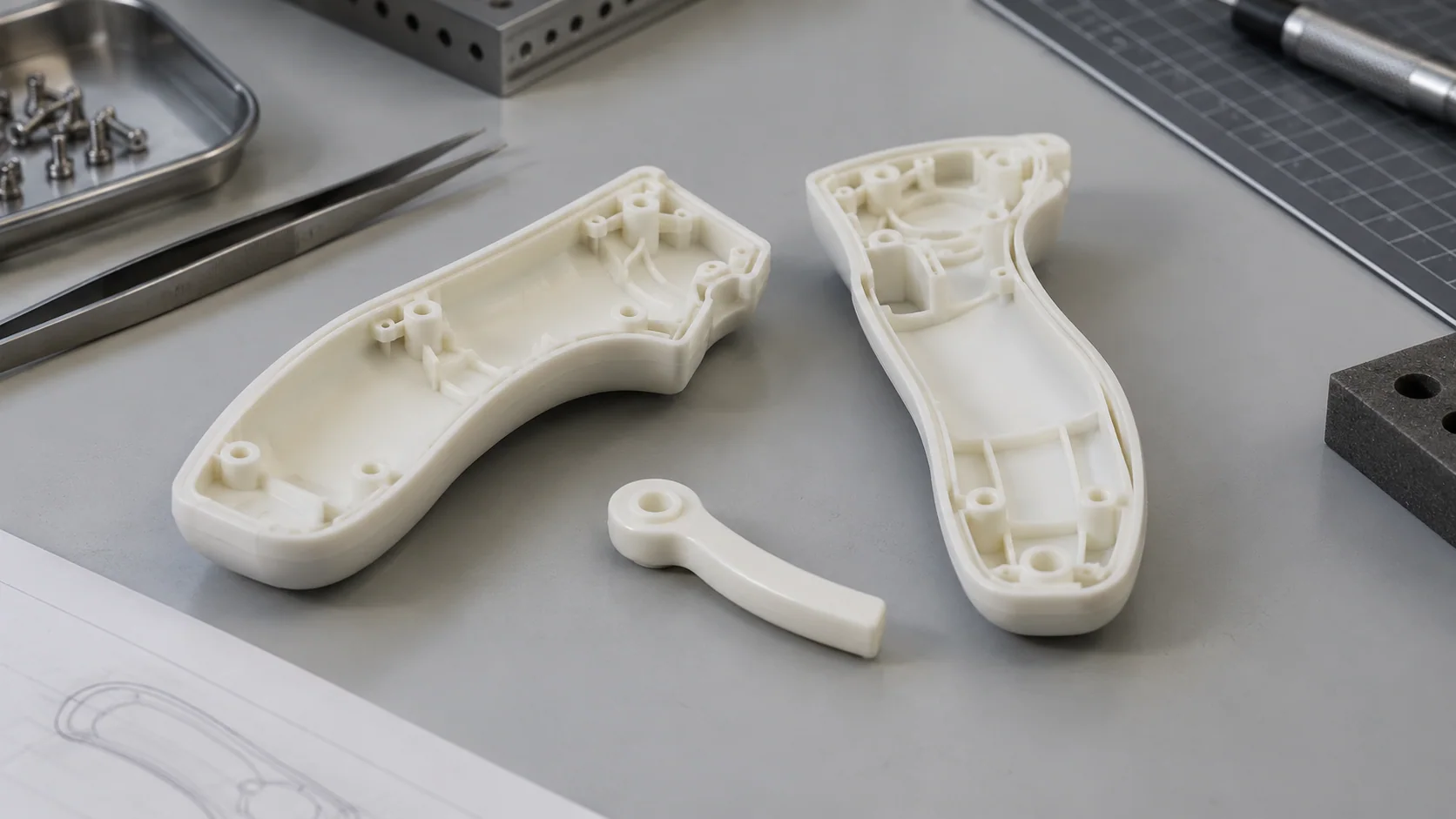
Additive manufacturing has moved well beyond prototyping. Across Canada, engineering teams now rely on industrial 3D printing for functional prototypes, tooling, bridge production, and end-use components.
The challenge is not whether to use additive manufacturing—but how to deploy it effectively. Companies must decide whether to build internal capability or work with an experienced manufacturing partner.
For many Canadian organizations, outsourcing provides the fastest path to production-ready parts without the capital investment, staffing requirements, and utilization challenges of operating industrial printers.
This guide explains how Canadian teams use 3D printing services today, what technologies matter most, and how to evaluate the right manufacturing partner.
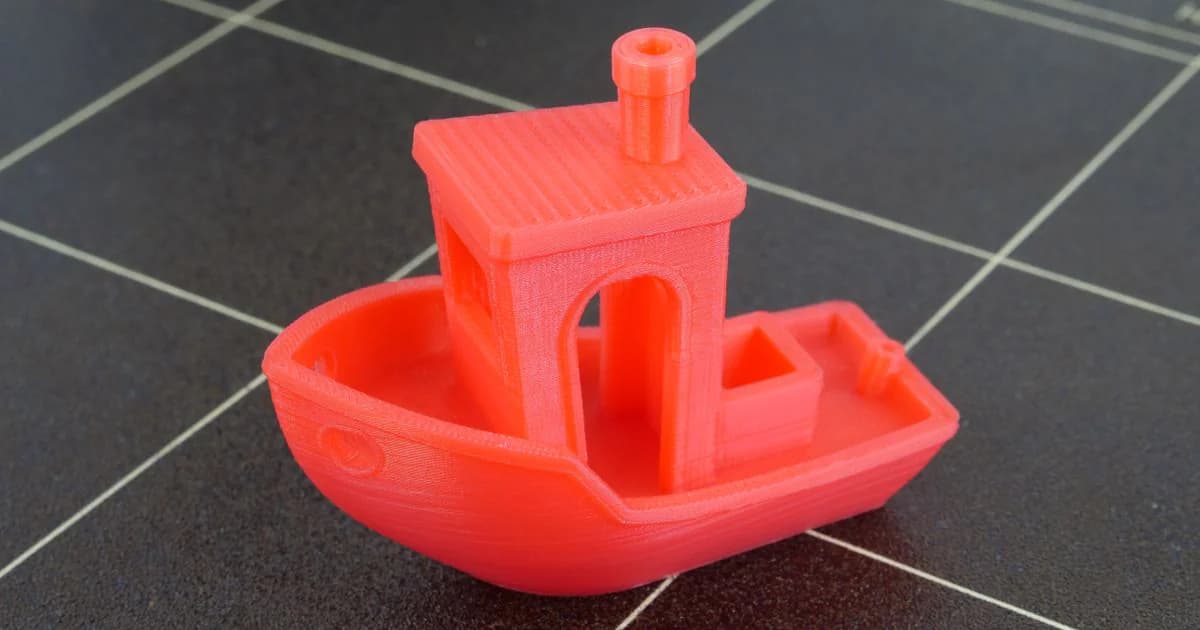
Canadian service bureaus provide rapid access to additive manufacturing capability without the capital investment of owning equipment.
The Role of 3D Printing in Modern Product Development
For engineering teams, the value of additive manufacturing is speed and design freedom. Parts can move from CAD to physical components in days instead of weeks, without tooling or complex setup.
This flexibility has made 3D printing an essential tool across industries such as:
- Aerospace and defense
- Medical devices
- Robotics and automation
- Automotive development
- Consumer hardware and electronics
Instead of waiting for tooling or machining programs, engineers can rapidly validate geometry, assembly fit, and mechanical performance.
In many cases, additive manufacturing also enables design strategies that are impossible with traditional processes, including:
- Internal channels and lattice structures
- Part consolidation to reduce assembly complexity
- Lightweight geometries for performance-critical components
For early-stage design and low-volume production, these advantages dramatically shorten development cycles.
Build vs. BuyWhy Many Canadian Companies Outsource 3D Printing
Production-grade additive manufacturing systems require significant investment. Machines capable of production-grade parts—such as SLS, MJF, metal DMLS, or high-end FDM systems—can cost hundreds of thousands of dollars before considering facility requirements, materials, and trained operators.
For most organizations, the challenge is not simply buying a printer—it is maintaining consistent production quality.
Operating an additive production environment requires:
- Machine calibration and maintenance
- Powder and material management
- Process parameter optimization
- Post-processing equipment
- Inspection and quality documentation
Outsourcing to a specialized additive manufacturing partner allows companies to access these capabilities without carrying the full operational burden internally.
Canadian manufacturers also benefit from local supply chains, avoiding delays, customs issues, and communication challenges that often arise when parts are sourced overseas.
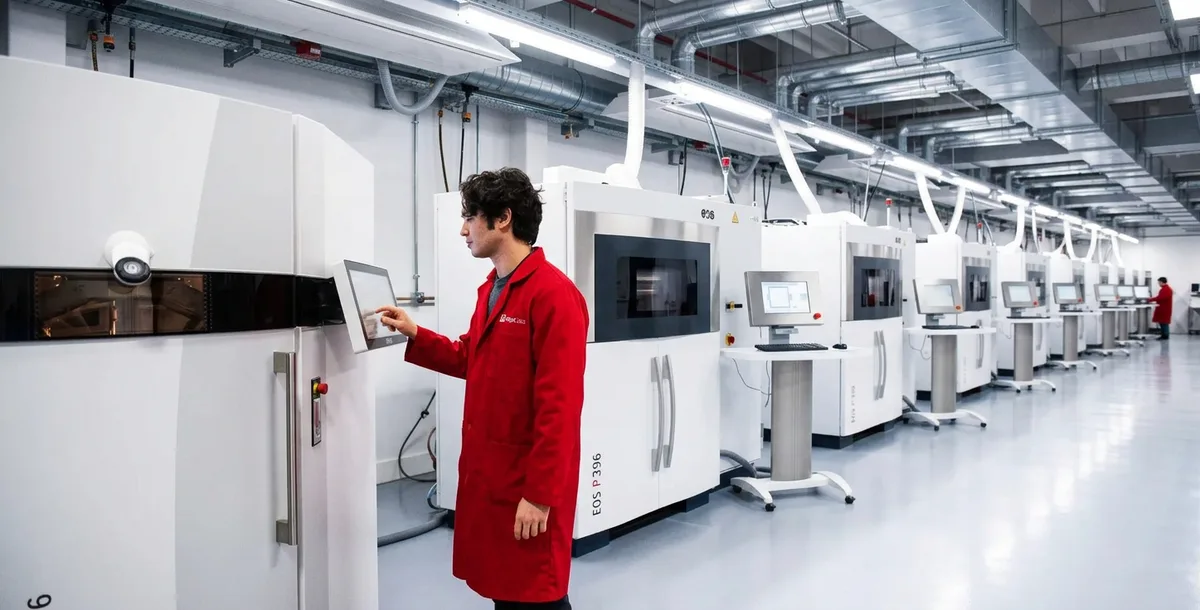
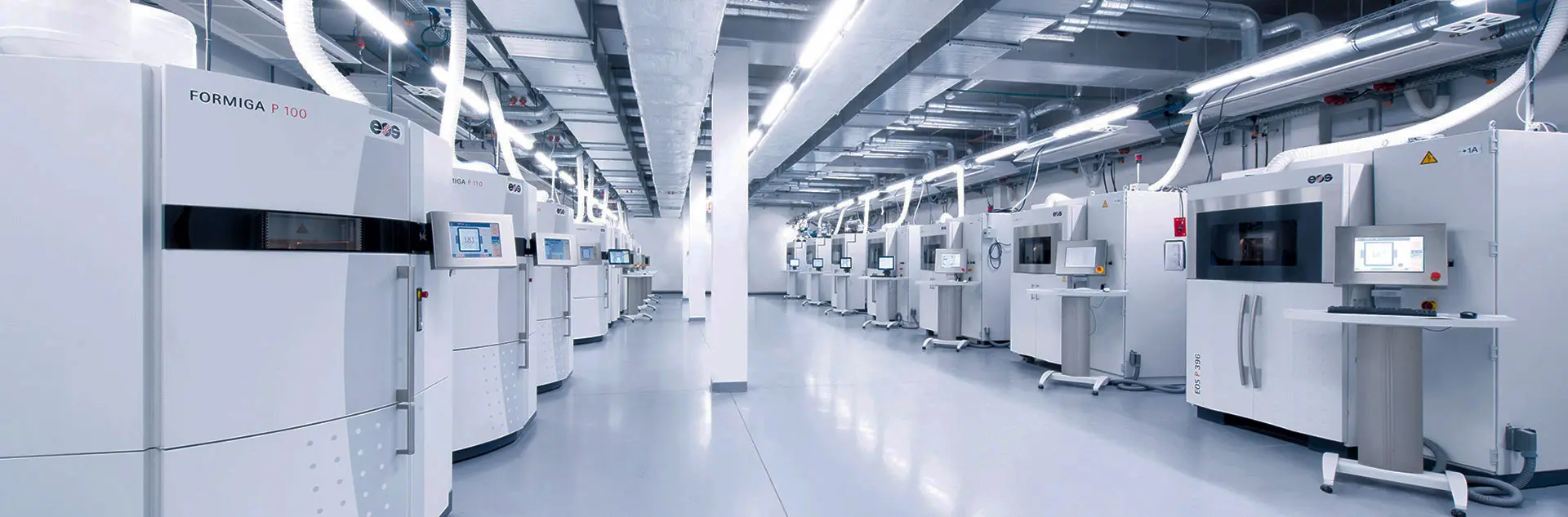
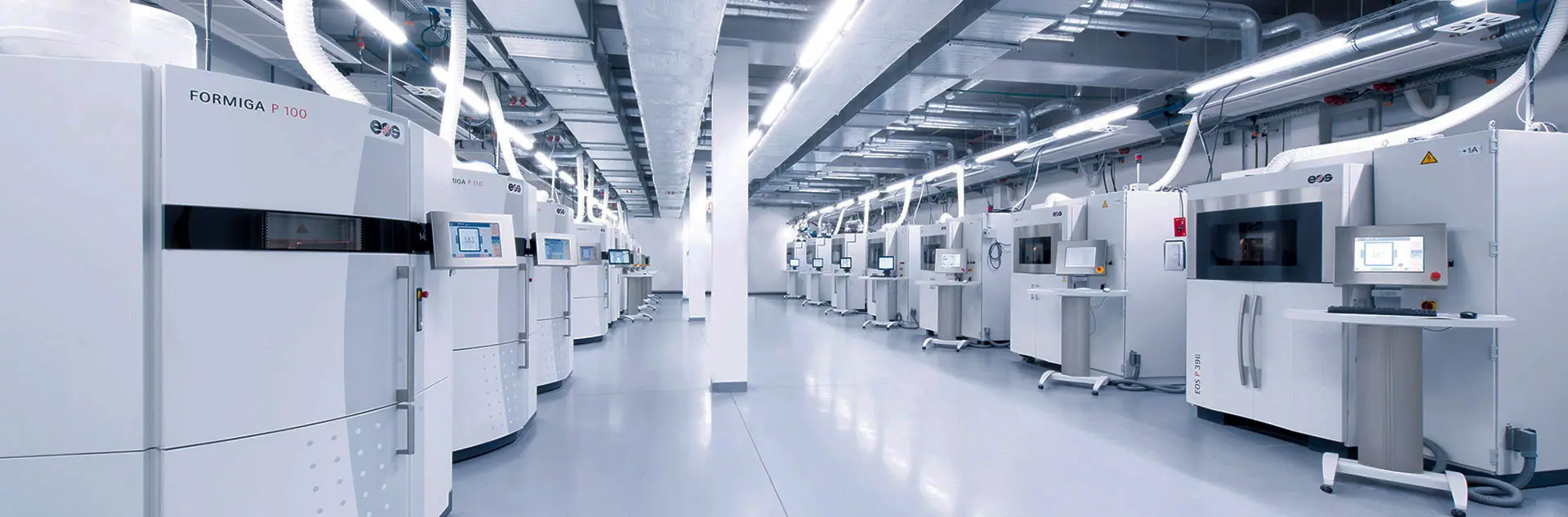
SLS production systems at Forge Labs. Powder-bed additive manufacturing requires calibrated equipment, dedicated facilities, and trained operators.
Key Industrial 3D Printing Technologies
Different additive manufacturing technologies serve different applications. A capable service bureau will offer multiple processes so the manufacturing method can be chosen based on part requirements rather than machine availability.
Selective Laser Sintering (SLS)
Selective Laser Sintering uses a laser to fuse nylon powder layer by layer into functional parts.
SLS is one of the most widely used additive processes because it produces strong, isotropic components without support structures. Parts can be nested efficiently within the build volume, making the process well suited for both prototypes and small production runs.
Typical SLS applications include:
- Functional prototypes
- Snap-fit assemblies
- Mechanical housings
- Low-volume production parts
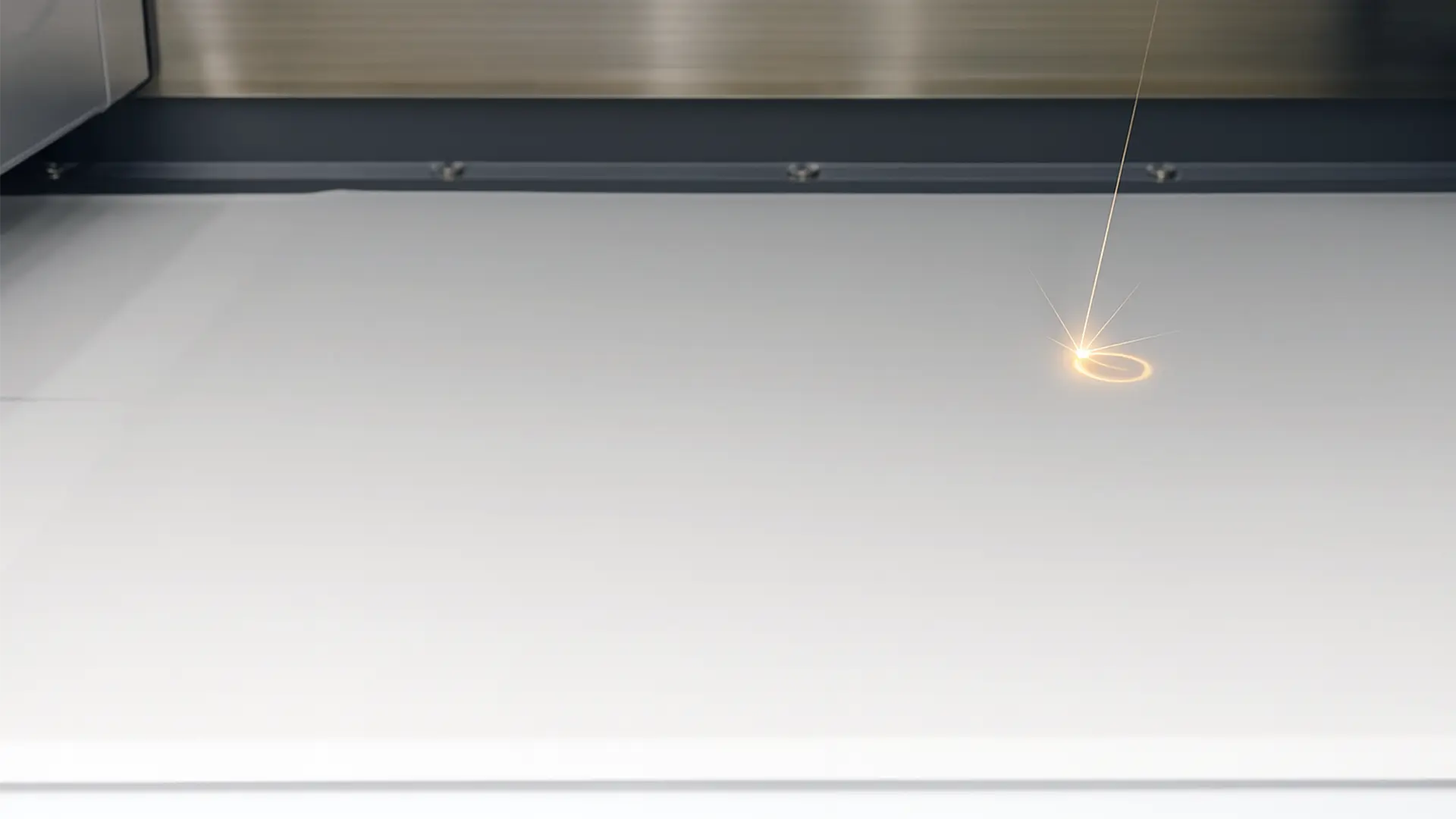
Nylon PA12 parts being sintered during an SLS production build. The support-free process allows dense nesting of parts within the build volume.
Multi Jet Fusion (MJF)
Multi Jet Fusion, developed by HP, is another powder-bed process commonly used for Nylon PA12 parts.
MJF offers excellent dimensional consistency and surface finish while supporting high build density, making it attractive for production batches.
Common applications include:
- Consumer product housings
- Production brackets and clips
- Wearables and ergonomic devices
- Robotics and automation components
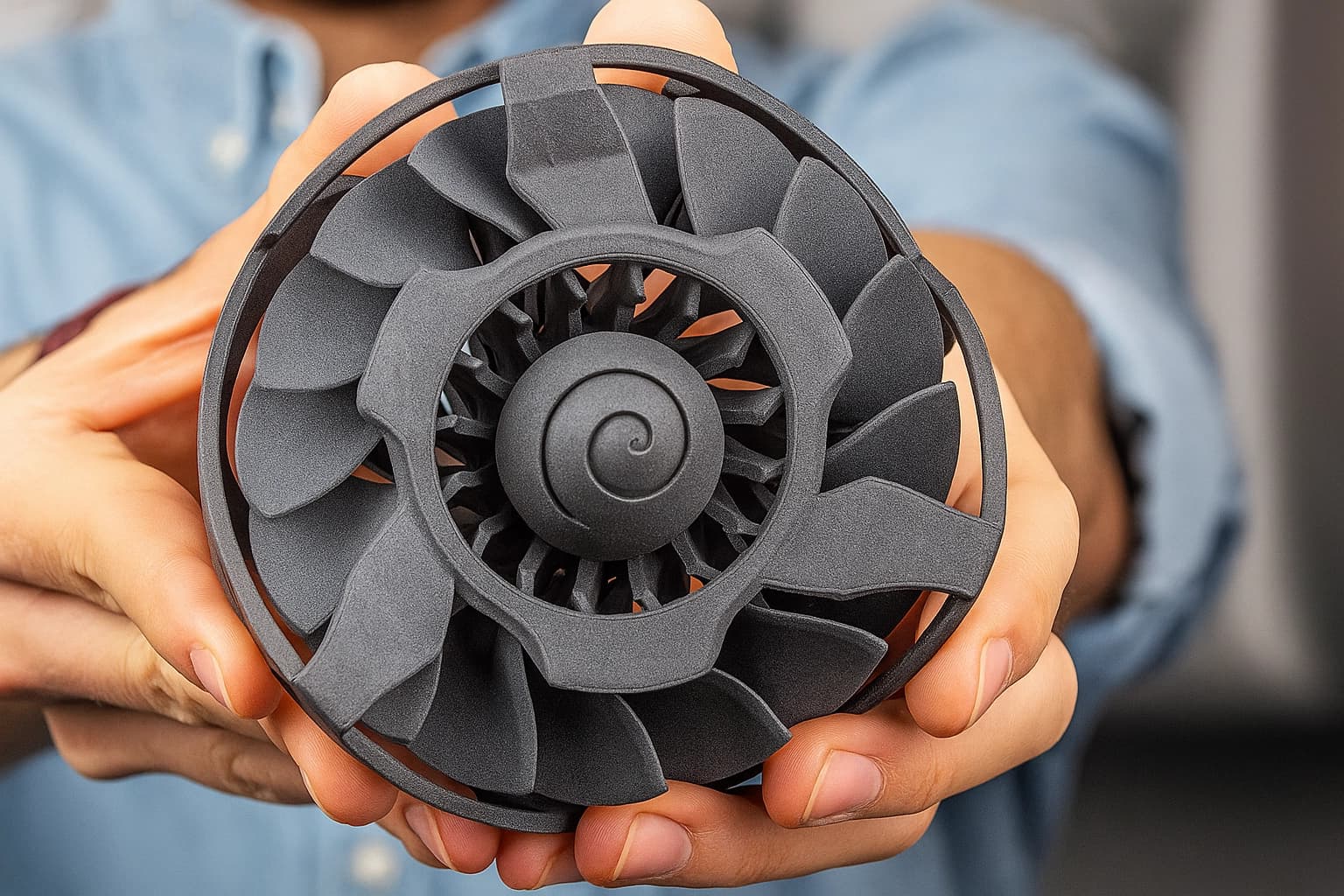
Nylon PA12 part produced using HP Multi Jet Fusion technology. MJF delivers consistent dimensional accuracy and surface quality for production applications.
SLA (Stereolithography)
SLA uses UV lasers to cure liquid photopolymer resin with extremely high resolution.
This process is often chosen when fine detail or smooth surface finish is critical.
Typical applications include:
- Appearance models
- Medical devices
- Casting patterns
- Detailed prototypes
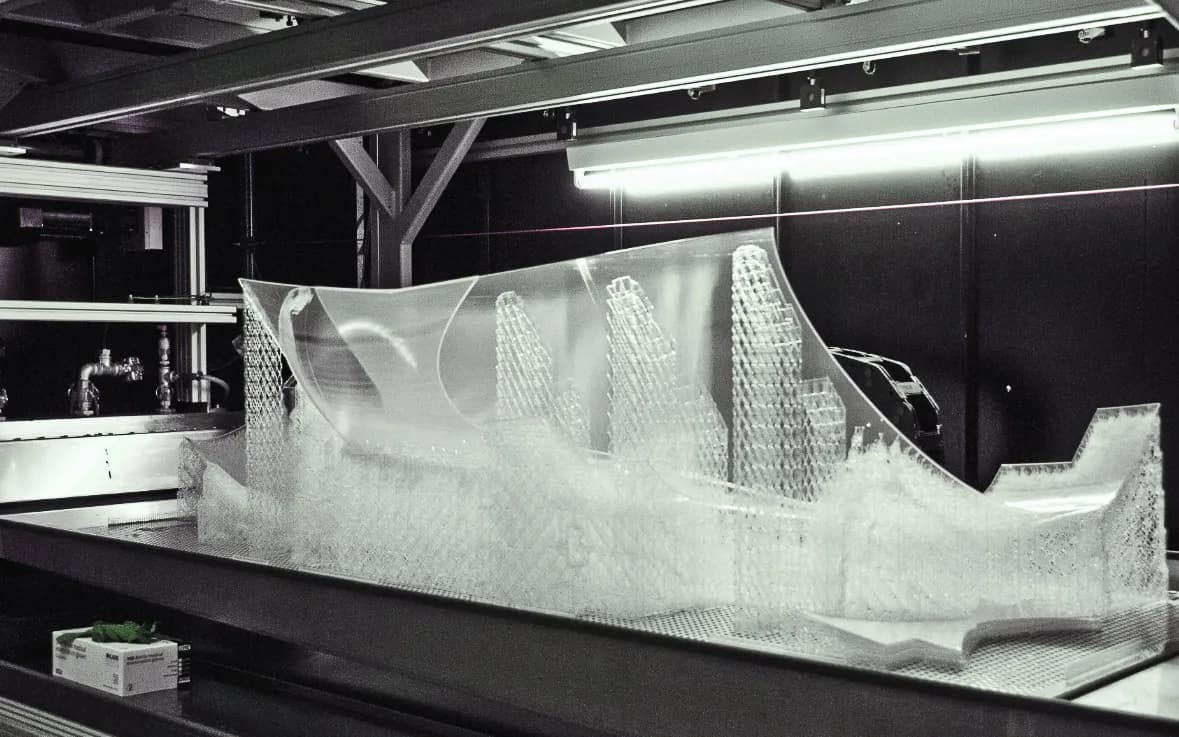
Large SLA part produced on a ProX 950 system. Stereolithography delivers the highest resolution and surface finish of any additive process.
FDM (Fused Deposition Modeling)
Production-grade FDM systems extrude thermoplastic filament layer by layer.
High-performance materials such as ULTEM and PAHT-CF carbon fibre nylon allow the process to produce strong functional components for demanding environments.
FDM is commonly used for:
- Jigs and fixtures
- Manufacturing tooling
- Large prototype parts
- Aerospace components
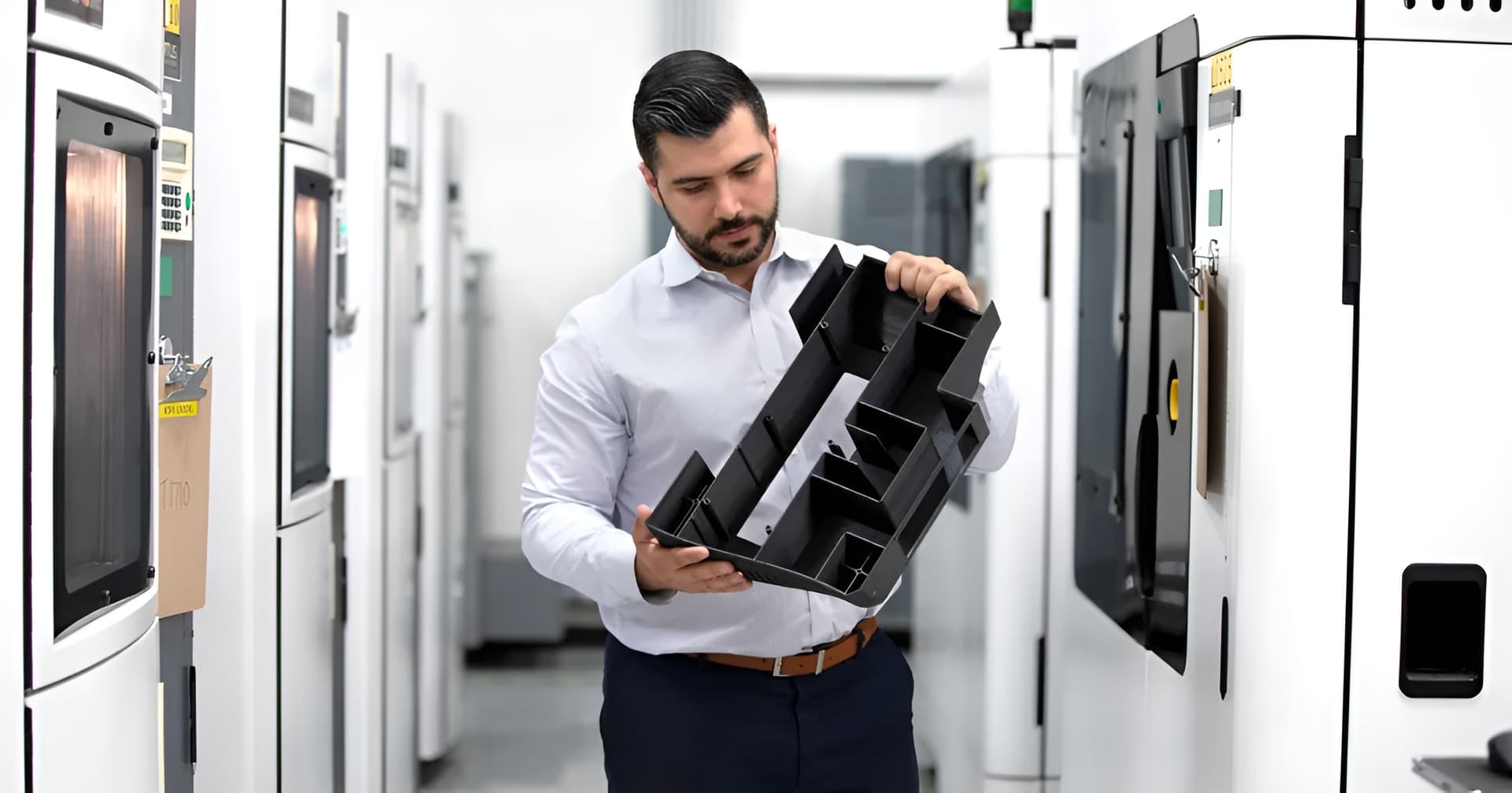
FDM production using engineering thermoplastics. The process excels at large-format parts and high-performance materials like ULTEM and PAHT-CF carbon fibre nylon.
DMLS / Metal 3D Printing
Direct Metal Laser Sintering (DMLS) produces functional metal parts by fusing metal powder using a high-power laser.
Metal additive manufacturing is used in applications where traditional machining cannot easily produce complex internal geometries.
Typical applications include:
- Aerospace components
- Medical implants
- Lightweight metal structures
- Heat exchangers and fluid systems
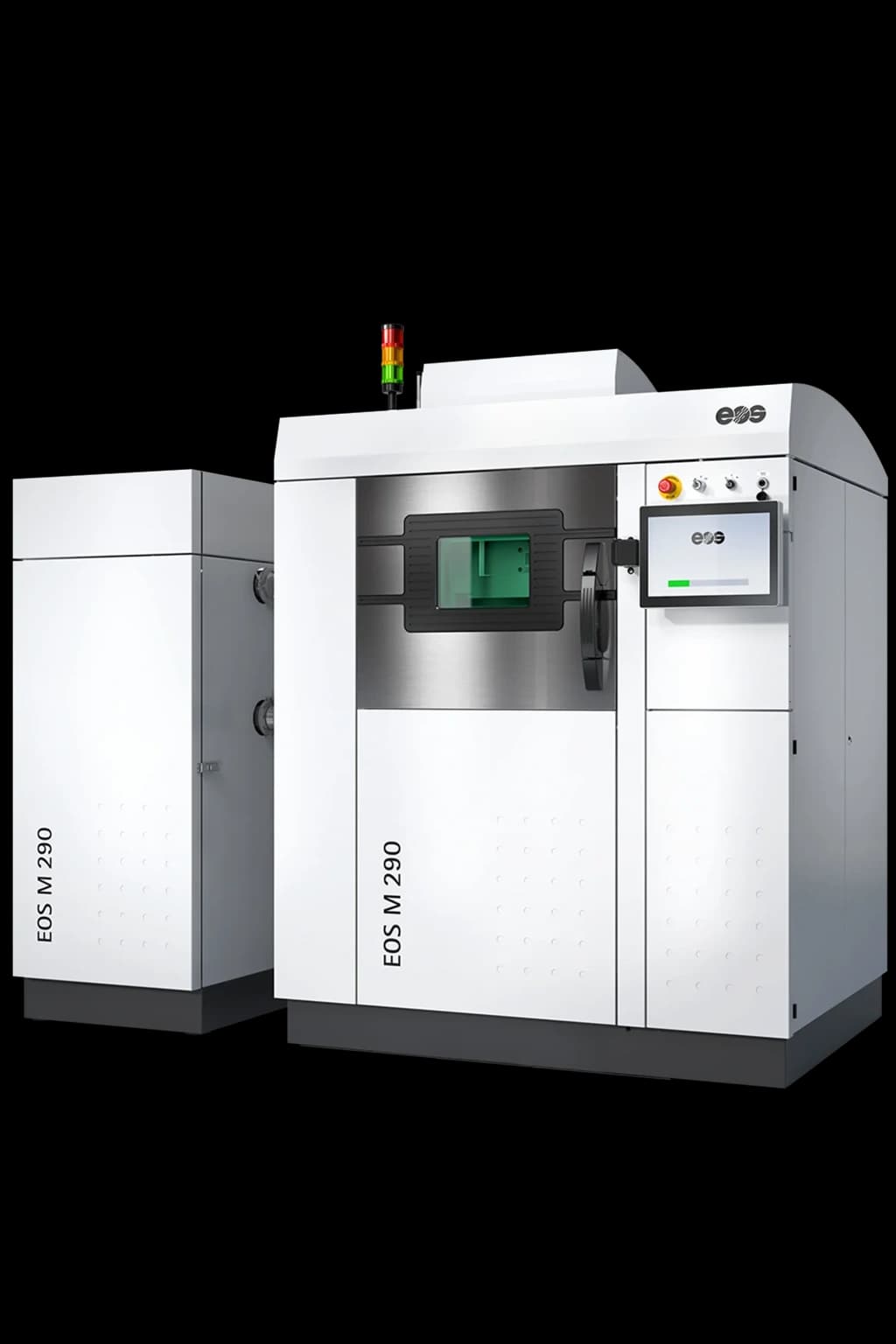
EOS M290 DMLS system. Metal additive manufacturing produces functional components in aluminum, titanium, stainless steel, and other alloys.
Industrial 3D Printing Technologies at Forge Labs
We provide several additive manufacturing processes, each suited to different applications.
| Technology | Best For | Design Guide |
|---|---|---|
| Selective Laser Sintering (SLS) | Strong nylon parts without support structures | SLS Design Guide |
| Multi Jet Fusion (MJF) | Consistent PA12 production with excellent surface quality | MJF Design Guide |
| SLA 3D Printing | High resolution photopolymer parts | SLA Design Guide |
| FDM Industrial Printing | Engineering thermoplastics for tooling and fixtures | FDM Design Guide |
| Metal 3D Printing (DMLS) | Complex metal geometries for aerospace and medical applications | DMLS Design Guide |
| PolyJet | Multi-material and full-color prototypes | — |
| Hybrid Manufacturing | Precision metal and plastic machined parts | — |
Each process supports a range of engineering materials and surface finishes. Explore our materials library and surface finish options to see available options.
Engineering Materials3D Printing Materials Available in Canada
Industrial additive manufacturing supports a wide range of engineering materials, each suited to different mechanical, thermal, and environmental requirements. Selecting the right material is often just as important as selecting the right printing technology.
Nylon PA12
Nylon PA12 is the most widely used material for industrial polymer 3D printing. It offers excellent mechanical strength, chemical resistance, and fatigue durability.
Typical applications include:
- Mechanical housings
- Snap-fit components
- Robotics parts
- Production brackets and clips
PA12 is commonly produced using SLS and Multi Jet Fusion technologies.
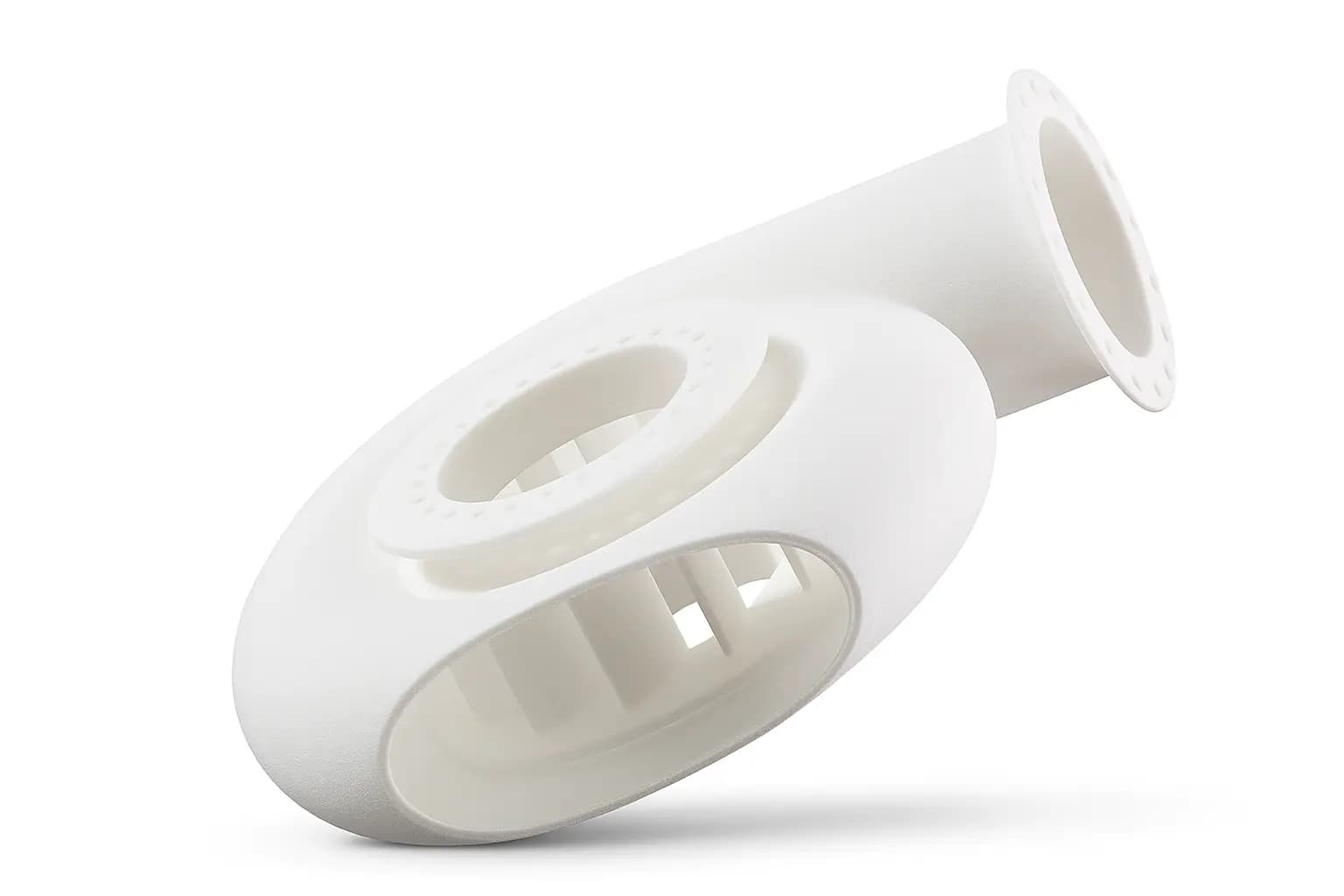
Nylon PA12 parts produced using SLS. PA12 is the most common material for functional prototypes and low-volume production in Canada.
TPU (Flexible Polyurethane)
TPU is a flexible elastomer used for parts that require rubber-like behavior.
Typical applications include:
- Seals and gaskets
- Wearables
- Protective covers
- Flexible connectors
TPU is often produced using powder-bed processes such as SLS or MJF.
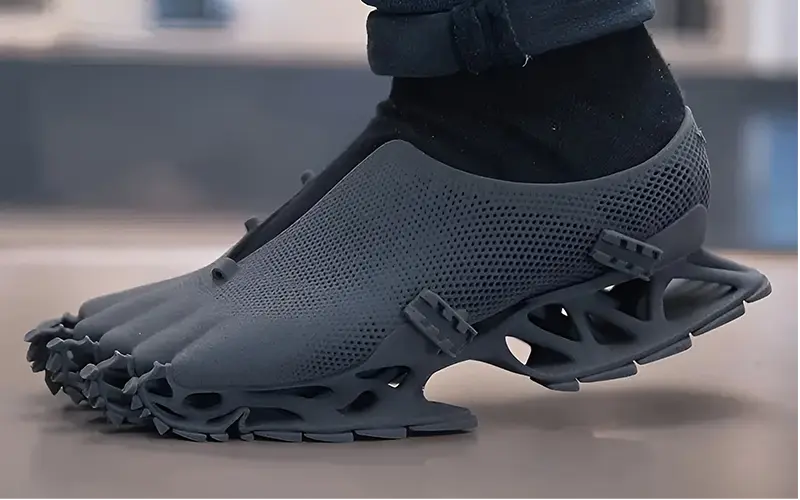
3D printed TPU shoe sole. Flexible elastomers enable functional parts that require rubber-like compression and rebound properties.
ULTEM 9085 and High-Temperature Thermoplastics
ULTEM 9085 is a high-performance thermoplastic used in demanding aerospace and industrial environments.
Key properties include:
- High heat resistance
- Excellent strength-to-weight ratio
- Flame, smoke, and toxicity (FST) compliance
ULTEM is commonly printed using production-grade FDM systems.
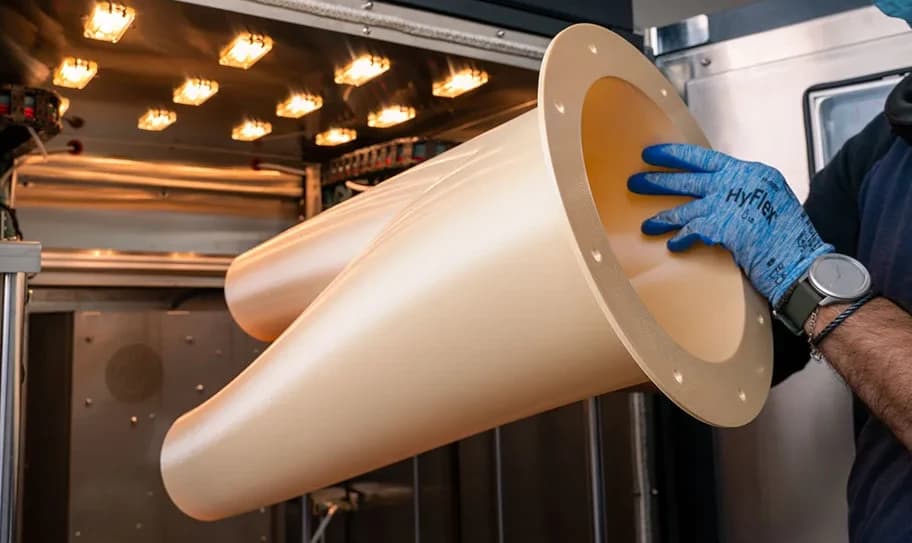
ULTEM 9085 aerospace duct produced using FDM. High-temperature thermoplastics meet FST requirements for aircraft interior applications.
Photopolymer Resins (SLA)
SLA resins provide extremely high resolution and smooth surface finishes.
Applications include:
- Appearance models
- Casting patterns
- Medical components
- Highly detailed prototypes
Resin systems can replicate properties ranging from rigid plastics to rubber-like materials.
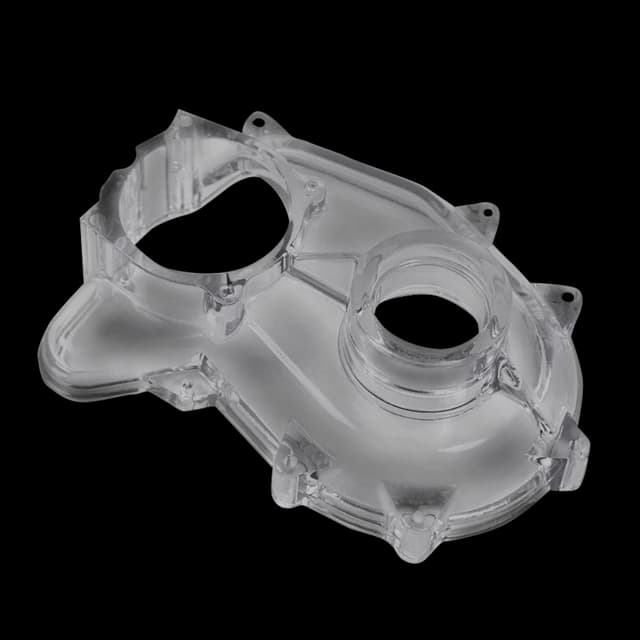
Accura ClearVue part produced using SLA. Photopolymer resins support a wide range of mechanical properties, from rigid plastics to optically clear materials.
Metal Alloys
Metal additive manufacturing supports a range of engineering alloys, including:
- Aluminum (AlSi10Mg)
- Stainless steel (17-4 PH)
- Titanium (Ti64)
- Maraging steel
These materials are produced using DMLS systems and are used in aerospace, medical, and high-performance mechanical applications.
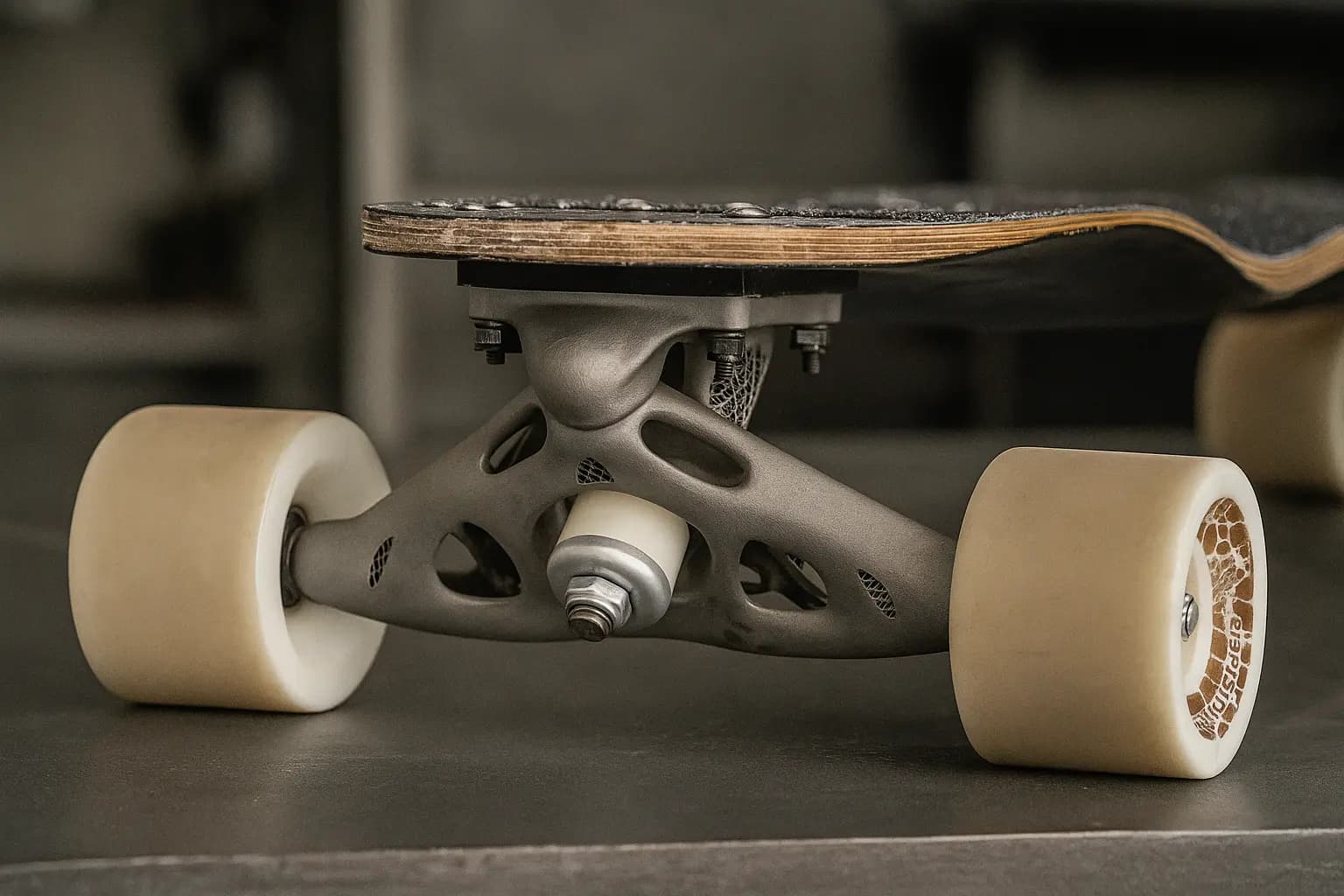
Titanium Ti64 component produced using DMLS. Metal additive manufacturing enables complex geometries that are difficult or impossible to machine conventionally.
Choosing the Right Material
Material selection should be based on application requirements such as:
- Mechanical strength
- Temperature resistance
- Chemical exposure
- Flexibility
- Surface finish requirements
Engineering teams often prototype using polymer materials before transitioning to metal or traditional manufacturing processes for high-volume production. Browse our full materials library for detailed specifications and application guidance.
PricingCost of 3D Printing Services in Canada
The cost of 3D printing services in Canada depends on several factors, including part size, material selection, printing technology, finishing requirements, and order quantity.
| Technology | Typical Use | Relative Cost |
|---|---|---|
| FDM | Large prototypes, tooling, jigs and fixtures | Low |
| SLS | Functional nylon parts, snap-fits, housings | Medium |
| MJF | Production nylon parts, high-throughput batches | Medium |
| SLA | High detail models, appearance prototypes | Medium |
| PolyJet | Multi-material prototypes, full-color models | Medium–High |
| Metal DMLS | Metal production parts, aerospace, medical | High |
Most prototypes range from $50 to several hundred dollars, while production components may cost more depending on complexity and material requirements. The fastest way to get accurate pricing is to upload your CAD file for an instant quote.
Volume discounts apply for production runs. Because powder-bed processes like SLS and MJF can nest multiple parts in a single build, per-unit costs decrease significantly at higher quantities.
Provider SelectionWhat Makes a Good 3D Printing Service Provider
Choosing a 3D printing partner should involve more than comparing quotes. The real value of a service bureau lies in engineering expertise, production experience, and reliability.
Process Knowledge
Experienced providers understand how build orientation, packing density, and post-processing affect part quality. These decisions directly influence dimensional accuracy, surface finish, and mechanical strength.
Design for Additive Manufacturing (DfAM)
Good providers review part geometry and recommend improvements before production begins. This feedback can prevent issues such as thin walls, trapped powder, or unsupported features.
Material Expertise
Material selection should be based on application requirements, not just availability. The right provider will guide engineers toward materials that meet strength, temperature, or chemical resistance needs.
Quality Systems
For production parts, traceability and inspection procedures are essential. Reputable service bureaus operate controlled workflows and maintain documented processes for repeatable builds.
Lead Time Reliability
Manufacturing schedules often depend on predictable turnaround times. Providers with multiple machines and established production processes can absorb rush jobs or unexpected demand more easily.
| Evaluation Domain | Questions to Ask | What Good Looks Like |
|---|---|---|
| Technology portfolio | Which industrial processes are production-ready today? | Clear capability boundaries by geometry, tolerance, and volume. |
| Material expertise | Are material choices tied to application performance requirements? | Documented guidance beyond generic datasheet references. |
| Quality system | How are inspection, revisions, and lot traceability managed? | Consistent reporting and controlled production workflows. |
| Commercial model | How are pricing and lead time managed across revision cycles? | Transparent quoting with predictable turn windows. |
When 3D Printing Makes the Most Sense
While additive manufacturing is powerful, it is not always the best manufacturing method. The most successful programs use 3D printing where its advantages are clear.
Typical high-value applications include:
- Rapid prototyping during product development
- Low-volume production where tooling is impractical
- Custom or highly variable components
- Complex geometries that reduce assembly steps
For many companies, the best approach is a hybrid strategy—using additive manufacturing early in development and transitioning to traditional manufacturing as volumes increase. For parts that require tighter tolerances or higher volumes, Hybrid Manufacturing is often the right complement to additive.

Production SLS parts in Nylon PA12. Additive manufacturing delivers the most value for complex geometries, low-to-medium volumes, and rapid design iteration.
Benefits of Working with a Canadian 3D Printing Provider
Working with a local manufacturing partner offers several advantages over sourcing parts internationally.
Faster Shipping
Parts can arrive in days rather than waiting for international shipments. Domestic ground shipping across Canada is predictable and avoids the customs clearance delays common with overseas suppliers.
Easier Collaboration
Engineering teams can communicate directly with production specialists in the same time zone. When design questions come up mid-build, fast communication prevents delays and rework.
Supply Chain Reliability
Domestic production reduces exposure to customs delays, tariffs, and international disruptions. Canadian teams that experienced cross-border shipping challenges during recent supply chain disruptions have increasingly moved toward local sourcing for critical components.
Regulatory Compliance
Local providers are often familiar with Canadian manufacturing standards and documentation requirements. For regulated industries like aerospace and medical devices, this simplifies qualification and audit processes.
No Cross-Border Surprises
Importing parts from the US or overseas can introduce unexpected costs—brokerage fees, duty charges, and delays at the border. Working with a Canadian provider means straightforward domestic transactions with no customs paperwork.
About UsIndustrial Additive Manufacturing at Forge Labs
Forge Labs is a Canadian additive manufacturing company specializing in production-grade 3D printing for engineering teams and product developers.
Our facility operates a fleet of additive manufacturing systems designed for engineering and production applications:
- EOS SLS systems for Nylon PA12 production
- HP Multi Jet Fusion for high-throughput polymer manufacturing
- SLA systems for high-resolution components
- Stratasys FDM for engineering thermoplastics including ULTEM
- Bambu Lab H2D and H2S FDM printers for PAHT-CF carbon fibre nylon
- EOS DMLS for complex metal parts in aluminum, titanium, and stainless steel
- PolyJet for multi-material and full-color prototyping
These systems are supported by automated post-processing, finishing, and inspection workflows, allowing us to support everything from rapid prototypes to repeatable low-volume production.
We work closely with engineering teams across Canada and the United States to move parts from prototype to production quickly and reliably.
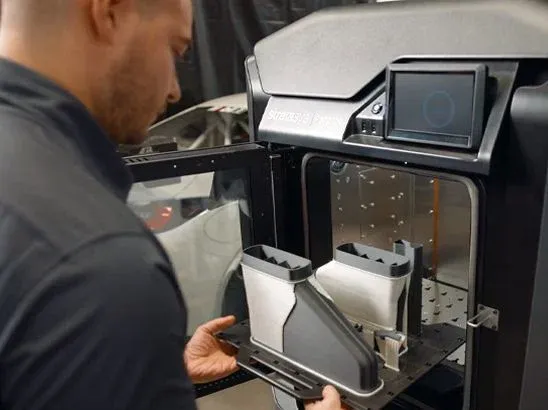
Production operations at Forge Labs. Our team manages builds from file preparation through post-processing and quality inspection.
Frequently Asked Questions
What is the most common 3D printing material?
Nylon PA12 is one of the most widely used materials for industrial 3D printing because of its strength, chemical resistance, and durability. It is available on both SLS and MJF platforms. For a full list of options, see our materials library.
How long does 3D printing take?
Most prototype parts can be produced within 2–5 business days, depending on the technology and finishing requirements. Rush turnaround is available for time-critical projects. Production batches may require additional lead time depending on quantity and post-processing.
How much does 3D printing cost in Canada?
Costs depend on part size, material, technology, and quantity. Most prototypes range from $50 to several hundred dollars. Production runs benefit from volume pricing, especially on powder-bed processes like SLS and MJF where parts can be nested efficiently. The fastest way to get a price is to upload your CAD file for an instant quote.
Is 3D printing suitable for production?
Yes. Technologies like SLS and MJF are widely used for low-volume production and bridge manufacturing. Many companies use additive manufacturing for hundreds or thousands of end-use parts per month.
Can 3D printing replace injection molding?
For high volumes, injection molding is usually more cost-effective. However, 3D printing is ideal for prototypes, low-volume production, and complex geometries where tooling costs cannot be justified. Many teams use 3D printing to validate designs before committing to injection mold tooling.
What file formats do you accept?
We accept STEP, STL, OBJ and IGES files. STEP files are preferred for quoting because they preserve exact geometry and allow our engineers to review design intent. You can upload files directly through our quoting platform.
Do you ship across Canada?
Yes. We ship to all provinces and territories across Canada, as well as to the United States. Most domestic orders arrive within 2–3 business days after production is complete.
Start Your Next 3D Printing Project
Upload your CAD file to receive instant pricing and automated manufacturability feedback through the Forge Labs quoting platform. Our engineers can review your design, recommend the right process, and help bring your part from concept to production.
Get an instant quote