
FDM and FFF are often treated as interchangeable terms, but in engineering practice they represent different capability tiers. Consumer FFF systems are useful for low-cost concept work, while industrial FDM platforms are built for repeatable dimensional control, higher-grade materials, and process stability under production conditions.
For teams making decisions about prototypes, tooling, and end-use components, this distinction matters. A low-cost printer may validate shape quickly, but it can also create false assumptions about what extrusion-based additive manufacturing can achieve at industrial quality levels.
Technology Clarification
Industrial FDM systems routinely achieve tighter tolerance control, more stable thermal behavior, and stronger quality governance than typical consumer FFF machines. The result is a different application envelope, especially for regulated or mechanically demanding parts.
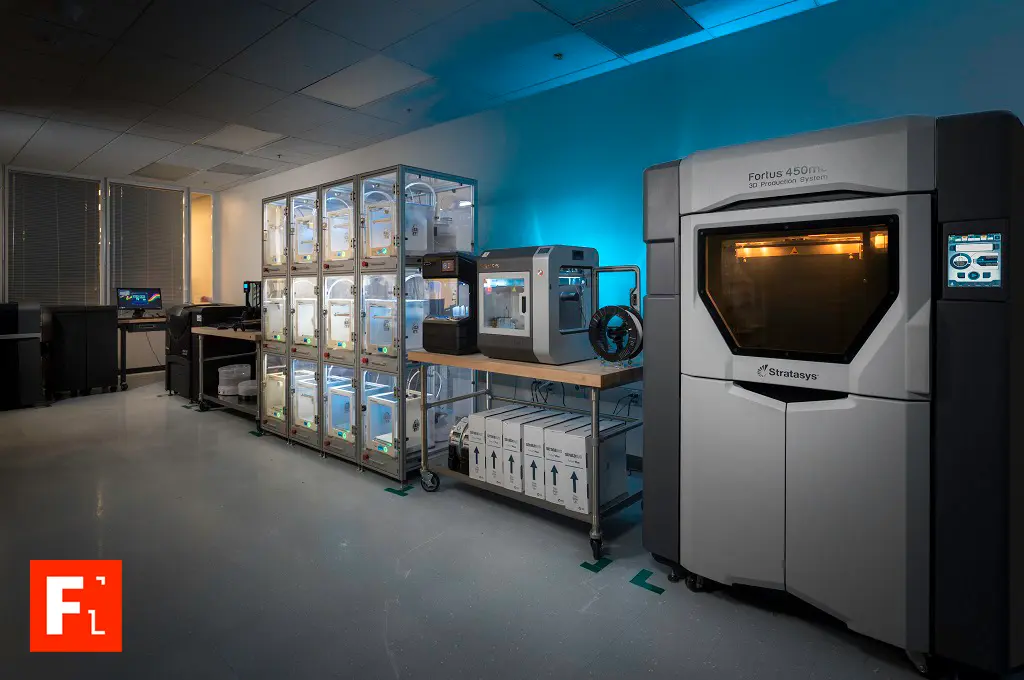
FDM and FFF share extrusion roots, but process control and output quality differ significantly by system class.
How the FDM and FFF Categories Diverged
Stratasys introduced Fused Deposition Modeling (FDM) in 1988 as a professional manufacturing technology. After key patents expired in 2009, lower-cost Fused Filament Fabrication (FFF) systems rapidly expanded access to 3D printing for hobbyists, education, and small shops. This democratization accelerated adoption, but it also blurred the distinction between industrial and consumer process capability.
Industrial FDM Trajectory
- Focused on engineering applications and production reliability
- Closed thermal environments and process repeatability
- Validated materials with stronger traceability expectations
- Used by aerospace, automotive, medical, and defense teams
Consumer FFF Trajectory
- Focused on affordability and accessibility
- Open or semi-open machine architectures
- Rapid concept iteration and educational use
- Lower process consistency across hardware and filament sources
A common failure mode is evaluating all extrusion-based additive manufacturing through the lens of first-time FFF results. If initial prints show weak layer bonding or dimensional drift, teams may incorrectly conclude that the full technology family is unsuitable for serious engineering work.
Core Technical Differences
Dimensional Accuracy and Repeatability
Industrial FDM systems are built for tighter and more repeatable dimensional output. This is not just a marketing difference; it directly affects fit, assembly performance, and rework rate for functional components.
| Technology Tier | Typical Accuracy Range | Primary Use Pattern | Operational Implication |
|---|---|---|---|
| Industrial FDM | ±0.127 mm (±0.005 in) | Functional prototypes, tooling, end-use components | Lower rework and tighter assembly confidence |
| Consumer FFF | ±0.3 to 0.5 mm | Concept models and general prototyping | Higher post-fit adjustment in critical interfaces |
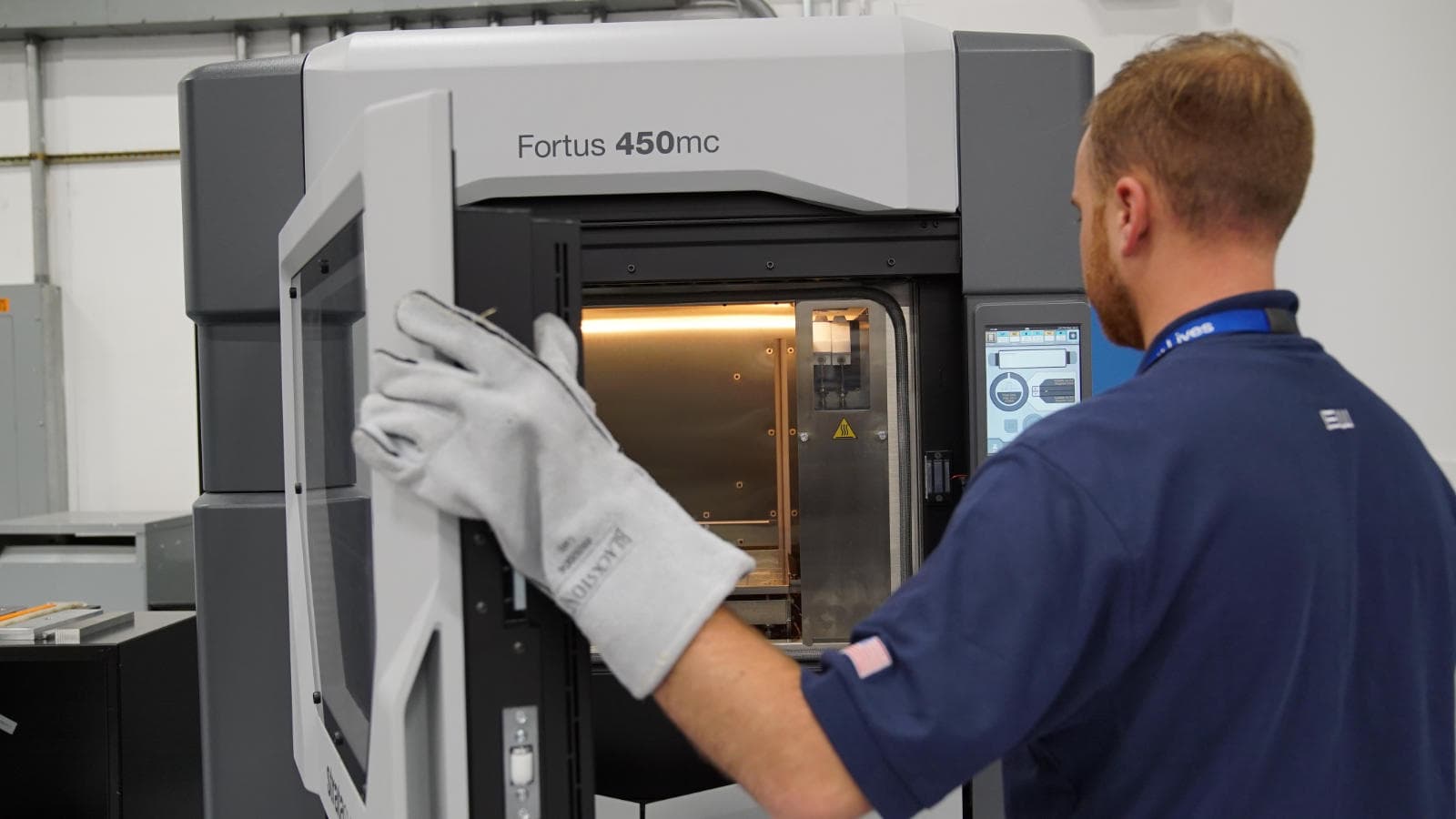
Enclosed industrial build architecture is a key driver of process stability in FDM systems.
Thermal Control and Mechanical Outcomes
A major performance separator is thermal management. Industrial FDM typically runs in an enclosed, temperature-managed chamber, while many FFF systems operate in ambient conditions. Stable thermal transitions reduce residual stress, improve layer adhesion, and lower warpage risk.
FDM Thermal Profile
- Enclosed heated chamber matched to material requirements
- More uniform cooling behavior across the part
- Improved interlayer bonding consistency
- Higher confidence for engineering-grade thermoplastics
FFF Thermal Profile
- Often ambient or partially controlled print environment
- Greater exposure to drafts and room temperature variability
- Higher risk of thermal distortion on larger geometries
- Less predictable mechanical behavior between runs
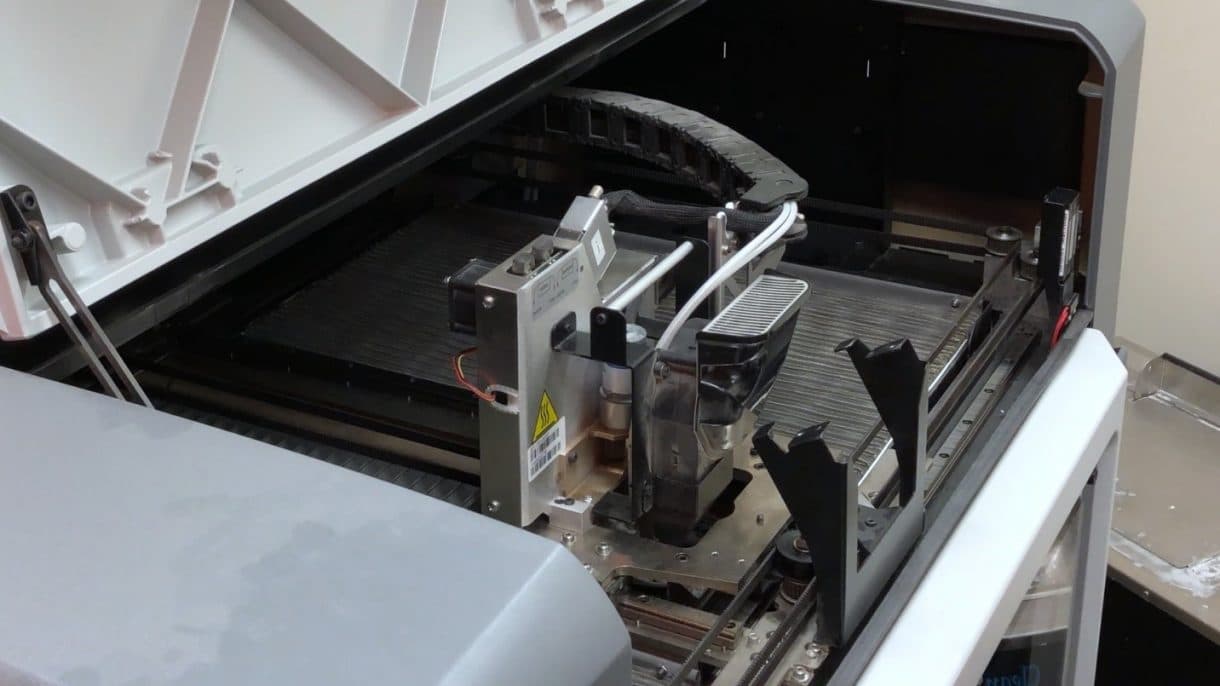
Print-head precision and thermal consistency strongly influence interlayer strength and final tolerances.
Material Quality and Traceability
Industrial FDM programs depend on more than raw polymer selection. They require tighter filament/process controls, consistent diameter behavior, and stronger lot-level quality expectations, especially for regulated industries.
Industrial Material Control Expectations
- Controlled filament tolerance and feed behavior
- Documented batch consistency and process traceability
- Qualification pathways for critical applications
- Repeatable print performance across production cycles
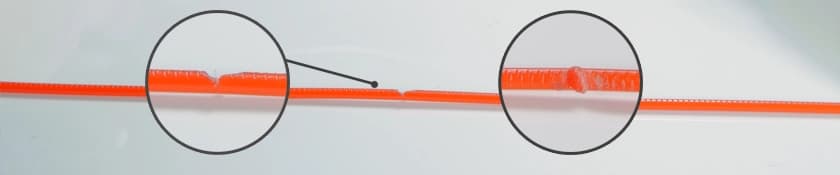
Filament consistency and quality control contribute directly to repeatable industrial part output.
Support Strategy and Post-Processing
Support removal is another point where operational differences become visible. Engineered support strategies in industrial systems can reduce manual cleanup burden and protect critical surfaces, especially in dense or internal geometries.
| Support Aspect | Industrial FDM | Consumer FFF |
|---|---|---|
| Support material strategy | Engineered and process-matched options | Often basic single-material support workflows |
| Removal workflow | More standardized and repeatable procedures | Frequently manual and operator-dependent |
| Surface risk at removal | Lower risk in validated workflows | Higher probability of manual witness marks |
| Internal geometry access | Better support for complex internal features | More constrained for intricate enclosed geometry |
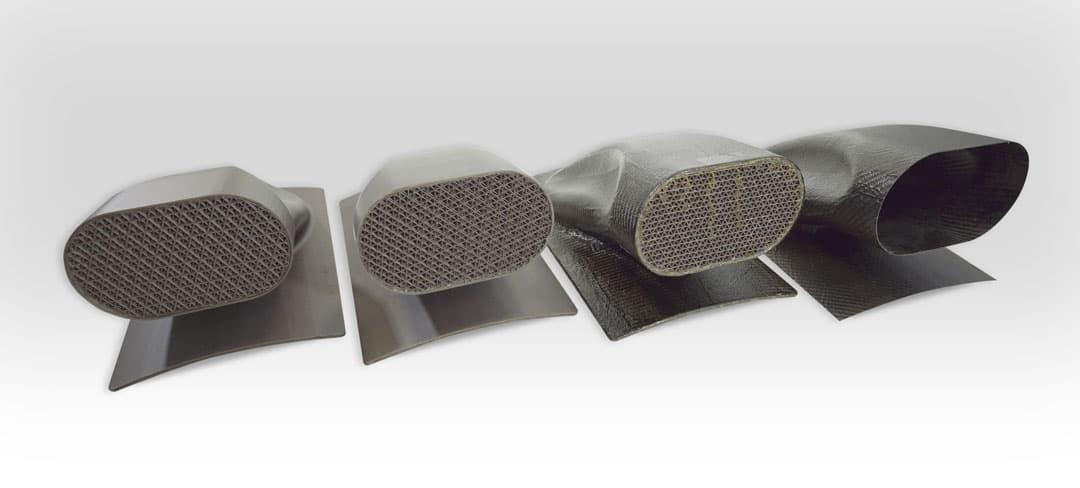
Controlled support workflows enable cleaner outcomes on complex functional components.
Application Fit by Material and Industry
Industrial FDM systems are generally selected when teams need tighter control with engineering thermoplastics for functional use. FFF remains effective where accessibility and rapid concept iteration are the dominant priorities.
Common Industrial FDM Use Cases
- Aerospace interior and bracket components
- Automotive fixtures and functional validation assemblies
- Industrial housings requiring heat or chemical resistance
- Medical and regulated programs needing tighter process discipline
Common FFF Use Cases
- Concept models and design communication
- Educational projects and training environments
- Low-risk prototype iterations with simple requirements
- Maker workflows where cost is the primary constraint
Economic View: Capability vs Cost
Upfront and material costs are usually higher in industrial FDM environments, but total program economics can improve when rework, failure rate, labor burden, and schedule risk are included in the model.
| Cost Dimension | Industrial FDM Profile | Consumer FFF Profile | Program Effect |
|---|---|---|---|
| Capital expenditure | Higher initial investment | Lower acquisition cost | Different entry thresholds by business stage |
| Material cost per kg | Higher for validated engineering materials | Lower for commodity filaments | Offset by quality and reliability needs |
| Failure/rework burden | Generally lower in controlled workflows | Typically higher in variable environments | Affects delivery confidence and labor cost |
| Post-processing labor | More standardized procedures | Often manual and variable | Impacts cycle time and scalability |
Selection Framework
Choose Industrial FDM When
- Dimensional control is critical to assembly or function
- Material performance requirements exceed commodity polymers
- Regulatory or traceability expectations are present
- Program risk from failed prints is operationally expensive
Choose Consumer FFF When
- Primary goal is low-cost concept iteration
- Tolerance and surface requirements are non-critical
- Use case is educational, exploratory, or hobby-driven
- Schedule and quality risk are acceptable tradeoffs
Practical Migration Path
- Start with FFF for concept velocity and early design exploration.
- Quantify where tolerance, quality, or reliability constraints begin to fail.
- Pilot industrial FDM on critical part families or tooling workflows.
- Standardize process controls and qualification criteria for scaled use.
- Run a hybrid model where each technology is used at its strongest tier.
Outlook
FDM and FFF will continue to coexist. FFF remains essential for accessibility and learning, while industrial FDM continues to advance as a production-grade path for organizations that need tighter process control and stronger engineering confidence.
Conclusion
The FDM-vs-FFF discussion is not a naming dispute; it is a capability and risk discussion. Teams that align technology choice to part requirements, quality expectations, and operational consequences make better manufacturing decisions and avoid both overbuying and under-specifying their process.
Key Takeaways
- Industrial FDM and consumer FFF serve different performance tiers.
- Thermal control and process consistency drive major quality differences.
- Material quality governance is often as important as printer hardware.
- Total cost should include failure rate, labor, and schedule risk, not only machine price.
Further Resources
- Industrial FDM Technology Guide
- FDM Design Guidelines and Best Practices
- Complete 3D Printing Technology Comparison
- Aerospace Applications of FDM Technology
Need Help Choosing Between FDM and FFF for a Specific Program?
Forge Labs can review your part requirements, tolerance targets, and material constraints to recommend the right manufacturing path.
Talk to Engineering