Direct Metal Laser Sintering Aluminum 6061 For High-Strength Structural Parts

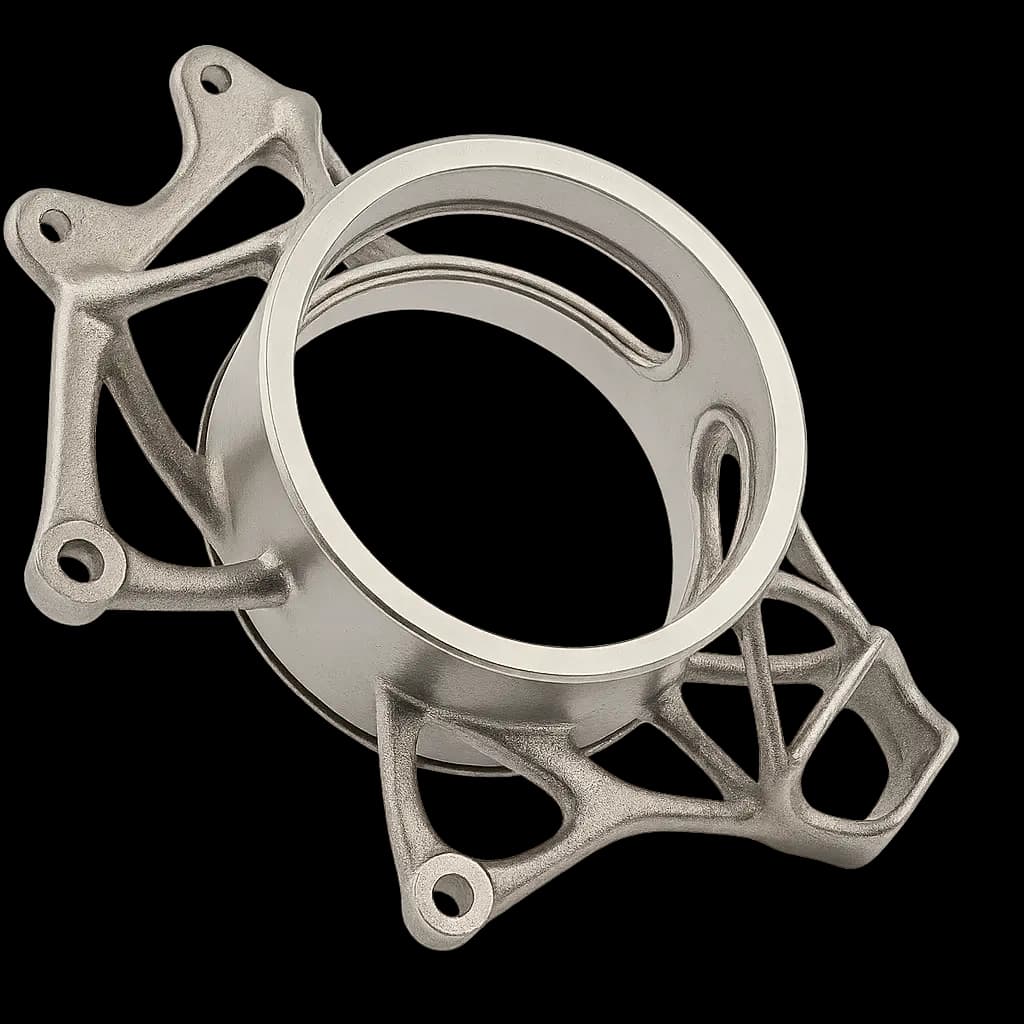
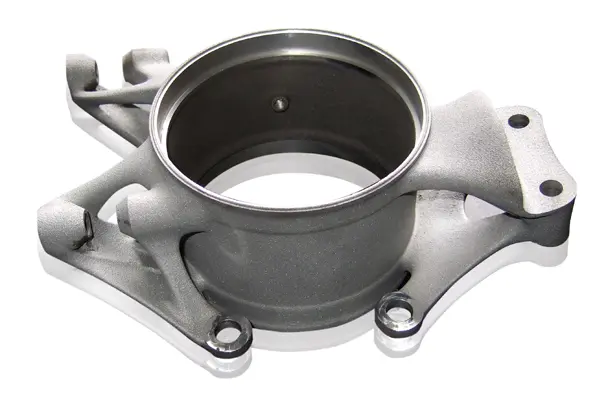
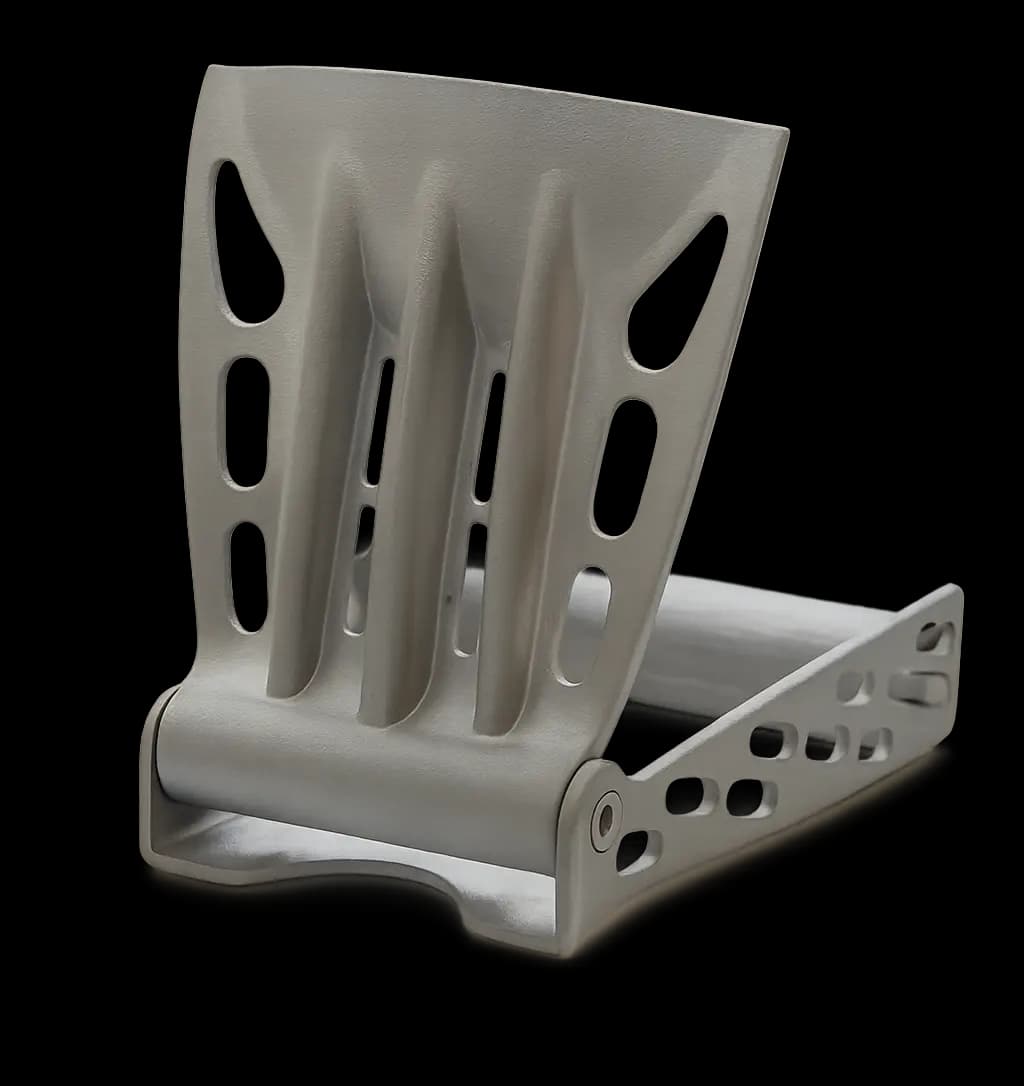
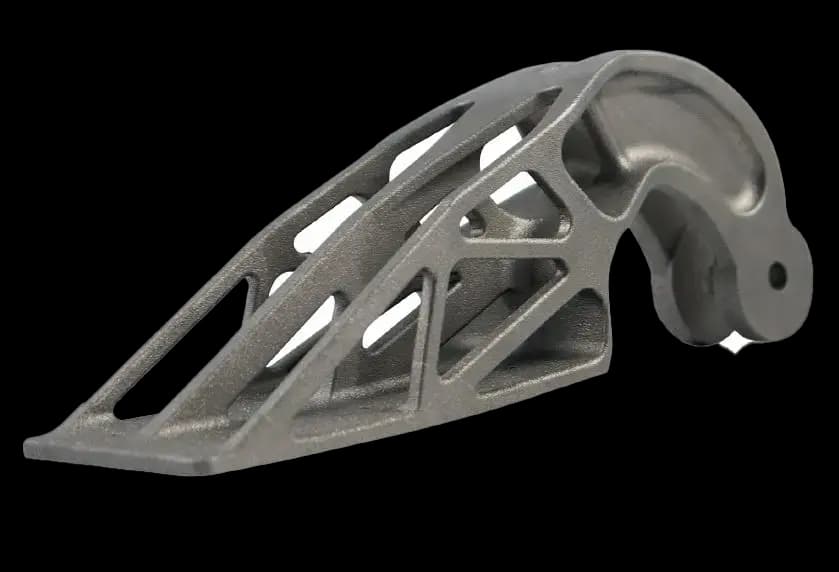
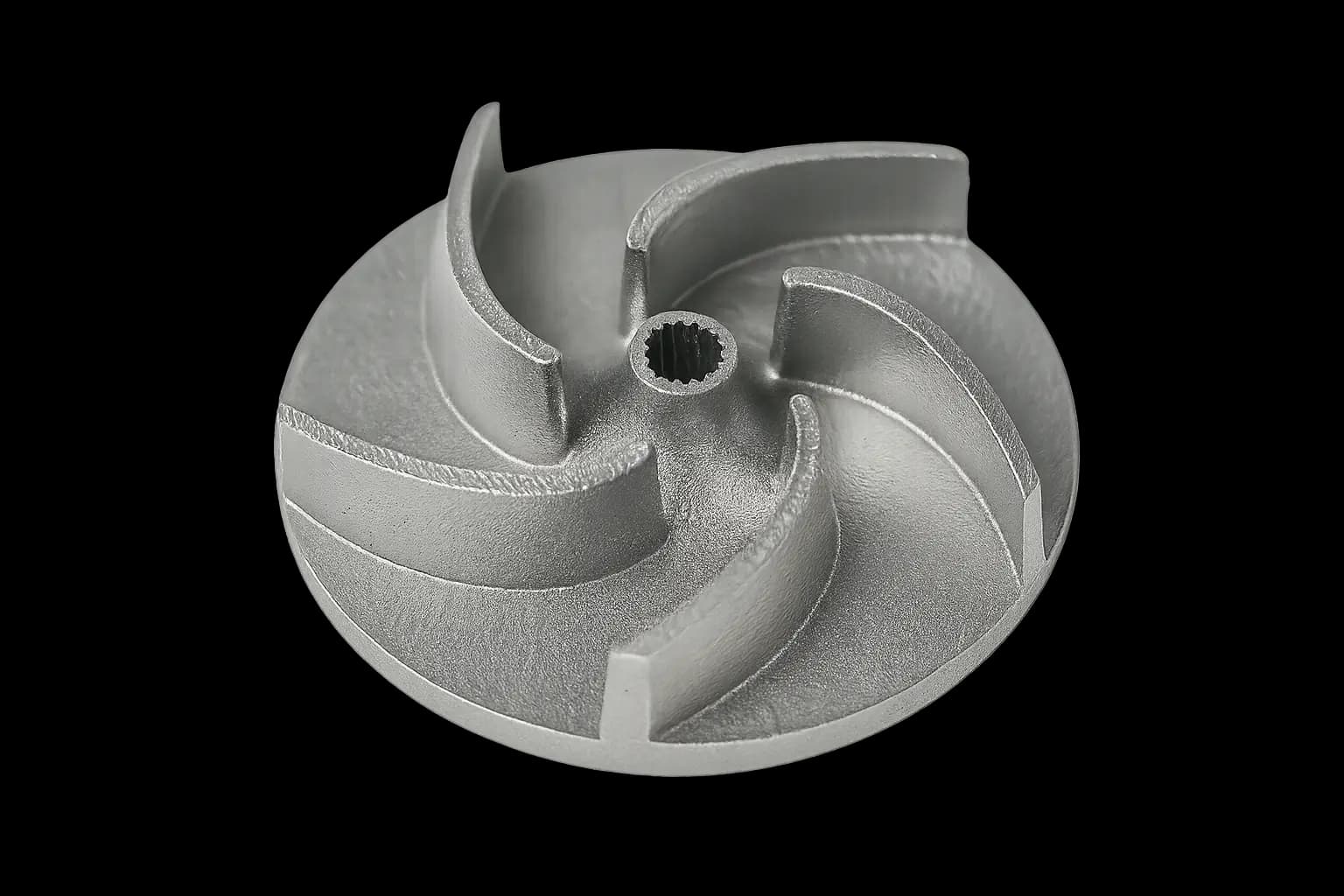
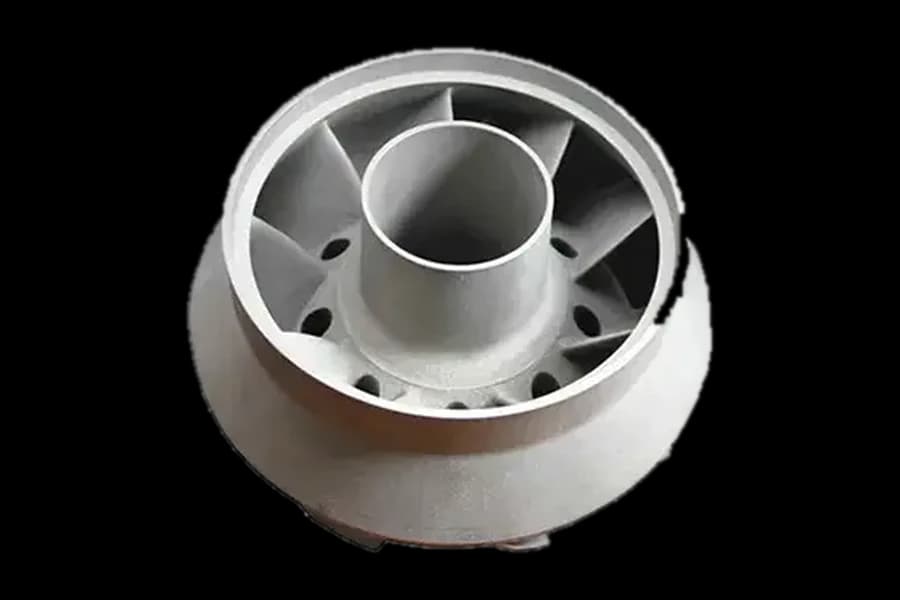
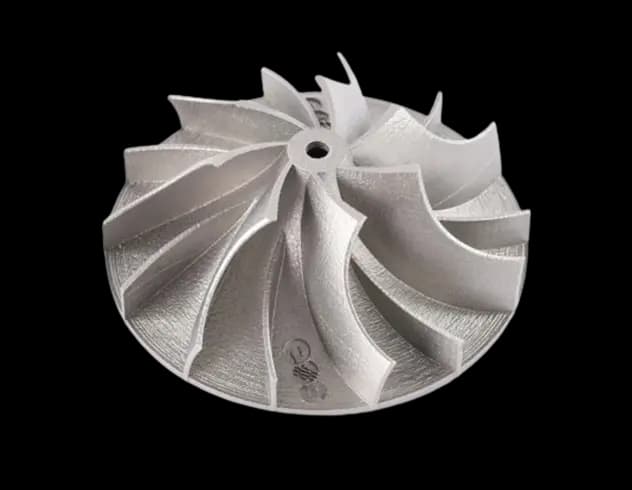
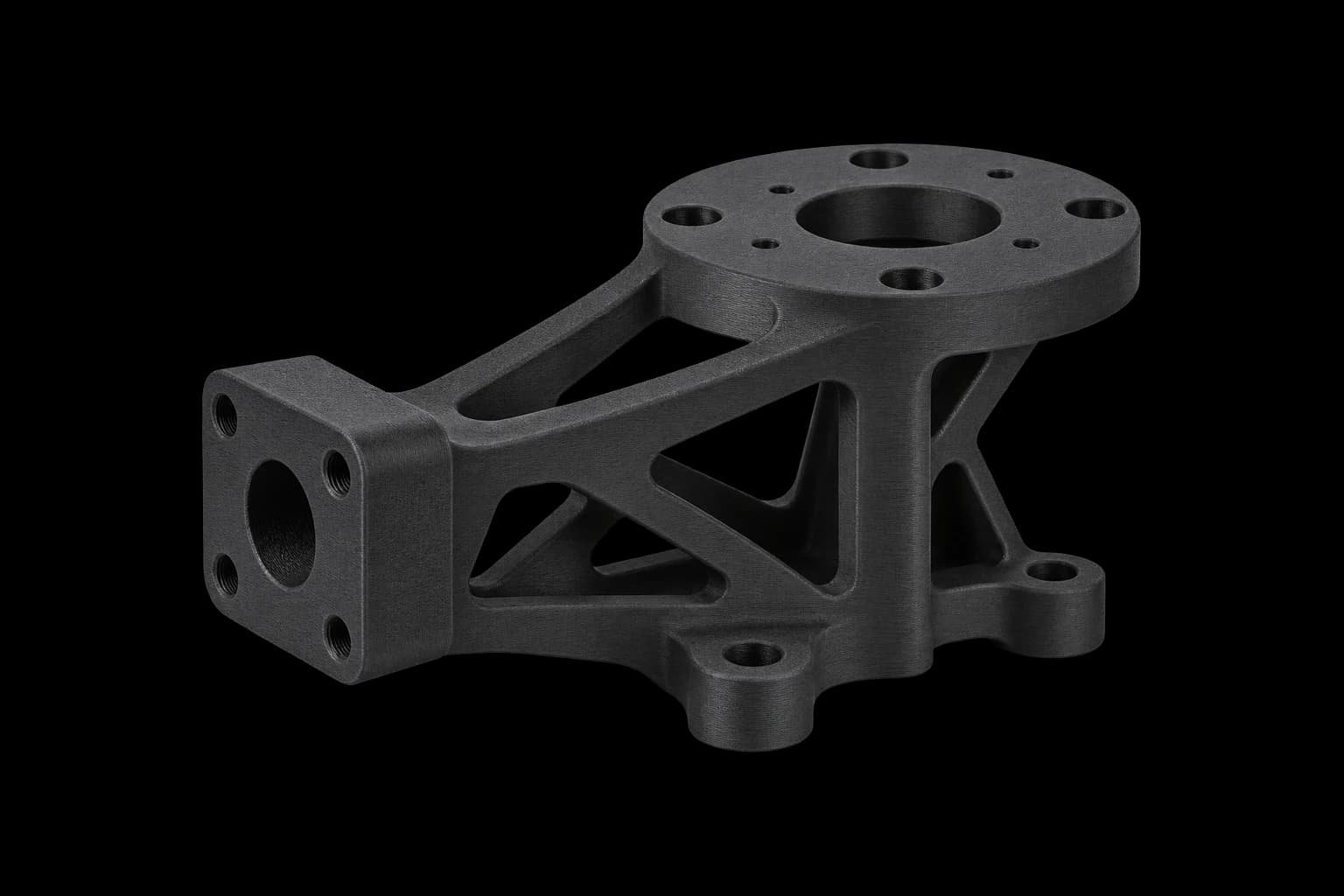
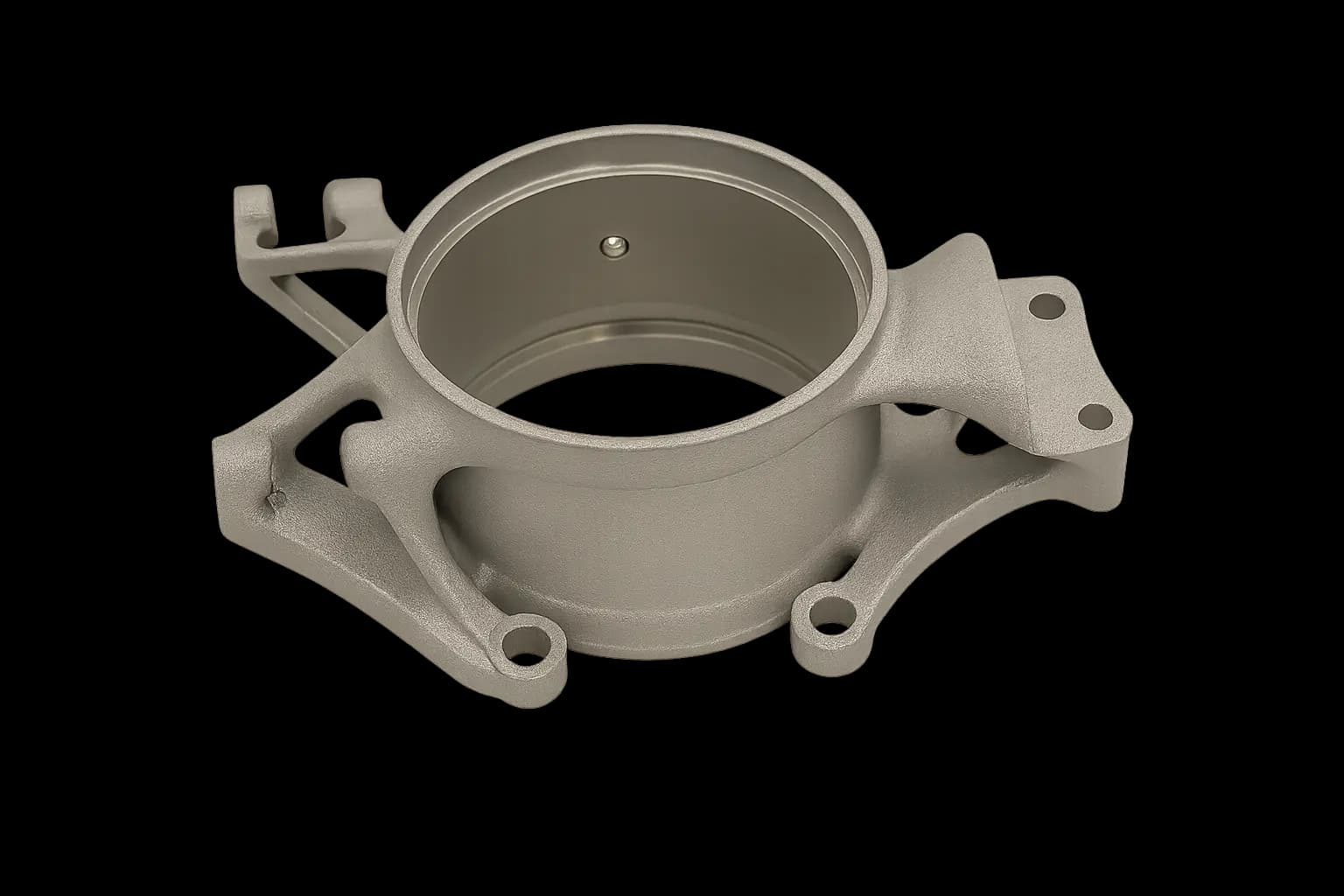
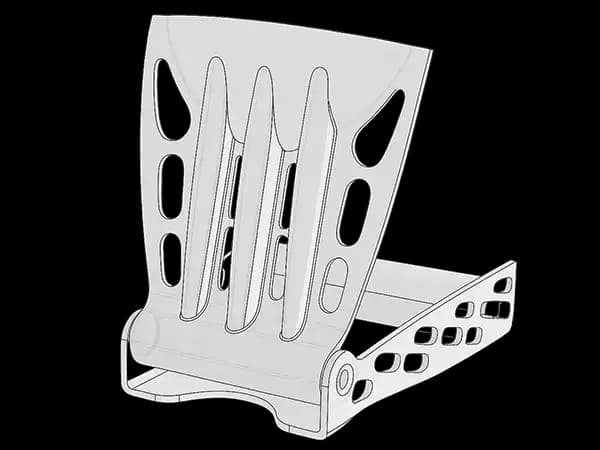
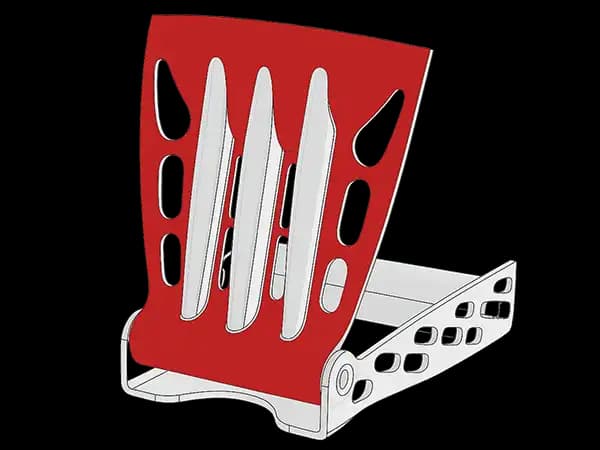
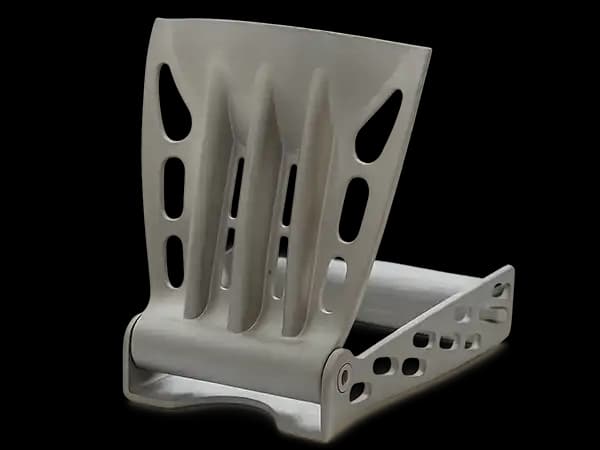
Aluminum 6061 3D printed part example
Metal Precision
Industrial Grade
DMLS material

Aluminum 6061 overview

Aluminum 6061 brings the familiar 6061 alloy to DMLS metal 3D printing, so light, strong aluminum parts can take shapes that machining cannot reach. After heat treatment, printed parts are comparable in strength to conventional 6061, resist corrosion and carry heat well, and they can be machined and anodized like any aluminum part. Use it for brackets, housings, robot end effectors, heat sinks and manifolds in aerospace, automotive, robotics, electronics and marine work.

How Aluminum 6061 is manufactured

Aluminum 6061 is manufactured using Direct Metal Laser Sintering (DMLS), an industrial powder-bed process in which a laser melts fine aluminum powder layer by layer under the inert atmosphere reactive aluminum alloys require. Parts print on the EOS M 290, whose F-theta optics keep beam quality consistent across the whole plate, so features print to the same accuracy wherever a part sits. This allows complex geometries, internal channels and consolidated designs to be produced in one build, with repeatable quality from the first part to the last.

Build volume
250 × 250 × 325 mm
Lead time
From 12 business days
Layer height
0.04 mm
Forge Labs Steam

Know before you manufacture in Aluminum 6061.

Upload CAD files to Forge Labs Steam for instant Aluminum 6061 pricing and live manufacturability feedback, and fix issues before production.

Upload CAD files to Forge Labs Steam for instant Aluminum 6061 pricing and live manufacturability feedback, and fix issues before production.

Surface finishes

Finishes for Aluminum 6061

DMLS parts generally exhibit a slightly rough, matte finish due to the laser sintering process, resulting in a uniform surface texture. While this natural finish is sufficient for many functional applications, Forge Labs offers several post-processing options to enhance aesthetics, accuracy, and performance.

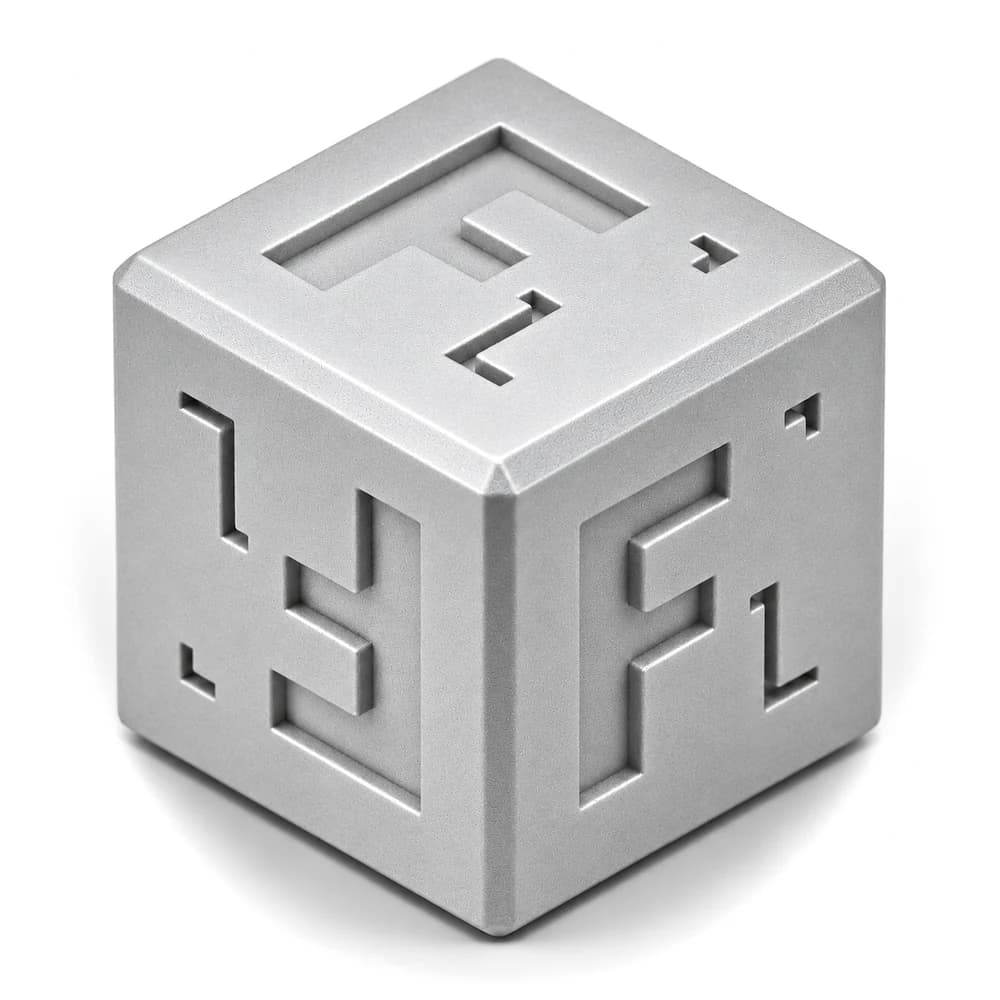
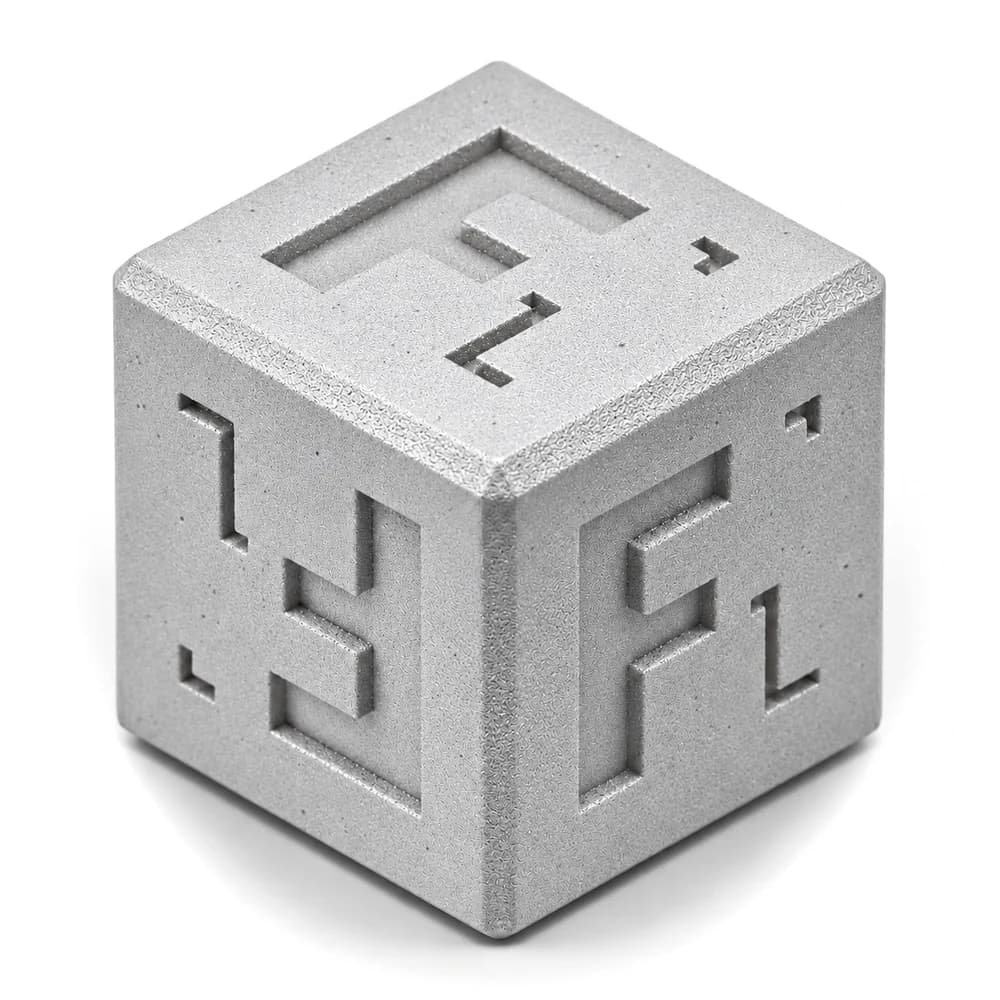
Forge Labs sample cube in bead-blasted DMLS aluminum 6061
Natural

Standard Finish

Support structures are carefully removed, and parts undergo shot peening to create a uniform, matte surface and help relieve residual stresses. Critical features may receive light machining for tighter tolerances.

Surface Texture
Uniformly matte surface
Appearance
Matte Grey
Details
Well represented
Sample cube with a machined and polished satin metal finish
Forge Labs sample cube in bead-blasted DMLS aluminum 6061
Enhanced

Machining & Polishing

Precision machining and polishing processes enhance surface quality, achieving tighter tolerances and smoother finishes for critical applications.

Surface Texture
Smooth, polished finish
Appearance
High-gloss metallic
Details
High retention
Sample cube in blue anodized DMLS Aluminum 6061
Forge Labs sample cube in bead-blasted DMLS aluminum 6061
Protective

Anodizing

For aluminum parts, anodizing forms a protective oxide layer, significantly enhancing corrosion resistance and hardness while improving appearance.

Surface Texture
Matte with reduced texture
Appearance
Matte protective coating
Details
Preserved
Sample cube with a red automotive-grade performance paint finish
Forge Labs sample cube in bead-blasted DMLS aluminum 6061
Premium

Performance Paint

Automotive-grade coating that enhances aesthetics and durability. Each part is hand-finished with professional-grade equipment for exceptional adhesion and custom color matching.

Surface Texture
Matte to Semi-Gloss
Appearance
Custom color matching available
Details
Clear & refined
Industry applications

Industry applications for Aluminum 6061

Aluminum 6061 combines an exceptional strength-to-weight ratio for lightweight structural applications with excellent corrosion resistance. From rapid prototyping to production runs, teams rely on Aluminum 6061 to maintain tight tolerances while reducing assembly complexity through consolidated part designs.

While Aluminum 6061 is traditionally a wrought alloy, processing through EOS DMLS enables complex geometries with properties comparable to wrought 6061-T6 after heat treatment. Engineers get an alloy whose properties they already trust, with the design freedom of additive manufacturing.

Standard 6061 is prone to hot cracking when laser-melted, so this powder carries a small ceramic addition that lets parts print crack-free and dense, to above 99.5% relative density.

Parts are T6 heat treated after printing to reach their full mechanical properties. The alloy also anodizes well, for corrosion protection and a durable colored finish.

All industries
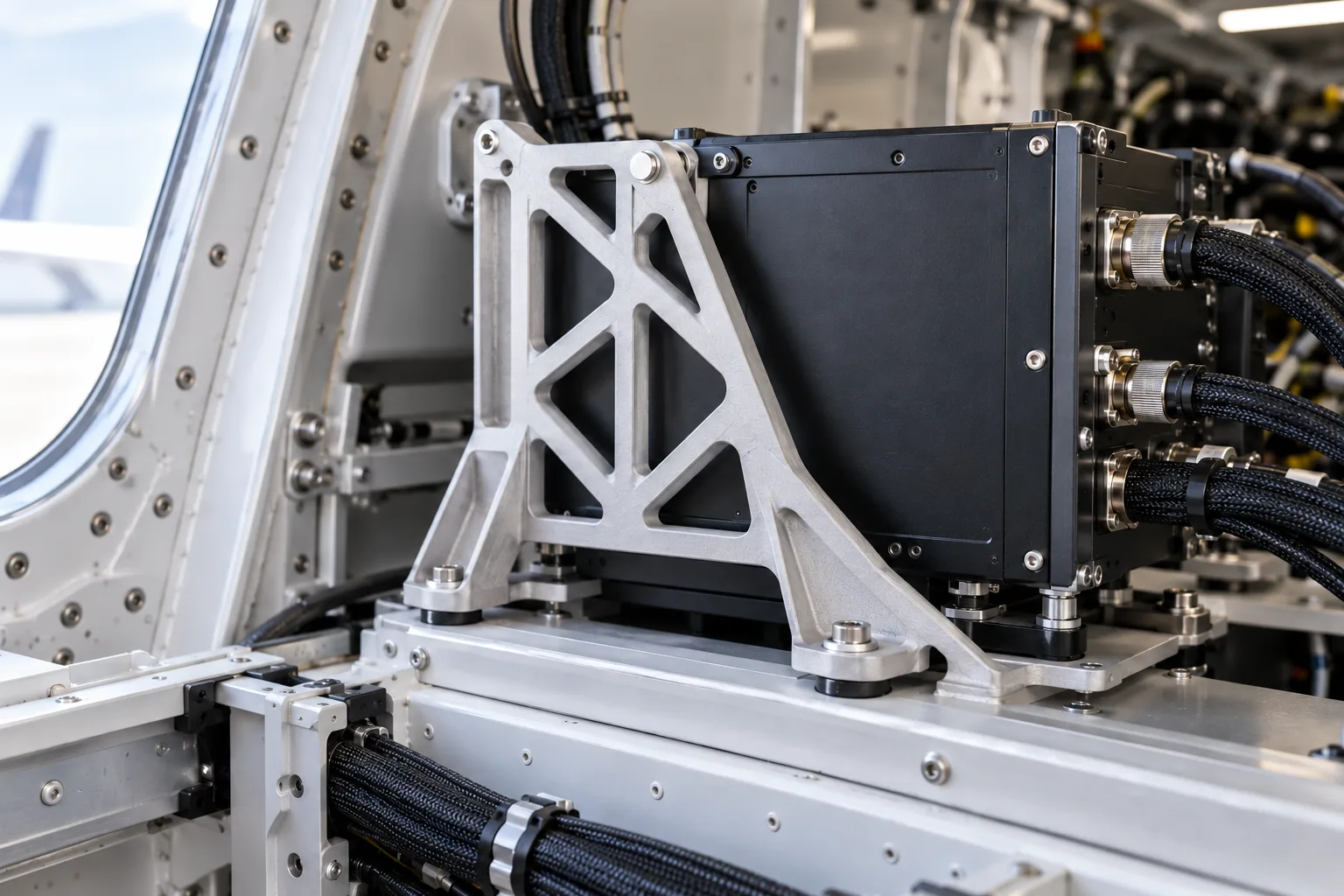
DMLS aluminium 6061 avionics bracket in an equipment bay

Aerospace

Brackets, Avionics Housings & Ground Hardware

Aerospace and space teams use Aluminum 6061 for passive RF parts on satellites and lightweight prototype structures, where engineers want a familiar, light and stiff alloy in a shape machining cannot reach. Its tensile strength rises to 419 MPa at −157 °C, so it suits hardware that sees cold environments.

  • Secondary structure brackets and fittings
  • Avionics housings and mounts
  • Ground support equipment
Explore aerospace
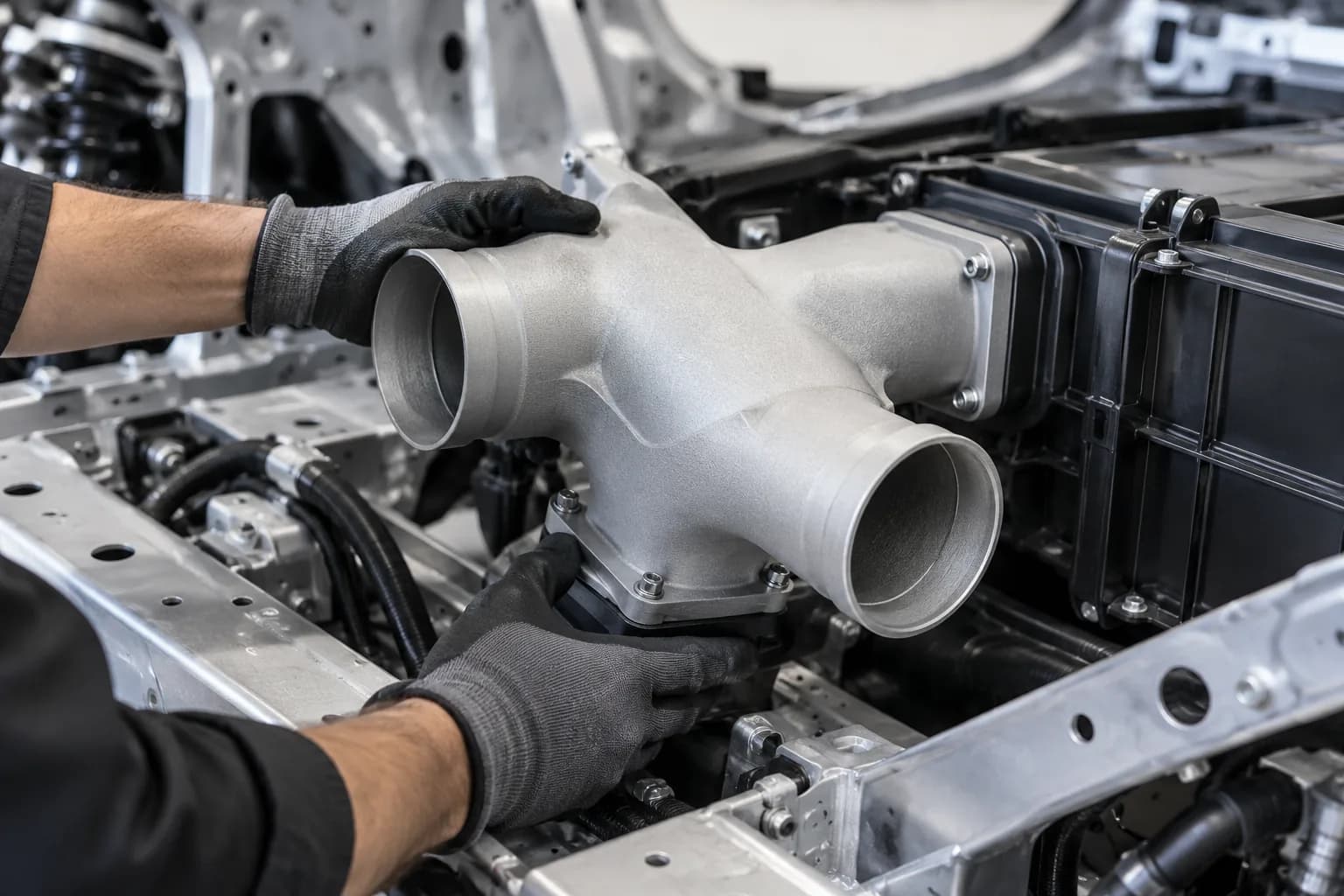
DMLS aluminium 6061 duct junction in a vehicle chassis

Automotive & Transportation

Lightweight Brackets, Ducting & Enclosures

Automotive, motorsport and transport teams use Aluminum 6061 for mounting adapters, custom fittings and lightweight structural parts, consolidating several machined or fabricated pieces into one printed part. The alloy is proven in motorsport, and because it suits fluid-flow parts, ducts can follow the space available instead of straight drilled paths.

  • Interior and chassis brackets
  • HVAC components and ducting
  • Electrical enclosures
Explore automotive
DMLS aluminium 6061 gripper body on a robot arm

Robotics

End Effectors, Arm Links & Sensor Mounts

Robotics teams use Aluminum 6061 for lightweight end effectors, end-of-arm brackets and structural frames, where weight at the end of the arm cuts into payload. A 76 GPa modulus at aluminum's low density keeps parts rigid without adding weight, and pivot bores and mounting faces can be machined after printing for a hybrid manufacturing route.

  • Gripper bodies and fingers
  • Robot arm links and joints
  • Sensor mounting structures
Explore robotics
DMLS aluminium 6061 heat sink on a power electronics board

Electronics & Clean Tech

Heat Sinks & Thermal Management Parts

Electronics, semiconductor and clean tech teams use Aluminum 6061 wherever a metal part has to carry heat away from the components it holds, from power electronics to semiconductor capital equipment. At 162 W/m·K it moves heat well, and fins, internal cooling channels and mounting features print in one part with no machining setup for each feature.

  • Heat sinks and heat spreaders
  • Cold plates with internal channels
  • Electronics mounts and housings
Explore clean tech
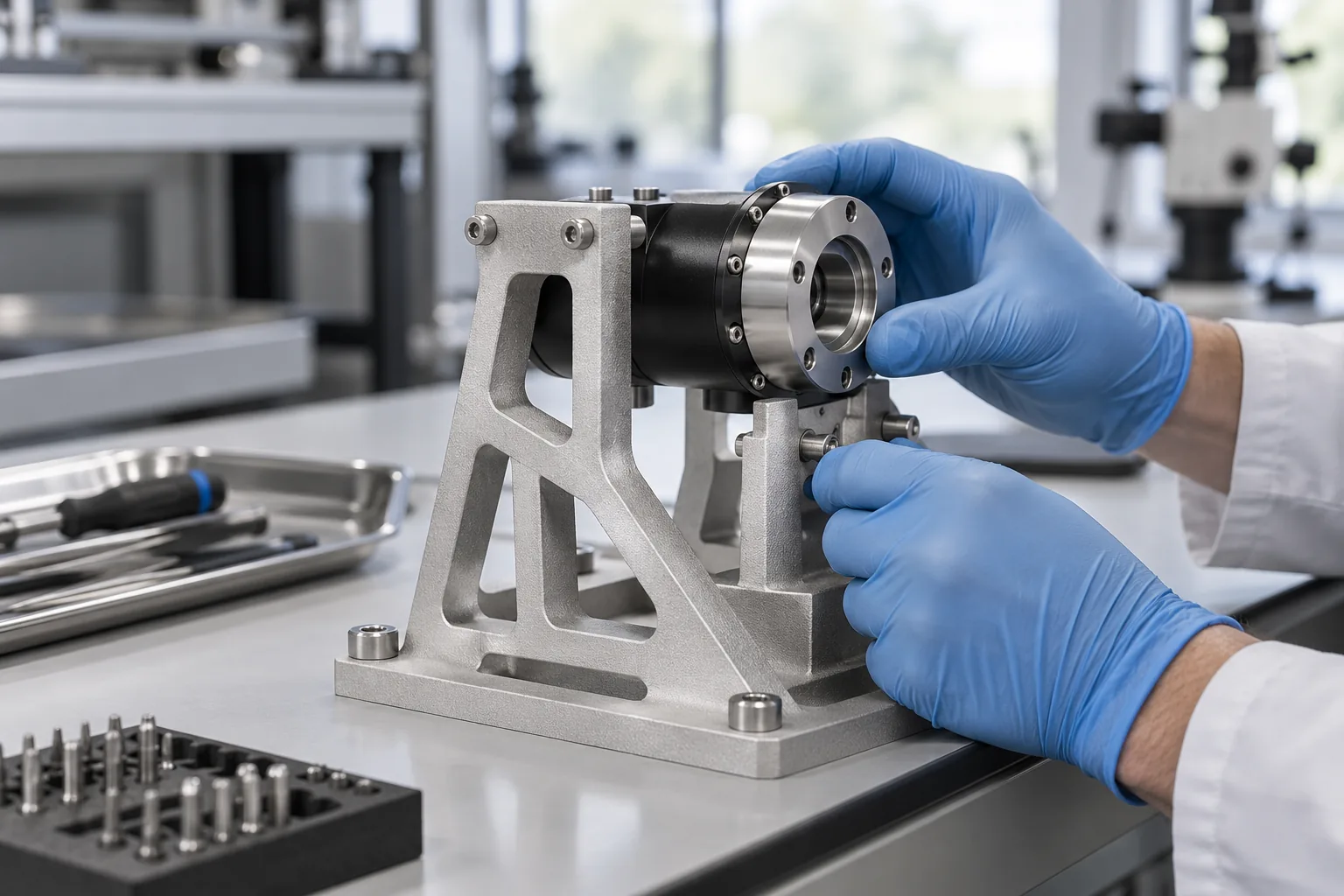
DMLS aluminium 6061 alignment fixture on a lab bench

Medical & Life Science

Instrument Components & Device Fixtures

Life-science labs and medical device makers use Aluminum 6061 for instrument frames, optics and sensor mounts, and the precision tooling that holds devices during manufacture, where hardware must stay light, stiff and dimensionally stable. Aluminum instrument components and fixtures are part of Forge Labs' DMLS work for medical device makers, and repeat lots print from the same file, so a replacement fixture matches the original.

  • Lab instrument components
  • Device assembly jigs and fixtures
  • Precision tooling and alignment blocks
Explore medical devices
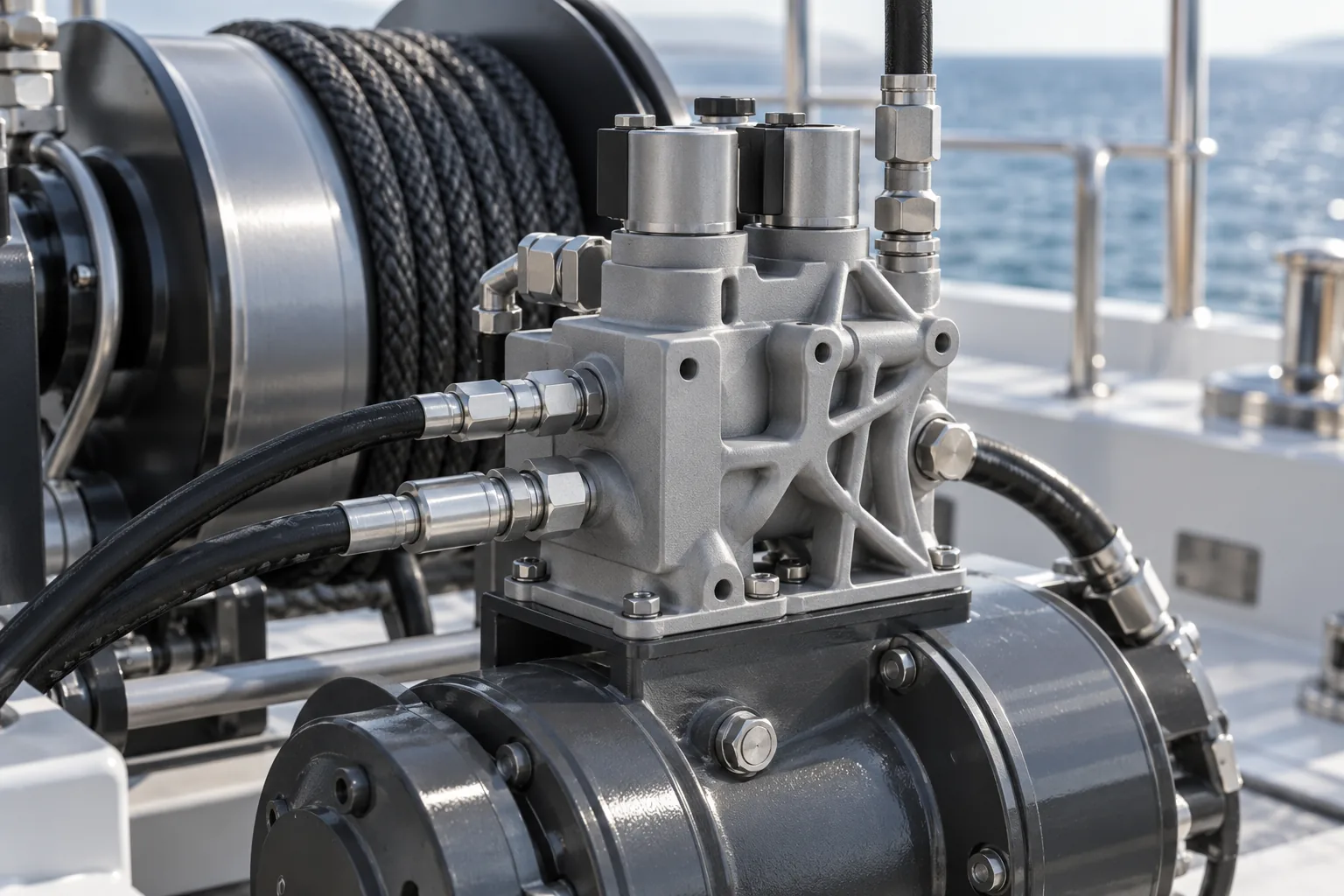
DMLS aluminium 6061 hydraulic manifold on a marine deck unit

Marine & Offshore

Instrument Housings, Manifolds & Deck Hardware

Marine and offshore equipment builders use Aluminum 6061 for underwater equipment components, mounting brackets and fluid fittings that would otherwise be machined from billet or fabricated from several pieces. Manifolds route fluid through internal passages in a single part, and hardware can be anodized for corrosion protection before it goes into service.

  • Instrumentation housings
  • Hydraulic manifolds and valve bodies
  • Custom cleats and deck hardware
Explore subsea and field hardware
Performance data

Technical performance for Aluminum 6061

Values from the Elementum 3D A6061-RAM2 datasheet for T6 heat-treated parts printed on the EOS M 290, tested to the standard listed with each property.

Mechanical performance

Mechanical properties

Aluminum 6061 delivers dependable strength and ductility for aircraft structural components, robot end-of-arm parts and automotive chassis brackets, helping teams move from prototype to production with confidence. Its balanced mechanical profile handles demanding load conditions without turning brittle in critical parts.

The values are for T6 heat-treated parts and sit at or above typical wrought 6061-T6 strength. Hardness is given on the Rockwell B scale and the modulus is measured ultrasonically. Elementum publishes fatigue results to 10 million cycles as a chart rather than a single value, so ask us for it when fatigue drives the design.

PropertyValue
Ultimate Tensile StrengthASTM E8
331 MPa
Yield Strength, 0.2% OffsetASTM E8
297 MPa
Elongation at BreakASTM E8
12 %
Modulus of ElasticityASTM E494-15
76 GPa
Hardness, Rockwell BASTM E18
60 HRB

Material makeup

Physical properties

Aluminum's low density keeps parts lightweight yet durable, and printed parts reach near-full density, so critical features hold tolerance and downstream finishing stays predictable. The composition row lists the 6061 alloying elements and the ceramic addition.

As-built roughness depends on the face: top surfaces print smoothest, vertical walls are rougher and downward-facing 45° surfaces are roughest. Place cosmetic or sealing faces upward, or plan to machine or finish them.

PropertyValue
Nominal CompositionElementum 3D
Al-1.0Mg-0.6Si-0.28Cu-0.2Cr + 2% RAM additives
Theoretical Maximum DensityElementum 3D
2.74 g/cm³
Printed Relative DensityElementum 3D
> 99.5 %
Surface Roughness Ra, As Built (Top, 0°)Stylus profilometry, 40 µm layers
2.2 µm
Surface Roughness Ra, As Built (Vertical, 90°)Stylus profilometry, 40 µm layers
5.9 µm
Surface Roughness Ra, As Built (45° Downskin)Stylus profilometry, 40 µm layers
7.6 µm

Heat performance

Thermal properties

Aluminum 6061 conducts heat well, which suits heat sinks and thermal management parts; conductivity was measured in the build (Z) direction. Its thermal expansion is typical of aluminum, so allow for it where parts meet steel or titanium.

The temperature rows come from one elevated-temperature test series, including its own 23 °C point, so compare the hot and cold rows with that point rather than with the room-temperature tensile value. Strength rises in the cold and holds well through 100 °C, then falls steeply above 150 °C, so the alloy is not suited to long-term service above 200 °C.

PropertyValue
Thermal Conductivity (Z)ISO/DIS 22007-2.2 (transient plane source)
162 W/m·K
Coefficient of Thermal ExpansionASTM E228
22.4 ×10⁻⁶/K
Tensile Strength at −157 °CASTM E21 (Elementum Rev 2022-07-26)
419 MPa
Tensile Strength at 23 °CASTM E21 (Elementum Rev 2022-07-26)
338 MPa
Tensile Strength at 100 °CASTM E21 (Elementum Rev 2022-07-26)
331 MPa
Tensile Strength at 150 °CASTM E21 (Elementum Rev 2022-07-26)
287 MPa
Tensile Strength at 200 °CASTM E21 (Elementum Rev 2022-07-26)
215 MPa
Tensile Strength at 250 °CASTM E21 (Elementum Rev 2022-07-26)
129 MPa

Functional performance

Electrical properties

Aluminum 6061 conducts electricity, supporting grounded housings, shielding features and electrically integrated metal components.

The conductivity value is an as-printed reference measured by 3D Systems on the same powder; T6 heat-treated parts may differ.

PropertyValue
Electrical Conductivity (As Printed)ASTM B193 at 20 °C (3D Systems data)
13 MS/m
Resources

Datasheets and design resources

Datasheets, design guidance and supplier documentation for Aluminum 6061.

Download center

Access the most recent datasheet and supporting documentation maintained by our engineering team.

Aluminum 6061 datasheet

Design guidelines

Explore printable geometry recommendations, wall thickness tips, and finishing playbooks for DMLS.

View DMLS design guide
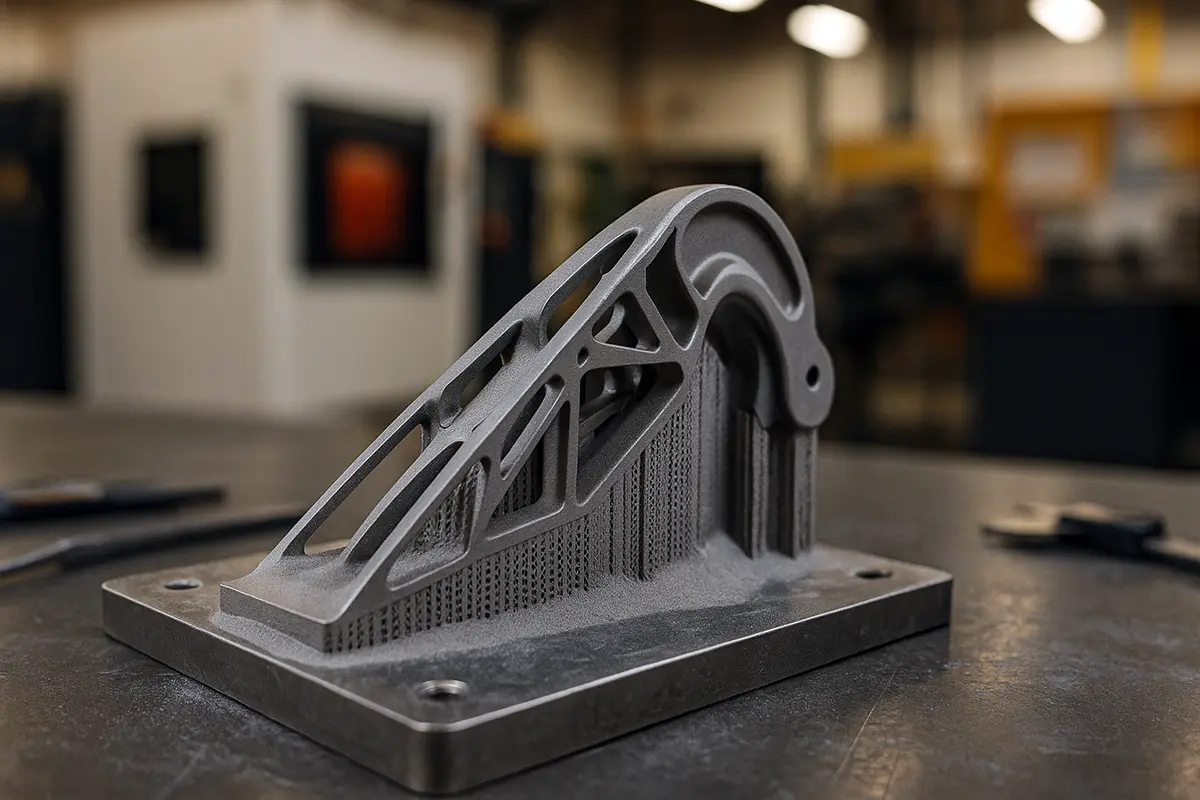
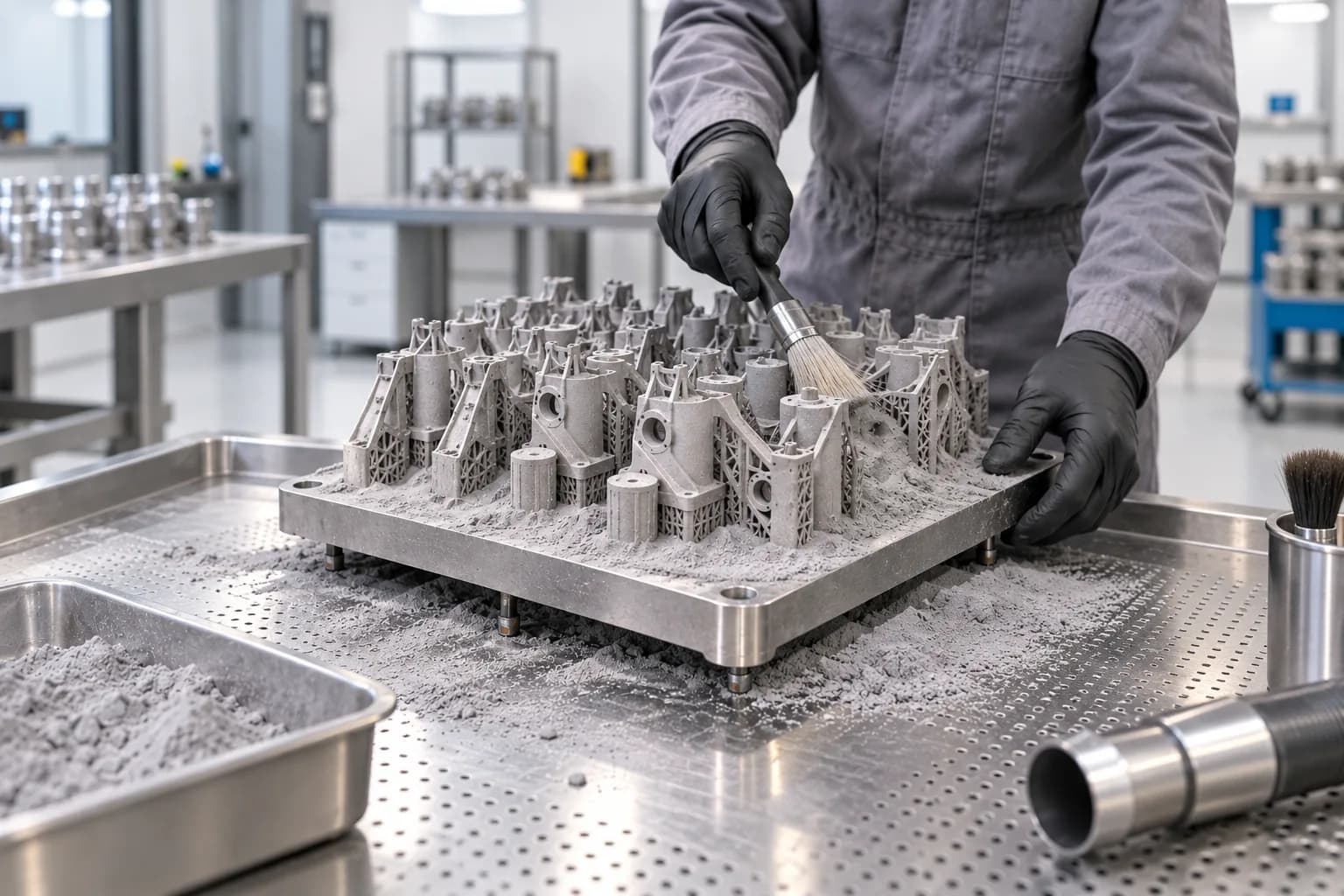
DMLS metal parts on a build plate being cleared of powder
Advanced Manufacturing

Built with Precision DMLS Technology

Aluminum 6061 is manufactured using industrial-grade DMLS technology, providing high strength and precision for mission-critical applications, from tooling and end-use components to repeat production batches. On the EOS M 290, this powder builds real parts about 50% faster than AlSi10Mg, with an excellent as-printed surface finish.

Tolerance
±0.3% (min ±0.3 mm)
Production capacity
Multiple parts and assemblies built on each plate
Quality control
In-process monitoring and batch traceability for consistent part quality and material properties
Heat treatment
T6 heat treatment
Colours & finishes
Matte grey as printed; anodizing and painting; support removal, CNC machining and surface finishing
Learn more about DMLS technology
Frequently Asked Questions

Frequently asked questions about Aluminum 6061

Can't find the answer you're looking for? Reach out to our customer support team.

Aluminum 6061 combines an exceptional strength-to-weight ratio with excellent corrosion resistance and good thermal and electrical conductivity. After T6 heat treatment, DMLS parts reach 331 MPa tensile strength, 297 MPa yield strength and 12% elongation in Elementum 3D testing, comparable to wrought 6061-T6, making it suitable for aerospace and automotive applications.
Start a quote

Ready to Get Started with Aluminum 6061?

Upload your design and get an instant quote for Aluminum 6061 parts.

  • Instant pricing with automated manufacturability analysis
  • Production workflows built for repeatable quality
  • Engineering support from prototype to production
Compare all materials

Create an account to upload CAD

STEP, STL, OBJ, 3MF and IGES supported

Manufacturing technologies
6
Engineering materials
50+
Part quantities
1-500+