Published in Aerospace

Aerospace 3D Printing Standards: Lessons from the Cozy Mk IV Crash

The Cozy Mk IV accident shows how an uncertified, 3D-printed induction elbow—not additive manufacturing itself—created risk in aviation. Here is how aerospace teams keep 3D printing airworthy with material certification, quality control, and traceability.

By Forge Labs Team

A recent Air Accidents Investigation Branch (AAIB) report detailed a Cozy Mk IV light aircraft that lost power on approach after a 3D-printed plastic induction elbow softened in the engine bay and collapsed. The headline could read "3D printing caused a crash," but the real story is about aerospace material standards, certification, and documenting every change on a critical system.

Cozy Mk IV intake elbow failure underscores aerospace 3D printing standards
The Cozy Mk IV intake elbow failed because it bypassed verification, not because 3D printing is flawed.

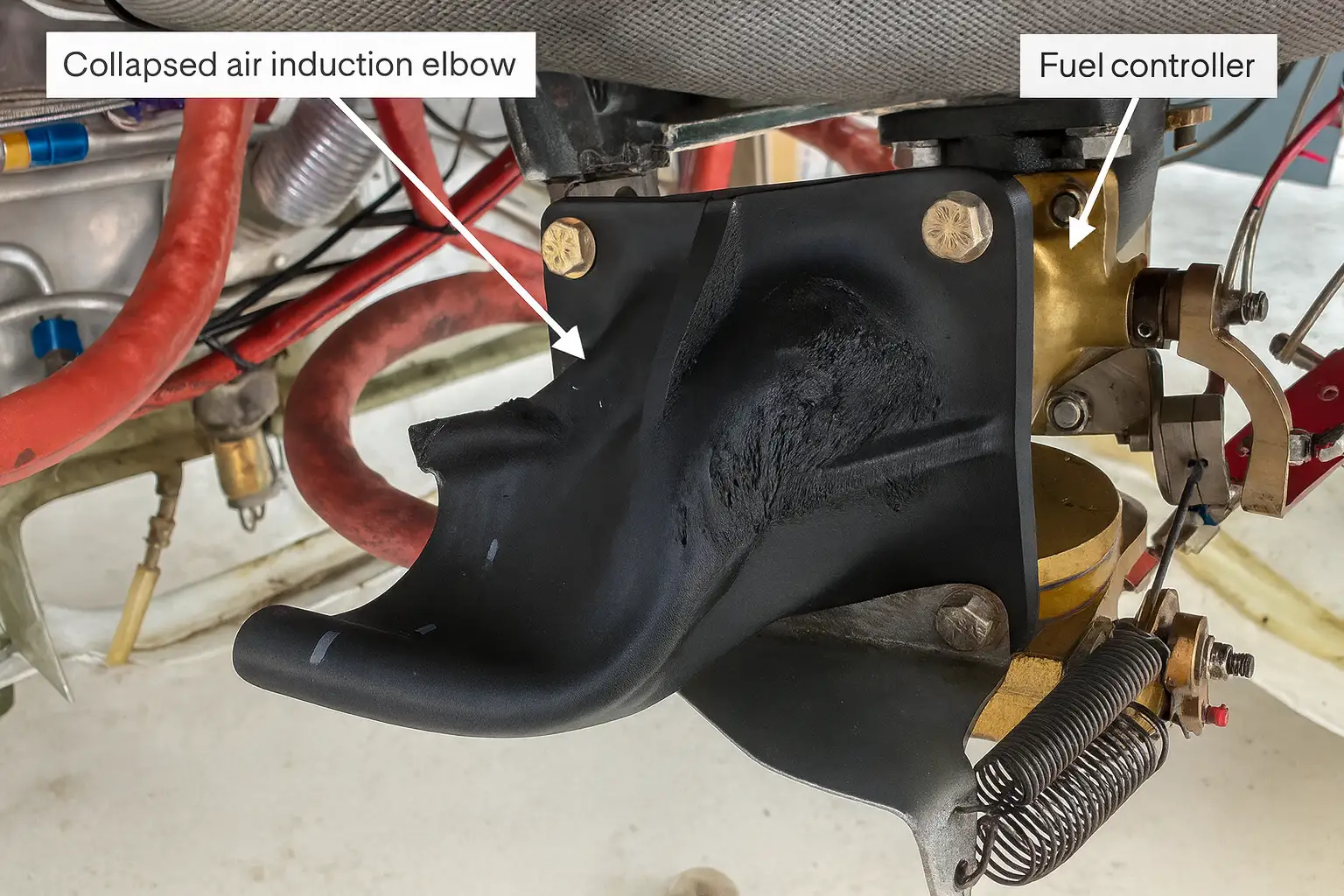
The part in question was a carbon-fiber filled ABS (CF-ABS) elbow bought at an air show, likely printed on a consumer FDM system, and installed without being declared or individually assessed as part of a fuel-system modification. AAIB testing found its glass transition temperature near 53°C—far below the 105°C the owner believed—so the elbow softened at normal engine-bay temperatures and collapsed. The pilot walked away; the aircraft did not.

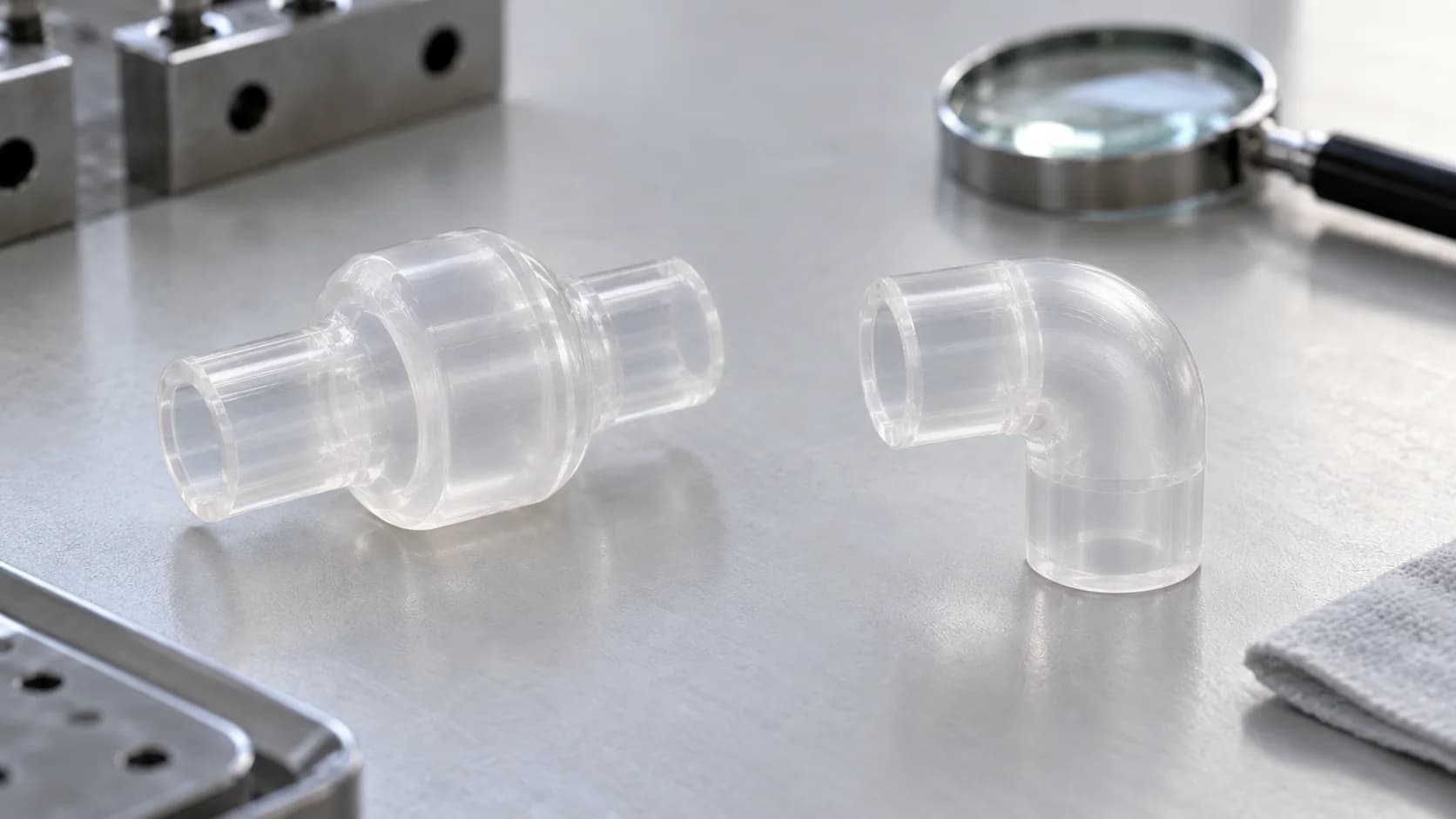
Collapsed Cozy Mk IV 3D-printed induction elbow after heat exposure
Lab analysis showed the 3D-printed induction elbow softened and collapsed, choking airflow on approach.

What happened in the Cozy Mk IV incident

The Cozy Mk IV’s plans specified a reinforced epoxy-and-fiberglass duct with a thin-walled aluminum insert to maintain shape under heat. The printed replacement removed the reinforcement entirely and was never disclosed in the airworthiness paperwork, bypassing review by the Light Aircraft Association. When the elbow deformed, airflow to the fuel controller choked off and the engine quit on final approach.

Engine failure on final approach

AAIB investigators reported the aircraft was being flown solo on March 18, returning from a local outing when the pilot began an RNP (GNSS) approach to Runway 09 at Gloucestershire. At roughly 500 feet above ground, the pilot advanced the throttle for a planned go-around, but the engine remained unresponsive and the aircraft landed short of the runway, striking the localiser array. The modified fuel-injection system had accrued about 37 hours in service before the failure.

  • Material behavior was assumed from hearsay, not validated; the measured Tg was half of what was claimed.
  • Original design intent—an internal aluminum sleeve for structural stability—was ignored.
  • No thermal analysis or engine-bay exposure testing was completed before first flight.
  • The modification was undocumented, so no regulator or peer review could flag the risk.

Airworthiness review exists to catch exactly these gaps. Without a declaration to the Light Aircraft Association, there was no opportunity to verify temperature margins, confirm a reinforced design, or require a material with proven heat performance. That omission—not the printer—created the hazard.

None of these failures are inherent to 3D printing. They are failures of engineering controls and certification.

Standards separate hobby prints from flight hardware

Additive manufacturing is proven in aerospace, but only when materials, machines, and people operate inside disciplined quality systems. A printed duct made on a hobby printer in an uncontrolled garage is not equivalent to a production part built on a calibrated industrial platform with serialized powder lots and process records.

What was missing in this modification

  • Material verification: no lot traceability, thermal conditioning data, or published mechanical properties.
  • Process control: unknown machine calibration, moisture conditioning, or build parameters.
  • Design validation: no proof of temperature margin, vibration tolerance, or fuel/oil exposure resistance.
  • Regulatory alignment: the part was not declared, so no airworthiness review or deviation plan existed.

By contrast, certified aerospace programs run additive parts under AMS, ASTM, and ISO standards with operator qualifications, first-article records, and repeatability studies. The Cozy Mk IV elbow failed because it never entered that ecosystem.

How to evaluate 3D-printed parts before they enter flight

A structured review closes the gap between "it printed" and "it is safe in a hot, vibrating, fuel-soaked engine bay." For aerospace additive manufacturing, the checklist is specific and evidence-driven.

  • Select materials with certified Tg and HDT values that exceed the environment by a wide margin.
  • Verify machine capability, moisture conditioning, and parameter locking for the selected process.
  • Preserve design intent—reinforcements, wall sections, and sealing surfaces must match or exceed the original.
  • Test against the real environment: thermal soak, vibration, fuel/oil exposure, and pressure drop where relevant.
  • Document everything: material certs, build records, and inspection data form the airworthiness package.

These steps are routine in regulated programs but easy to skip when a replacement part is sourced informally. That is why consumer-grade substitutions introduce risk even when the geometry looks correct.

Oversight gap and planned safety actions

The modified fuel-injection system had been reviewed by the Light Aircraft Association, but the induction elbow was not listed on the parts sheet, so it escaped evaluation. The AAIB notes the material failure of the elbow directly caused the power loss and off-runway landing, highlighting why every substituted component must be declared, tested, and documented. The AAIB also reported Tg measurements of 52.8°C and 54.0°C using a heat-flux differential scanning calorimeter and noted the LAA plans to issue an alert about 3D-printed parts and reference it in engine TADS. Investigators even posited the extended belly airbrake could have pulled hotter airflow over the elbow, compounding radiant heating.

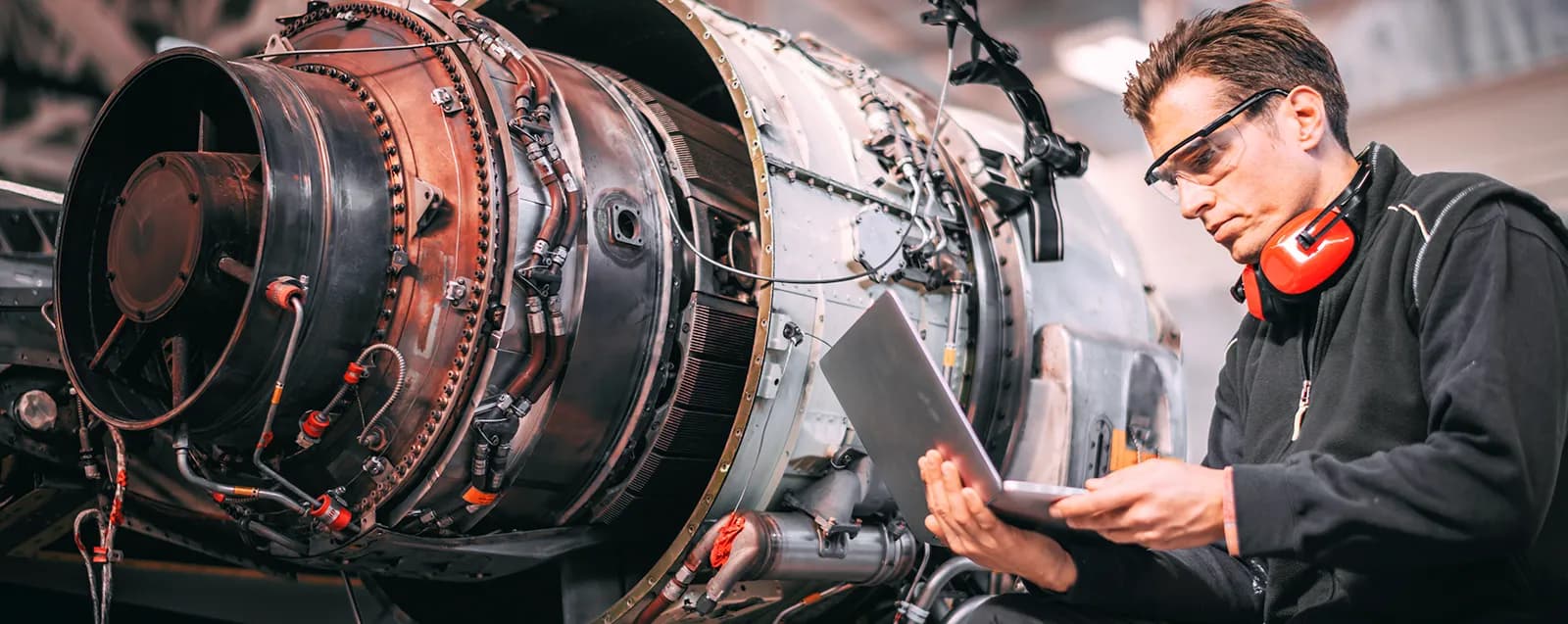
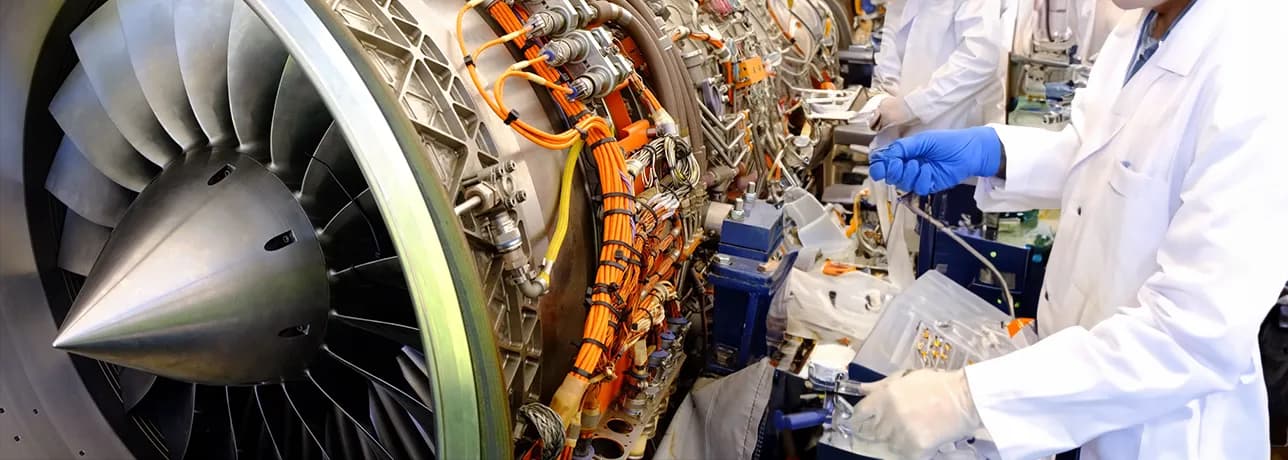
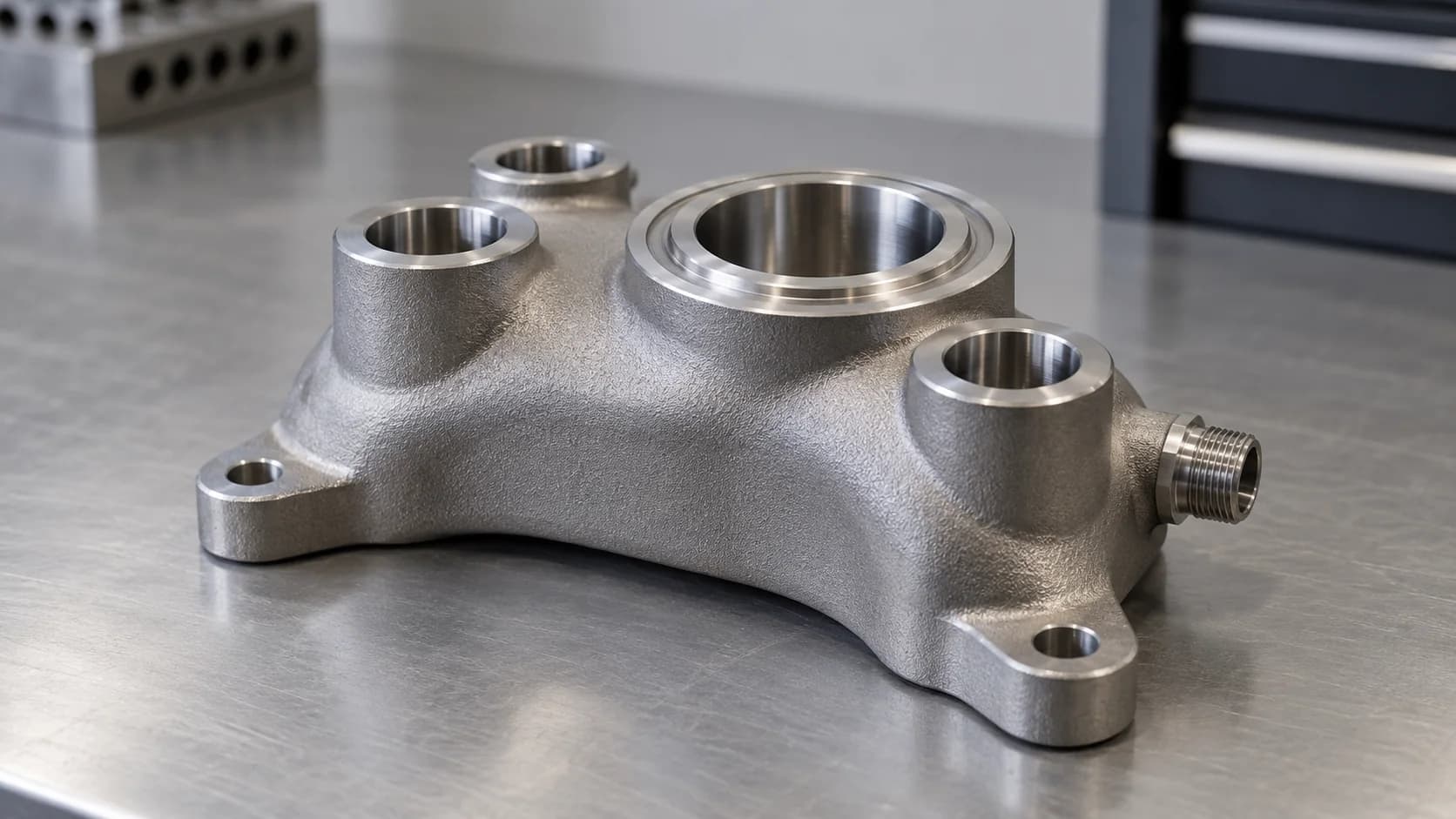
Aerospace components produced with industrial additive manufacturing
Flight hardware succeeds when material pedigrees, machine qualifications, and inspection records move together.

Where additive already works in aerospace

Tens of thousands of 3D-printed parts fly today across airframes, spacecraft, and UAVs. Metal fuel nozzles, cabin brackets, ECS ducting, antenna mounts, satellite frames, and propulsion components all ship with full traceability and validation. These programs use industrial AM cells built for aerospace production, not hobby equipment, and every lot is tied to tensile, fatigue, porosity, and chemistry data.

Accessibility is 3D printing’s strength—anyone can buy a printer and make a replacement in hours. That same accessibility is the risk when a consumer-grade part quietly replaces a certified component without testing. Aviation is unforgiving: heat, vibration, and fuel exposure will reveal any gap in analysis.

In certified programs, additive runs alongside AS9100 quality management and NADCAP-style process oversight. Powder handling, parameter control, and inspection are codified; deviations are documented; and every shipment carries the pedigree data required for configuration control.

Quality controls that keep 3D printing airworthy

Forge Labs runs polymer and metal AM inside controlled production cells with a digital thread that mirrors what regulated teams expect. Our Steam MES is built to enable ISO 9001 quality systems, capturing DFM, orientation strategies, machine telemetry, batch control, and inspection approvals automatically so the documentation leaves with the shipment—not weeks later.

  • Material traceability for every powder lot, resin batch, or filament spool with conditioning records.
  • Process qualification on EOS, HP, Markforged, Stratasys, and Formlabs industrial platforms with locked parameters.
  • Thermal, chemical, and mechanical verification when parts see heat, fuels, lubricants, or cyclic loads.
  • Engineer-led DFM that preserves design intent, accounts for anisotropy, and flags missing reinforcements.
  • Closed-loop documentation—machine IDs, build notes, inspections—delivered with each order.
  • Release packages that mirror AS9100 expectations: serialized batches, FAIR/PPAP data when required.

Those controls are why additive works for certified interiors, lightweight ducting, satellite structures, and propulsion components, while a garage-printed elbow fails in the first hot run-up.

Engineer reviewing build telemetry beside a metal 3D printer
Real-time monitoring, serialized batches, and engineering ownership keep industrial AM predictable.

Guidance for builders, maintainers, and engineers

If you are modifying an aircraft or other critical system

  • Treat every replacement as an engineering change: declare it, document it, and run it through review.
  • Use materials with published, tested properties; request certifications and conditioning data.
  • Validate the environment: temperature, vibration, fuel/oil exposure, and load cases.
  • Preserve design intent—reinforcements, wall sections, and interfaces exist for a reason.
  • Test on the ground under worst-case conditions before the part ever sees flight.

If you are leveraging a service bureau

  • Ask for traceability, process documentation, and inspection records—not just a print.
  • Confirm machines are industrial-grade and locked to qualified parameters for the chosen material.
  • Align with standards (AMS, ASTM, ISO) and quality systems that match your certification path.
  • Engage engineering early; let DFM catch missing reinforcements or thermal risks before build.

Closing thoughts

Additive manufacturing did not fail the Cozy Mk IV; the absence of verification, certification, and respect for operating limits did. 3D printing accelerates innovation and unlocks geometries no other process can deliver, but in flight-critical or life-critical systems, it must be paired with the right materials, processes, validation, and oversight.

We support teams who need that rigor every day—across aerospace, defense, energy, robotics, and medical programs—by pairing industrial AM with documented quality control, material certification, and traceability. When the stakes are high, standards are not optional. They are the reason 3D printing belongs in the most demanding environments.

Related Topics

AerospaceQuality ControlSafety CriticalAdditive ManufacturingMaterialsTraceabilityISO 9001AS9100Cozy Mk IVAAIB