
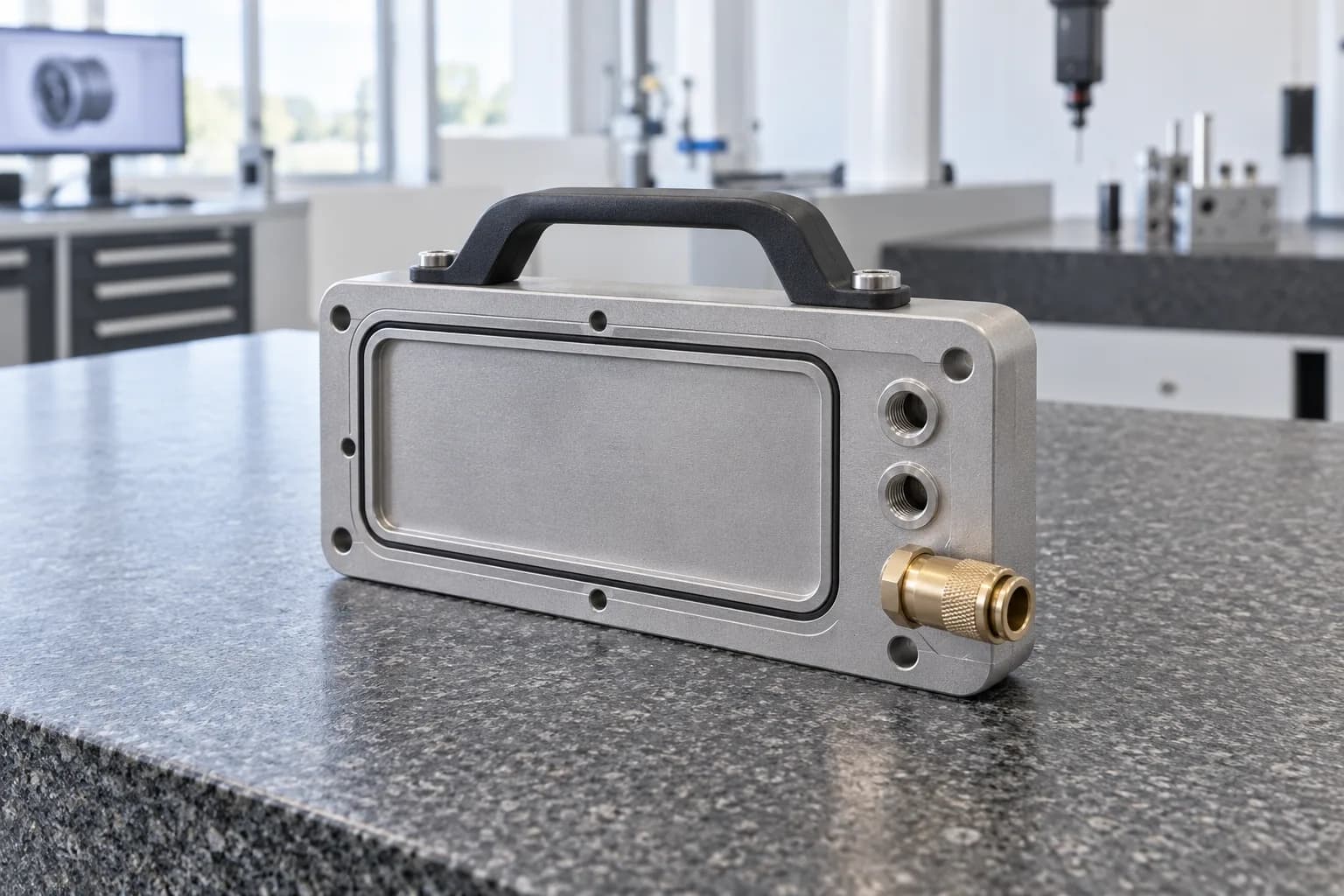
Aerospace & Defense
Highly Stressed Brackets & Fittings
Brackets, fittings and UAV hardware machined from one of the strongest aluminum alloys.
Aluminum 7075-T6 is the strongest of the common aluminum alloys for CNC machining, used for light parts that carry heavy and repeated loads. It gives steel-like strength while weighing far less than steel, stands up well to fatigue and stays stable through long machining runs, so tight tolerances hold. Hard anodizing adds a wear-resistant, protective surface. Choose it for highly stressed brackets and aircraft fittings, UAV hardware, motorsport uprights and suspension links, and robot drivetrain housings in aerospace, defense, motorsport and robotics.
How Aluminum 7075-T6 is manufactured
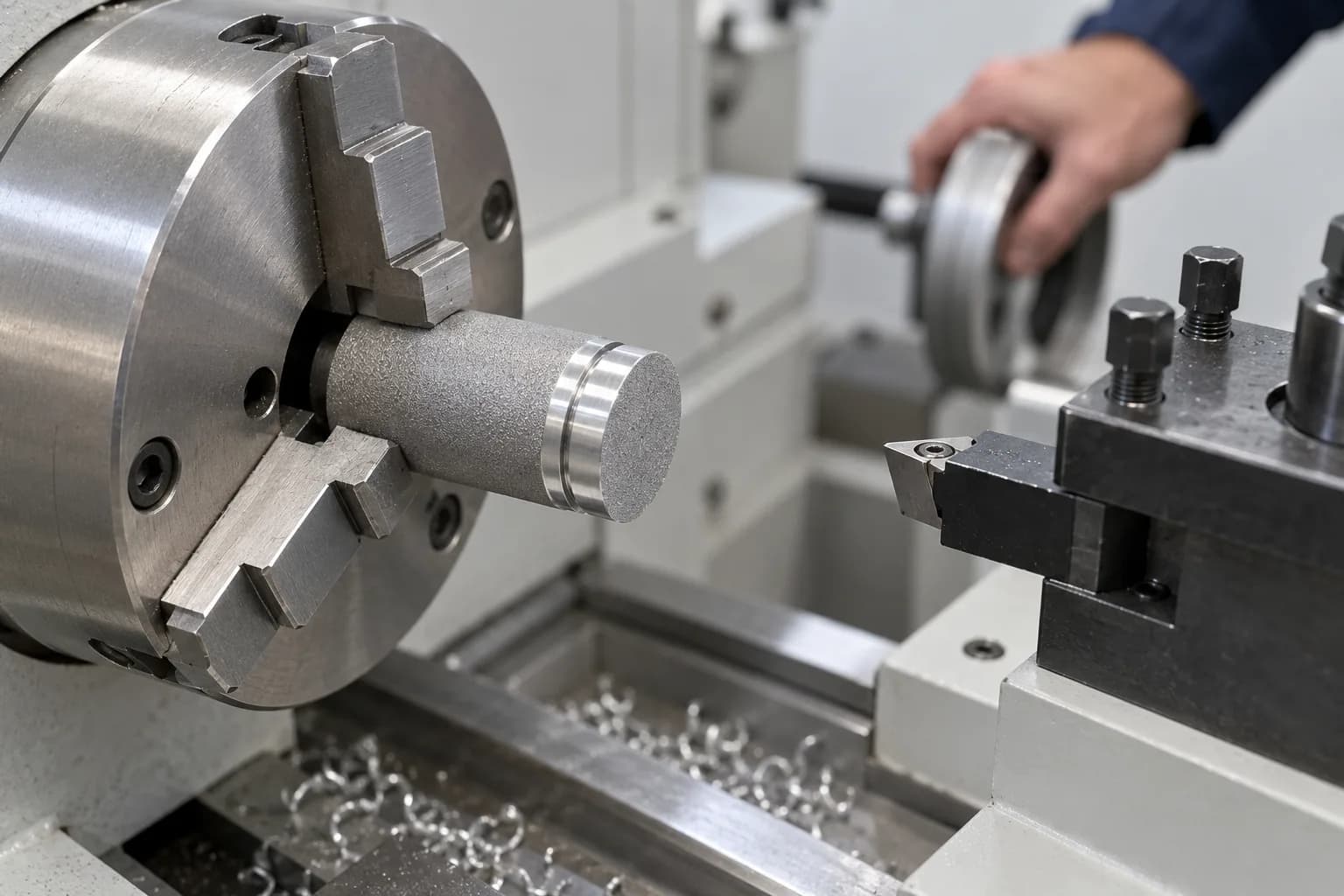
Aluminum 7075-T6 parts are made by CNC machining, which removes material from solid T6 and T651 plate and bar using precision cutting tools, so every part keeps the full strength of the wrought stock. Datum surfaces and planned fixturing let multi-setup parts reference every critical feature, so bores, threads and mounting patterns are cut to the drawing in the same job. Because there is no tooling to make, the same program runs a single prototype or a repeat production batch.
Upload CAD files and drawings to Forge Labs Steam, and our engineers review Aluminum 7075-T6 parts for tolerances, tool access and finish so issues are fixed before production.
Upload CAD files and drawings to Forge Labs Steam, and our engineers review Aluminum 7075-T6 parts for tolerances, tool access and finish so issues are fixed before production.



Aluminum 7075-T6 is trusted for aerospace and defense programs that need the highest strength of the common machining aluminum alloys. It combines that strength with excellent fatigue resistance for dynamic loads, so programs choose it for highly stressed brackets, fittings, suspension links and drivetrain housings when uptime matters.
From rapid prototyping to production runs, teams rely on Aluminum 7075-T6 to maintain tight tolerances while reducing assembly complexity through consolidated part designs. T651 plate and bar are stress relieved by stretching before ageing, which keeps parts stable through long machining cycles and deep pocketing.
It is compatible with hard anodizing and protective coatings, and parts in wet or salty service need them, because its corrosion resistance is lower than 6000 series alloys. It is not recommended for welding-intensive assemblies, so 7075 parts are designed to be fastened rather than welded.
Aluminum 7075-T6 costs more than 6061, so Aluminum 6061-T6 is the better choice where corrosion resistance, weldability or cost matter more than peak strength. For printed aluminum geometry such as internal channels, choose DMLS Aluminum AlSi10Mg.
Aerospace & Defense
Brackets, fittings and UAV hardware machined from one of the strongest aluminum alloys.
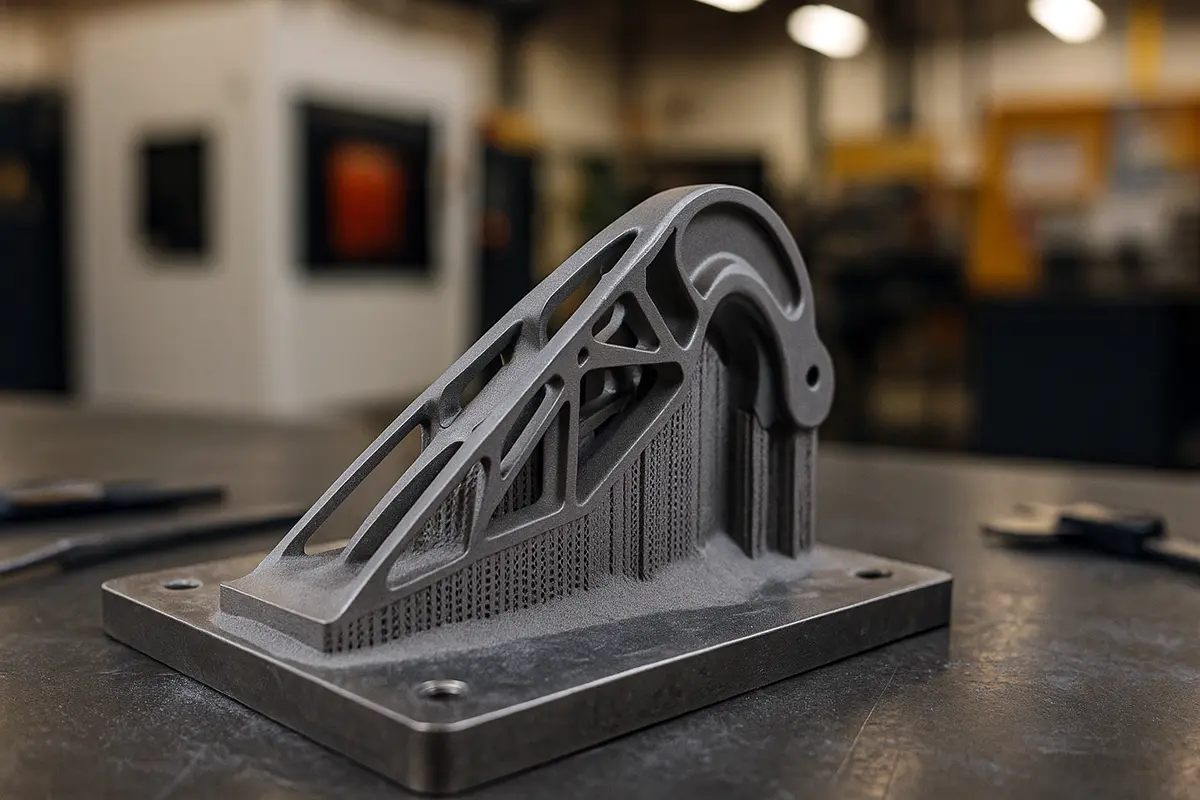
Motorsport & Automotive
Uprights, knuckles and suspension links that carry repeated loads and save weight.
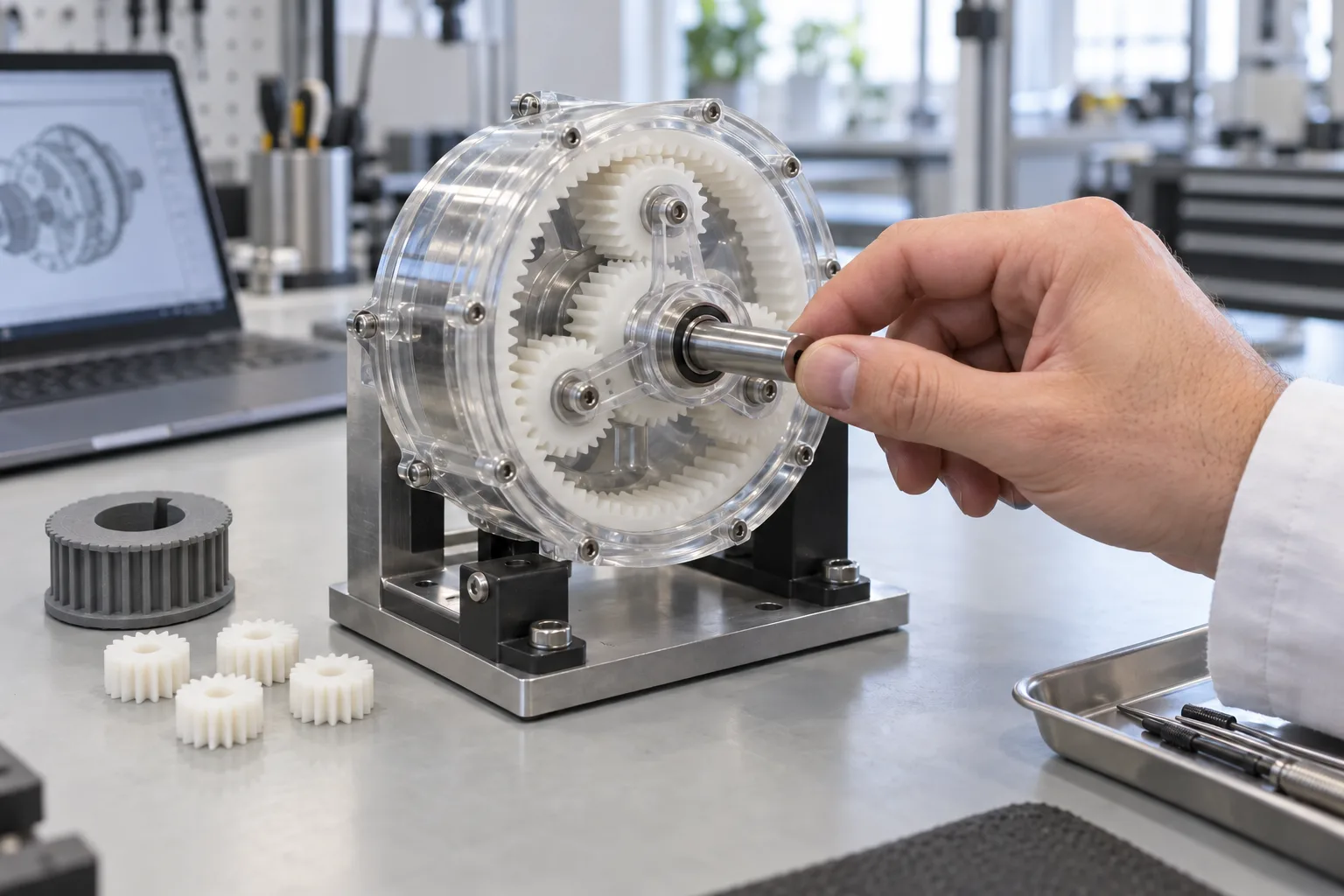
Robotics
Drivetrain housings and arm links with hard, wear-resistant mounting faces.
Energy & Process Equipment
Gears, shafts, keys and regulating valve parts that weigh far less than steel.
Aerospace & Defense
Aerospace and defense teams machine Aluminum 7075-T6 into lightweight brackets and mounts, aircraft fittings, wing fixtures and UAV hardware that need maximum strength-to-weight. 7075 is a very high strength material for highly stressed structural parts and a standard alloy for missile parts.
Motorsport & Automotive
Uprights, steering knuckles, suspension links and driveline housings carry repeated race loads, and motorsport and automotive teams machine them from Aluminum 7075-T6. Its fatigue strength is 159 MPa at 500 million fully reversed cycles, and a typical tensile strength of 572 MPa lets designers thin sections and save unsprung weight. The same combination puts 7075 into bike frames and ATV sprockets.
Robotics
Robotics teams machine Aluminum 7075-T6 into precision drivetrain housings, arm links and high strength structural inserts, where bearing bores and gear centers must stay true under load. Its 150 HB hardness is high for an aluminum alloy, and hard anodizing adds a wear-resistant surface to sliding and mounting faces.
Energy & Process Equipment
Power generation and process equipment builders use Aluminum 7075-T6 for gears and worm gears, shafts and keys, meter parts and regulating valve parts. Its typical shear strength of 331 MPa suits keys and shafts that transmit torque, and its strength lets gears and shafts weigh far less than steel equivalents.
Values for wrought 7075-T6 and T651: Aluminum Association typical data as published by ASM Aerospace Specification Metals, and typical T651 plate and bar values from Aircraft Materials, with the source listed with each property.
Mechanical performance
Aluminum 7075-T6 delivers exceptional strength and fatigue resistance, giving highly stressed aerospace brackets, motorsport uprights and suspension links, and high strength structural inserts a proven alloy from prototype to production. Its balanced mechanical profile handles demanding load conditions without turning brittle and keeps parts intact under repetitive stress.
The Aluminum Association rows show what the alloy typically delivers, and the T651 rows show a stockist's typical figures for plate and bar; for design minimums, use the stock specification for the form and size. Fracture toughness depends on direction and is lowest through the thickness of the plate, so keep major loads in the plane of the plate where possible. The fatigue value comes from polished, fully reversed specimens, so machined finish, notches and corners set the real fatigue life of a part.
Material makeup
The low density of aluminum makes Aluminum 7075-T6 parts lightweight yet strong, which matters most for flying and moving hardware.
The composition rows are the registered limits for UNS A97075. Zinc and magnesium give the alloy its strength after ageing, while copper adds strength but lowers corrosion resistance. The machinability rating compares 7075 with other aluminum alloys, not with steel.
Heat performance
Aluminum 7075-T6 conducts heat far better than stainless steel, which helps housings and mounts carry heat away from components. It also expands about twice as much as steel, so check clearances where aluminum parts meet steel ones.
The solution treatment and ageing temperatures describe how the T6 temper is produced. Prolonged exposure above the ageing temperature lowers strength over time, so 7075-T6 suits parts that run at ambient or moderately warm temperatures rather than hot service.
Functional performance
Aluminum 7075-T6 conducts electricity, so it suits conductive housings, grounded fixtures and functional prototypes that interact with electrical systems.
Its alloying additions make it a weaker conductor than pure aluminum or 6061, so choose those where conductivity matters most. Anodized surfaces insulate, so mask grounding points before anodizing.
Compatibility data
These ratings are screening guidance built from general aluminum behavior and rated lower for 7075 because it contains copper. Its natural oxide film protects it in mildly acidic to mildly alkaline conditions, strong acids and alkalis attack it, and oils, hydraulic fluids and most fuels do not.
It corrodes galvanically when coupled with steel, stainless steel or copper, so isolate dissimilar fasteners. The T6 temper is more prone to stress corrosion cracking than the overaged T73-type tempers, so avoid sustained tensile stress through the plate thickness, and confirm ratings with application-specific testing.
Compliance
Aluminum 7075 is registered as UNS A97075. Its plate and sheet are produced to ASTM B209, bar and rod to ASTM B211 and extrusions to ASTM B221, in tempers that include T6 and T651. Strength falls as plate gets thicker, so check the specification values for the plate thickness a part is cut from.
 CNC Machining
Aluminum 6061-T6
 CNC Machining
Stainless Steel 17-4 PH (CNC)
CNC MachiningStainless Steel 304
 CNC Machining
PEEK
CNC MachiningDelrin (Acetal)
 CNC Machining
Polycarbonate (CNC)
 DMLS
DMLSAluminum AlSi10Mg
 DMLS
DMLSAluminum 6061
 DMLS
DMLSTitanium Ti-6Al-4V
 DMLS
DMLSStainless Steel 17-4 PH
 DMLS
DMLSMaraging Steel MS1
 DMLS
DMLSStainless Steel 316L
Datasheets, design guidance and supplier documentation for Aluminum 7075-T6.
Access the most recent datasheet and supporting documentation maintained by our engineering team.
Aluminum 7075-T6 datasheetTolerance, wall thickness and finishing guidance for machined parts.
View machining guidance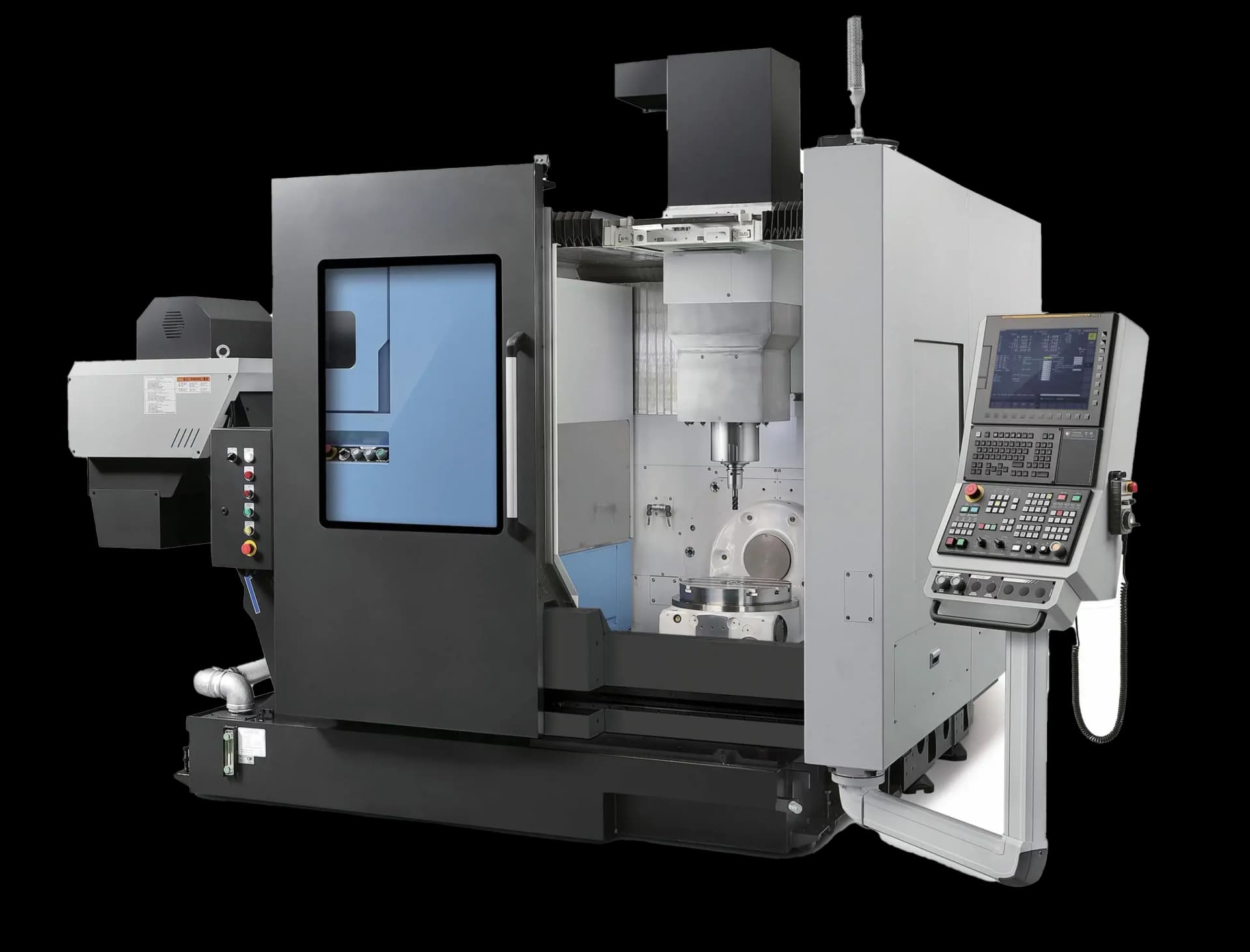
Aluminum 7075-T6 is manufactured using advanced CNC machining technology, ensuring optimal material properties and dimensional accuracy. Five-axis precision milling reaches complex bracket and housing geometry from several angles, with toolpaths optimized for aerospace alloy billet.
Can't find the answer you're looking for? Reach out to our customer support team.
Upload your design and get a quote for Aluminum 7075-T6 parts from our engineers.
Create an account to upload CAD
STEP, STL, OBJ, 3MF and IGES supported