Stereolithography High Temperature Resin For Hot Air, Hot Fluid and Tooling Parts

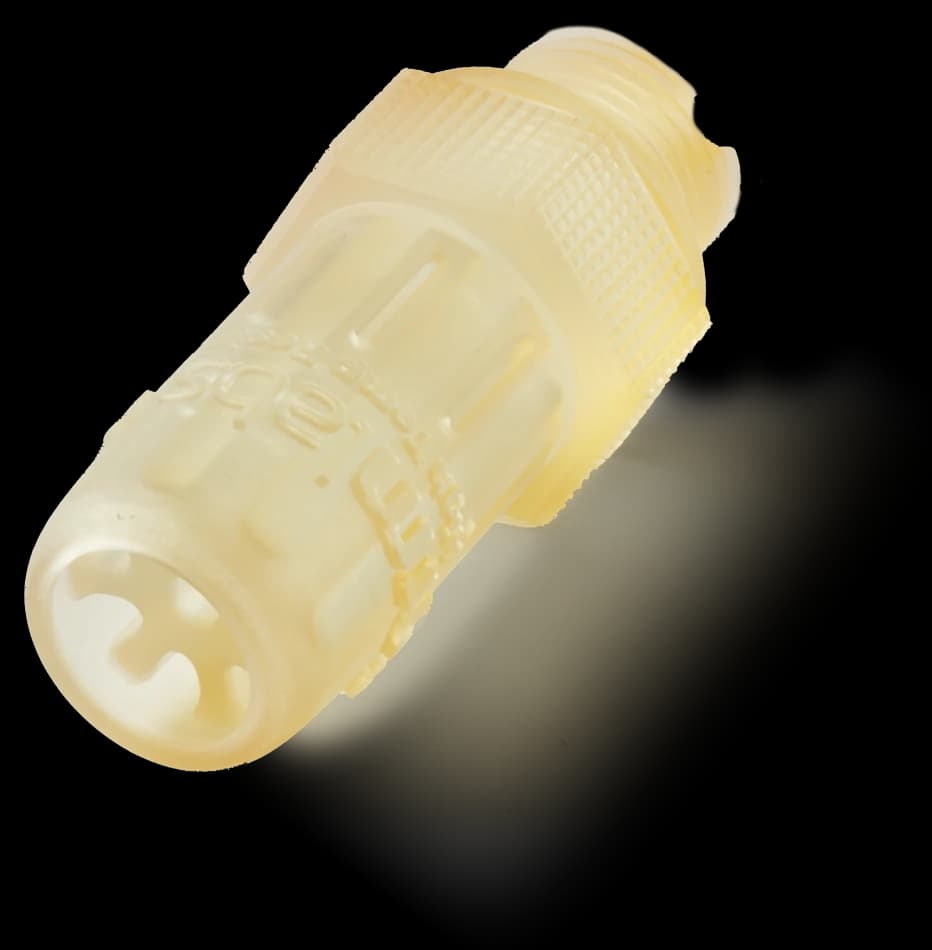
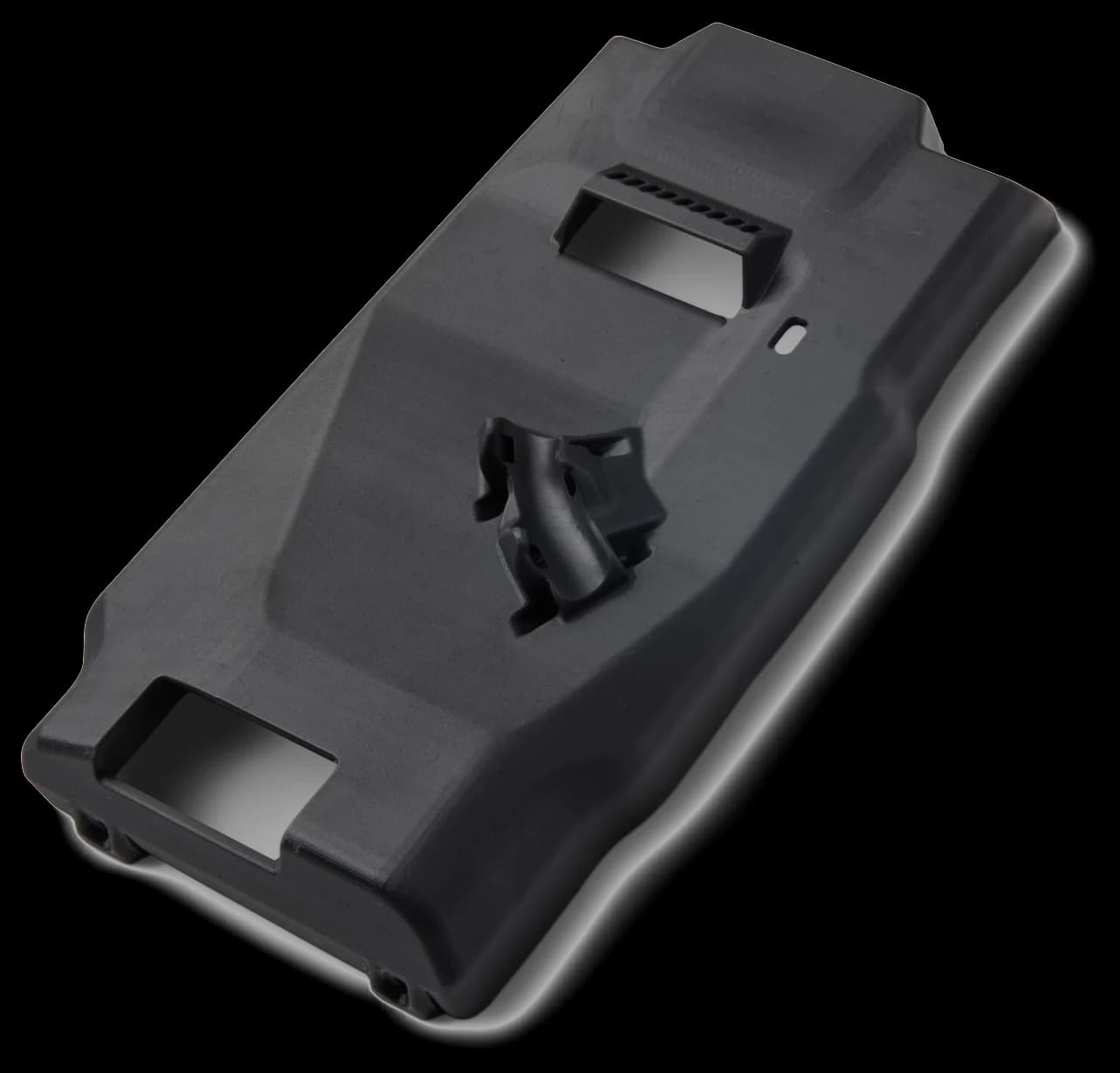
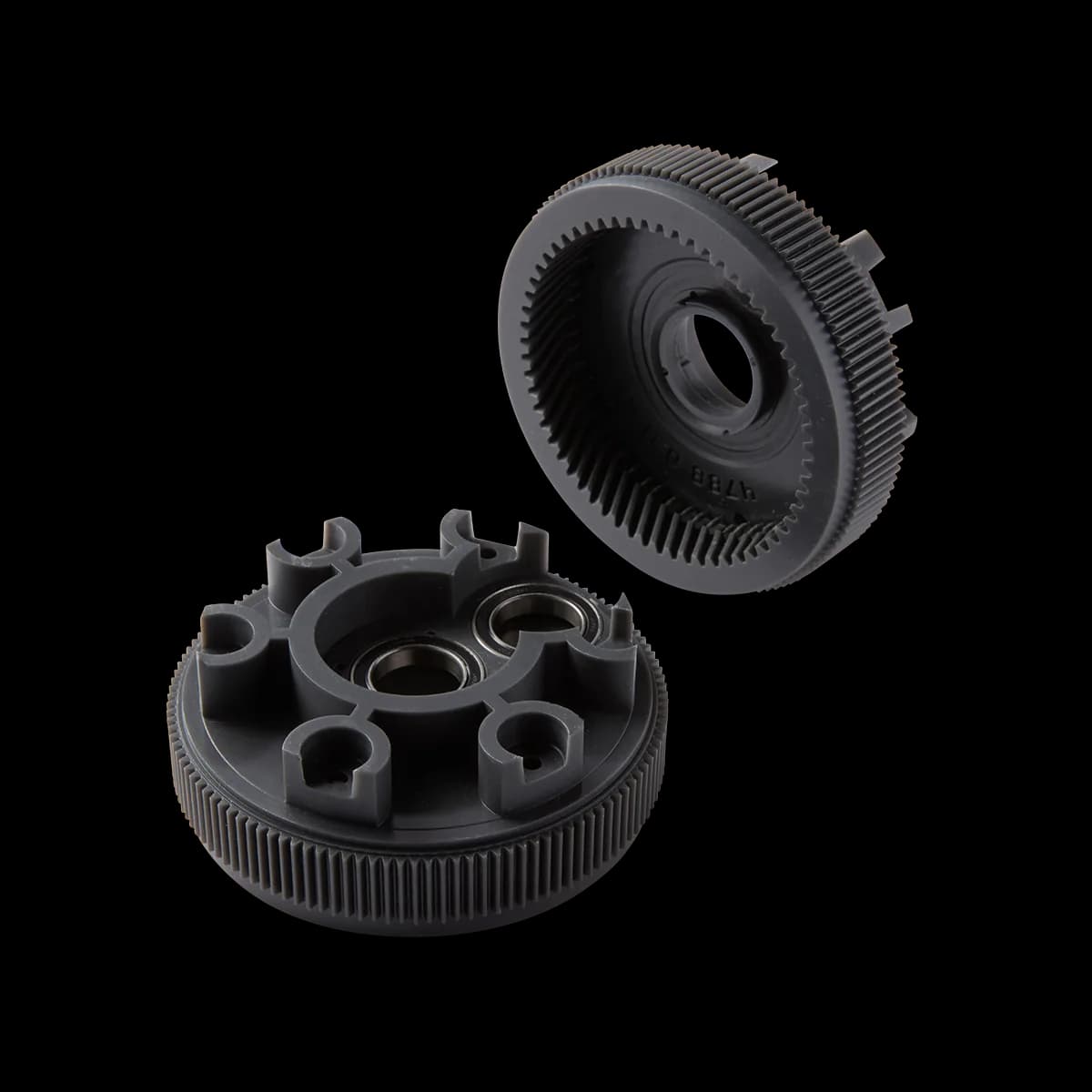
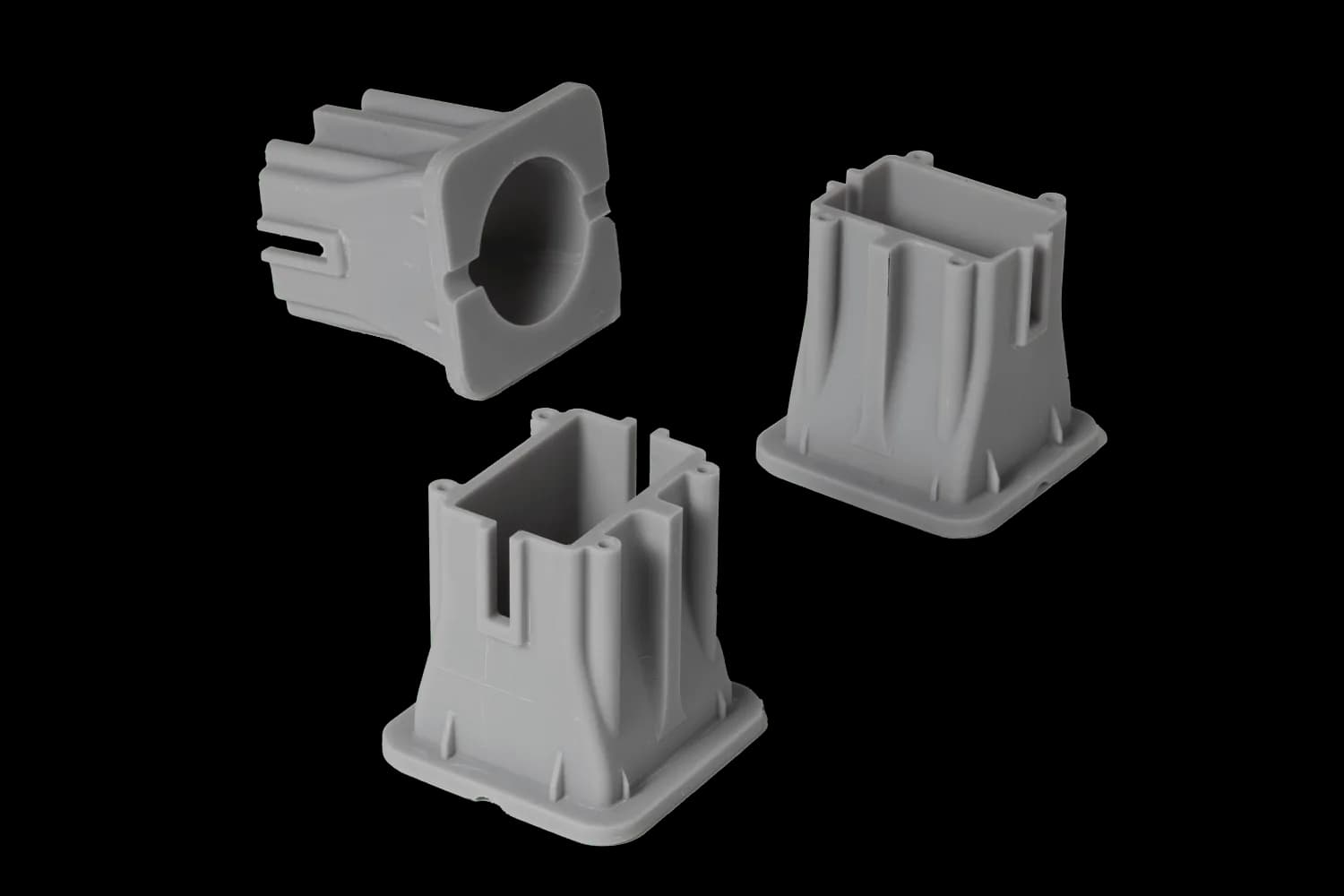
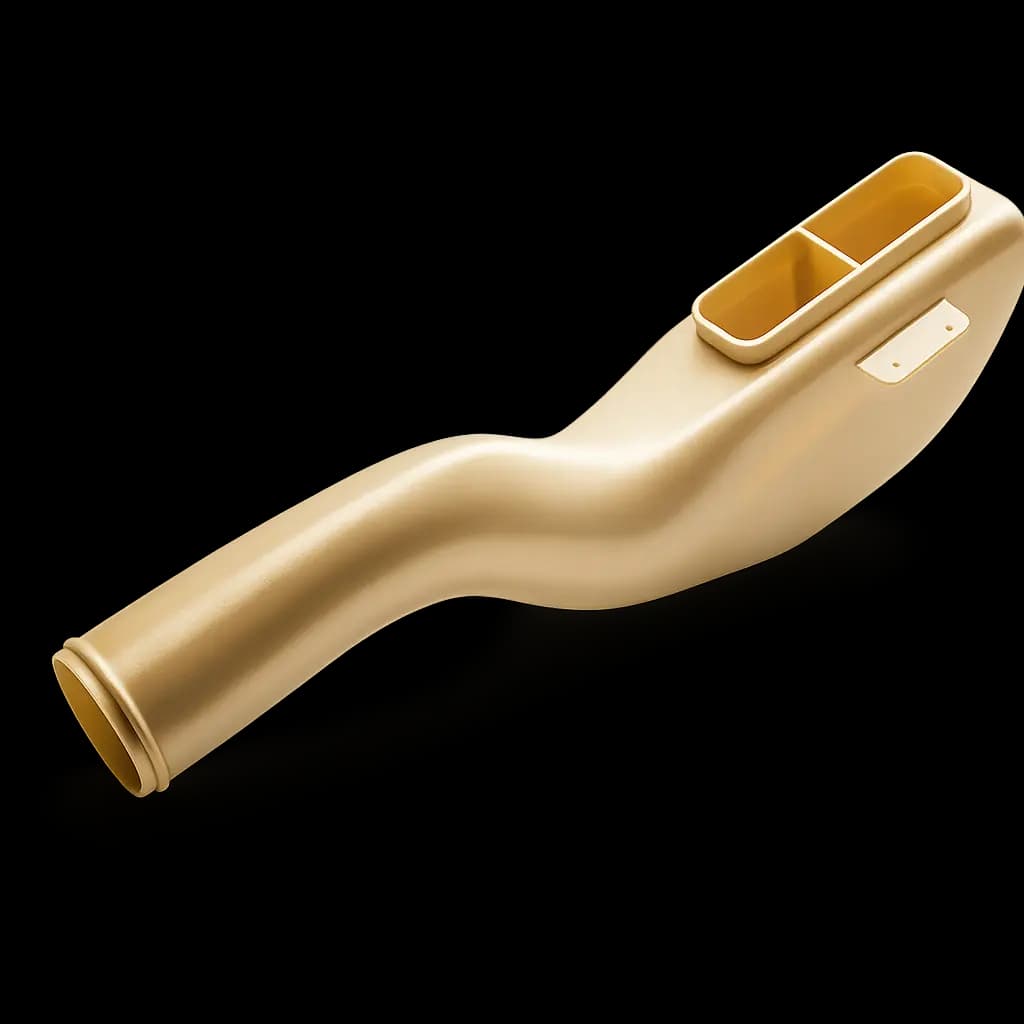
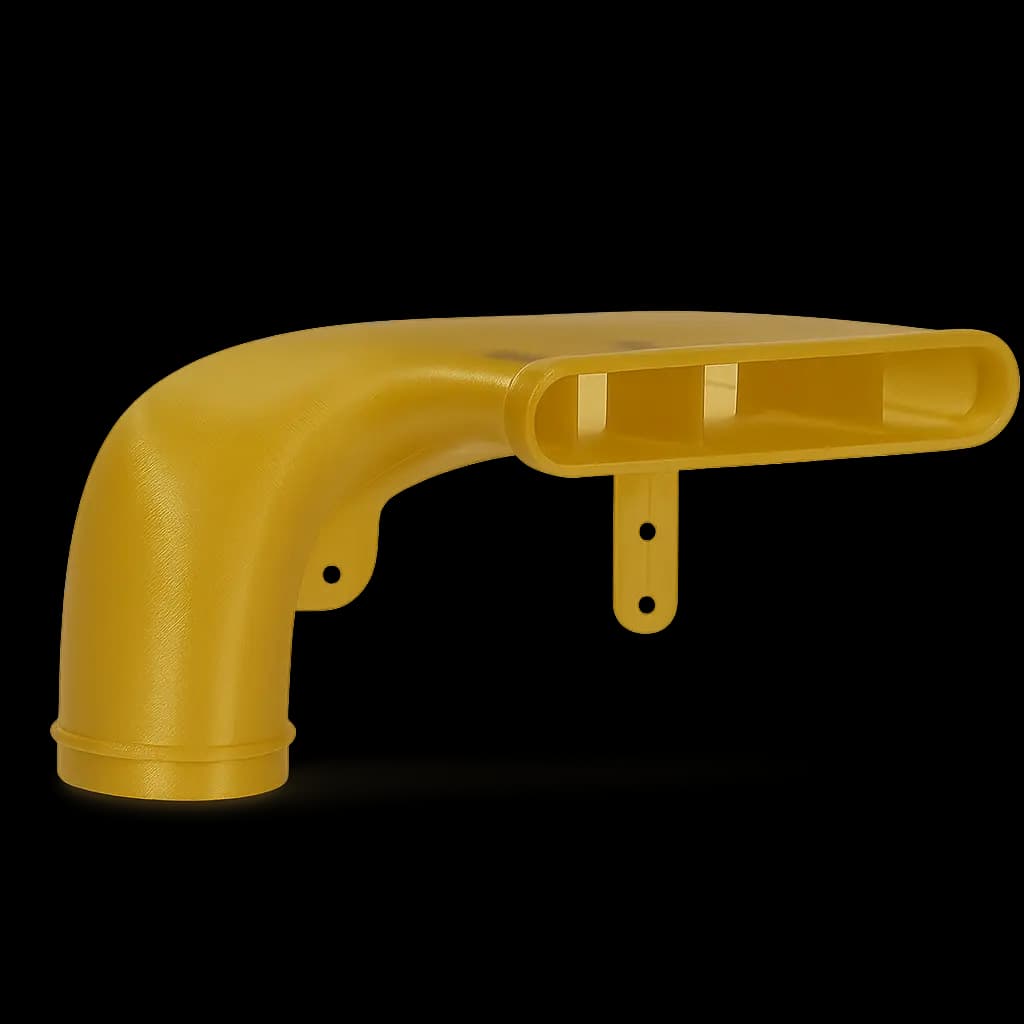
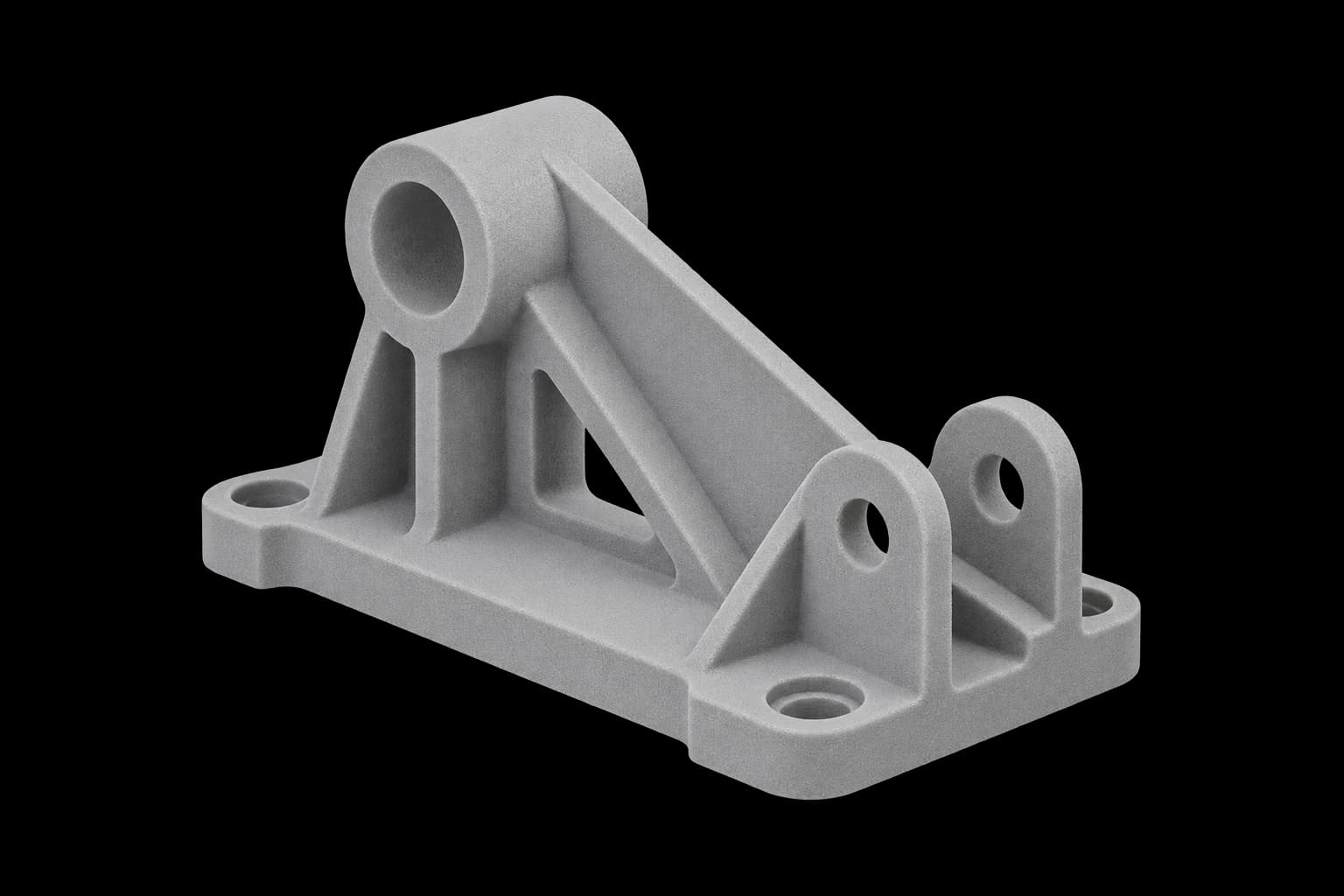
High Temperature Resin 3D printed part example
High Detail Resolution
Smooth Finish
SLA material

High Temperature Resin overview

High Temperature Resin is the most heat-resistant Formlabs resin, 3D printed by SLA for detailed parts that work in hot air, gas and fluid. After a final oven cure, parts keep their shape at temperatures that deform standard plastics, with the fine detail and smooth surface SLA is known for. Parts are dense and watertight and handle contact with boiling water. Automotive, aerospace, tooling and appliance teams use it for under-hood and cooling-system parts, composite layup moulds, injection mould inserts and heat-resistant housings and fixtures.

How High Temperature Resin is manufactured

High Temperature Resin is manufactured using Stereolithography (SLA) on Formlabs Form 4L printers, where light cures the liquid resin layer by layer through a masked display. Parts are washed, supports are removed, and every part receives a UV cure and the Formlabs oven thermal cure. Forge Labs' controlled post-cure process applies precise UV and thermal exposure to a documented schedule, which develops the full heat resistance of the resin while preventing warpage.

Build volume
353 × 196 × 350 mm
Lead time
2-4 business days
Layer height
0.05-0.1 mm
Forge Labs Steam

Know before you manufacture in High Temperature Resin.

Upload CAD files to Forge Labs Steam for High Temperature Resin pricing and a manufacturability review, and fix issues before production.

Upload CAD files to Forge Labs Steam for High Temperature Resin pricing and a manufacturability review, and fix issues before production.

Surface finishes

Finishes for High Temperature Resin

SLA delivers the smoothest surface of any 3D printing process. Every part is washed, post-cured and has its supports removed, leaving a smooth, finely detailed surface that is ready to use straight away or to paint.

Forge Labs sample cube in SLA High Temperature Resin
Natural

Standard Finish

Parts are washed, post-cured and have their supports removed, leaving the smooth, finely detailed surface SLA is known for. Sharp edges, small text and fine features hold their shape, and the surface is ready for fit checks, assembly and presentation, or as a base for paint.

Surface Texture
Smooth, fine-detailed surface
Appearance
Natural resin colour
Details
Sharp & crisp
Sample cube with a red automotive-grade performance paint finish
Forge Labs sample cube in SLA High Temperature Resin
Premium Finish

Performance Paint

Painting offers a highly durable, automotive-grade coating that enhances the aesthetics and durability of 3D-printed parts. Each part is hand-finished to ensure smooth surfaces and a premium quality appearance. Using professional-grade coating equipment, this process allows for precise application and exceptional adhesion. Custom color matching is available, making it ideal for applications that require specific branding or visual impact.

Surface Texture
Matte to Semi-Gloss
Appearance
Custom color matching
Details
Clear & refined
Industry applications

Industry applications for High Temperature Resin

High Temperature Resin keeps its shape at temperatures that deform standard plastics, and that thermal performance enables applications from injection mould tooling to aerospace wind-tunnel testing. It pairs that heat resistance with the excellent surface finish and fine feature resolution of SLA, so tooling and fixtures for high-temperature processes keep the small features and accuracy of a precision prototype.

From rapid prototyping to production runs, teams rely on High Temperature Resin to hold tight tolerances while reducing assembly complexity through consolidated part designs.

It is a rigid material with almost no flex, so mounts, housings, fixtures and mould inserts hold their geometry in heat.

All industries
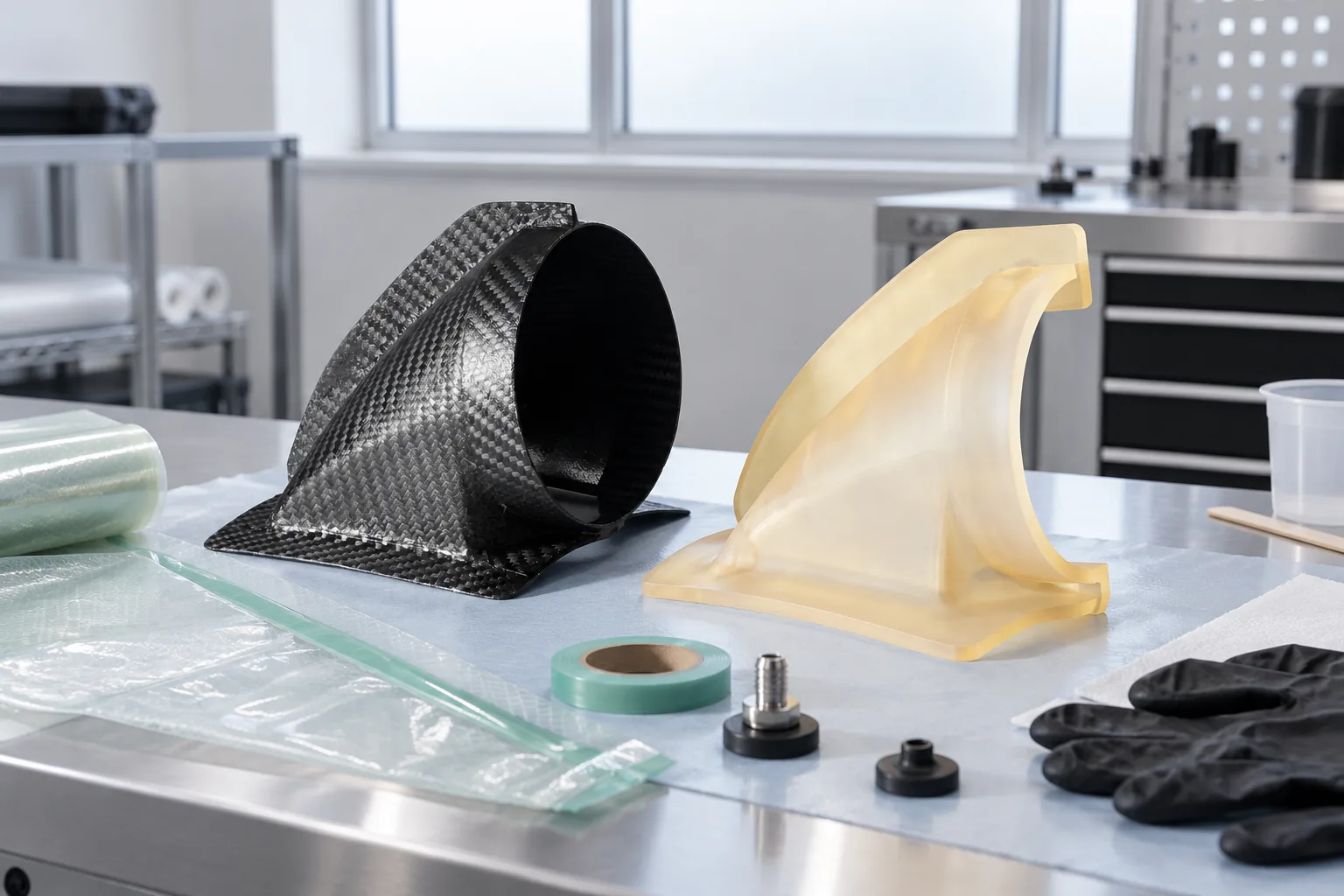
A translucent amber printed layup mould beside the carbon-fibre duct just demoulded from it, on a clean composites bench next to vacuum-bagging materials

Aerospace

Composite Layup Moulds & Hot-Air Test Parts

Aerospace engineers use High Temperature Resin for composite layup moulds, wind-tunnel models, sensor mounts and thermal test fixtures, and for components that sit in hot gas flow. It takes the heat and pressure of an autoclave for prepreg layup, and one aerospace and defence manufacturer prints composite layup moulds in it instead of machining Invar tools. On Forge's large-format aerospace prototyping programs, High Temperature Resin covers the hot-air and thermal test parts.

  • Composite layup moulds
  • Wind-tunnel test models
  • Thermal test fixtures
Explore aerospace
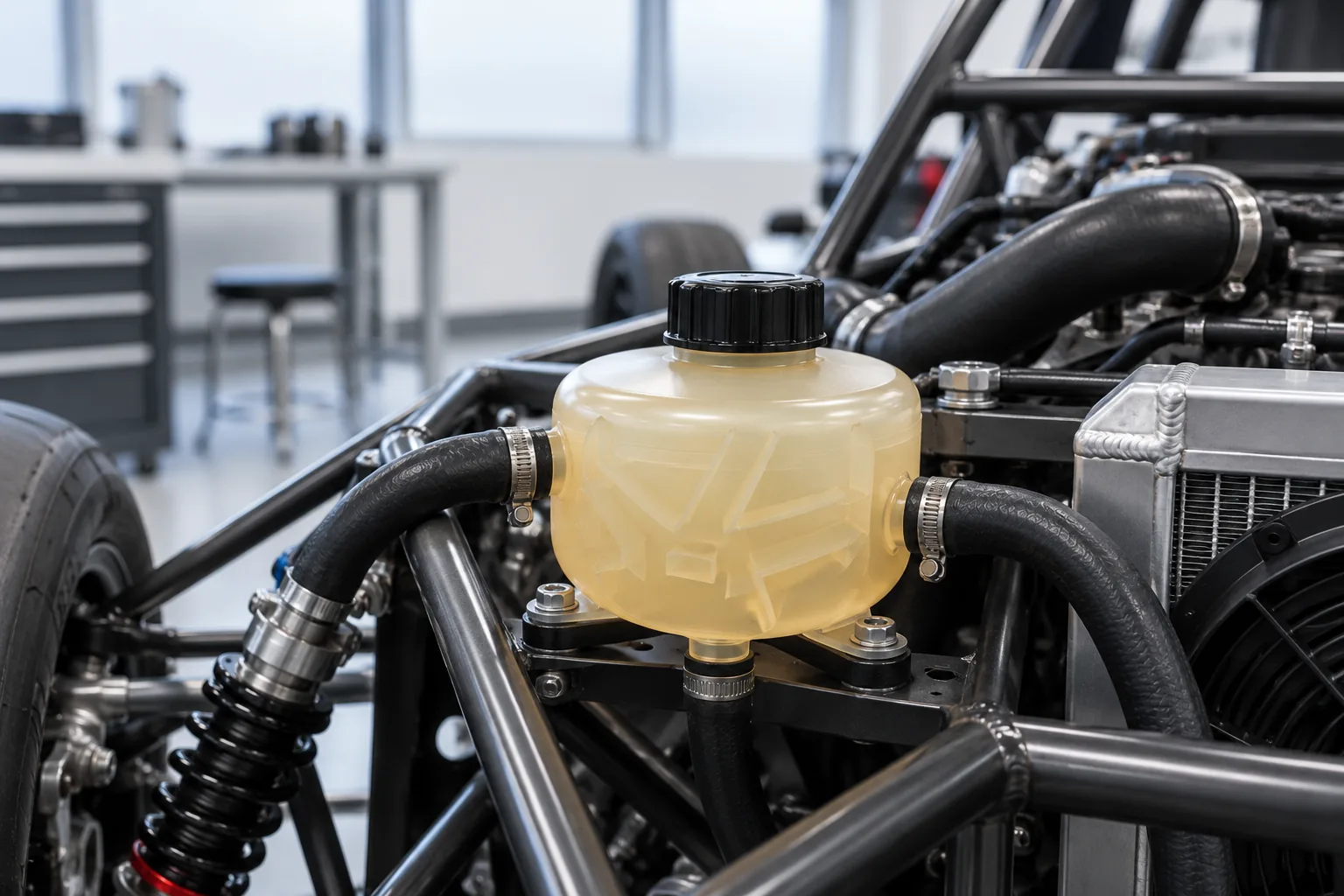
A translucent amber printed coolant tank prototype fitted in the engine bay of a generic student race car in a clean workshop, hoses connected

Automotive

Under-Hood & Cooling-System Parts

Automotive teams use High Temperature Resin for under-hood component prototypes, hot-air ducting models, connector prototypes and heat-resistant sensor housings that must keep their functional features in engine-bay heat. A Formula Student team printed radiator parts, a pump inlet and a vortex tank on a Form 4L for a water circuit running near 80 °C, and cut each radiator's weight by 67% compared with the previous year's radiator.

  • Under-hood component prototypes
  • Radiator and cooling-system parts
  • Connector and sensor housings
Explore automotive
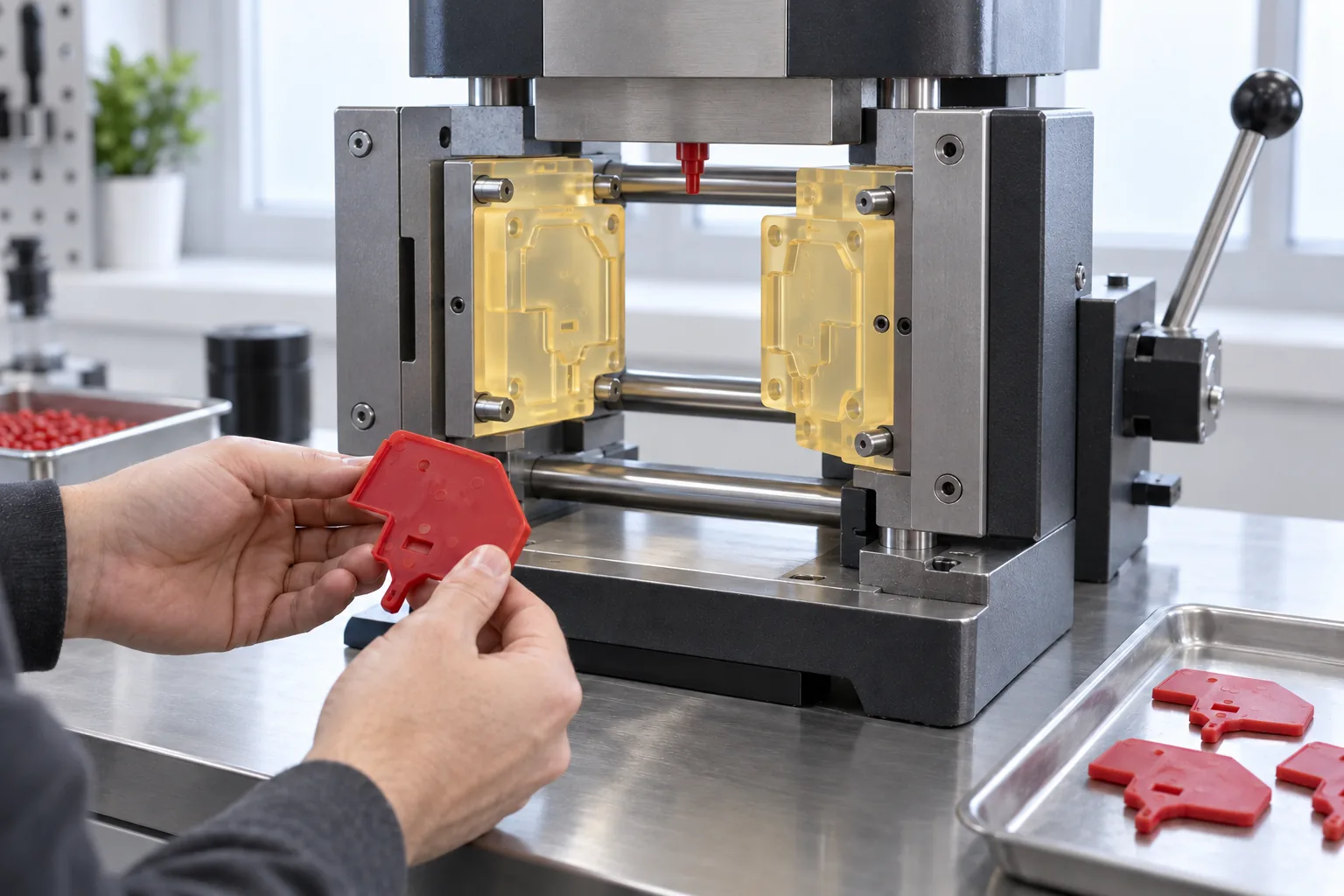
A pair of translucent amber printed mould inserts mounted in a small benchtop injection-moulding press

Manufacturing Tooling

Mould Inserts & Rubber Moulds

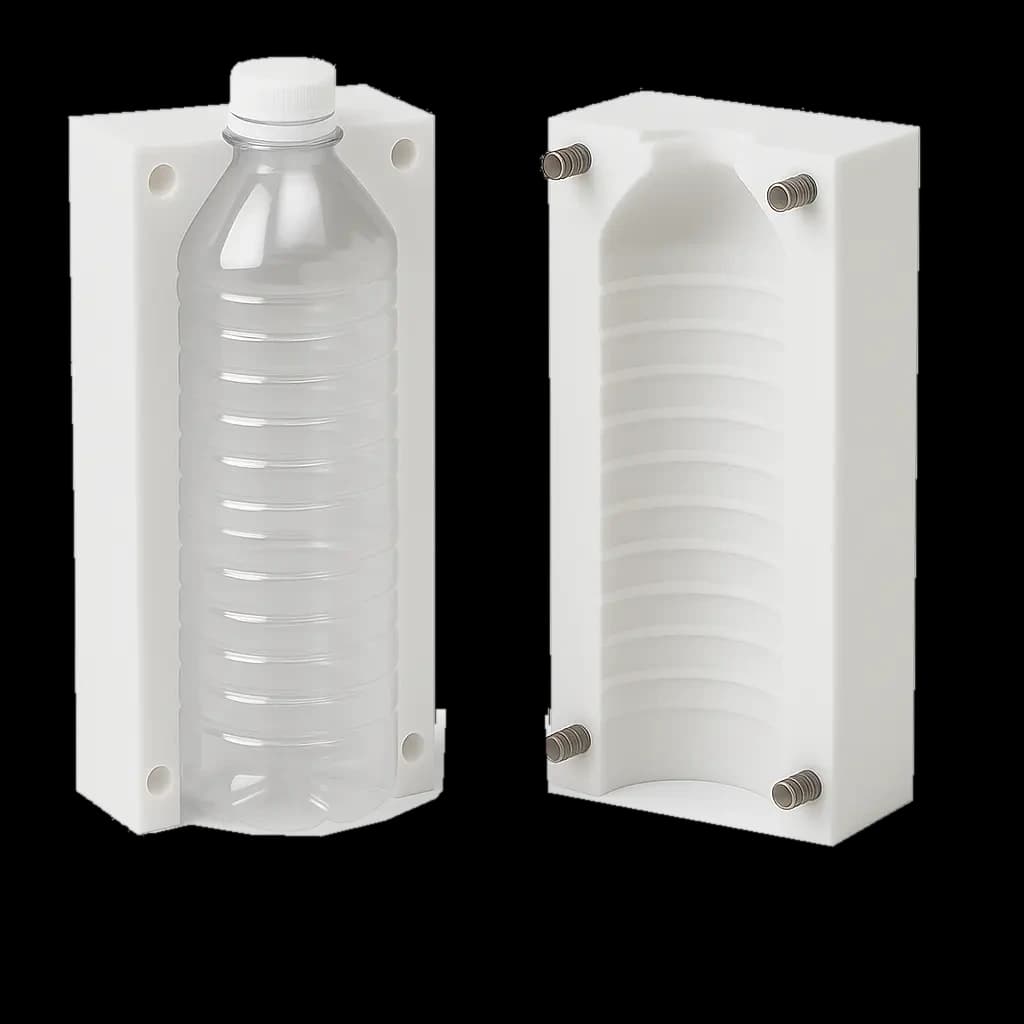
Product teams print High Temperature Resin mould inserts for prototype and short-run injection moulding, so a design can be shot in its production plastic before steel tooling is cut. One insert ran at least 1,500 shots of a low-viscosity polypropylene at about 230 °C, with the gate enlarged and moulding pressure kept low. The same resin makes overmoulding stand-in inserts, vulcanised rubber moulds and thermoforming tools for short runs at reduced pressure.

  • Injection mould inserts
  • Overmoulding stand-in inserts
  • Thermoforming tools
Read the SLA mould design guide
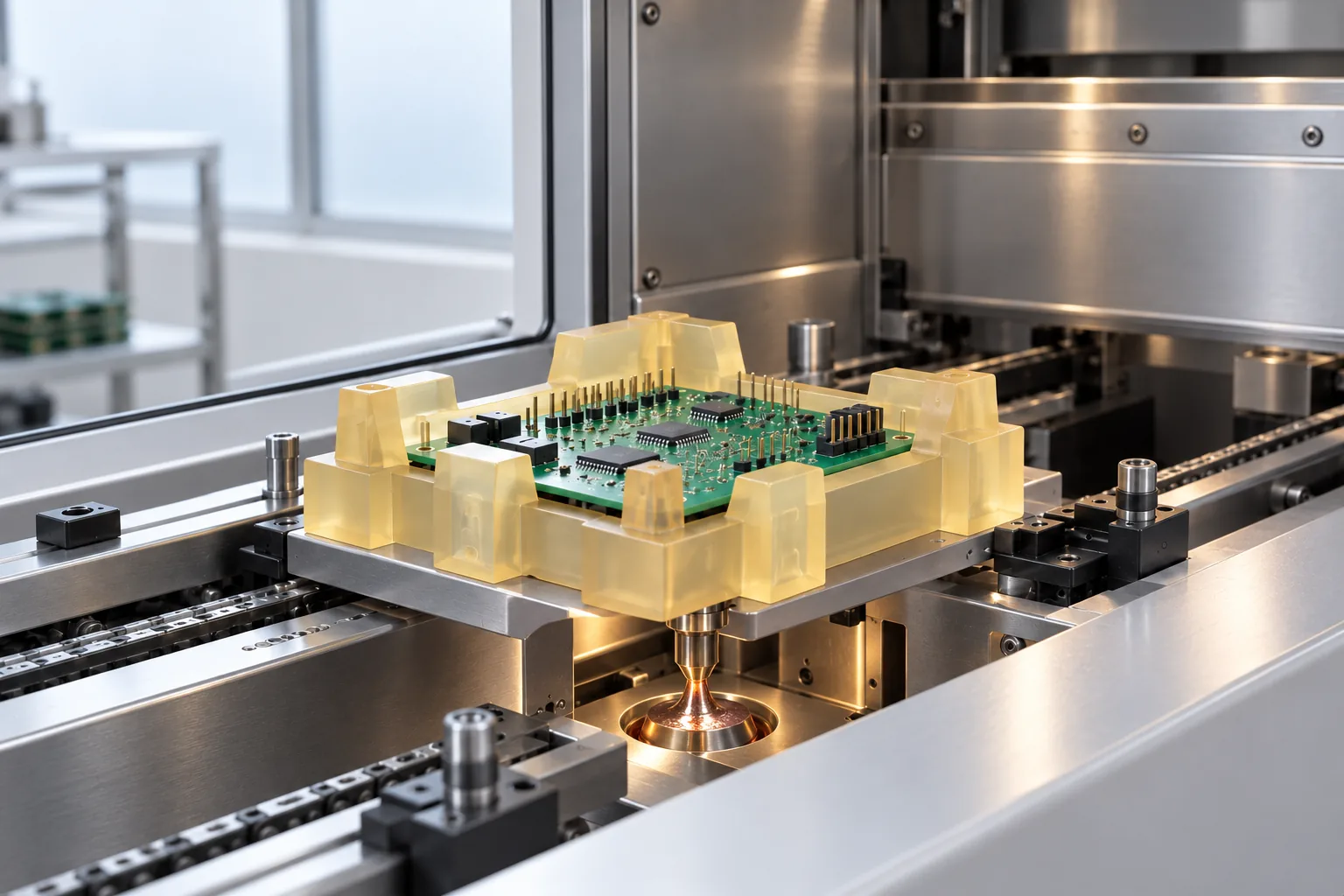
A translucent amber printed masking fixture holding a circuit board as it enters a selective soldering station on an electronics line

Electronics & Energy

Soldering Masks & Hot-Process Fixtures

Electronics teams use High Temperature Resin for protective masks that shield boards during soldering and conformal coating, and for fixtures and housings that sit near hot assembly processes. Fine SLA detail carries through to vents, pin arrays and thin walls on housings and fixtures that run hot, and to moulds for small device components. Masks print to the board outline, so each revision gets a matching mask without tooling.

  • Soldering and coating masks
  • Moulds for device components
  • Heat-resistant electronics housings
Explore robotics
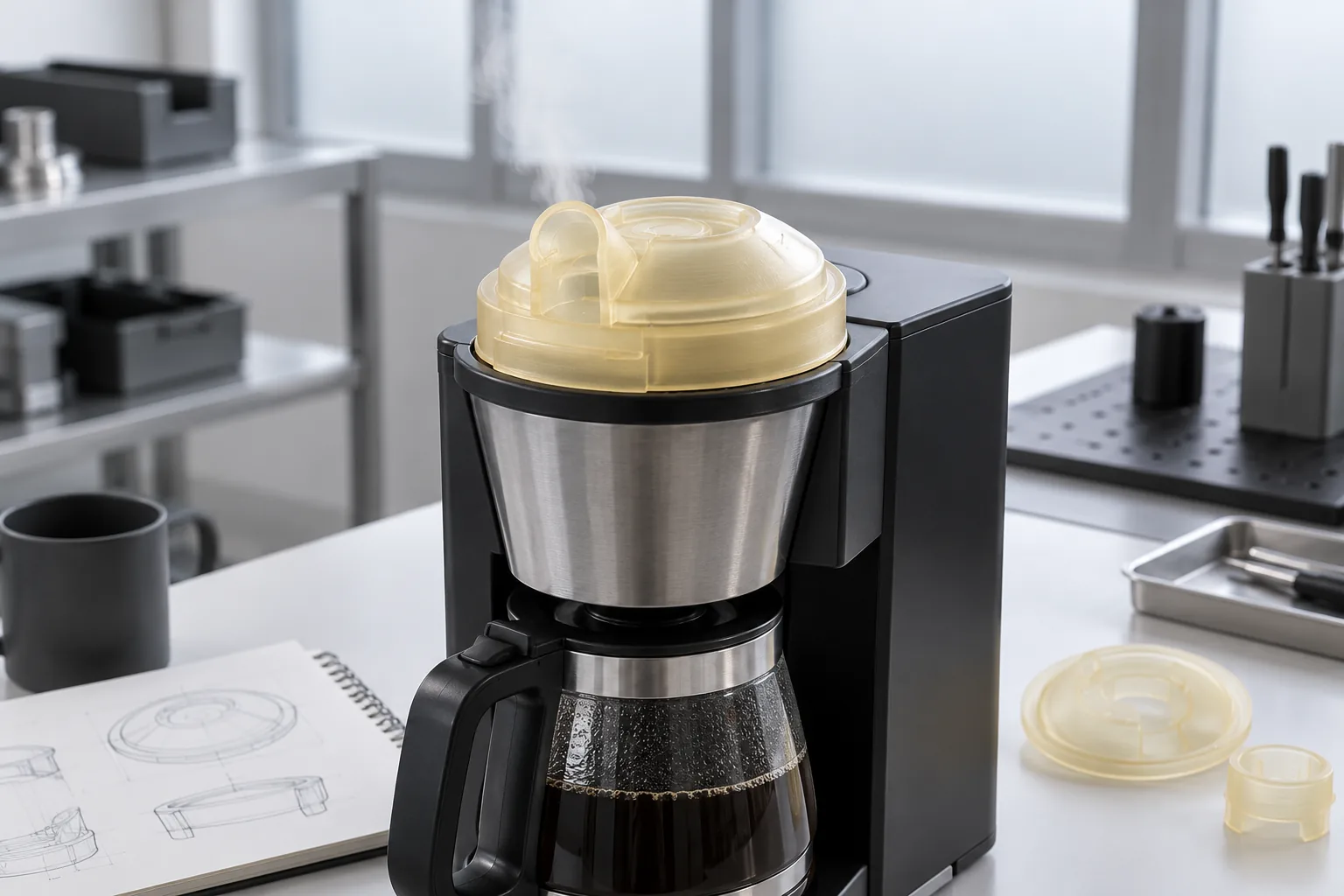
A translucent amber printed coffee-maker lid prototype fitted on a generic prototype coffee machine on a design bench, light steam rising from the brew head

Consumer Products

Hot-Air & Hot-Fluid Appliance Parts

Appliance and consumer product teams use High Temperature Resin for kitchen-appliance prototypes, hot-air vents and housings that carry hot air or hot fluid during functional testing. Parts are dense and watertight with low absorption, so prototype coffee-maker parts handle contact with boiling water. The translucent resin lets testers see flow paths, and prototypes hold their shape through heat tests before the design moves to production tooling.

  • Kitchen-appliance prototypes
  • Hot-air vents and housings
  • Hot-fluid flow prototypes
Explore industrial design
Performance data

Technical performance for High Temperature Resin

Values from the Formlabs High Temp Resin V2 datasheet, tested to the standard listed with each property; liquid resin values from the Formlabs safety data sheet.

Mechanical performance

Mechanical properties

Tensile and flexural modulus show how stiff the resin is, and elongation shows how far it stretches before it breaks. High stiffness with low elongation marks a resin that holds precise geometry rather than one that flexes or absorbs impact.

Every part receives the Formlabs oven thermal cure; the post-cured rows show Formlabs' UV-only values for comparison. The thermal cure lowers tensile strength and elongation and raises flexural stiffness slightly in exchange for its heat resistance. Low elongation and notched impact call for generous radii, and the resin is not suited to snap-fits, living hinges or parts under sustained load.

PropertyValue
Ultimate Tensile Strength (Post-Cured)ASTM D638-14
58 MPa
Ultimate Tensile Strength (Post-Cured + Thermal Cure)ASTM D638-14
49 MPa
Tensile Modulus (Post-Cured)ASTM D638-14
2800 MPa
Tensile Modulus (Post-Cured + Thermal Cure)ASTM D638-14
2800 MPa
Elongation at Break (Post-Cured)ASTM D638-14
3.3 %
Elongation at Break (Post-Cured + Thermal Cure)ASTM D638-14
2.3 %
Flexural Strength at Break (Post-Cured)ASTM D790-15
95 MPa
Flexural Strength at Break (Post-Cured + Thermal Cure)ASTM D790-15
97 MPa
Flexural Modulus (Post-Cured)ASTM D790-15
2600 MPa
Flexural Modulus (Post-Cured + Thermal Cure)ASTM D790-15
2800 MPa
Notched Izod Impact (Post-Cured)ASTM D256-10
18 J/m
Notched Izod Impact (Post-Cured + Thermal Cure)ASTM D256-10
17 J/m

Material makeup

Physical properties

Density and viscosity describe the liquid resin in the vat, not the finished part; Formlabs publishes no cured-part density. A controlled wash and post-cure give every part a smooth, uniform surface, so critical features stay in tolerance and downstream finishing stays predictable.

PropertyValue
Resin Density (liquid)Formlabs SDS
1.14 g/cm³
Resin Viscosity (liquid, 35 °C)Formlabs SDS
1015 cP

Heat performance

Thermal properties

Heat deflection is listed at two loads. The oven thermal cure lifts heat deflection at the lower load to the headline figure; at the higher load the gain is smaller, so size each part to the load it carries at its operating temperature.

Thermal expansion is typical of a rigid photopolymer. Allow for it where a part mates with metal across a wide temperature swing.

PropertyValue
HDT @ 0.45 MPa (Post-Cured)ASTM D648-16
120 °C
HDT @ 0.45 MPa (Post-Cured + Thermal Cure)ASTM D648-16
238 °C
HDT @ 1.8 MPa (Post-Cured)ASTM D648-16
78 °C
HDT @ 1.8 MPa (Post-Cured + Thermal Cure)ASTM D648-16
101 °C
Thermal Expansion (Post-Cured)ASTM E831-13
80 ×10⁻⁶/K
Thermal Expansion (Post-Cured + Thermal Cure)ASTM E831-13
75 ×10⁻⁶/K

Compatibility data

Chemical properties

Formlabs immersed printed, post-cured cubes in 19 fluids for 24 hours and measured size and weight gain. Fuels, mineral and hydraulic oils, salt water, alcohol and dilute acids and bases leave almost no change, while acetone causes the largest weight gain and concentrated hydrochloric acid a small size change.

Formlabs does not state an elevated test temperature, so treat the ratings as screening guidance and confirm hot-fluid exposure with application-specific testing before production release.

Chemical24 h size gain24 h weight gain
Acetic acid 5%
24 h size gain< 1%
24 h weight gain< 1%
Acetone
24 h size gain< 1%
24 h weight gain2%
Bleach (~5% NaOCl)
24 h size gain< 1%
24 h weight gain< 1%
Butyl acetate
24 h size gain< 1%
24 h weight gain< 1%
Diesel fuel
24 h size gain< 1%
24 h weight gain< 1%
Diethylene glycol monomethyl ether
24 h size gain< 1%
24 h weight gain1%
Hydraulic oil
24 h size gain< 1%
24 h weight gain< 1%
Hydrogen peroxide 3%
24 h size gain< 1%
24 h weight gain< 1%
Isooctane (gasoline)
24 h size gain< 1%
24 h weight gain< 1%
Isopropyl alcohol
24 h size gain< 1%
24 h weight gain< 1%
Mineral oil (light)
24 h size gain< 1%
24 h weight gain< 1%
Mineral oil (heavy)
24 h size gain< 1%
24 h weight gain< 1%
Salt water (3.5% NaCl)
24 h size gain< 1%
24 h weight gain< 1%
Skydrol 5
24 h size gain< 1%
24 h weight gain1.1%
Sodium hydroxide 0.025% (pH 10)
24 h size gain< 1%
24 h weight gain< 1%
Strong acid (HCl, concentrated)
24 h size gain1.2%
24 h weight gain< 1%
Tripropylene glycol monomethyl ether
24 h size gain< 1%
24 h weight gain< 1%
Water
24 h size gain< 1%
24 h weight gain< 1%
Xylene
24 h size gain< 1%
24 h weight gain< 1%

Compliance

Compliance profile

Formlabs' June 2024 statement covering all its resins, including High Temp, declares RoHS compliance and no substances from the ECHA candidate list as of June 2024. Formlabs also states that every substance in High Temp Resin is on the US TSCA Active Inventory.

Formlabs publishes no biocompatibility, food-contact or flammability rating for this resin, so it is not used for food contact or where a flame-retardant material is required. For parts that must meet UL 94 V-0, Formlabs Flame Retardant Resin is the flame-retardant SLA choice.

StandardStatus
RoHS Directives 2011/65/EU and (EU) 2015/863Restricted substances not contained or intentionally added above the threshold limits (statement covers all Formlabs resins)
Formlabs declaration
REACH SVHC (EC 1907/2006)No substances on the ECHA candidate list (June 2024 statement; all Formlabs resins except Clear Resin)
Formlabs declaration
TSCA Active InventoryAll substances used in High Temp Resin are on the US TSCA Active Inventory
Formlabs statement
Resources

Datasheets and design resources

Datasheets, design guidance and supplier documentation for High Temperature Resin.

Download center

Access the most recent datasheet and supporting documentation maintained by our engineering team.

High Temperature Resin datasheet

Design guidelines

Explore printable geometry recommendations, wall thickness tips, and finishing playbooks for SLA.

View SLA design guide

Supplier compliance documents

Supplier declarations and test statements for this material.

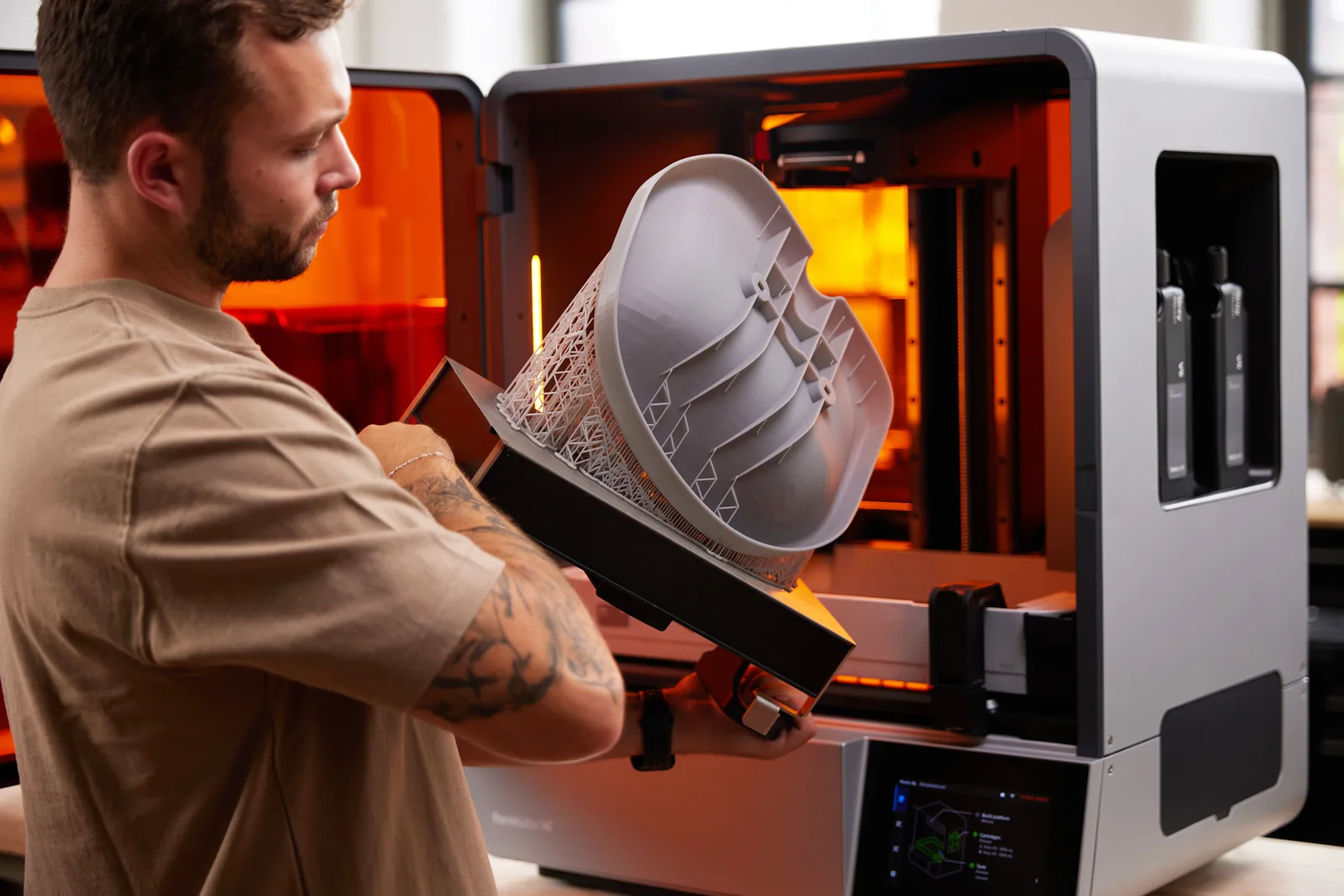
Operator lifting a build platform with a large grey SLA part on supports out of a Formlabs Form 4L printer
Advanced Manufacturing

Built with Precision SLA Technology

High Temperature Resin is manufactured using industrial-grade Stereolithography (SLA) technology, delivering exceptional surface finish and dimensional accuracy for high-detail applications. Our calibrated resin systems and closed-loop process controls keep High Temperature Resin parts repeatable across the full build platform.

Tolerance
±0.25% (min ±0.25 mm); ±0.4% (min ±0.5 mm) over 10 in
Production capacity
Multiple parts and assemblies built together on a large platform
Quality control
In-process monitoring and batch traceability for consistent part quality and material properties
Colours & finishes
Translucent amber; sanding, priming and painting
Learn more about SLA technology
Frequently Asked Questions

Frequently asked questions about High Temperature Resin

Can't find the answer you're looking for? Reach out to our customer support team.

High Temperature Resin is the most heat-resistant Formlabs SLA resin, with a heat deflection temperature of 238 °C at 0.45 MPa and 101 °C at 1.8 MPa after thermal post-cure. It combines that heat resistance with excellent surface finish and fine feature resolution, a tensile modulus of 2,800 MPa and low uptake of fuels and oils.
Start a quote

Ready to Get Started with High Temperature Resin?

Upload your design and get a quote for High Temperature Resin parts from our engineers.

  • Engineer-prepared quotes with manufacturability review
  • Production workflows built for repeatable quality
  • Engineering support from prototype to production
Compare all materials

Create an account to upload CAD

STEP, STL, OBJ, 3MF and IGES supported

Manufacturing technologies
6
Engineering materials
50+
Part quantities
1-500+